Tree Care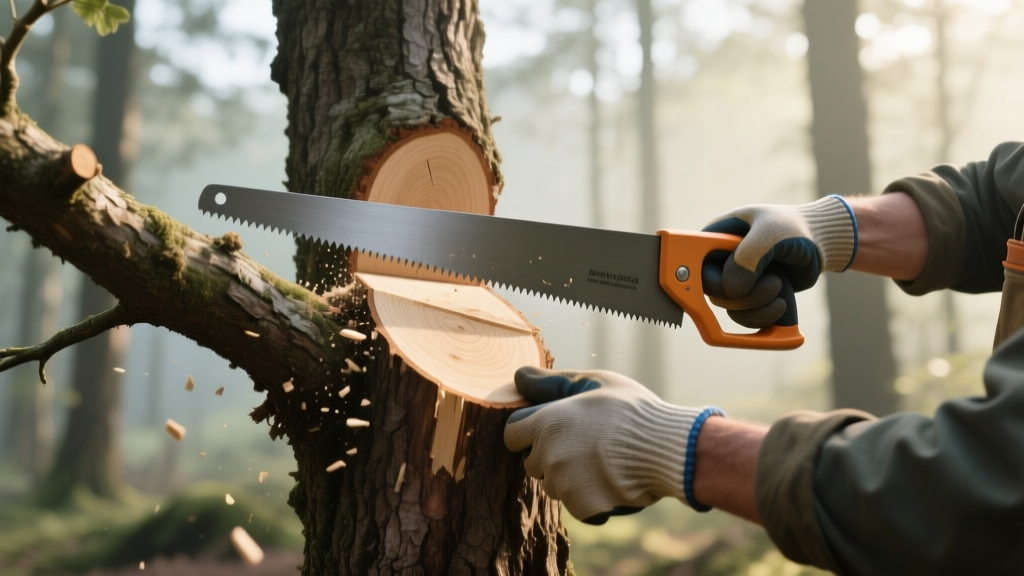
2026 Guide: Photographing the 3-Cut Tree Pruning Method
Emily WatsonPublished
The Intersection of Arboriculture and Visual Documentation
In the modern landscaping and arboriculture industry, technical skill is only half the equation. The ability to visually document your work has become a cornerstone of business growth, client trust, and educational outreach. As we move through 2026, high-resolution before-and-after web sliders, 4K time-lapse reels, and detailed macro photography of pruning cuts are dominating social media feeds and professional portfolios. For tree care professionals and garden photographers alike, mastering the documentation of the three-cut pruning method for large branch removal is an essential skill.
Photographing tree surgery is not merely about snapping a picture of a fallen limb. It requires an understanding of arboricultural biology, a keen eye for composition amidst chaotic natural environments, and the technical camera knowledge to capture fast-moving action in challenging, dappled light. This comprehensive guide will walk you through the exact techniques, gear, and shot lists required to professionally document the three-cut method in 2026.
Understanding Your Subject: The Anatomy of the Three Cuts
To effectively photograph the three-cut method, you must first understand the biological and mechanical purpose of each step. According to Penn State Extension's guide on pruning landscape trees, improper pruning can lead to catastrophic bark tearing, decay, and structural failure. The three-cut method prevents this by systematically relieving the weight of the branch before making the final, biologically critical cut.
- Cut 1: The Undercut. Made on the underside of the branch, a few inches away from the trunk. This prevents the bark from tearing down the trunk when the branch falls.
- Cut 2: The Relief Cut (Top Cut). Made slightly further out on the top of the branch than the undercut. This removes the bulk of the branch's weight.
- Cut 3: The Final Collar Cut. The most critical cut for the tree's health, made just outside the branch collar and branch bark ridge to allow for proper compartmentalization and healing.
As a photographer, your goal is to capture the mechanical necessity of the first two cuts and the biological precision of the third.
Essential 2026 Camera Gear for Tree Care Documentation
Documenting large branch removal requires gear that balances image quality with rugged durability and safety. You cannot be standing directly under a dropping limb with a fragile setup.
Camera Bodies and Lenses
For dedicated portfolio work, a weather-sealed mirrorless camera like the Sony A7R V or the Canon EOS R5 Mark II is ideal. These bodies offer high-megapixel sensors that allow you to crop tightly into the branch collar detail during post-processing. Pair this with a 70-200mm f/2.8 telephoto lens. The telephoto reach allows you to maintain a safe distance from the drop zone while compressing the background to isolate the arborist and the saw.
For macro documentation of the final cut and the branch collar, a 100mm macro lens is indispensable. This allows you to capture the intricate vascular patterns and the precise location of the cut relative to the bark ridge.
Mobile and Action Cameras
For rapid social media content in 2026, the iPhone 16 Pro remains a powerhouse. Its 5x tetraprism telephoto lens allows for safe, high-quality compression shots, while the dedicated macro mode is perfect for quick collar inspections. Additionally, mounting a DJI Osmo Action 4 to the arborist's helmet or chest harness provides a thrilling first-person POV of the chainsaw work, which is highly engaging for TikTok and Instagram Reels.
The Step-by-Step Pruning Shot List
A successful documentation project tells a complete story. Follow this chronological shot list to ensure you capture every vital phase of the removal.
Phase 1: The Assessment (Before)
Start with wide environmental portraits establishing the tree's location and the problematic branch. Use a wide-angle lens (24mm or 35mm) to show the branch's relationship to surrounding structures, power lines, or garden beds. Capture the arborist pointing out the branch collar and discussing the cut angle. These 'consultation' shots build immense trust with prospective clients viewing your portfolio.
Phase 2: The Action (Cuts 1 and 2)
Switch to your 70-200mm telephoto lens and step well outside the drop zone. Focus on the tension and the sawdust.
- The Undercut: Shoot from a low angle if safely possible, capturing the upward bite of the chainsaw into the wood.
- The Relief Cut: Use a fast shutter speed (1/1000s or faster) to freeze the sawdust flying from the top cut. Capture the exact moment the branch hinge snaps and the heavy limb falls away.
Phase 3: The Climax (Cut 3 and the Collar)
This is the most important phase for educational documentation. According to Trees Are Good, an initiative of the International Society of Arboriculture (ISA), preserving the branch collar is paramount for tree health. Once the heavy wood is on the ground, move in with your macro lens or smartphone macro mode. Photograph the arborist making the final, precise cut. Capture a tight, high-resolution detail shot of the finished wound, clearly showing that the bark ridge is intact and the collar is undamaged. This specific image is your 'money shot' for proving technical competence.
Phase 4: The Aftermath (Clean Up)
Conclude with wide shots of the cleaned-up site, the mulched debris, and the newly balanced canopy. If your website supports interactive WebP sliders, ensure your 'after' shot is taken from the exact same tripod position and focal length as your 'before' shot to create a seamless transition.
Mastering Dappled Light and Bark Glare
Tree canopies create notoriously difficult lighting conditions. Dappled sunlight causes harsh, distracting hotspots on the arborist's clothing and the tree bark. To combat this in 2026, rely on a circular polarizing filter (CPL) on your lens. A CPL will cut the waxy glare off the leaves and bark, revealing the rich, true colors of the wood and foliage. If the contrast is too extreme, use a portable LED panel (like an Aputure Amaran) bounced off a white reflector to fill in the deep shadows of the branch crotch, ensuring the collar detail is perfectly exposed.
2026 Camera Settings Cheat Sheet
Use the table below as a quick reference guide when configuring your camera for the various stages of branch removal documentation.
| Shot Type | Aperture | Shutter Speed | ISO | Lens Recommendation |
|---|---|---|---|---|
| Wide Before/After | f/8 | 1/250s | 100-400 | 24-70mm f/2.8 |
| Telephoto Action | f/4 | 1/1000s+ | 800-1600 | 70-200mm f/2.8 |
| Macro Collar Detail | f/5.6 - f/8 | 1/200s (Flash) | 100 | 100mm Macro |
| POV Helmet Cam | f/2.8 (Fixed) | 1/500s | Auto | DJI Action 4 (Wide) |
Post-Processing and Portfolio Presentation
When editing your pruning documentation, prioritize natural accuracy over stylized grading. The University of Minnesota Extension notes that the visual indicators of tree health—such as the color of the cambium layer and the texture of the callus wood—are vital for diagnosis and education. Do not oversaturate the greens or shift the white balance so far that the wood tones become unrecognizable. Use local adjustment masks to brighten the shadowed areas of the branch collar without blowing out the highlights on the sky behind the canopy.
Finally, when publishing your work in 2026, pair your high-resolution images with detailed captions explaining the 'why' behind the three-cut method. Educating your audience on the biological importance of the branch collar transforms your photography from simple landscaping marketing into authoritative, trust-building arboricultural content.