Tree Care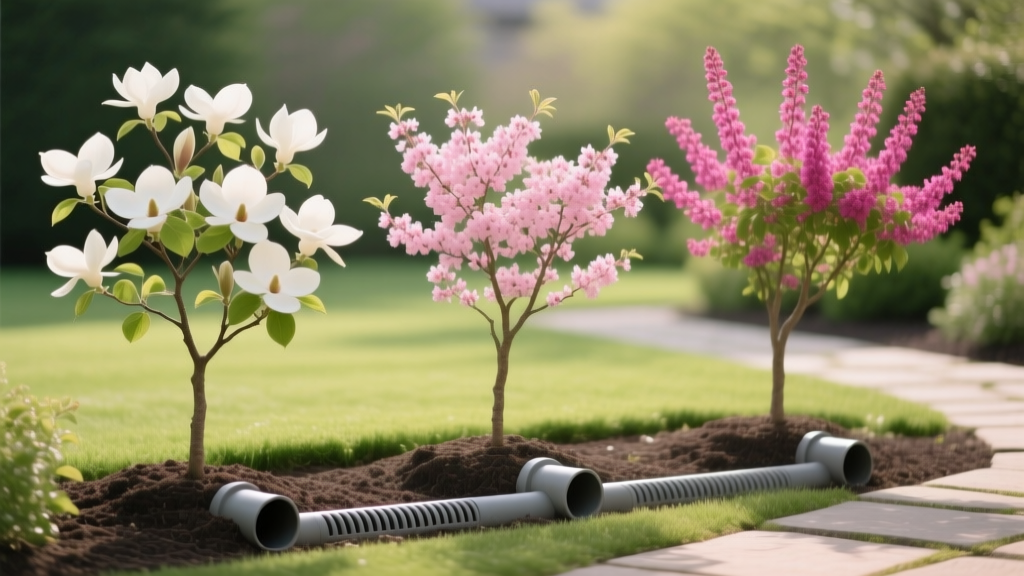
Dogwood vs Redbud vs Crape Myrtle: 2026 Drainage Pipe Guide
Mike RodriguezPublished
Choosing the Right Flowering Tree for Poorly Drained Yards in 2026
Selecting the perfect flowering ornamental tree is a cornerstone of landscape design, but the hidden enemy of vibrant blooms is poor soil drainage. As we navigate the 2026 planting season, extreme weather fluctuations and heavy spring rains have made waterlogged soil a primary concern for homeowners. Three of the most popular ornamental trees—the Flowering Dogwood, Eastern Redbud, and Crape Myrtle—each have distinct root structures and water tolerances. When planted in heavy clay or poorly graded yards, these trees can quickly succumb to root rot, fungal diseases, and hypoxia (oxygen deprivation).
The most effective, long-term solution for protecting your investment is the strategic installation of landscape drainage pipes. By integrating subsurface drainage systems like French drains and corrugated slotted pipes into your tree beds, you can create the ideal well-drained environment these species demand. This comprehensive guide compares the drainage needs of Dogwoods, Redbuds, and Crape Myrtles, and provides a step-by-step framework for installing landscape drainage pipes to ensure your trees thrive in 2026 and beyond.
Understanding the Water Tolerance of Ornamental Trees
Before digging trenches for drainage pipes, it is crucial to understand how each tree species interacts with soil moisture. Not all ornamental trees react to standing water in the same way.
Flowering Dogwood (Cornus florida)
Dogwoods are understory trees with shallow, fibrous root systems that spread horizontally. According to the Clemson University Cooperative Extension, dogwoods require moist, well-drained soil and are highly susceptible to root rot and canker diseases if left in standing water. Because their roots stay in the top 12 to 18 inches of soil, they are the first to feel the effects of surface water pooling and shallow water tables. For Dogwoods, a shallow, broad landscape drainage pipe network is essential to pull excess moisture away from the critical root zone.
Eastern Redbud (Cercis canadensis)
Redbuds develop a deeper taproot when young, eventually forming a heart-shaped root system. The Clemson University Redbud factsheet notes their preference for deep, moist, well-drained soils. While they are slightly more adaptable to transient wet conditions than Dogwoods, prolonged waterlogging will still lead to verticillium wilt and root asphyxiation. Redbuds benefit from deep-trench drainage pipes that intercept subsurface water before it rises into the primary root mass.
Crape Myrtle (Lagerstroemia indica)
Crape Myrtles are famously drought-tolerant once established, but they despise 'wet feet.' The Clemson HGIC Crape Myrtle guide emphasizes that while these trees thrive in heat, poor drainage leads to severe fungal issues, including powdery mildew exacerbation and root decay. Crape Myrtles require aggressive drainage solutions in low-lying areas, often necessitating larger diameter PVC or corrugated pipes to rapidly evacuate heavy storm runoff.
The Percolation Test: Do You Need a Drainage Pipe?
Before purchasing materials for your 2026 landscape project, perform a simple percolation test to determine if a drainage pipe is actually necessary. Dig a hole 12 inches deep and 12 inches wide in your proposed tree bed. Fill it with water and let it drain completely to saturate the soil. Then, fill it a second time and measure how long it takes for the water to drop one inch. If the water level drops less than one inch per hour, you have heavy clay or compacted soil, and a landscape drainage pipe system is mandatory for the survival of Dogwoods, Redbuds, and Crape Myrtles.
Types of Landscape Drainage Pipes for Tree Beds
Modern landscaping offers several pipe options, each suited to different soil profiles and tree species.
- Corrugated Slotted Pipe (Flexible): Typically available in 4-inch and 6-inch diameters, this flexible pipe features slots that allow water to seep in from the surrounding soil. It is ideal for creating sweeping French drains around the wide, shallow root zones of Flowering Dogwoods. In 2026, high-density polyethylene (HDPE) corrugated pipes with built-in geotextile wraps are the industry standard, preventing soil infiltration and clogging.
- PVC Schedule 40 (Rigid): Rigid PVC is best for main trunk lines that carry water away from the tree bed to a storm drain or dry well. It is highly durable and resists crushing under heavy soil loads or foot traffic, making it ideal for Crape Myrtle beds located near walkways or patios.
- Perforated Pipe with Gravel Envelope: This involves wrapping a perforated pipe in washed drainage gravel and landscape fabric. This classic French drain method is highly effective for Redbuds, as it creates a massive subsurface reservoir that captures rising water tables before they reach the taproot.
Step-by-Step Installation: Protecting Your Trees
Installing drainage pipes around existing or newly planted ornamental trees requires precision to avoid severing critical roots. Follow these 2026 best practices for installation:
1. Map the Critical Root Zone (CRZ)
The CRZ is generally defined as a circle with a radius of one foot for every inch of trunk diameter. Never trench for drainage pipes inside the inner 50% of the CRZ. Keep your pipe trenches in the outer drip line and beyond to avoid structural root damage.
2. Trenching and Slope
Dig a trench 12 to 18 inches deep, ensuring a consistent downward slope of 1/8 inch per foot (a 1% grade). This slope is non-negotiable; without it, water will pool inside the pipe and stagnate. Use a laser level for accuracy.
3. Bedding and Pipe Placement
Lay down a 2-inch base of washed 57-stone gravel. Place your 4-inch NDS corrugated slotted pipe with the slots facing down. This counter-intuitive placement prevents topsoil from washing directly into the slots, relying instead on water rising through the gravel bed to enter the pipe.
4. Wrapping and Backfilling
Cover the pipe with more gravel until it is buried by 4 inches. Fold a high-quality, non-woven geotextile fabric over the top of the gravel to create a 'burrito' wrap. This prevents fine clay particles from migrating into the gravel and clogging the system. Backfill the remaining trench with native soil and topsoil.
Comparison Chart: Tree Species and Drainage Requirements
| Tree Species | Root Depth Profile | Waterlogging Tolerance | Recommended Pipe System | Estimated 2026 Installation Cost (per linear ft) |
|---|---|---|---|---|
| Flowering Dogwood | Shallow (Top 18 inches) | Very Low | 4-inch Corrugated Slotted w/ Fabric Wrap | $25 - $35 |
| Eastern Redbud | Medium to Deep Taproot | Low to Moderate | 6-inch Perforated PVC in Gravel Envelope | $30 - $45 |
| Crape Myrtle | Medium, Spreading | Low (Prone to fungus) | 4-inch Schedule 40 PVC Trunk Line | $35 - $50 |
Integrating 2026 Smart Moisture Tech
The landscape industry in 2026 has embraced smart technology to monitor subsurface conditions. When installing your drainage pipes, consider burying wireless soil moisture sensors (such as the latest models from Rachio or Netafim) adjacent to the pipe trench. These sensors connect to your smartphone and alert you when the soil moisture capacity reaches 90%, allowing you to verify that your drainage pipe is actively evacuating water during heavy spring storms. This data-driven approach takes the guesswork out of tree care and prevents the overwatering that often mimics poor drainage symptoms.
Mulching and Surface Grading
Even the best landscape drainage pipe will fail if surface water is directed straight into the tree trunk. Always grade the soil surface so it slopes away from the root flare at a 5% grade. When applying mulch, use the 3-3-3 rule: 3 inches deep, in a 3-foot radius, keeping it 3 inches away from the trunk. Never let mulch touch the bark of a Dogwood or Redbud, as this traps moisture and invites crown rot, negating the benefits of your subsurface drainage system.
Final Thoughts
When deciding between a Dogwood, Redbud, or Crape Myrtle, your soil's drainage capacity should dictate your final choice. If you have heavy clay and cannot install a drainage pipe, the Redbud is your safest bet due to its slightly higher adaptability. However, if you are willing to invest in a properly sloped, geotextile-wrapped landscape drainage pipe system, you can successfully grow all three species in almost any yard. By combining the timeless beauty of these flowering ornamentals with modern 2026 drainage engineering, you guarantee a landscape that remains healthy, vibrant, and structurally sound for decades to come.