Tree Care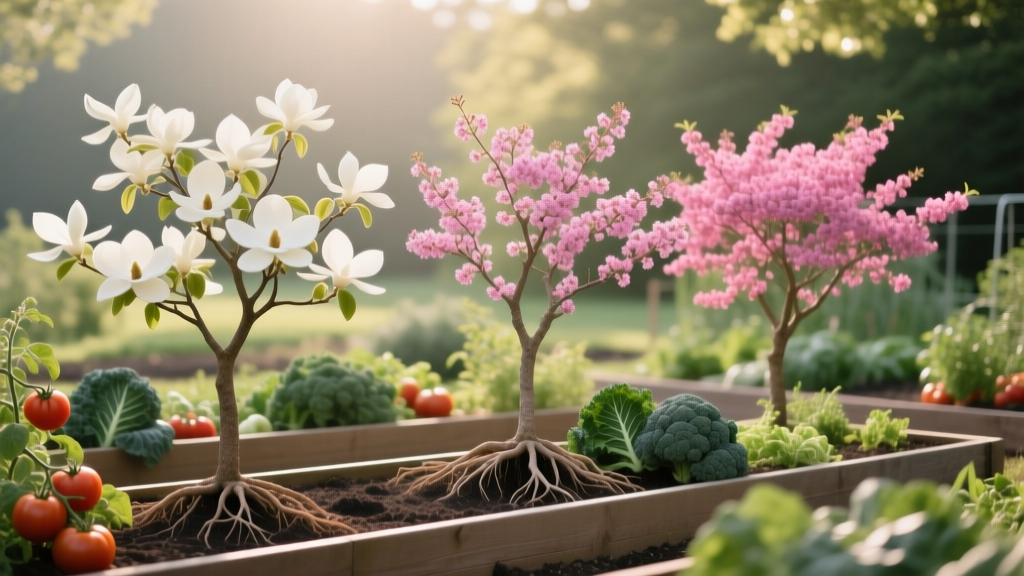
Dogwood vs Redbud vs Crape Myrtle: Raised Beds 2026
Mike RodriguezPublished
The 2026 Foodscaping Trend: Merging Ornamentals and Edibles
Welcome to the 2026 era of 'foodscaping,' where the strict boundaries between ornamental landscaping and raised bed vegetable gardening have beautifully dissolved. Modern homesteaders and urban gardeners are no longer content with hiding their vegetable patches in the back corner of the yard. Instead, the latest garden design trends integrate flowering ornamental trees directly into and around raised bed layouts to create microclimates, attract vital pollinators, and maximize aesthetic appeal. But when you are dealing with the contained, nutrient-rich, and frequently watered environment of a raised vegetable bed, choosing the right tree canopy is critical. You must consider root competition, shade density, and seasonal debris.
In this comprehensive guide, we are evaluating three of the most popular flowering ornamental trees in North America—Flowering Dogwood, Eastern Redbud, and Crape Myrtle—specifically through the lens of raised bed vegetable gardening. Which tree will boost your crop yields, and which will invade your soil and block your sunlight? Let us dig into the data.
Dogwood vs. Redbud vs. Crape Myrtle: Quick Comparison Chart
Before we analyze the specific interactions between these trees and your vegetable crops, here is a side-by-side comparison of their core traits as they relate to raised bed proximity.
| Tree Species | Mature Height | Root System Type | Bloom Season | Shade Density | Best Raised Bed Veggie Companions |
|---|---|---|---|---|---|
| Eastern Redbud | 20-30 ft | Deep Taproot | Early Spring | Light / Open | Peas, Radishes, Spring Brassicas |
| Flowering Dogwood | 15-25 ft | Shallow / Fibrous | Mid-Spring | Dappled / Moderate | Lettuce, Spinach, Swiss Chard, Cilantro |
| Crape Myrtle | 15-30 ft | Lateral / Fibrous | Mid-to-Late Summer | Dense Canopy | Tomatoes, Peppers, Eggplant (if spaced North) |
Eastern Redbud: The Pollinator Powerhouse
The Eastern Redbud (Cercis canadensis) is arguably the most raised-bed-friendly ornamental tree for early-season vegetable gardeners. According to the NC State Extension Plant Database, Redbuds are celebrated for their vibrant, magenta-pink early spring blooms. From a vegetable gardening perspective, this timing is everything.
Pollinator Timing and Edible Flowers
When your early spring crops—like fava beans, early peas, and spring brassicas—are ready for pollination, native bees and early-season foragers are just emerging from winter dormancy. The Redbud provides a massive, critical nectar source right when your garden needs pollinators the most. Furthermore, Redbud flowers are entirely edible. In 2026, farm-to-table gardeners are increasingly tossing these slightly tart, citrusy blossoms directly into spring salads harvested from the raised beds below.
Root Structure and Raised Bed Safety
Unlike many ornamental trees, the Redbud develops a deep taproot system rather than aggressive, shallow lateral roots. This means it is far less likely to invade the loose, nutrient-rich soil of your adjacent raised beds. As long as you plant the tree at least 6 to 8 feet away from the edge of your composite or cedar raised beds, root competition for water and nutrients will be minimal.
Flowering Dogwood: The Dappled Shade Specialist
The Flowering Dogwood (Cornus florida) is a classic understory tree, meaning it naturally thrives in the dappled shade of larger forest canopies. In the context of a raised bed vegetable garden, this shade-casting ability is a double-edged sword that requires strategic placement.
Extending the Cool-Season Harvest
As summers grow hotter and more unpredictable, providing afternoon shade for cool-weather crops has become a staple of 2026 climate-resilient gardening. Planting a Dogwood on the west or southwest side of your raised beds will cast a gentle, dappled shade during the harshest afternoon hours. This microclimate is perfect for extending the harvest window of bolt-prone greens like spinach, arugula, lettuce, and cilantro well into the early summer months. For disease resistance in modern landscapes, experts recommend planting Kousa Dogwood (Cornus kousa) or hybrids like 'Stellar Pink', which offer high resistance to dogwood anthracnose and powdery mildew, as noted by the NC State Extension.
The Root Invasion Risk
Dogwoods possess shallow, fibrous root systems that aggressively seek out moisture and nutrients. If planted too close to a raised bed, the Dogwood's roots will easily penetrate the bed's soil, competing directly with your shallow-rooted vegetables like carrots and beets. To mitigate this in 2026, it is highly recommended to install a 24-inch deep HDPE (high-density polyethylene) root barrier between the Dogwood and your raised bed infrastructure.
Crape Myrtle: The Heat-Tolerant Summer Anchor
The Crape Myrtle (Lagerstroemia indica) is the undisputed champion of summer color, blooming prolifically from July through September when most spring-flowering trees have long since faded. However, integrating this tree near raised beds requires careful spatial planning.
Summer Pollinators and Sunlight Management
During the peak of summer, your heat-loving crops—tomatoes, peppers, eggplants, and cucumbers—are in full production and require maximum sunlight (8+ hours of direct sun daily). A mature Crape Myrtle casts a dense, heavy shade. If placed on the south or east side of your raised beds, it will stunt the growth of your summer vegetables. Always plant Crape Myrtles on the north side of your raised bed layout to ensure they do not block the sun. Their late-summer blooms are fantastic for attracting butterflies and late-season pollinators, which benefits your fall squash and pumpkin crops.
The Aphid and Honeydew Dilemma
One major drawback of placing a Crape Myrtle near edibles is its susceptibility to Crape Myrtle Bark Scale and aphids. These pests excrete 'honeydew,' a sticky substance that can drip down onto the vegetable crops below, promoting the growth of black sooty mold on your edible leaves and fruits. If you choose a Crape Myrtle as your raised bed companion, select modern, disease-resistant cultivars like 'Natchez' or 'Tuscarora', and avoid planting leafy greens directly beneath the drip line. The NC State Extension provides excellent regional guidance on managing these specific cultivars for optimal health without heavy chemical interventions.
Spacing, Root Barriers, and Raised Bed Protection
When integrating any of these three trees into a raised bed vegetable garden, physical spacing and root management are non-negotiable. Raised beds are essentially giant, irresistible targets for tree roots because they offer loose soil, consistent moisture, and high organic matter.
- Minimum Spacing: Keep the trunk of any ornamental tree at least 8 to 10 feet away from the outer walls of your raised beds. This accounts for trunk flare and immediate surface roots.
- Root Barriers: In 2026, professional landscapers routinely use heavy-duty, 24-inch to 36-inch deep HDPE root barriers when planting trees near edible infrastructure. Dig a narrow trench between the tree and the raised bed, insert the barrier, and backfill. This forces the tree roots to grow deeper rather than laterally into your vegetable soil.
- Hardscape Considerations: If you are using stone or brick raised beds, tree roots can easily heave and crack the mortar over time. A root barrier protects both your harvest and your masonry investment.
Watering and Soil Management for Mixed Zones
Trees and vegetables have vastly different watering requirements. Vegetables in raised beds generally require frequent, shallow watering to keep the top 6 inches of soil consistently moist. Trees, conversely, thrive on deep, infrequent watering that encourages roots to anchor deeply into the subsoil.
To manage this, you must run a dual-zone drip irrigation system. Zone 1 should be dedicated to your raised beds, utilizing high-flow drip tape or button emitters that run daily or every other day during the summer. Zone 2 should feature deep-soil root feeders or bubblers placed at the tree's drip line, programmed to run for longer durations but only once a week. Never rely on the same irrigation valve for both your tomatoes and your Dogwood, or you will inevitably end up with either waterlogged tree roots or drought-stressed vegetables.
Mulching: Keeping the Zones Separate
Mulch is vital for both trees and raised beds, but the materials should never cross over. For the base of your Dogwood, Redbud, or Crape Myrtle, use a 3-inch layer of coarse arborist wood chips. This mimics the forest floor, retains deep moisture, and suppresses weeds without tying up nitrogen in the topsoil. However, do not let these wood chips spill into your raised beds. For your vegetable beds, stick to organic, fast-decomposing mulches like straw, shredded leaves, or grass clippings, which will break down and add vital organic matter to your vegetable soil by the end of the 2026 growing season.
Final Verdict for Your 2026 Garden Layout
Choosing between a Dogwood, Redbud, and Crape Myrtle ultimately depends on what you are growing in your raised beds and where your sun exposure lies. If you are focused on early spring harvests and want to minimize root competition, the Eastern Redbud is your safest and most beneficial choice. If you struggle with hot summers and need to protect cool-weather greens from bolting, the dappled shade of a Flowering Dogwood is unmatched. Finally, if you have a sprawling layout where you can plant on the north side of your beds and want late-season color for your fall crops, the Crape Myrtle is a stunning anchor. By respecting root barriers, managing shade angles, and tailoring your irrigation, you can successfully merge the beauty of ornamental trees with the bounty of a raised bed vegetable garden.