Tree Care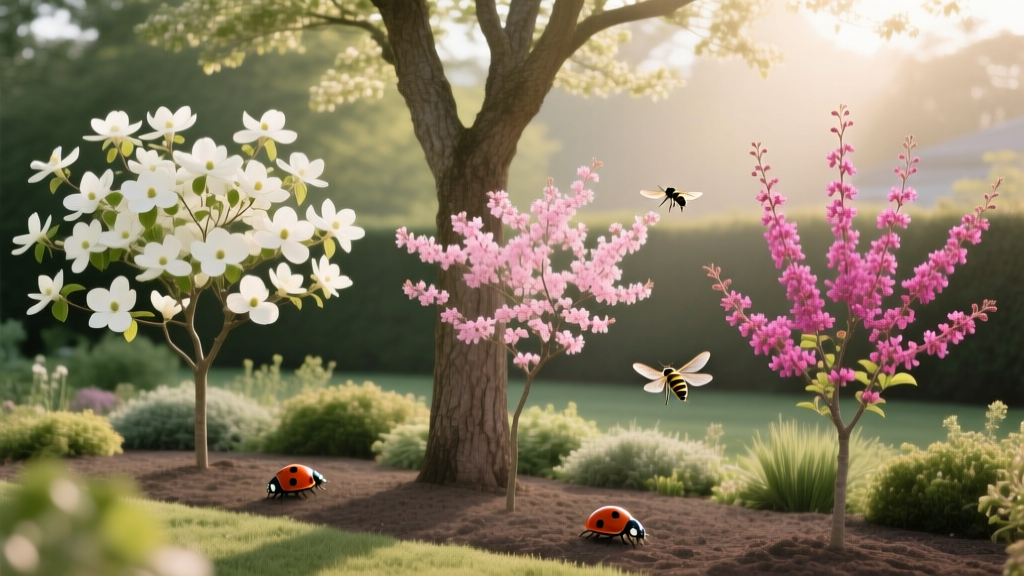
Dogwood vs Redbud vs Crape Myrtle: 2026 Beneficial Insect Guide
Sarah ChenPublished
The 2026 Shift Toward Bio-Control in Ornamental Landscaping
As we navigate the 2026 landscaping season, the widespread phase-out of neonicotinoid pesticides in residential zones has made biological control not just an eco-friendly preference, but a practical necessity for tree health. Homeowners and arborists are increasingly evaluating ornamental trees based on their ecological utility—specifically, their ability to attract beneficial insects that provide natural pest management. Three of the most popular flowering ornamental trees in North America are the Flowering Dogwood (Cornus florida and Cornus kousa), the Eastern Redbud (Cercis canadensis), and the Crape Myrtle (Lagerstroemia indica). While all three offer stunning seasonal displays, their roles in supporting predatory insects, pollinators, and natural bio-control networks vary dramatically. This comprehensive guide compares these three landscape staples through the lens of beneficial insect attraction and biological pest management.
Flowering Dogwood (Cornus spp.): The Spring Pollinator Magnet
Beneficial Insect Attraction
The Flowering Dogwood is a cornerstone of the early-spring landscape. Blooming between April and May, depending on your hardiness zone, dogwoods provide a critical, early-season nectar and pollen source for native solitary bees, particularly Andrena mining bees and mason bees. These native pollinators are essential bio-control agents in their own right, as their foraging habits support the broader garden ecosystem. According to The Xerces Society for Invertebrate Conservation, preserving early-blooming native trees like the dogwood is vital for sustaining overwintering beneficial insect populations as they emerge in the spring.
Pest Vulnerabilities & Bio-Control Strategies
Despite their beauty, dogwoods are notoriously susceptible to the Dogwood Borer (Synanthedon scitula), a clearwing moth whose larvae tunnel into the cambium layer, weakening the tree and inviting secondary fungal infections. As detailed in Purdue University Extension's Dogwood Borer Guide, maintaining tree vigor through proper mulching and avoiding mechanical trunk damage are your first lines of defense.
When bio-control is required, chemical trunk sprays are no longer the 2026 standard. Instead, arborists recommend the application of beneficial nematodes, specifically Steinernema carpocapsae. These microscopic worms actively seek out and destroy borer larvae inside the tree and in the surrounding soil. 2026 Application Guide: Purchase commercial-grade nematodes (approximately $42 for 10 million nematodes). Apply as a trunk drench and soil soak in early May when soil temperatures consistently reach 60°F. Ensure the soil is moist before and after application to prevent the nematodes from desiccating in UV light.
Eastern Redbud (Cercis canadensis): The Early-Season Lifeline
Beneficial Insect Attraction
The Eastern Redbud erupts in vibrant magenta blossoms before its leaves even emerge, typically in late March to early April. This timing makes it an absolute lifeline for early-emerging predatory insects and pollinators. Redbuds are highly attractive to bumblebees (Bombus spp.) and leafcutter bees, which rely on the abundant pollen to establish their first broods of the year. Furthermore, the dense, low-branching canopy of a mature redbud provides excellent shelter for overwintering ladybugs and lacewings, creating a built-in reservoir of predatory insects ready to tackle spring aphid outbreaks in your surrounding garden beds.
Pest Vulnerabilities & Bio-Control Strategies
Redbuds are generally hardy but can fall victim to scale insects (such as the Greedy Scale) and leafhoppers, especially when subjected to drought stress. In 2026, the most effective bio-control strategy for managing scale on redbuds is the introduction of Green Lacewings (Chrysoperla rufilabris). Lacewing larvae, often referred to as "aphid lions," are voracious predators that will aggressively consume scale crawlers, leafhopper nymphs, and soft-bodied insects.
2026 Application Guide: Order lacewing eggs or larvae from a reputable biological supplier (costing roughly $28 for 1,000 eggs). To ensure the larvae remain on the tree, mix the eggs with a small amount of water and a drop of natural molasses, then apply directly to the redbud’s branches using a soft-bristle brush or a specialized bio-release sprayer. Time the release for late May, coinciding with the hatching of scale crawlers.
Crape Myrtle (Lagerstroemia indica): The Summer Bio-Control Powerhouse
Beneficial Insect Attraction
While dogwoods and redbuds dominate the spring, the Crape Myrtle takes over in the heat of summer. Blooming from July through September, crape myrtles provide a massive, reliable nectar source during a time of year when many native plants have finished flowering. This late-season bounty attracts a diverse array of beneficial insects, including hoverflies (Syrphidae), parasitic wasps (Braconidae), and native lady beetles. These predatory insects use the crape myrtle as a "banker plant," establishing large populations that naturally patrol the surrounding landscape for caterpillars and soft-bodied pests.
Pest Vulnerabilities & Bio-Control Strategies
The primary threats to crape myrtles are the Crape Myrtle Aphid (Tinocallis kahawaluokalani) and the increasingly problematic Crape Myrtle Bark Scale (CMBS). The USDA APHIS Plant Pests and Diseases Database notes that CMBS has become a severe issue across the southern and mid-Atlantic United States, causing heavy honeydew production and black sooty mold.
To combat CMBS and aphids without harming the summer pollinator traffic, 2026 bio-control protocols rely heavily on the Mealybug Destroyer (Cryptolaemus montrouzieri) and the specialized lady beetle Chilocorus stigma. These predators specifically target scale insects and mealybugs. 2026 Application Guide: Release adult Mealybug Destroyers at dusk to prevent immediate bird predation. A rate of 50 to 100 adults per mature tree is recommended when scale populations are first detected in June. Supplement this with a dormant application of horticultural oil (neem or mineral oil) in late February to smother overwintering scale nymphs before the beneficial insects become active.
2026 Ecological Comparison Chart
| Feature | Flowering Dogwood | Eastern Redbud | Crape Myrtle |
|---|---|---|---|
| Primary Bloom Time | Mid-Spring (April - May) | Early Spring (March - April) | Summer (July - September) |
| Key Beneficial Insects Attracted | Mining bees, Mason bees, Spring Parasitoids | Bumblebees, Leafcutter bees, Overwintering Ladybugs | Hoverflies, Parasitic Wasps, Native Lady Beetles |
| Most Common Pests | Dogwood Borer, Powdery Mildew | Scale Insects, Leafhoppers | Crape Myrtle Bark Scale, Aphids |
| Primary Bio-Control Agent | Steinernema carpocapsae (Nematodes) | Chrysoperla rufilabris (Green Lacewings) | Cryptolaemus montrouzieri (Mealybug Destroyer) |
| 2026 Est. Bio-Control Cost (Per Tree) | $42 (Nematode drench) | $28 (Lacewing eggs) | $35 (Adult beetle release) |
| Maintenance Level | High (Requires specific soil pH and moisture) | Medium (Drought tolerant once established) | Low (Highly adaptable, requires pruning) |
Implementing a Bio-First Landscape Strategy
Choosing the right tree is only the first step. To maximize the bio-control potential of your dogwood, redbud, or crape myrtle in 2026, you must cultivate an environment that allows beneficial insects to thrive year-round. Consider the following actionable strategies:
- Understory Companion Planting: Plant native shade-tolerant groundcovers like Wild Ginger (Asarum canadense) beneath dogwoods and redbuds. This provides undisturbed overwintering habitat for ground beetles and predatory nematodes, which protect the tree's root zone from grubs and larvae.
- Eliminate Broad-Spectrum Insecticides: Even organic broad-spectrum sprays like pyrethrin or spinosad will decimate the parasitic wasps and hoverflies that protect your crape myrtles. Rely strictly on targeted biological agents and horticultural oils applied during dormancy.
- Leave the Leaves (Selectively): Allow leaf litter to accumulate in designated beds beneath your ornamental trees. Many native lacewings and ladybugs overwinter in this debris. Removing it in early spring destroys your free, naturally occurring pest-control workforce before they can wake up and patrol your canopy.
- Install Insect Hotels: Mount native bee houses on the sunnier, southern-facing trunks of your redbuds and crape myrtles to encourage solitary pollinators to nest directly within your tree's micro-habitat.
Conclusion
The debate between planting a Dogwood, Redbud, or Crape Myrtle ultimately comes down to your landscape's specific ecological needs and your local climate. If your goal is to support early-spring native bees and you are willing to manage soil moisture carefully, the Dogwood is unparalleled. If you need a hardy, early-blooming lifeline for emerging bumblebees, the Redbud is your best choice. However, if you are looking for a summer bio-control powerhouse that sustains predatory wasps and hoverflies during the hottest months, the Crape Myrtle stands alone. By integrating these trees with modern 2026 bio-control agents like beneficial nematodes and lacewings, you can maintain a vibrant, pest-resistant landscape that works in harmony with nature.
