Tree Care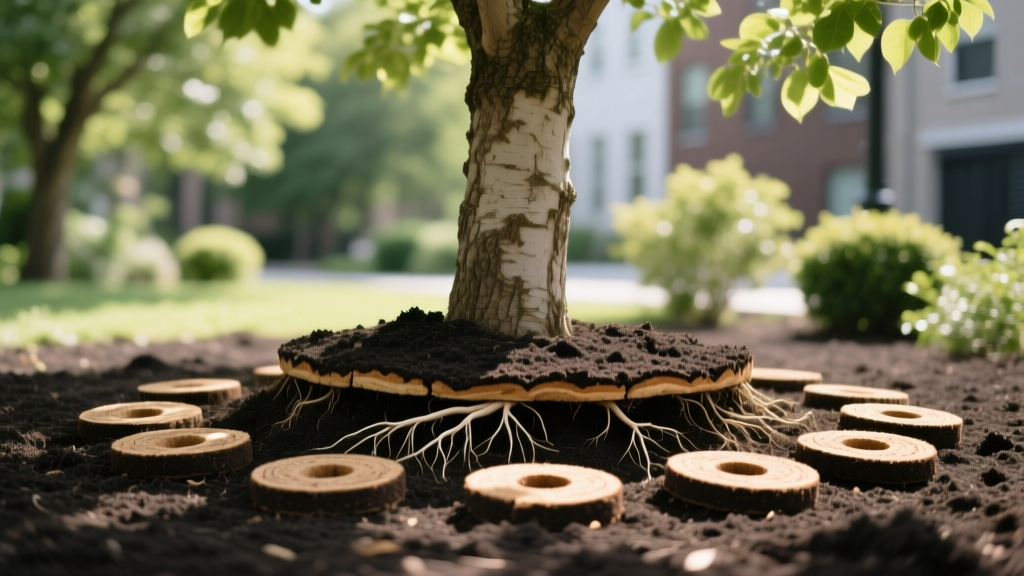
Tree Web Worm Control: The 2026 Donut Mulch Guide
Emily WatsonPublished
The Hidden Link Between Mulching and Tree Web Worms
When homeowners think of fall webworms (Hyphantria cunea), they usually picture the unsightly, silken tents engulfing the outer branches of pecan, walnut, and persimmon trees. However, as arboricultural science advances in 2026, experts are increasingly pointing to the base of the tree—specifically, the root zone and mulch management—as a critical, often overlooked component of comprehensive pest defense. While webworms are primarily foliar feeders, a tree's ability to survive and recover from severe defoliation is entirely dependent on root vigor. Improper mulching techniques severely compromise this vigor, turning a manageable pest nuisance into a fatal tree health crisis.
The most common and destructive landscaping error is 'volcano mulching,' where mulch is piled high against the trunk. This practice traps moisture against the bark, leading to phytophthora root rot and inviting secondary borers. A tree stressed by suffocated roots and bark decay lacks the carbohydrate reserves needed to push out a second flush of leaves after a webworm invasion. Furthermore, thick, trunk-hugging mulch piles create a humid, sheltered microclimate where overwintering pest pupae and secondary fungal pathogens thrive. To combat this, the 2026 industry standard for tree health and pest resilience is the 'Donut Mulching Method' governed strictly by the 3-inch depth rule.
The 2026 Standard: The Donut Shape and 3-Inch Depth Rule
Proper mulching mimics the natural forest floor, regulating soil temperature, retaining moisture, and suppressing competing weeds without harming the tree's anatomy. According to the Arbor Day Foundation, correct mulching can improve tree growth rates by up to 79% compared to unmulched trees in urban environments. However, the geometry and volume of the mulch are non-negotiable.
The Donut Shape
The 'donut' shape refers to keeping the mulch completely away from the tree's trunk and root flare. The root flare is the area where the trunk expands and transitions into the structural roots. This tissue requires oxygen and must remain dry to prevent rot. By creating a 6-inch to 8-inch 'hole' in the center of your mulch ring (the donut hole), you expose the root flare to the air. The mulch should then extend outward toward the tree's dripline, creating a protective ring that resembles a flat donut rather than a volcano.
The 3-Inch Depth Rule
More is not better when it comes to mulch. The 3-inch depth rule dictates that the mulch layer should never exceed three inches in depth. A layer of 2 to 3 inches is sufficient to block weed growth and insulate the soil. Exceeding this depth creates anaerobic (oxygen-deprived) soil conditions, which kills fine feeder roots. When these feeder roots die, the tree experiences drought stress even if the soil is moist, making it highly susceptible to defoliators like the fall webworm. As noted by the University of Maryland Extension, excessive mulch depth also encourages the growth of girdling roots, which slowly strangle the tree over time.
Step-by-Step Donut Mulching for Web Worm Prevention
Implementing the donut mulching technique requires precision and proper timing. To maximize your tree's resilience against webworms in the 2026 season, follow these actionable steps:
Step 1: Clear the Debris and Overwintering Pupae
Fall webworms overwinter as pupae in leaf litter and loose debris on the soil surface. Before applying new mulch in early spring, thoroughly rake the area under the tree's canopy. Remove all old, matted leaves, fallen twigs, and existing webworm cocoons. Dispose of this debris in your municipal green waste bin rather than composting it, ensuring you physically remove the next generation of pests from the site.
Step 2: Expose the Root Flare
Use a hand trowel or an air-spade (if dealing with severe volcano mulch buildup) to carefully excavate the base of the trunk. Locate the root flare—the point where the trunk widens at the base. Remove any soil or old mulch covering this area. If you find girdling roots circling the trunk, consult a certified arborist for root pruning.
Step 3: Measure and Apply the 3-Inch Layer
Apply your chosen organic mulch starting 6 to 8 inches away from the trunk. Spread it evenly to a depth of exactly 2 to 3 inches. Use a standard garden rake to level the mulch. Extend the mulch ring as far out as practically possible, ideally to the tree's dripline (the outer edge of the canopy). For a mature tree with a 20-foot canopy spread, this requires approximately 4 to 5 cubic yards of mulch.
Step 4: Create the Donut Hole Edge
Ensure the inner edge of the mulch ring is clean and distinct. The 6-inch gap between the trunk and the mulch should be bare soil or covered with a very thin layer of loose compost to allow maximum gas exchange for the bark and root flare.
Mulch Materials: Which Deters Pests Best?
Not all mulches are created equal. In 2026, the shift toward sustainable, naturally pest-resistant mulches has become a cornerstone of Integrated Pest Management (IPM). Below is a comparison of common mulch types regarding their efficacy in tree care and pest deterrence.
| Mulch Type | Pest Deterrence | Moisture Retention | 2026 Avg. Cost (per cu. yd.) | Best Use Case |
|---|---|---|---|---|
| Eastern Red Cedar | High (Natural oils repel insects) | Moderate | $45 - $55 | High pest pressure zones |
| Shredded Hardwood | Low (Can harbor fungi if matted) | High | $30 - $40 | General landscaping, low wind |
| Pine Bark Nuggets | Moderate | High | $35 - $45 | Acid-loving trees, sloped beds |
| Arborist Wood Chips | Moderate (Encourages beneficial fungi) | Very High | $15 - $25 (often free) | Large estates, rural tree lines |
'The goal of mulching is to cultivate a thriving soil microbiome. Beneficial mycorrhizal fungi, which flourish under a proper 3-inch layer of arborist wood chips, actually help trees produce defensive tannins that make their leaves less palatable to chewing insects like webworms.' — Dr. Aris Thorne, Urban Forest Pathologist, 2026.
Integrating Mulching with Broader Web Worm Control
While the donut mulching method builds the tree's foundational health and tolerance to damage, it must be paired with active IPM strategies to fully control webworm populations. According to Penn State Extension, fall webworms rarely kill healthy, mature trees outright, but repeated defoliation over consecutive years will severely weaken them. Here is how to integrate your mulching efforts with active pest control:
- Early Detection and Pruning: Monitor your trees in late summer. If you spot small, localized web tents on the tips of branches, simply prune out the affected branch tips and destroy them. This is highly effective when nests are small and prevents the need for chemical interventions.
- Biological Controls (Bt): If nests are too high to prune, apply a spray containing Bacillus thuringiensis var. kurstaki (Bt). Bt is a naturally occurring soil bacterium that specifically targets caterpillars. When the webworms consume the treated leaves, the Bt disrupts their digestive system. Because Bt breaks down quickly in sunlight, it is safe for the beneficial insects and pollinators visiting your mulched garden beds.
- Preserve Natural Predators: A healthy, properly mulched soil ecosystem supports ground-dwelling predators like rove beetles and spiders, which feed on webworm pupae that drop to the soil to overwinter. Avoid using broad-spectrum synthetic insecticides on the soil surface, as these will decimate your natural defense army.
- Avoid Dyed Mulches: In 2026, arborists strongly advise against using artificially dyed red or black mulches. The chemical dyes can alter soil pH and inhibit the microbial activity necessary for robust root growth, indirectly stressing the tree and making it a softer target for defoliators.
Common Mistakes to Avoid in 2026
Even with the best intentions, homeowners frequently make errors that undermine their tree care efforts. Avoid these critical mistakes:
1. Refreshing Without Removing
Adding a fresh layer of mulch every spring without measuring the existing depth is a recipe for disaster. If you already have 2 inches of decomposed mulch from last year, adding another 3 inches creates a 5-inch barrier, violating the 3-inch rule and suffocating the roots. Always rake and measure before adding new material.
2. Using Landscape Fabric Under Trees
Placing impermeable landscape fabric beneath organic mulch in a tree ring blocks water and gas exchange. Over time, the fabric clogs with soil particles, creating a hydrophobic barrier. Tree roots need to breathe and drink; rely on a thick, proper layer of organic mulch to suppress weeds instead of synthetic fabrics.
3. Ignoring the Dripline
Restricting mulch to a tiny 2-foot ring around the trunk provides almost no benefit to the tree. The vast majority of a tree's water-and-nutrient-absorbing feeder roots are located in the top 12 inches of soil, extending well past the dripline. Expand your donut ring as wide as your property allows to maximize root zone protection.
Conclusion
Tree web worm control is not just about spraying caterpillars; it is about cultivating an environment where trees are naturally resilient. By adopting the 2026 standard of the donut mulching method and strictly adhering to the 3-inch depth rule, you protect the vital root flare, prevent anaerobic soil conditions, and empower your trees to withstand and recover from foliar pests. A properly mulched tree is a fortified tree, capable of weathering the seasonal storms and pest pressures of the modern landscape.