Tree Care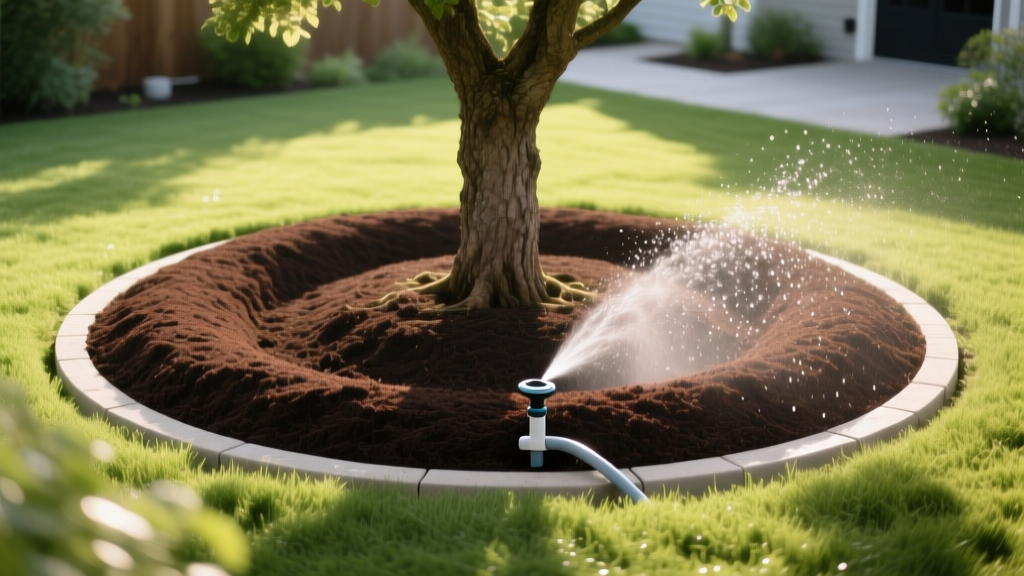
Tree Irrigation 2026: Donut Mulch & Sprinkler Guide
Emily WatsonPublished
The Intersection of Tree Mulching and Irrigation in 2026
As we navigate the 2026 landscaping season, water conservation and smart irrigation technology are at the forefront of lawn and garden care. Modern smart controllers and Wi-Fi-enabled sprinkler systems can precisely calculate evapotranspiration rates, but even the most advanced irrigation hardware will fail if the physical landscape architecture is flawed. Nowhere is this more evident than in tree care, where the interaction between sprinkler head placement and mulch application dictates the health of the tree and the efficiency of your water usage.
One of the most critical, yet frequently misunderstood, concepts in arboriculture and irrigation design is the proper mulching technique: specifically, the "donut shape" and the "3-inch depth rule." When paired correctly with modern sprinkler and drip irrigation systems, this technique maximizes soil moisture retention, prevents fungal diseases, and eliminates water runoff. In this comprehensive guide, we will explore how to configure your 2026 irrigation system to work in perfect harmony with the donut mulching method.
What is the Donut Mulching Technique?
Before adjusting your sprinkler zones, it is vital to understand the geometry and dimensions of proper tree mulching. The "donut shape" refers to the practice of keeping mulch completely away from the trunk flare of the tree, creating a bare-soil ring (the "hole" of the donut) that measures 3 to 5 inches in radius around the trunk. The mulch is then spread outward in a wide ring over the root zone.
The "3-inch depth rule" mandates that the organic mulch layer (such as shredded hardwood, pine bark, or wood chips) should never exceed 3 inches in depth. According to Penn State Extension, applying mulch deeper than 3 inches restricts oxygen flow to the shallow feeder roots and creates an anaerobic environment that breeds root rot. Furthermore, piling mulch against the trunk—a practice known as "volcano mulching"—keeps the bark perpetually moist, inviting pests, fungal cankers, and girdling roots.
How Sprinkler Systems Interact with the Mulch Ring
The physical presence of a 3-inch mulch berm drastically alters how water from your sprinkler system reaches the soil. When auditing your irrigation system for the 2026 season, you must account for the following interactions:
- Sprinkler Head Blockage: Standard 2-inch pop-up spray heads are easily obstructed by a 3-inch mulch ring. If the mulch settles or shifts, the water spray is deflected, resulting in dry spots near the tree's critical root zone and excessive water pooling on the mulch surface.
- Overspray and Trunk Wetting: If your sprinkler heads are positioned too close to the tree and aimed inward, they will spray the trunk directly. This violates the core principle of the donut shape, which is designed to keep the root flare dry and exposed to air.
- Infiltration Rates and Runoff: A fresh 3-inch layer of hardwood mulch acts like a sponge. However, if your rotary sprinklers apply water faster than the mulch can absorb and transmit it to the soil below, you will experience surface runoff, wasting water and washing your mulch into the street or storm drains.
Step-by-Step: Configuring Irrigation for the Donut Shape
To achieve optimal tree health and irrigation efficiency, follow these steps to integrate your sprinkler system with the donut mulch rule.
Step 1: Clear the Trunk Zone and Grade the Soil
Remove all existing mulch, grass, and weeds from a 3-foot to 5-foot diameter circle around the tree. Ensure the soil slopes slightly away from the trunk flare to promote natural drainage. This bare zone ensures that no sprinkler overspray will trap moisture against the bark.
Step 2: Apply the 3-Inch Organic Mulch Layer
Spread your chosen organic mulch starting 3 inches away from the trunk, extending outward to the tree's drip line if possible. Use a rake to maintain a strict maximum depth of 3 inches. Do not build a "moat" or berm on the outer edge of the mulch ring, as this will trap sprinkler water and prevent it from percolating evenly through the soil profile.
Step 3: Upgrade and Position Sprinkler Heads
Replace any 2-inch pop-up spray heads located within or immediately adjacent to the mulch ring with 4-inch or 6-inch shrub risers or tall pop-up bodies. This ensures the spray pattern clears the 3-inch mulch canopy. Adjust the nozzles so that the spray pattern overlaps the mulch ring but avoids direct contact with the bare trunk zone.
Step 4: Integrate Drip Irrigation (The 2026 Gold Standard)
For the highest efficiency, bypass overhead sprinklers for trees entirely and utilize drip irrigation. Place inline drip tubing in a spiral pattern within the mulch ring, starting 6 inches from the trunk and extending outward. The 3-inch mulch layer will hide the drip lines, protect them from UV degradation, and keep the soil evenly moist without wetting the trunk.
Comparison Chart: Irrigation Methods for Mulched Trees
Not all irrigation methods perform equally well when paired with the 3-inch donut mulch rule. Below is a comparison of common 2026 irrigation strategies:
| Irrigation Method | Compatibility with Donut Mulch | Water Efficiency | Best Use Case |
|---|---|---|---|
| Subsurface Drip Emitters | Excellent | 95% | Newly planted trees; precise deep-root watering without disturbing mulch. |
| Inline Drip Tubing | Very Good | 90% | Established trees; tubing can be laid directly on soil and covered by the 3-inch mulch layer. |
| Tall Riser Spray Heads | Good | 75% | Mixed landscape beds where trees share a zone with shrubs; requires careful nozzle adjustment. |
| Rotary Nozzles (MP Rotator) | Fair to Good | 80% | Large canopy trees; low application rate prevents mulch runoff but requires longer run times. |
| Standard Pop-up Sprays | Poor | 60% | Not recommended; easily blocked by 3-inch mulch, high wind drift, and high runoff risk. |
Smart Irrigation Controllers and Soil Moisture Sensors
In 2026, relying on a static timer is an outdated practice that leads to overwatered, mulch-suffocated trees. The EPA WaterSense program highly recommends the use of weather-based smart irrigation controllers to reduce outdoor water waste, as noted in their guidelines on efficient landscape irrigation.
When using the donut mulch technique, pair your smart controller with a soil moisture sensor. However, placement is critical. The sensor probe must be inserted through the 3-inch mulch layer directly into the underlying native soil. If the sensor is suspended in the mulch, it will read the rapid drying of the wood chips and trigger the sprinklers unnecessarily, leading to waterlogged soil beneath the surface. By measuring the moisture at the root level (6 to 9 inches deep), your smart controller will only activate the sprinklers or drip valves when the tree genuinely requires hydration.
Cycle and Soak: Managing Infiltration Rates
Because a 3-inch layer of organic mulch slows the initial penetration of water, overhead sprinklers can easily cause runoff on sloped terrain. The University of Minnesota Extension advises deep, infrequent watering to encourage deep root growth, which is essential for tree stability and drought resistance, as detailed in their research on watering new and established trees.
To achieve this without losing water to runoff, utilize the "Cycle and Soak" feature available on all major 2026 smart controllers (such as the Rachio 4 or Hunter Hydrawise Pro). Instead of running a sprinkler zone for 30 continuous minutes, program the controller to run three 10-minute cycles, spaced 45 minutes apart. This allows the mulch to absorb the initial moisture and slowly wick it down into the soil profile before the next cycle begins, ensuring 100% of the water reaches the tree's feeder roots.
Common Irrigation and Mulching Mistakes to Avoid
Even experienced landscapers make errors when combining irrigation hardware with mulch. Avoid these common pitfalls:
- Burying Drip Lines Too Deep: Do not bury drip irrigation lines under more than 3 inches of mulch or soil. Emitters need to be near the surface where the feeder roots and oxygen are concentrated. Deep burial leads to clogged emitters and anaerobic soil conditions.
- Using Inorganic Mulch with Overhead Sprinklers: If you use decorative river rock or gravel instead of organic wood chips, overhead sprinklers will cause severe water splashing and soil erosion. The donut shape and 3-inch rule apply primarily to organic mulches that retain moisture and break down over time.
- Failing to Adjust for Seasonal Growth: As the tree grows, the trunk flare expands. Re-evaluate the "donut hole" clearance every spring to ensure the expanding bark is not engulfed by the mulch ring or subjected to direct sprinkler spray.
Conclusion
Proper tree care in 2026 requires a holistic approach that bridges the gap between horticultural best practices and modern irrigation engineering. By strictly adhering to the donut mulch shape and the 3-inch depth rule, you protect your trees from fatal fungal diseases and root suffocation. When you pair this physical mulching technique with appropriately sized sprinkler heads, targeted drip irrigation, and smart cycle-and-soak scheduling, you create a highly efficient, water-wise landscape that will thrive for decades to come.