Tree Care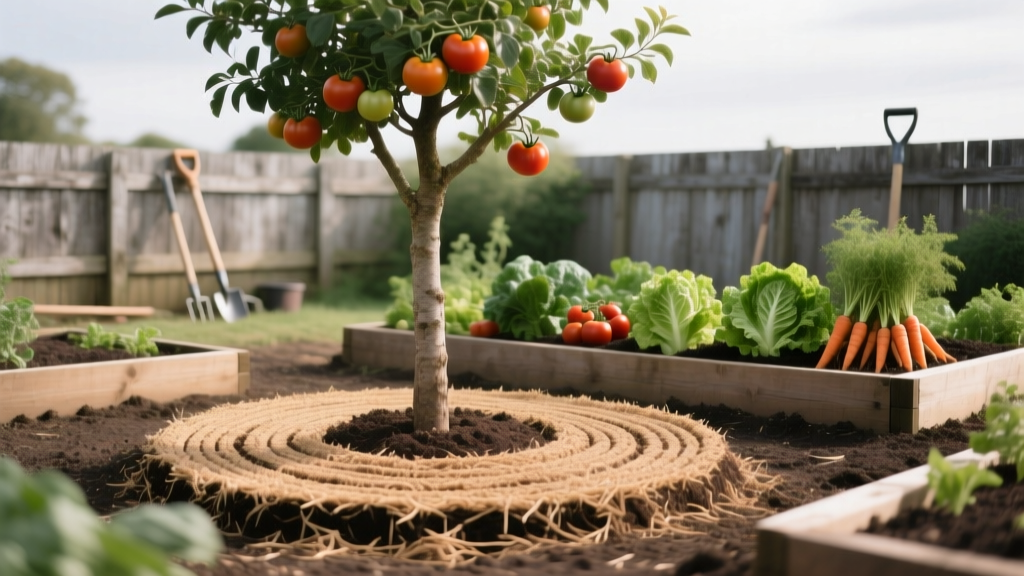
Donut Mulching Trees Near Raised Beds: 2026 3-Inch Rule
David ParkPublished
Integrating Fruit Trees with Raised Bed Vegetable Gardens
As urban homesteading and permaculture design continue to surge in popularity throughout 2026, more gardeners are integrating dwarf fruit trees directly into or immediately adjacent to their raised bed vegetable gardens. Planting a 'Juliet' dwarf apple or an 'Improved Meyer' lemon at the corner of a cedar raised bed maximizes yard space, creates beneficial microclimates for heat-loving vegetables, and establishes a diverse food forest ecosystem. However, this proximity introduces a unique challenge: how do you properly care for the tree's root zone without compromising the health of the tree or the carefully managed soil of your vegetable beds?
The answer lies in a precise tree care technique known as the 'donut shape' mulching method, governed strictly by the 3-inch depth rule. When trees are planted near raised beds, they are often subjected to the frequent watering and rich compost applications intended for vegetables. If mulch is applied incorrectly, this excess moisture and organic matter can lead to fatal trunk rot, girdling roots, and pest infestations. By mastering the donut mulching technique, you can protect your fruit trees while maintaining the pristine growing conditions of your 2026 vegetable harvest.
The Danger of Volcano Mulching in Food Forests
Before diving into the correct technique, it is crucial to understand what to avoid. 'Volcano mulching'—the practice of piling mulch high against the trunk of a tree in a conical shape—is a pervasive landscaping error. According to the University of Minnesota Extension, volcano mulching traps moisture against the bark, leading to cambium decay and inviting fungal pathogens.
In a raised bed vegetable garden setting, the risks of volcano mulching are amplified. Raised beds are designed for optimal drainage and are frequently irrigated. If a tree's trunk is buried under a mound of mulch right next to a raised bed, the runoff from the vegetable soil will constantly soak the mulch volcano. This creates a perpetually wet, anaerobic environment at the tree's root flare. Furthermore, deep mulch piles encourage the growth of secondary roots that wrap around the trunk (girdling roots), eventually strangling the tree. To protect your integrated fruit trees, you must abandon the volcano and embrace the donut.
The Anatomy of the Mulch Donut
The donut shape is exactly what it sounds like: a ring of mulch that surrounds the tree's root zone while leaving the trunk and root flare completely exposed and bare. The 'hole' of the donut should extend at least 6 to 8 inches away from the base of the trunk in all directions. This bare soil buffer allows the trunk to dry out, prevents bark decay, and deters rodents like voles from nesting against the trunk and chewing the cambium layer during the winter months.
When working near raised beds, the donut shape also serves as a physical barrier. It prevents the nutrient-dense, heavily composted soil of the vegetable bed from spilling over and burying the tree's root flare. The Arbor Day Foundation consistently emphasizes that the root flare—the area where the trunk expands at the base and meets the roots—must always be visible and exposed to the air. The donut method guarantees this visibility, even in the dynamic, heavily amended environment of a permaculture vegetable garden.
The 3-Inch Depth Rule Explained
The second critical component of this technique is the 3-inch depth rule. While it might be tempting to pile mulch a foot deep to suppress weeds and retain moisture, doing so suffocates the tree's fine feeder roots. Tree roots require oxygen to survive and process nutrients. A layer of mulch thicker than 4 inches can create an impermeable barrier to gas exchange, effectively drowning the root system, especially when combined with the heavy watering schedules typical of raised bed vegetable gardening.
A uniform depth of 3 inches is the 2026 industry standard for optimal moisture retention, temperature moderation, and weed suppression without sacrificing soil aeration. The mulch should be 3 inches deep at the outer edge of the donut and taper down to 0 inches as it approaches the 6-inch bare buffer around the trunk. This gentle slope encourages water to flow away from the trunk and into the active root zone, rather than pooling against the bark.
Step-by-Step: Creating the Perfect Mulch Donut
To properly mulch a fruit tree situated next to your raised vegetable beds, follow these actionable steps:
- Step 1: Clear the Base. Remove any existing mulch, soil, or compost that is touching the tree trunk. Use a hand trowel or an air spade to carefully expose the root flare. Ensure the first 6 to 8 inches of the trunk base are completely bare.
- Step 2: Define the Outer Edge. Measure out 2 to 3 feet from the trunk (or to the drip line if the tree is young and small). If the tree is planted directly against the timber or stone wall of a raised bed, the donut will naturally form a semi-circle or crescent shape against the bed's border.
- Step 3: Apply the Mulch. Spread your chosen organic mulch evenly around the tree, starting from the outer edge and working inward. Maintain a strict 3-inch depth.
- Step 4: Taper and Shape. As you approach the 6-inch bare buffer zone around the trunk, taper the mulch down to zero. The final cross-section should look like a flat donut with a slightly sloped inner edge.
- Step 5: Install a Spillover Barrier. If the tree is at the base of a raised bed, consider installing a small physical edging (like a half-buried river stone or a thin metal garden border) between the raised bed wall and the mulch donut to prevent vegetable soil from washing into the tree's root flare zone during heavy rains.
Choosing the Right Mulch for 2026 Permaculture Beds
Not all mulches are created equal, especially when they are in close proximity to edible vegetable gardens. You must consider the carbon-to-nitrogen (C:N) ratio, potential spillover, and cost. Below is a comparison of the best mulching materials for trees integrated with raised beds in 2026.
| Mulch Type | C:N Ratio | Veggie Bed Proximity Rating | Estimated 2026 Cost |
|---|---|---|---|
| Aged Arborist Wood Chips | 100:1 | Excellent (Heavy, resists spillover) | $0.50 / cu ft |
| Composted Leaf Mold | 20:1 | Good (Nutrient-rich, but can wash away) | $1.50 / cu ft |
| Pine Bark Fines | 80:1 | Fair (Acidic, may alter adjacent veggie soil pH) | $1.20 / cu ft |
| Wheat Straw | 40:1 | Poor (Lightweight, easily blows into raised beds) | $0.80 / cu ft |
For most raised bed integrations, aged arborist wood chips are the superior choice. They are heavy enough to stay in the donut shape, they break down slowly to feed the soil microbiome, and they do not drastically alter the pH of your adjacent vegetable beds if a few chips happen to spill over the edge.
Managing Water Runoff and Soil Microbiology
One of the primary concerns when placing a tree next to a raised bed is the management of water runoff and soil microbes. Raised beds are often amended with high-nitrogen fertilizers and compost teas to support heavy-feeding vegetables like tomatoes and squash. If your tree mulch donut is poorly shaped, these nutrient-dense waters will wash directly against the tree trunk, promoting bacterial wetwood and fungal cankers.
By strictly adhering to the 3-inch depth rule and the 6-inch bare trunk buffer, you allow the tree's natural bark defenses to remain intact. Furthermore, the mulch donut acts as a bio-filter. As water from the raised bed flows into the mulch ring, the fungi and bacteria living in the wood chips break down excess salts and synthetic fertilizers before they reach the tree's delicate feeder roots. This symbiotic relationship is a cornerstone of modern permaculture, turning a potential hazard into a biological advantage.
Seasonal Maintenance and Refreshing
Mulch decomposes over time, and the 3-inch depth will naturally reduce to 1 or 2 inches by the end of the growing season. In late autumn, after your raised bed vegetables have been harvested and the beds are put to sleep with cover crops, take the time to refresh the tree's mulch donut. Rake the existing mulch to break up any hydrophobic crusts that may have formed during the hot summer months, check that the root flare is still completely exposed, and top-dress with an additional inch of fresh arborist wood chips to restore the 3-inch depth.
By following the donut shape and the 3-inch depth rule, you ensure that your fruit trees remain vigorous, disease-free, and productive for decades. Integrating trees into raised bed vegetable gardens is a brilliant strategy for 2026 and beyond, but it requires a nuanced understanding of tree biology. Treat the root flare with respect, keep the mulch shallow and wide, and watch your integrated food forest thrive.
