Tree Care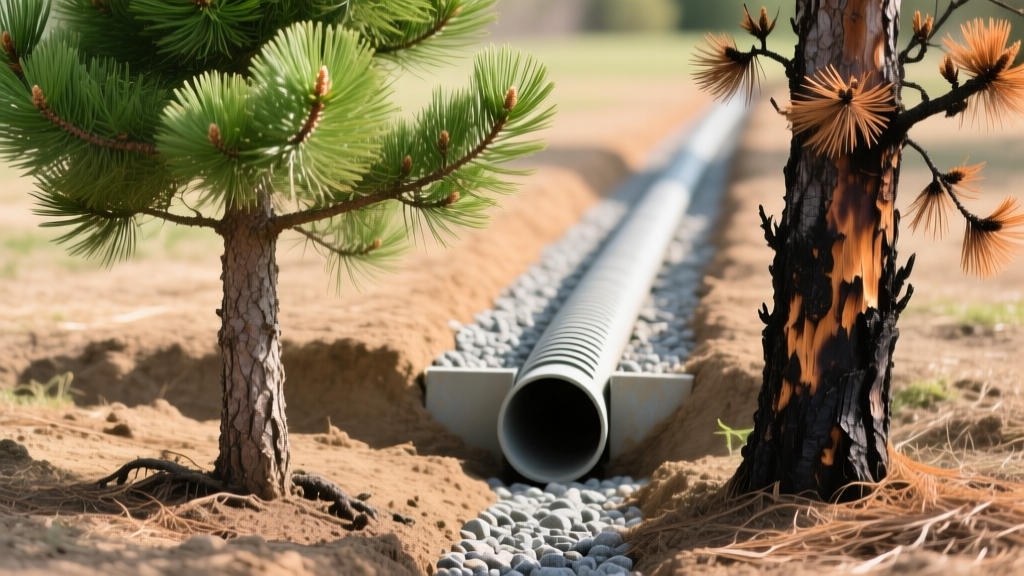
Pine Browning 2026: Dothistroma vs Winter Burn & French Drain Fixes
James MillerPublished
The 2026 Pine Browning Epidemic: Misdiagnosis and Moisture
As we navigate the erratic weather patterns of 2026, homeowners and arborists alike are witnessing a alarming rise in pine needle browning. From Austrian pines to vulnerable Ponderosas, the sight of rust-colored, dying needles often triggers immediate panic. However, the instinct to rush for fungicides or increase watering often exacerbates the problem. The two most common culprits behind this browning are Dothistroma Needle Blight and Winter Burn. While one is a fungal pathogen and the other an abiotic environmental stressor, they share a hidden, destructive common denominator: poor soil drainage. In this comprehensive 2026 guide, we will explore how to accurately diagnose these conditions and reveal why strategic French drain installation is often the ultimate, long-term cure for failing pine trees.
Diagnosing the Culprit: Dothistroma vs. Winter Burn
Before swinging a shovel or spraying chemicals, accurate diagnosis is paramount. Misidentifying the cause of pine browning leads to wasted resources and further tree decline. Let us break down the visual and environmental signatures of both conditions.
Identifying Dothistroma Needle Blight
Dothistroma needle blight is a severe fungal disease caused by the pathogen Dothistroma septosporum. It thrives in environments with high humidity, frequent spring rains, and poor air circulation. According to the University of Minnesota Extension, the fungus infects needles, causing distinct reddish-brown bands or spots to appear. The tip of the needle beyond the band eventually dies and turns brown, while the base remains green. In late spring and early summer, you may notice tiny, black, fruiting bodies breaking through the needle surface. Crucially, Dothistroma spores are spread by rain splash. If your yard suffers from poor drainage, the constant dampness and splashing mud create the perfect vector for this disease to ravage your pine canopy.
Identifying Winter Burn
Winter burn, conversely, is not a disease but a physiological condition. It occurs when pine needles lose moisture to harsh winter winds and bright sun faster than the root system can replace it. The Penn State Extension notes that this typically manifests as uniform browning on the windward or sun-facing sides of the tree, often appearing in late winter or early spring. But why does a tree with soggy soil suffer from drought-like winter burn? When soil is waterlogged and poorly drained, pine roots suffocate from oxygen deprivation. Damaged, asphyxiated roots cannot absorb water, even if the ground thaws. Therefore, a pine tree sitting in a wet, un-drained yard is actually suffering from physiological drought during the winter, leading to severe desiccation.
| Diagnostic Feature | Dothistroma Needle Blight | Winter Burn |
|---|---|---|
| Primary Cause | Fungal Pathogen (D. septosporum) | Abiotic / Environmental Desiccation |
| Visual Symptoms | Red/brown bands on needles; green bases; black fruiting bodies | Uniform browning, usually on windward/sun-facing sides |
| Timing of Appearance | Late spring to mid-summer | Late winter to early spring |
| Primary Trigger | Wet foliage, rain splash, high humidity | Freezing winds, bright sun, frozen or damaged roots |
| Soil Moisture Link | Poor drainage increases fungal splash and canopy humidity | Waterlogged soil suffocates roots, preventing winter water uptake |
The Soil Drainage Connection: Why Pines Fail in Wet Yards
Pine trees are notoriously intolerant of 'wet feet.' Their root systems require high levels of soil oxygen to function. When heavy clay soils or improper grading cause water to pool around the root zone, the soil pores fill with water, displacing oxygen. As highlighted by The Morton Arboretum, prolonged flooding and waterlogging lead to root rot and severe physiological stress. By installing a properly engineered French drain, you actively remove excess gravitational water from the soil profile, restoring the vital oxygen-to-water ratio in the root zone. This single landscaping intervention simultaneously starves the Dothistroma fungus of its damp breeding ground and rehabilitates the root system so it can survive winter desiccation.
Tree-Safe French Drain Installation: Step-by-Step (2026 Standards)
Installing a French drain near mature or semi-mature pines requires surgical precision. You cannot simply dig a trench through the root system without causing catastrophic damage. Follow these 2026 best practices for tree-safe drainage remediation.
Step 1: Mapping the Critical Root Zone (CRZ)
Before marking your trench line, calculate the tree's Critical Root Zone. The CRZ is generally defined as a circle with a radius of 1 foot for every 1 inch of trunk diameter measured at 4.5 feet above the ground. Never trench within 3 to 5 feet of the trunk, as this area contains the primary structural and water-absorbing roots. Route your French drain along the periphery of the CRZ or in the low-lying topographical areas where water naturally pools, directing it away from the pine's drip line.
Step 2: Trenching and Slope Engineering
A French drain relies entirely on gravity. Dig a trench that is 12 to 18 inches wide and 18 to 24 inches deep. The trench must maintain a consistent downward slope of at least 1 inch per 8 feet (a 1% grade). Use a modern rotary laser level or a smart digital transit level to ensure accuracy. If the water has nowhere to exit (daylight), you must route the pipe to a dry well or a municipal storm drain catch basin.
Step 3: Material Selection and Assembly
The longevity of your drain depends on the materials used. In 2026, advanced geotextiles and specialized aggregates are the industry standard.
- Filter Fabric: Line the trench with a heavy-duty, non-woven geotextile fabric (minimum 4 oz per square yard). Woven fabrics clog too easily in clay-heavy soils. Leave enough overhang on both sides to wrap over the top of the gravel later.
- Base Gravel: Add 2 to 3 inches of washed, angular drain rock (typically 3/4-inch crushed stone). Angular stone locks together, preventing settling, while washing removes fine dust that could clog the pipe.
- The Pipe: Lay a 4-inch rigid, perforated PVC pipe or flexible corrugated pipe with the holes facing downward. This counter-intuitive placement allows water to rise into the pipe from the saturated gravel bed, keeping the pipe itself clear of sediment buildup.
- Cover and Wrap: Cover the pipe with more washed gravel until you are 3 to 4 inches below the soil surface. Fold the overhanging geotextile fabric over the gravel to create a 'burrito' wrap, preventing topsoil from migrating into the drain. Top off with native soil and sod.
| Material | Specification (2026 Standard) | Estimated Cost per 50 ft. Trench |
|---|---|---|
| Non-Woven Geotextile | 4 oz/yd² heavy-duty drainage fabric | $85 - $110 |
| Washed Drain Rock | 3/4-inch angular crushed stone (washed) | $120 - $160 (approx. 2 tons) |
| Perforated Pipe | 4-inch SDR 35 PVC or corrugated HDPE | $60 - $90 |
| Catch Basin / Outlet | 9x9 inch plastic basin with grate | $45 - $75 |
| Total Material Cost | Excluding labor and equipment rental | $310 - $435 |
Post-Installation Pine Recovery Protocol
Once the French drain is operational and the soil begins to dry out and aerate, the pine tree will need supportive care to recover from its previous stress.
Managing Dothistroma Outbreaks
If your diagnosis confirmed Dothistroma, improving drainage is only the first step. You must also prune out heavily infected lower branches to increase air circulation and reduce rain-splash vectors. For severe cases, apply a copper-based fungicide (such as copper hydroxide or Bordeaux mixture) in late spring just as the new needles are emerging. Always follow the 2026 label instructions for application rates and safety gear.
Reversing Winter Burn Damage
For pines suffering from winter burn, the newly installed French drain will ensure the roots remain healthy and oxygenated going into the next freezing season. In the fall, apply an anti-desiccant spray (like Wilt Pruf) to the needles to seal in moisture. Furthermore, ensure the tree receives a deep, slow soaking before the ground freezes solid in late autumn; a healthy, well-drained root system will store this water to combat winter winds.
Conclusion
Pine needle browning is a complex symptom that demands a holistic approach. By understanding the distinct differences between Dothistroma needle blight and winter burn, and recognizing the critical role that soil hydrology plays in tree health, you can save your pines from premature decline. A professionally planned, tree-safe French drain installation is not just a landscaping upgrade; it is a vital medical intervention for your soil, ensuring your pines remain vibrant, green, and resilient for decades to come.
