Gardening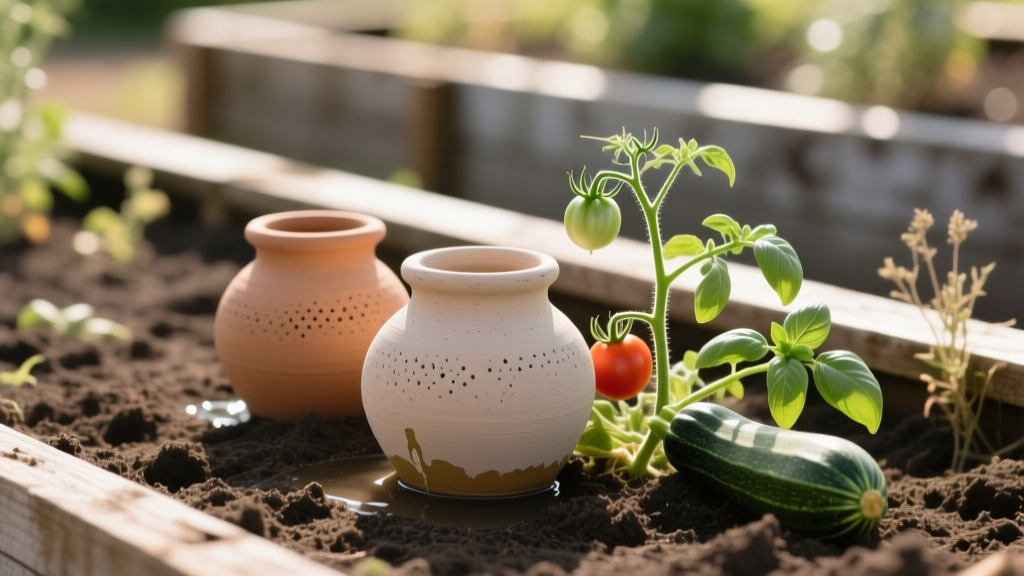
Drought-Proof Vegetable Gardening: Ollas and Wicking Beds
James MillerPublished
The Reality of Drought Gardening
As climate patterns shift and summer heatwaves become more intense, traditional vegetable gardening methods are failing home growers. Overhead sprinklers lose massive amounts of water to evaporation, and shallow daily watering encourages weak, drought-susceptible root systems. According to the Environmental Protection Agency (EPA), outdoor water use accounts for nearly 30% of total household water consumption, with more than half of that being wasted due to wind, evaporation, and runoff. For the home gardener, this means higher utility bills and stunted harvests.
Fortunately, you do not need to abandon your vegetable garden during a drought. By shifting from surface-level watering to sub-surface and reservoir-based irrigation, you can drastically reduce your water footprint while actually improving your crop yields. As highlighted by the Water Use It Wisely conservation campaign, targeting irrigation efficiency at the root zone is the single most effective way to maintain a lush, productive garden in arid climates. In this guide, we will explore two of the most effective, water-wise gardening systems available: Olla irrigation and Wicking Raised Beds.
Olla Irrigation: Ancient Technology for Modern Gardens
An Olla (pronounced oh-yah) is an unglazed, porous terracotta clay pot that is buried in the soil up to its neck and filled with water. This ancient irrigation technique, dating back over 4,000 years to Northern Africa and the Americas, relies on soil moisture tension. When the surrounding soil dries out, water seeps through the microscopic pores of the clay directly into the root zone. When the soil is moist, the seepage stops. This creates a flawless, self-regulating irrigation system that eliminates water waste entirely.
Sourcing and Preparing Your Ollas
You do not need expensive, imported ceramic vessels to start. Standard, unglazed terracotta plant pots from any local nursery work perfectly. Look for pots ranging from 1-gallon to 3-gallon capacities. A 1-gallon pot costs roughly $4 to $6, while a 3-gallon pot may cost $10 to $15. To prepare the pot, you must seal the drainage hole at the bottom. You can do this using a tight-fitting cork, a piece of flat stone sealed with waterproof outdoor silicone ($3 per tube), or a specialized terracotta plug. Ensure the seal is completely watertight before burying.
Installation and Spacing
- Placement: Bury the Olla in the center of your planting area, leaving only the top rim and lid exposed above the soil line. This prevents soil and debris from falling in.
- Spacing: Water seeps outward in a roughly spherical pattern. A 1-gallon Olla will effectively water a 3-foot diameter circle, while a 3-gallon Olla covers a 4-to-5-foot diameter. Space your pots accordingly.
- Planting: Plant your vegetable seedlings or seeds in a ring around the Olla, about 6 to 12 inches away from the clay walls. As the plants mature, their roots will physically wrap around the buried pot, tapping directly into the moisture source.
- Maintenance: Keep the Olla filled with water. In peak summer heat, a 3-gallon Olla may need refilling every 2 to 3 days. In cooler spring weather, it may only need filling once a week.
Wicking Raised Beds: The Ultimate Moisture Reservoir
While Ollas are fantastic for in-ground gardens and smaller plots, wicking raised beds are the ultimate solution for large-scale, drought-proof vegetable production. A wicking bed is essentially a self-watering container on a macro scale. It features a built-in water reservoir at the bottom of the bed, separated from the soil by a permeable barrier. Through the physics of capillary action, water is drawn upward from the reservoir into the soil profile, keeping the root zone consistently moist from below.
Materials and Cost Breakdown
Building a standard 4-foot by 8-foot wicking bed requires a few specialized materials, but the return on investment is immense. Expect to spend between $150 and $220 on materials, depending on your local lumber and hardware prices.
- Lumber: Untreated cedar or redwood (2x10 or 2x12 boards) for a bed at least 18 inches deep.
- Liner: Heavy-duty 45-mil EPDM pond liner or 6-mil polyethylene sheeting ($40-$60). This is crucial to hold the water reservoir.
- Reservoir Medium: Clean, washed 3/4-inch gravel or scoria (approx. 10 cubic feet).
- Fill Pipe: A 2-inch diameter PVC pipe with a 90-degree elbow joint to act as your water fill tube.
- Barrier: Heavy-duty permeable landscape fabric to separate the gravel from the soil.
Step-by-Step Construction
- Build and Line the Box: Construct your raised bed frame and ensure it is perfectly level. If the bed is unlevel, water will pool at one end, leaving the other end dry. Line the entire interior with your pond liner, folding the corners neatly and stapling the excess to the outside of the top rim.
- Install the Fill Pipe: Cut your PVC pipe so that it stands slightly taller than the bed walls. Place the 90-degree elbow at the bottom, facing horizontally, and secure it in one corner of the bed. This allows you to insert a hose directly into the reservoir without digging through soil.
- Create the Reservoir: Add 4 to 6 inches of washed gravel across the bottom of the lined bed. Ensure the gravel is level. The PVC pipe will allow water to flow into this gravel layer, creating a hidden subterranean reservoir.
- Install the Overflow Valve: Drill a 1/2-inch hole through the wooden wall and the liner exactly 1 inch below the top of the gravel layer. Insert a short piece of copper or PVC tubing. This ensures that heavy rains will drain out of the reservoir before they flood the soil above and rot your plant roots.
- Separate and Fill: Lay a layer of landscape fabric over the gravel, tucking it up against the sides. This prevents soil from washing down into the gravel and clogging the reservoir. Finally, fill the remaining 12 to 14 inches with a high-quality, moisture-retentive mix of topsoil, compost, and coco coir.
System Comparison: Ollas vs. Wicking Beds vs. Drip Irrigation
Choosing the right system depends on your budget, garden layout, and physical mobility. Below is a structured comparison to help you decide which water-wise method is best for your specific needs.
| Feature | Olla Clay Pots | Wicking Raised Bed | Surface Drip Irrigation |
|---|---|---|---|
| Initial Cost (4x8 bed) | $20 - $45 | $150 - $220 | $60 - $90 |
| Water Efficiency | Extremely High (95%+) | Extremely High (90%+) | High (75-85%) |
| Evaporation Loss | Zero (Sub-surface) | Minimal (Sub-surface) | Moderate (Surface level) |
| Maintenance Level | High (Hand-fill every 2-3 days) | Low (Hose-fill weekly) | Medium (Timer/line flushing) |
| Best Application | In-ground rows, small spaces | Large vegetable plots, patios | Long hedgerows, orchards |
Pairing Systems with Drought-Tolerant Crops
While Ollas and wicking beds drastically reduce water waste, pairing these systems with naturally drought-resilient crops will maximize your success. Some vegetables are biologically engineered to thrive in low-water environments. Consider integrating the following crops into your water-wise garden:
- Okra: With its deep taproot, okra thrives in heat and requires minimal supplemental watering once established.
- Cowpeas (Black-eyed Peas): A fantastic legume that fixes its own nitrogen and produces heavy yields even in poor, dry soils.
- Swiss Chard: Unlike delicate lettuces that bolt in the heat, chard has a robust root system that pulls moisture efficiently from wicking beds.
- Indeterminate Tomatoes: When planted near a 3-gallon Olla, tomatoes will send roots deep into the soil, preventing blossom end rot and cracking caused by erratic surface watering.
- Mediterranean Herbs: Rosemary, thyme, and oregano prefer the slow, steady moisture release of clay Ollas over the heavy saturation of sprinklers.
Soil Amendments for Maximum Moisture Retention
No irrigation system can overcome poor, sandy soil that drains too quickly. To support your water-wise infrastructure, you must amend your soil to act like a sponge. Incorporate biochar into your raised beds at a rate of 10% by volume. Biochar is a highly porous form of charcoal that holds water and nutrients in its microscopic structure, releasing them slowly to plant roots. Additionally, top your beds with a 3-inch layer of coarse arborist wood chips. This mulch layer will drop the soil temperature by up to 15 degrees Fahrenheit during summer heatwaves, further reducing subsurface evaporation and protecting the delicate soil microbiome.
Coco coir, a byproduct of the coconut industry, is another essential amendment for drought-prone regions. It can hold up to 10 times its weight in water. Mixing 20% coco coir into your wicking bed soil profile ensures that the capillary action remains strong and the soil does not become hydrophobic during dry spells. When combined with a generous layer of organic compost, these amendments create a soil structure that acts as a secondary reservoir, supporting your primary irrigation system.
The goal of water-wise gardening is not just to use less water, but to ensure that every single drop is delivered directly to the plant's root zone where it is needed most, completely eliminating the waste of surface evaporation and wind drift.
Conclusion
Drought conditions do not have to mean the end of your home vegetable harvest. By abandoning wasteful overhead sprinklers and embracing the physics of sub-surface irrigation, you can grow abundant, healthy food using a fraction of the water. Whether you choose the low-cost, ancient simplicity of buried Ollas or the high-capacity reservoir of a wicking raised bed, these water-wise strategies will future-proof your garden against climate extremes while saving you time, money, and precious resources.
