Gardening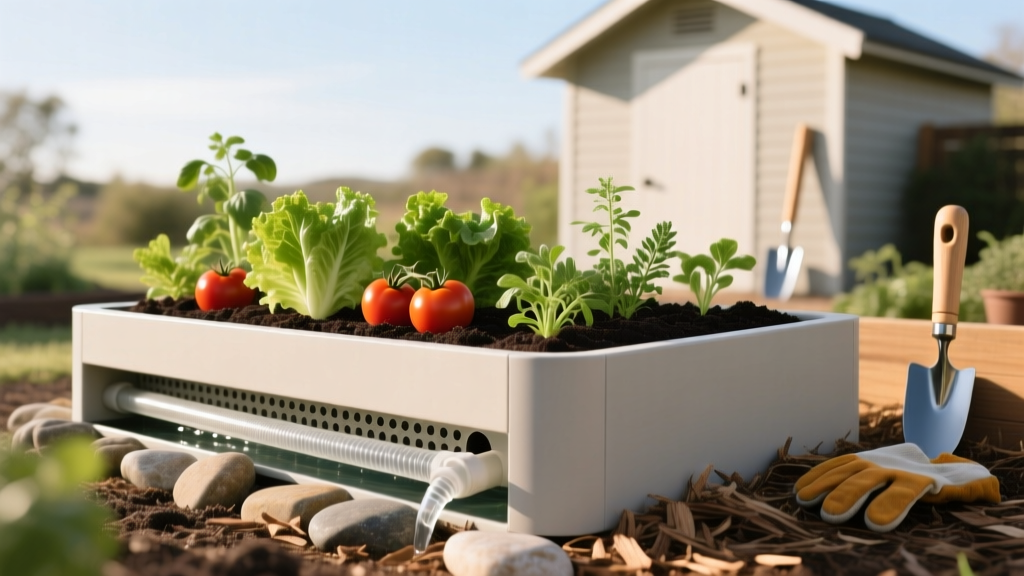
Build Drought-Proof Wicking Raised Beds for Vegetables
Robert HayesPublished
The Ultimate Drought Solution: Wicking Raised Beds
As climate patterns shift and summer droughts become more frequent and severe, home gardeners are facing unprecedented challenges in keeping their vegetable gardens alive. Traditional top-watering methods lead to massive water loss through surface evaporation, wind drift, and runoff. According to the Environmental Protection Agency (EPA), outdoor water use accounts for nearly 30% of total household water consumption, with a significant portion wasted due to inefficient irrigation practices. For the water-wise gardener, finding a sustainable, high-yield solution is no longer optional; it is essential.
Enter the wicking raised bed. Originally popularized in arid regions of Australia and adapted by permaculture designers worldwide, wicking beds utilize sub-irrigation to deliver water directly to the root zone from below. By creating a hidden underground reservoir, these beds use capillary action to draw moisture upward through the soil profile. This method not only reduces water consumption by up to 50% compared to traditional drip or hose watering but also promotes deeper, healthier root systems and drastically reduces weed germination on the soil surface.
How Capillary Action Works in the Garden
The science behind a wicking bed relies on capillary action—the same process that draws water up the stem of a celery stalk. When water sits in a reservoir at the bottom of the bed, the soil above acts like a sponge. As plant roots extract moisture and the sun evaporates trace amounts from the surface, a negative pressure gradient is created. The soil pulls water upward from the reservoir to replace the lost moisture, maintaining a consistent, optimal humidity level in the root zone.
As noted by Colorado State University Extension, water-wise gardening techniques that focus on sub-surface moisture delivery are among the most effective strategies for xeriscaping and drought-resilient food production. Because the top two inches of the soil remain relatively dry, weed seeds fail to germinate, and fungal diseases that thrive on damp foliage are virtually eliminated.
Materials and Estimated Costs for a 4x8 Foot Bed
Building a wicking bed requires a slightly higher initial investment than a standard raised bed, but the return on investment in water savings and plant vigor is substantial. Here is what you need for a standard 4-foot by 8-foot bed, standing 24 inches tall:
- Lumber: (6) 2x6x8 cedar or composite boards for the frame (~$120)
- Liner: 45-mil EPDM pond liner (10x15 ft) to hold the reservoir (~$85)
- Reservoir Media: 1 cubic yard of washed 3/4-inch river rock or expanded shale (~$60)
- Separator: 1 roll of heavy-duty non-woven geotextile landscape fabric (~$30)
- Plumbing: (1) 3-inch PVC pipe (36 inches long), (1) end cap, and (1) overflow bulkhead fitting (~$25)
- Soil Components: Coconut coir, organic compost, and vermiculite (~$150)
Total Estimated Cost: $470
Step-by-Step Construction Guide
Step 1: Site Preparation and Framing
Choose a location that receives at least 6 to 8 hours of direct sunlight. Level the ground meticulously using a tamper and a long spirit level. A wicking bed must be perfectly level; otherwise, water will pool at one end of the reservoir, leaving the other end dry. Assemble the cedar frame using exterior-grade deck screws, ensuring the corners are square and braced.
Step 2: Install the Pond Liner and Plumbing
Drape the EPDM pond liner over the inside of the frame, pushing it into the corners and allowing the excess to fold over the top edges. Before adding rock, install your water inlet and overflow system. Drill a hole near the bottom of the 3-inch PVC pipe and insert the overflow bulkhead fitting. The overflow pipe is critical: it must be set exactly at the top of the gravel reservoir line. This prevents the soil layer from becoming waterlogged and drowning your plant roots.
Step 3: Create the Water Reservoir
Place the PVC pipe vertically in one corner of the bed. Fill the bottom 10 inches of the bed with the washed river rock. The rock creates a void space that holds up to 40 gallons of water. Ensure the rock is level and does not block the overflow pipe.
Step 4: Lay the Geotextile Separator
Lay the non-woven geotextile fabric directly over the gravel layer, wrapping it up the sides of the bed. This fabric is the unsung hero of the wicking bed. It allows water to pass through via capillary action but prevents the fine soil particles from migrating down into the gravel and clogging the reservoir over time. Do not use standard woven weed barrier, as it will fail to wick moisture effectively.
Step 5: Add the Wicking Soil Mix
Fill the remaining 14 inches of the bed with a specialized wicking soil mix. Standard garden soil or heavy topsoil will compact and fail to draw water upward. You need a mix that balances moisture retention with aeration.
The Perfect Wicking Soil Recipe
The soil medium in a wicking bed must act as a reliable wick. Texas A&M AgriLife Extension emphasizes that soil structure is paramount for water conservation. A mix heavy in organic matter and coir is ideal.
| Component | Percentage | Purpose in Wicking Bed |
|---|---|---|
| Coconut Coir | 40% | Exceptional capillary wicking and water retention |
| Organic Compost | 40% | Provides slow-release nutrients and microbial life |
| Coarse Vermiculite | 20% | Improves aeration and holds moisture within the soil matrix |
Thoroughly hydrate the coconut coir blocks before mixing. Once the bed is filled, water the soil heavily from the top down for the first three days to prime the wick and establish the capillary bridge between the soil and the reservoir.
Traditional vs. Wicking Raised Beds: A Comparison
Understanding the operational differences between traditional beds and wicking beds highlights why the latter is superior for drought-prone climates.
| Feature | Traditional Raised Bed | Wicking Raised Bed |
|---|---|---|
| Watering Frequency | Daily or every other day | Every 1 to 3 weeks |
| Water Usage | High (surface evaporation loss) | Low (sub-surface delivery) |
| Weed Germination | High (moist surface soil) | Low (dry top 2 inches of soil) |
| Root Development | Shallow (chasing surface water) | Deep (growing toward the reservoir) |
| Fungal Disease Risk | High (wet foliage and soil surface) | Very Low (dry surface) |
Supplemental Top-Watering: Integrating Ollas
While wicking beds are incredible for established plants, seeds and shallow-rooted seedlings in the top two inches of soil may not receive enough moisture to germinate. To solve this without resorting to overhead sprinklers, integrate unglazed clay Ollas (pronounced oy-yahs) into your wicking bed design.
Bury an Olla up to its neck in the center of the bed and fill it with water. The porous clay slowly weeps water into the surrounding topsoil, creating a localized germination zone. Once the seedlings' roots reach down toward the main wicking reservoir, they will transition to the sub-irrigation system. This combination of deep wicking and localized clay-pot irrigation creates a nearly closed-loop, drought-proof ecosystem.
Mulching for Maximum Evaporation Control
Even with a dry soil surface, applying a 2-inch layer of organic mulch over your wicking bed will further insulate the soil from extreme summer heat. Use seed-free straw, shredded hardwood, or dried leaves. Mulch regulates soil temperature, keeping the root zone cool during heatwaves and preventing any residual surface moisture from escaping. Avoid using wood chips directly around annual vegetables, as they can tie up nitrogen during decomposition; save wood chips for perennial borders and fruiting shrubs.
Winterization and Long-Term Maintenance
At the end of the growing season, maintenance is simple. Cut back dead plant material and leave the roots in the soil to decompose and feed the microbial web. In freezing climates, you must drain the reservoir before winter to prevent ice expansion from damaging the pond liner or PVC pipes. Simply open the overflow valve or use a submersible pump to empty the gravel layer. Cover the bed with a tarp or a thick layer of leaf mold to protect the soil structure from heavy winter rains.
Every three to four years, you may need to top-dress the bed with fresh compost and a slow-release organic fertilizer, as the soil level will naturally settle. By investing in a wicking raised bed system, you are not just building a garden; you are engineering a resilient, water-wise food production system capable of thriving even in the harshest drought conditions.
