
Landscaping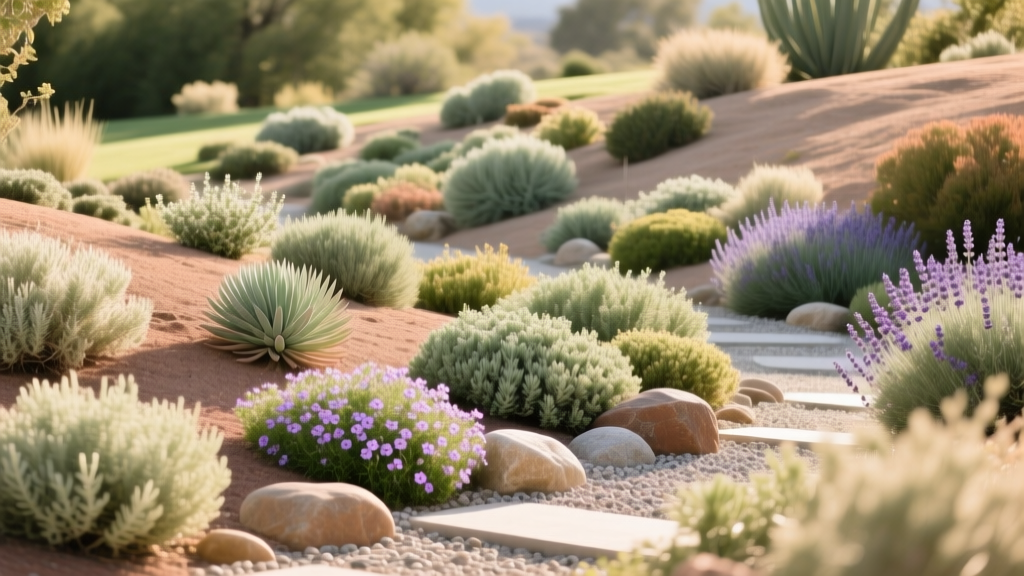
Xeriscaping With Drought-Tolerant Groundcover Plants
James MillerPublished
The Shift Toward Water-Wise Landscaping
As climate patterns shift and municipal water restrictions become more frequent, homeowners and landscape designers are rethinking the traditional American lawn. Xeriscaping—the practice of designing landscapes to reduce or eliminate the need for supplemental irrigation—has moved from a niche desert gardening trend to a mainstream necessity. At the heart of a successful xeriscape design is the strategic use of drought-tolerant groundcovers. These low-growing plants spread horizontally to cover soil, suppress weeds, and provide a lush, textured aesthetic without the massive water footprint of traditional turfgrass.
Why Replace Traditional Turfgrass?
Traditional turfgrasses like Kentucky Bluegrass and Tall Fescue are notoriously thirsty. According to the U.S. Environmental Protection Agency (EPA), outdoor water use accounts for nearly 30% of total household water consumption, with landscape irrigation being the primary culprit. In arid and semi-arid regions, this number can exceed 50%. By replacing non-functional turf areas—such as front yard verges, steep slopes, and narrow side yards—with drought-tolerant groundcovers, homeowners can reduce outdoor water usage by up to 70%. Furthermore, deep-rooted groundcovers improve soil structure, reduce erosion, and mitigate the urban heat island effect far better than shallow-rooted grasses or bare dirt.
Understanding Plant Water Needs
When selecting plants for a water-wise landscape, it is crucial to rely on verified horticultural data rather than generic nursery tags. The University of California's WUCOLS database (Water Use Classification of Landscape Species) is an industry-standard tool that categorizes plants based on their actual water requirements. For groundcovers, you want to target species classified as 'Low' (L) or 'Very Low' (VL) water use. These plants, once established, can survive on natural rainfall or minimal deep-watering schedules.
Top Drought-Tolerant Groundcovers Compared
Choosing the right groundcover depends on your USDA Hardiness Zone, soil type, and how much foot traffic the area will receive. Below is a comparison chart of four top-performing xeriscape groundcovers.
| Common Name | Botanical Name | USDA Zones | Water Needs | Foot Traffic | Est. Cost (Plugs) |
|---|---|---|---|---|---|
| Creeping Thyme | Thymus serpyllum | 4-9 | Low | Light | $0.85 - $1.25 /ea |
| Lippia | Phyla nodiflora | 7-11 | Very Low | Moderate | $0.75 - $1.00 /ea |
| Sedum (Stonecrop) | Sedum spurium | 3-9 | Very Low | None | $1.00 - $1.50 /ea |
| Dymondia | Dymondia margaretae | 9-11 | Very Low | Light | $1.25 - $1.75 /ea |
Creeping Thyme (Thymus serpyllum)
Creeping thyme is a favorite for walkways, rock gardens, and patio borders. It forms a dense, fragrant mat that typically grows 2 to 4 inches tall. In early summer, it produces tiny pink or purple flowers that attract pollinators. While it can handle light foot traffic, it is not suitable for active play areas. It requires well-draining soil and full sun to thrive.
Lippia (Phyla nodiflora)
Also known as Kurapia or Frogfruit, Lippia is an incredibly tough, fast-spreading groundcover. It can grow in poor soils, tolerate high heat, and handle moderate foot traffic. It stays green throughout the summer with minimal water and produces small white flowers. Note that in colder zones (below Zone 7), it will go dormant and turn brown during the winter months.
Sedum (Stonecrop varieties)
Sedums are succulents that store water in their fleshy leaves, making them virtually indestructible once established. Varieties like 'John Creech' or 'Dragon's Blood' spread quickly to form a colorful carpet. They are ideal for steep slopes or areas where mowing is impossible. Sedums cannot handle foot traffic and prefer sandy or rocky soils with excellent drainage.
Dymondia (Dymondia margaretae)
Often called 'Silver Carpet', Dymondia features striking blue-green foliage with white undersides. It is highly drought-tolerant and can handle light foot traffic, making it a popular choice for replacing parkways and front yard lawns in coastal and southern California. It requires full sun and will rot if planted in heavy, water-retentive clay.
Step-by-Step Site Preparation
Proper site preparation is the most critical step in xeriscaping. Skipping this phase will result in relentless weed battles and poor plant establishment.
- Remove Existing Turf: Avoid using chemical herbicides if possible. Instead, use the sheet mulching method. Mow the existing grass as short as possible, then cover the area with overlapping layers of plain corrugated cardboard. Wet the cardboard thoroughly.
- Amend the Soil: Spread a 2 to 3-inch layer of organic compost over the cardboard. For heavy clay soils, mix in expanded shale or pumice to improve drainage. Xeriscape plants generally prefer leaner, well-draining soils over highly fertilized ones.
- Grade for Drainage: Ensure the soil slopes away from your home's foundation at a minimum grade of 1/4 inch per foot to prevent water intrusion.
Planting Layout and Spacing Guidelines
To achieve full coverage quickly without overcrowding, plant your groundcover plugs in a staggered grid (diamond) pattern. For fast-spreading varieties like Lippia and Creeping Thyme, space plugs 12 inches apart. For slower-growing succulents like Sedum, space them 6 to 8 inches apart. Dig holes slightly wider than the root ball, but no deeper, ensuring the crown of the plant sits exactly at the soil surface to prevent rot.
Irrigation Strategies for Establishment
A common misconception is that drought-tolerant plants do not need water. While they require minimal water once established, they need consistent moisture during their first growing season to develop deep root systems. Overhead sprinklers are inefficient and promote fungal diseases. Instead, install a subsurface drip irrigation system.
- Product Recommendation: Use Netafim Techline CV drip tubing, which features built-in check valves to prevent drainage and root intrusion.
- Emitter Spacing: Lay out tubing in a grid pattern with 12-inch emitter spacing to ensure uniform water distribution across the root zone.
- Watering Schedule: For the first 2 weeks, water for 15 minutes every other day. From weeks 3 to 8, water deeply once or twice a week. By month three, taper off to a deep soaking once every 10-14 days, eventually relying on seasonal rainfall.
Mulching and Weed Control
Mulch is essential for retaining soil moisture and suppressing weeds while the groundcover fills in. However, avoid using heavy wood chips around succulents like Sedum and Dymondia, as wood chips trap too much moisture against the plant crowns. Instead, use a 1-inch layer of inorganic mulch, such as decomposed granite (DG) or pea gravel, which reflects heat and allows the soil surface to dry out between waterings. For thyme and Lippia, a thin layer of fine bark mulch is acceptable.
Long-Term Maintenance and Cost Analysis
While the upfront cost of installing a xeriscape groundcover is higher than laying sod, the long-term savings are substantial. The Water Use It Wisely campaign highlights that replacing just 1,000 square feet of grass with water-wise plants can save thousands of gallons of water annually. Below is a 5-year cost comparison for a 1,000 sq. ft. front yard.
| Expense Category | Traditional Turfgrass | Xeriscape Groundcover |
|---|---|---|
| Initial Installation | $1,200 (Sod & Soil Prep) | $2,800 (Plugs, Drip, Mulch) |
| Annual Water Cost | $450 / year | $90 / year |
| Annual Maintenance (Mowing/Fertilizer) | $600 / year | $50 / year (Weeding/Pruning) |
| 5-Year Total Cost | $6,450 | $3,500 |
As the data shows, the xeriscape option pays for itself in roughly 3.5 years through eliminated mowing, fertilizing, and drastically reduced water bills. Furthermore, you reclaim your weekends from lawn chores.
Conclusion
Transitioning to a water-wise landscape does not mean sacrificing beauty or curb appeal. By selecting the right drought-tolerant groundcovers, preparing the soil correctly, and utilizing efficient drip irrigation, you can create a dynamic, ecologically beneficial outdoor space. Whether you choose the fragrant blooms of creeping thyme or the rugged resilience of Lippia, xeriscaping is a smart, sustainable investment in your property and your local watershed.

