
Landscaping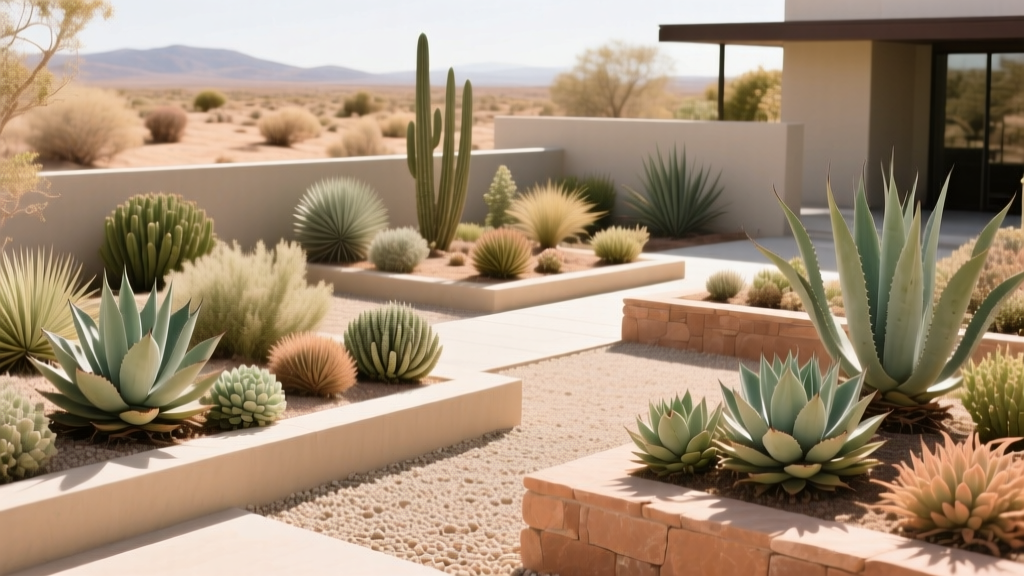
Drought Tolerant Landscaping Ideas For Dry Climates
Building a Landscape That Thrives Without Rain
Across the American Southwest, Great Plains, and increasingly in regions that once enjoyed reliable rainfall, homeowners are rethinking what a beautiful yard actually requires. Water bills in drought-prone areas have climbed sharply — Phoenix, Arizona residents saw average outdoor water costs rise 34% between 2018 and 2023, according to the Arizona Department of Water Resources (2023). A well-designed drought tolerant landscape doesn’t look sparse or neglected. Done right, it looks intentional, textured, and alive year-round with far less maintenance than a traditional lawn.
This isn’t about replacing grass with gravel and calling it done. Modern xeriscape and dry-climate design uses flowering perennials, ornamental grasses, native shrubs, and structural succulents that create visual interest across all four seasons. The key is understanding your soil, sun exposure, and rainfall patterns — then picking plants that evolved to handle those conditions.
Understanding Your Climate Zone Before You Plant
The USDA Plant Hardiness Zone Map is a starting point, but for drought tolerant design, the Sunset Climate Zone system offers more useful detail, particularly in the West. A homeowner in Albuquerque, New Mexico (Zone 7b USDA, Sunset Zone 10) faces different challenges than one in San Diego, California (Zone 10b USDA, Sunset Zone 24), even though both cities average fewer than 12 inches of annual rainfall.
Soil type matters as much as rainfall totals. Clay soils in the Denver, Colorado Front Range hold moisture but drain poorly, making root rot a risk for plants that need sharp drainage. Sandy soils in the Mojave Desert drain almost instantly, requiring plants with deep taproots or extensive lateral root systems. Before purchasing a single plant, spend $20–$40 on a professional soil test through your local cooperative extension office. The results will tell you pH, nutrient levels, and organic matter content — all of which affect which species will establish successfully.
Rainfall Patterns and Plant Selection
Many drought tolerant plants are not zero-water plants. They’re low-water plants that need supplemental irrigation during their first one to two growing seasons while roots establish. After that — typically 12 to 24 months — most native and adapted species can survive on natural rainfall alone in appropriate climates. The University of California Cooperative Extension (2022) found that established native plantings in Southern California required 60–75% less supplemental irrigation than equivalent areas planted with traditional turf grass.
Microclimates on Your Property
A south-facing slope in full sun bakes at temperatures 10–15°F higher than a north-facing bed shaded by your house. West-facing walls radiate stored heat through the evening. These microclimates let you grow plants slightly outside their typical range — or warn you away from placing moisture-sensitive species in spots that will stress them. Walk your property at different times of day and note where shade falls, where water pools after rain, and where the soil dries out fastest.
Plant Species That Deliver Real Results
The following plants have proven track records in dry-climate residential landscapes across the United States. Each offers ornamental value beyond mere survival — flowers, interesting foliage, wildlife habitat, or structural form that earns its place in a designed landscape.
Flowering Perennials and Groundcovers
- Agastache rupestris (Sunset Hyssop) — Tubular orange and pink flowers from June through October, reaching 2–3 feet tall. Hummingbird magnet. Hardy to Zone 5, thrives in Zones 6–9 with excellent drainage.
- Penstemon barbatus (Scarlet Bugler) — Native to the Rocky Mountain region, produces tall spikes of red tubular flowers. Grows 2–4 feet, spreads slowly by seed. Extremely drought tolerant once established.
- Delosperma cooperi (Ice Plant) — A South African native that has naturalized beautifully in Colorado and New Mexico. Produces vivid magenta flowers spring through fall, spreads to cover 18–24 inches per plant, and handles foot traffic reasonably well.
- Salvia greggii (Autumn Sage) — One of the most reliable flowering shrubs for Texas, New Mexico, and Arizona. Blooms nearly year-round in mild winters, available in red, pink, coral, and white. Grows 2–3 feet tall and wide.
- Gaillardia aristata (Blanket Flower) — Native to the Great Plains, produces bold red and yellow daisy-like flowers from May through frost. Self-seeds freely, creating naturalistic drifts over time.
Shrubs, Grasses, and Structural Plants
- Muhlenbergia capillaris (Pink Muhly Grass) — Spectacular fall display of pink-purple flower plumes. Native to the Southeast and adaptable across Zones 5–9. Grows 3 feet tall, spreads 3–4 feet wide.
- Hesperaloe parviflora (Red Yucca) — Despite the common name, not a true yucca. Produces tall coral-red flower spikes beloved by hummingbirds. Extremely heat and drought tolerant, native to the Chihuahuan Desert.
- Larrea tridentata (Creosote Bush) — The signature shrub of the Sonoran and Mojave Deserts. Slow-growing but extraordinarily long-lived, with small yellow flowers and a distinctive resinous fragrance after rain. Grows 4–8 feet tall.
- Ceanothus 'Dark Star' — A California native cultivar producing dense clusters of deep blue flowers in spring. Grows 5–6 feet tall and 8 feet wide, providing excellent erosion control on slopes.
- Agave parryi (Parry's Agave) — A compact agave species hardy to Zone 5, making it suitable for high-desert gardens in Colorado, Utah, and northern New Mexico. Forms a tight rosette 18–24 inches across.
Designing the Layout: Space, Zones, and Hardscape
Effective drought tolerant design organizes plants into hydrozones — groupings based on water needs. High-water plants (if any remain in the design) stay closest to the house where hand-watering is convenient. Medium-water plants occupy the middle ground. Low and no-water plants fill the outer areas and slopes. This zoning approach makes irrigation systems more efficient and prevents overwatering drought-adapted species.
For a typical suburban front yard of 1,200 square feet, a realistic planting plan might allocate space as follows: 300 square feet of decomposed granite or crushed rock mulch pathways, 200 square feet of flagstone or concrete hardscape near the entry, and 700 square feet of planted beds. Within those beds, spacing plants at their mature size — rather than their nursery pot size — is critical. A Salvia greggii planted 18 inches from its neighbor will look crowded within two seasons and require constant pruning.
Mulch is not optional in dry climates — it’s structural. A 3–4 inch layer of organic mulch (shredded bark, wood chips) or inorganic mulch (decomposed granite, river rock) reduces soil moisture evaporation by up to 70%, according to the Water Education Foundation (2021). Organic mulches also improve soil biology over time as they break down, while inorganic mulches provide a cleaner, more permanent aesthetic suited to desert-style designs.
Irrigation System Basics
Even a drought tolerant landscape benefits from a drip irrigation system during the establishment period and for supplemental watering during extreme heat events. A basic drip system for a 700-square-foot planted area typically costs $300–$600 in materials for a DIY installation, or $800–$1,500 installed professionally. Smart controllers that adjust watering schedules based on local weather data add $100–$250 to the system cost but can reduce water use by an additional 15–30% compared to timer-only systems.
Real Project Examples From Across the Country
The Denver Botanic Gardens' Dryland Mesa exhibit, covering approximately 2.5 acres in Denver, Colorado, demonstrates what a mature xeriscape planting looks like at scale. Established over 15 years, the exhibit features over 1,000 species of drought tolerant plants from arid regions worldwide, maintained with minimal supplemental irrigation. The garden's success has directly influenced residential landscaping trends across the Front Range, where the Denver Water utility reports that xeriscape conversions now account for over 40% of its water conservation rebate program applications.
In Austin, Texas, the Lady Bird Johnson Wildflower Center has documented the performance of native Texas plants in residential-scale test gardens since 1982. Their research consistently shows that established native plantings in Central Texas require no supplemental irrigation after the second growing season, even during the severe droughts that have become increasingly common in the region. Homeowners in the Austin metro area who converted traditional lawns to native plantings through the city's WaterWise Landscapes program reported average water bill reductions of $45–$90 per month during summer months.
In Tucson, Arizona, the Civano neighborhood was developed in the late 1990s with mandatory xeriscape requirements for all residential lots. A 2019 study by the University of Arizona found that Civano residents used 49% less water per household than comparable Tucson neighborhoods with conventional landscaping. The neighborhood's streetscapes, planted with Parkinsonia florida (Blue Palo Verde), Simmondsia chinensis (Jojoba), and Encelia farinosa (Brittlebush), have matured into a cohesive desert landscape that requires almost no municipal maintenance beyond occasional pruning.
"The most common mistake homeowners make is treating drought tolerant landscaping as a one-time installation rather than a living system that needs thoughtful management during its first two years. Plants that would thrive for decades with proper establishment often fail because they were planted in summer, watered inconsistently, and mulched inadequately."
— Dr. Mary Irish, horticulturist and author of Gardening in the Desert Southwest, speaking at the 2022 Desert Horticulture Conference in Phoenix, Arizona
Cost Planning and Return on Investment
Converting a 1,500-square-foot traditional lawn to a drought tolerant landscape in a Western US city typically costs between $3,500 and $9,000, depending on plant selection, hardscape materials, and whether you hire a landscape contractor or do the work yourself. Breaking that down: soil amendment and preparation runs $200–$500, plants for 700 square feet of beds cost $600–$2,000 depending on species and pot sizes, mulch for the entire area costs $150–$400, hardscape materials add $500–$3,000, and irrigation system installation adds $800–$1,500.
Many Western water utilities offer rebates that offset a significant portion of these costs. The Metropolitan Water District of Southern California offers up to $3 per square foot of turf removed and replaced with drought tolerant landscaping, with a maximum rebate of $6,000 per residential property. Las Vegas Valley Water District's Water Smart Landscapes program has paid out over $200 million in rebates since 1999, helping convert more than 190 million square feet of turf across the Las Vegas metro area.
| Project Component | DIY Cost (1,500 sq ft) | Professional Cost (1,500 sq ft) |
|---|---|---|
| Turf removal | $0–$150 (tool rental) | $300–$600 |
| Soil amendment | $200–$400 | $300–$600 |
| Plants (700 sq ft beds) | $600–$1,200 | $900–$2,000 |
| Mulch (3–4 inch layer) | $150–$300 | $250–$500 |
| Drip irrigation system | $300–$600 | $800–$1,500 |
| Hardscape (paths, edging) | $400–$1,000 | $800–$3,000 |
| Total Estimated Range | $1,650–$3,650 | $3,350–$8,200 |
The payback period on these investments varies by region and current water costs, but most homeowners in high-cost water districts see full payback within 3–7 years through reduced water bills, lower fertilizer costs, and reduced lawn maintenance expenses. After payback, the ongoing savings are essentially permanent — a mature native landscape requires almost no inputs beyond occasional pruning and the rare replacement of a plant that fails.
Seasonal Maintenance Through the Year
One of the genuine advantages of drought tolerant landscaping is reduced maintenance compared to traditional lawns, but "low maintenance" doesn't mean "no maintenance." The work shifts from weekly mowing and frequent watering to seasonal tasks that align with natural plant cycles.
In late winter or early spring, cut back ornamental grasses and perennials that were left standing through winter for wildlife habitat and visual interest. This is also the time to apply a fresh layer of mulch before the growing season begins, topping off areas where the previous year's mulch has decomposed or blown away. Early spring is the best planting window in most dry climates — soil temperatures are rising, rainfall is more reliable, and plants have the entire growing season to establish before facing summer heat stress.
Summer maintenance focuses on monitoring newly planted specimens for stress signs — wilting that doesn't recover overnight, yellowing leaves, or stunted growth — and providing supplemental water as needed. Established plants generally need no intervention unless temperatures exceed 110°F for extended periods. Fall is an excellent secondary planting window in Zones 7 and warmer, as cooling temperatures reduce transplant stress and winter rains help with establishment. Winter requires little action beyond protecting any marginally hardy plants with frost cloth during hard freezes.
The long-term trajectory of a well-designed drought tolerant landscape is toward less work, not more. As plants mature and fill their allotted space, weed pressure decreases, soil biology improves, and the landscape becomes increasingly self-sustaining. A planting that required 4–6 hours of monthly attention in its first year might need only 2–3 hours of seasonal work by year five — a meaningful return on the initial investment of thoughtful design and careful establishment.

