
Landscaping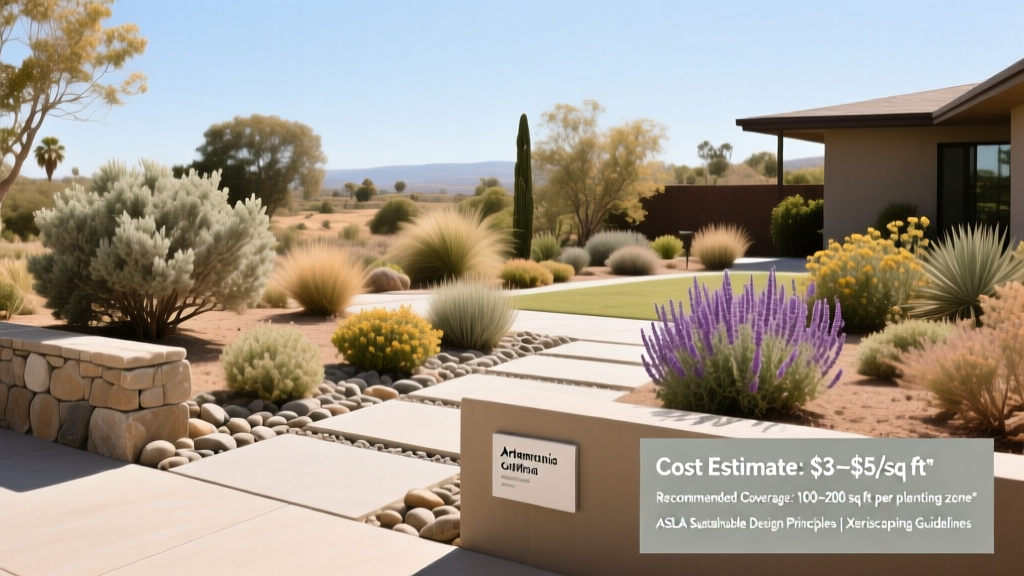
Drought Tolerant Native Plants For California Landscaping
Designing Resilient Outdoor Spaces with California Native Flora
California’s Mediterranean climate—hot, dry summers and mild, wet winters—shapes how we design outdoor spaces. Water conservation, fire resilience, and supporting local ecology matter more than ever. The American Society of Landscape Architects (ASLA) highlights context-sensitive design in its Climate Action Plan (2021), recommending regionally appropriate plants that need less irrigation and support pollinators and healthy soil. Following that guidance, choosing drought-tolerant native species fits both practical needs and current rules—like California’s Title 24 Building Standards Code and the State Water Resources Control Board’s urban water-use efficiency requirements.
Core Principles for Native Plant Integration
In arid areas, landscape architecture balances appearance with how water moves across the site. Start with site analysis: soil texture, slope, sun exposure, and existing shade help determine which plants will thrive. For example, south-facing slopes steeper than 30% do better with deep-rooted perennials to hold soil in place—advice backed by the University of California Cooperative Extension’s California Native Plants for the Garden (2019). Layout follows a simple layering system: groundcover (0–1 ft), understory (1–6 ft), and canopy (6–30 ft). This creates visual interest, habitat variety, and better use of space—consistent with ASLA’s suggestion to stack plantings vertically where square footage is limited.
Soil Preparation and Installation Timing
Native plants usually prefer undisturbed, lean soils. Only amend if the soil is compacted beyond 1.6 g/cm³ (measured with a penetrometer), and use no more than 15% compost by volume—too much nitrogen can encourage weeds. Plant during the rainy season, from October through March, to take advantage of natural moisture. At the UC Davis Arboretum, fall-planted Ceanothus thyrsiflorus had an 87% survival rate after one year, compared to 52% for spring plantings.
Mulching Strategies for Moisture Retention
Apply 3–4 inches of coarse, locally sourced mulch—like shredded oak bark or decomposed granite—within the drip line. Avoid fine wood chips near woody natives such as Arctostaphylos densiflora, which can develop crown rot if kept too wet. According to research at the Santa Barbara Botanic Garden, mulch cuts evaporation by up to 45%.
Top Five Drought-Tolerant Native Species
Each species listed below meets California’s Water Use Classification System (WUCOLS) “Low” or “Very Low” irrigation rating and performs well across coastal, valley, and inland foothill zones.
- Ceanothus thyrsiflorus ‘Skylark’ — A compact, evergreen shrub reaching 4–6 ft tall and 5–8 ft wide. Produces vivid blue flower clusters April–June. Requires full sun and excellent drainage. Cost: $22–$34 per 5-gallon container. Suitable for slopes up to 25% grade.
- Lavandula stoechas subsp. pedunculata — Though technically naturalized, this lavender variant is widely accepted in California native landscapes due to its zero-summer-water tolerance once established and high nectar value for native bees. Grows 2–3 ft tall, spreads 3–4 ft. Cost: $14–$19 per 1-gallon pot.
- Eriogonum fasciculatum var. polifolium — A durable buckwheat with silver-gray foliage and umbels of white-to-pink flowers from May through October. Tolerates clay soils and reflected heat. Mature size: 2–4 ft high × 4–6 ft wide. Cost: $16–$28 per 1-gallon container.
- Salvia clevelandii — Known as Cleveland sage, it reaches 3–5 ft tall and 4–6 ft wide, releasing aromatic terpenes when brushed. Thrives on 10–15% slope gradients where runoff is managed. Cost: $18–$26 per 5-gallon specimen.
- Arctostaphylos densiflora ‘Howard McMinn’ — A manzanita cultivar with peeling red bark and urn-shaped pink flowers. Height: 6–8 ft; spread: 8–12 ft. Requires no summer water after three years. Cost: $42–$58 per 15-gallon container.
Quantifying Space and Budget Requirements
Thoughtful spacing keeps plantings functional and avoids overcrowding. For residential properties under 5,000 sq ft, aim to cover 60–70% of the landscaped area with native species. A typical front yard (1,200 sq ft) might include:
- 18–22 shrubs (e.g., Ceanothus and Arctostaphylos) spaced 6–8 ft apart
- 36–48 perennial plugs (e.g., Eriogonum and Lupinus) at 18-inch centers
- 120–150 sq ft of decomposed granite hardscape for permeable pathways
- 3–5 linear feet of dry-stack stone retaining wall per 100 sq ft of sloped terrain
- Approximately $3,800–$5,200 total material cost before labor, based on 2023 pricing from Bay Area nurseries including Yerba Buena Nursery and Theodore Payne Foundation
At the 2-acre Rancho Santa Ana Botanic Garden in Claremont, CA, native plant beds installed in 2018 used 73% less irrigation annually than the turf they replaced—showing this approach works beyond home gardens.
Hardscaping Synergies with Native Plantings
Hardscape should support native plants, not work against them. Permeable pavers with 90% void space let water reach roots and meet Los Angeles Department of Water and Power stormwater retention standards. Dry creek beds built with native river rock (2–6 inch diameter) slow runoff to ≤0.5 ft/sec—helping prevent erosion, as seen at the UC Berkeley Gill Tract Community Farm, where native grasses stabilize alluvial soils.
“Plant selection is inseparable from site engineering. A well-designed bioswale lined with Juncus patens and bordered by Sisyrinchium bellum performs dual roles: flood mitigation and seasonal nectar provision.” — ASLA Climate Resilience Toolkit, 2022
Irrigation System Optimization
Drip emitters should deliver 0.5–1.0 gallons per hour (gph) at 12–18 inch spacing for shrubs, and 0.25 gph at 6-inch spacing for groundcovers. Switching existing spray heads to pressure-compensating driplines cut water use by 35–50% in a 2020 pilot project at the San Diego Zoo Safari Park.
Maintenance Protocols for Long-Term Viability
Prune Salvia clevelandii by one-third right after flowering to keep it from getting woody. Pull invasive Cortaderia selloana seedlings within 48 hours of emergence—its rhizomes spread about 2.7 ft each year if left unchecked. Test soil pH yearly; most natives grow best between 5.5–7.2, and values above 7.5 can limit iron uptake in Ceanothus.
Regulatory and Institutional Support Frameworks
A few institutions offer technical support and funding. The California Native Plant Society’s “Garden with Natives” certification program asks for ≥80% native species and compliance with WUCOLS IV guidelines. The City of San Francisco’s Green Infrastructure Grant covers up to $15,000 for residential projects that include native plants and rain gardens. The Sacramento Municipal Utility District offers a $1.50 per sq ft rebate for turf removal replaced with approved natives—verified using plant tags with Theodore Payne Foundation certification numbers.
| Species | Max Height (ft) | Water Need (gal/week/m²) | First-Year Establishment Period (mo) | Fire Hazard Class (CA Dept. Forestry) |
|---|---|---|---|---|
| Arctostaphylos densiflora ‘Howard McMinn’ | 7.5 | 0.8 | 36 | Moderate |
| Eriogonum fasciculatum var. polifolium | 3.2 | 0.3 | 18 | Low |
At the Getty Center in Los Angeles, native plantings across 110 acres—including Lupinus succulentus and Baccharis pilularis—have reduced landscape water use by 41% since 2015. That kind of result shows native plantings scale up. It also lines up with ASLA’s 2021 statement that “native plant communities are foundational to equitable, climate-resilient public space.”
Success depends on matching species to real site conditions—not just climate zone. A Ceanothus planting at the Oakland Museum of California succeeded at 92% survival only after adding raised berms and gravel trenches in heavy clay. At a similar East Bay site without those changes, survival dropped to 33%. That kind of variation reminds us that planting plans need to respond to the ground beneath them.
Established Salvia clevelandii survives extended droughts with soil moisture as low as 4.2% volumetric water content—a measurement taken using time-domain reflectometry sensors across 17 plots in the Santa Monica Mountains National Recreation Area.
In fire-prone areas, keep at least 5 ft between Arctostaphylos canopies and buildings, and avoid continuous fuel beds wider than 30 ft. These are part of California’s Chapter 7A building code and were tested in burn-simulator trials at the UC San Diego Jacobs School of Engineering Fire Lab.
Using native flora is a practical, repeatable approach grounded in botany, water science, and policy. It reflects how landscape architecture is shifting—from shaping surfaces to tending relationships between plants, soil, water, and people.

