Tree Care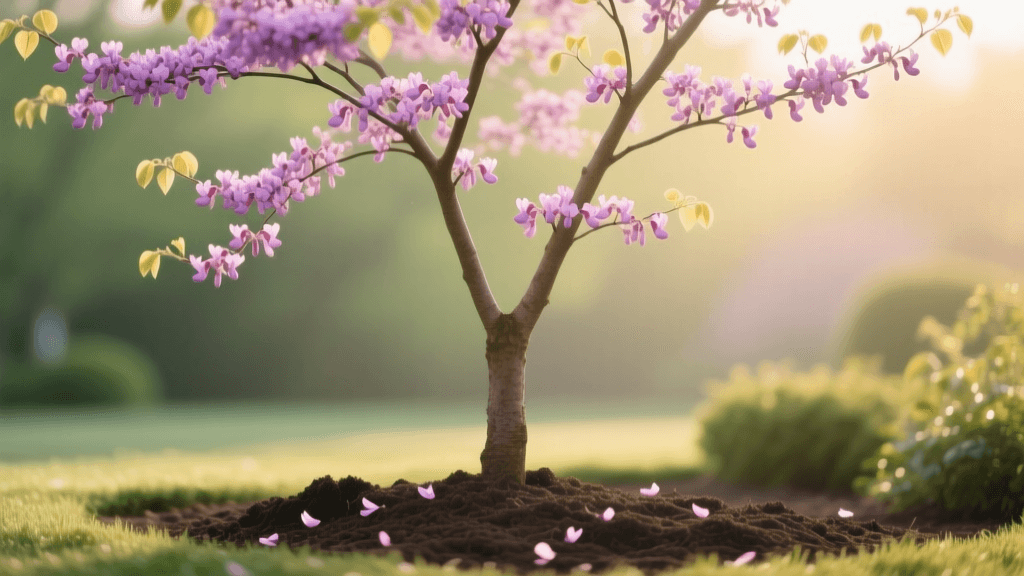
Eastern Redbud Tree Planting and Care Guide for Beginners
Why Choose the Eastern Redbud?
The Eastern Redbud (Cercis canadensis) is a spectacular, deciduous ornamental tree that serves as a herald of spring. For beginner gardeners and homeowners looking to add year-round visual interest to their landscape, this native tree is an exceptional choice. Known for its vibrant, magenta-pink blossoms that erupt directly from the bare branches in early spring, the Redbud transitions into summer with lush, heart-shaped green leaves, and finishes the year with a brilliant yellow autumn display. Beyond its aesthetic appeal, the Eastern Redbud is highly valued by early-season pollinators, including native bees and honeybees, which rely on its nectar when few other floral resources are available.
According to the Missouri Botanical Garden, this understory tree naturally thrives in woodland margins and along streams, making it remarkably adaptable to partial shade, though it flowers best in full sun. Its manageable mature size makes it perfect for small yards, patio plantings, or as a striking focal point near walkways.
Quick Reference Growing Chart
| Characteristic | Details |
|---|---|
| Botanical Name | Cercis canadensis |
| Common Name | Eastern Redbud |
| Mature Height | 20 to 30 feet |
| Mature Spread | 25 to 35 feet |
| Sun Exposure | Full sun to partial shade |
| Soil Type | Loamy, well-draining, adaptable |
| Soil pH | 6.0 to 7.0 (Slightly acidic to neutral) |
| Bloom Time | Early Spring (March to April) |
| Hardiness Zones | USDA Zones 4 to 9 |
| Growth Rate | Moderate (1 to 2 feet per year) |
Step-by-Step Planting Instructions
Planting a tree correctly from the start is the most critical factor in its long-term survival and health. Many beginners make the mistake of planting too deep, which can suffocate the root system and lead to trunk rot. Follow these precise steps to ensure your Redbud establishes a robust root network.
1. Timing Your Planting
The optimal time to plant an Eastern Redbud is in the early fall or early spring. Fall planting allows the tree to establish its root system in cool, moist soil before the stress of summer heat. If you must plant in spring, do so as soon as the ground thaws and is workable, ensuring you have a full growing season ahead.
2. Site Selection and Preparation
Choose a location that receives at least four to six hours of direct sunlight daily. While Redbuds tolerate partial shade, insufficient light will significantly reduce their famous spring bloom production. Ensure the site is at least 10 feet away from your home's foundation and clear of overhead power lines.
3. Digging the Hole
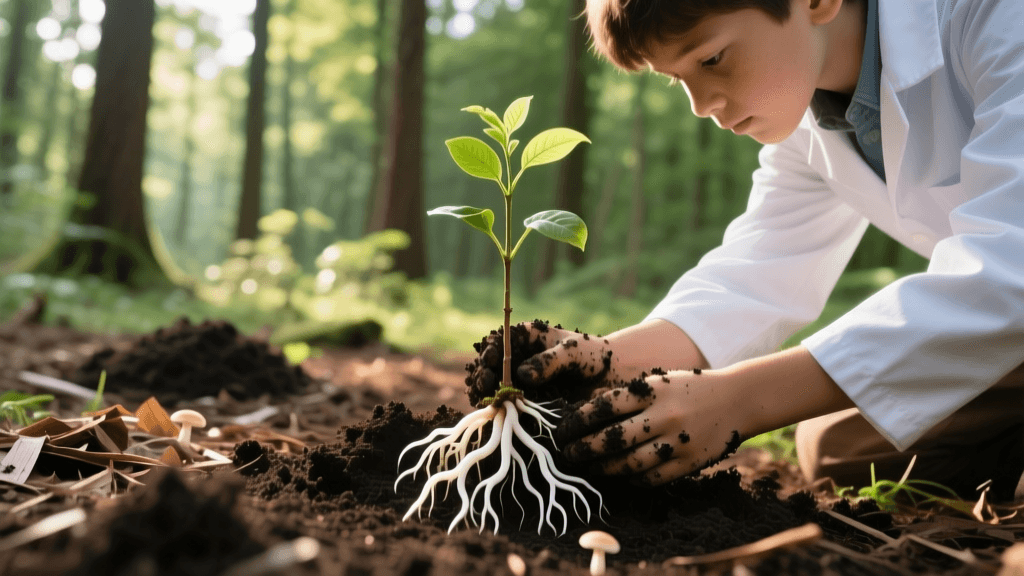
Dig a hole that is two to three times wider than the tree's root ball, but no deeper than the root ball itself. The goal is to provide loose soil for the lateral roots to expand into, while keeping the tree at its original growing depth. Locate the root flare—the point where the trunk widens and transitions into roots. This flare must sit slightly above the surrounding soil grade.
4. Backfilling and Mulching
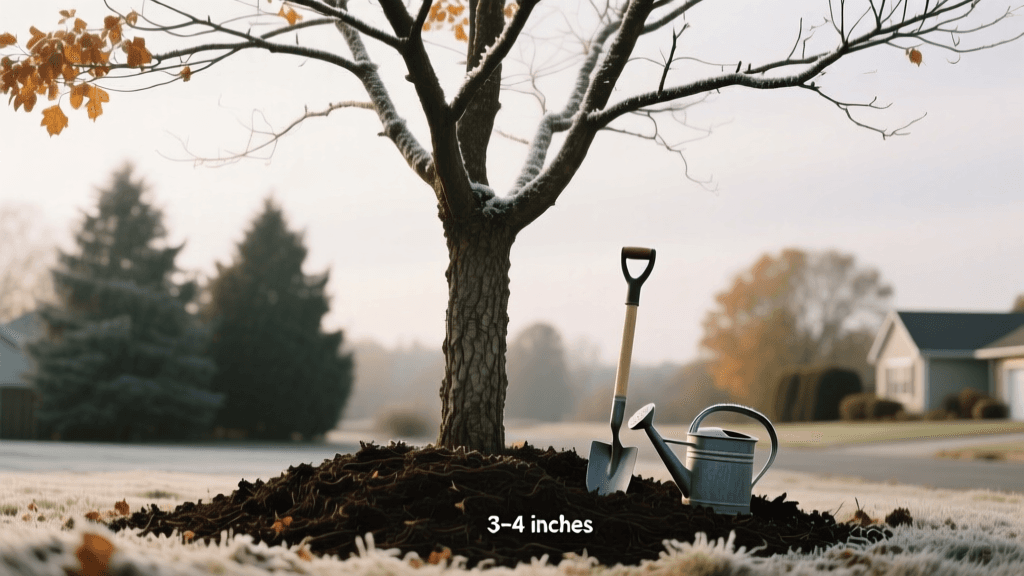
Place the tree in the hole and backfill with the native soil you just dug out. Avoid adding heavy compost or rich potting mixes to the backfill, as this can create a bathtub effect where water pools in the loose soil and drowns the roots. Gently tamp the soil to remove large air pockets. Apply a 2 to 3-inch layer of organic hardwood mulch in a 3-foot radius around the tree, but keep the mulch completely away from the trunk to prevent volcano mulching, which invites fungal diseases and rodent damage.
Watering Schedule for New and Established Trees
Watering is where most beginner gardeners struggle, often oscillating between underwatering and overwatering. Eastern Redbuds prefer consistently moist soil but cannot tolerate wet feet or poor drainage.
First-Year Watering Protocol
For the first year after planting, your Redbud relies entirely on you for moisture. Provide 10 to 15 gallons of water per week during the growing season. The most effective method is using a soaker hose coiled around the root zone, left on a low trickle for several hours. This encourages deep root growth rather than shallow surface roots.
The Screwdriver Test
To determine if your tree needs water, perform the screwdriver test. Push a long-bladed screwdriver into the soil near the root ball. If it slides in easily up to 6 inches, the soil has adequate moisture. If it meets resistance or comes out dry and dusty, it is time to water. During periods of heavy rainfall, skip your supplemental watering to prevent root rot.
Established Tree Care
Once established (typically after two to three years), Eastern Redbuds are moderately drought-tolerant. However, during prolonged summer dry spells, providing a deep watering every two weeks will prevent leaf scorch and maintain the tree's vigor.
Fertilizing and Soil Management
Unlike heavy-feeding fruit trees, Eastern Redbuds generally do not require aggressive fertilization. In fact, excessive nitrogen can promote weak, sappy growth that is highly susceptible to pests and canker diseases.
Before applying any fertilizer, it is highly recommended to conduct a basic soil test through your local university extension office. If your soil is severely depleted or the tree is showing signs of stunted growth and pale foliage, apply a balanced, slow-release granular fertilizer (such as a 10-10-10 or 5-10-5 NPK ratio) in early spring, just as the buds begin to swell. Broadcast the fertilizer evenly under the tree's drip line, keeping it at least 6 inches away from the trunk, and water it in thoroughly. According to the Clemson University Home & Garden Information Center, an annual top-dressing of organic compost is often sufficient to provide the micronutrients a Redbud needs to thrive without the risks associated with synthetic fertilizers.
Pruning for Structure and Health
Pruning an Eastern Redbud is relatively straightforward, but timing and technique are crucial. Because Redbuds bloom on old wood (growth from the previous year), pruning in the winter or early spring will remove the impending flower buds.
When to Prune
The ideal time to prune is immediately after the spring bloom finishes, usually in late May or early June. This timing allows the tree to heal quickly during the active growing season and gives it all summer to develop the next year's flower buds.
What to Cut
Begin by removing the Three Ds: Dead, Damaged, and Diseased wood. Next, look for crossing or rubbing branches and remove the weaker of the two to prevent bark wounds that invite infection. Redbuds naturally develop multiple trunks or low-sweeping branches. If you prefer a single-trunk tree form, select the strongest, most upright central leader and prune away competing lower branches. Always use sharp, clean bypass pruners or a pruning saw, and sterilize your blades between cuts using a 70% isopropyl alcohol solution to prevent the spread of latent fungal spores.
Troubleshooting Common Redbud Problems
While the Eastern Redbud is a resilient native species, it is prone to a few specific ailments, particularly when stressed by drought or physical damage.
Cytospora Canker
This fungal disease is the most common killer of Redbuds. It enters through pruning wounds or bark damage, causing sunken, discolored lesions on the branches. Infected branches will suddenly wilt and die back. There is no chemical cure for canker; management requires pruning out infected branches at least 6 inches below the visible canker margin and destroying the debris. Maintaining tree vigor through proper watering is the best preventive measure.
Verticillium Wilt
A soil-borne fungus that clogs the tree's vascular system, causing entire sections of the canopy to yellow, wilt, and die, often on just one side of the tree. The NC State Extension Plant Toolbox notes that once a tree is infected with Verticillium wilt, it cannot be cured. Prevention involves planting in well-draining soil and avoiding sites where susceptible crops (like tomatoes or potatoes) were previously grown.
Leafhoppers and Caterpillars
Redbuds occasionally attract leafhoppers, which cause cosmetic stippling on the leaves, and the Redbud Leaffolder caterpillar, which rolls leaves together to feed inside. For minor infestations, natural predators like birds and parasitic wasps usually keep populations in check. For severe outbreaks, horticultural oils or insecticidal soaps applied in the early evening can effectively manage the pests without harming beneficial pollinators.
Final Thoughts for Beginner Gardeners
The Eastern Redbud is a forgiving, deeply rewarding tree that offers multi-season interest with minimal ongoing maintenance once established. By focusing on proper planting depth, consistent first-year watering, and strategic post-bloom pruning, even novice gardeners can cultivate a stunning landscape centerpiece. Whether planted as a solitary specimen or integrated into a mixed native woodland border, the Redbud's breathtaking spring display and elegant branching structure will elevate your garden for decades to come.