Tree Care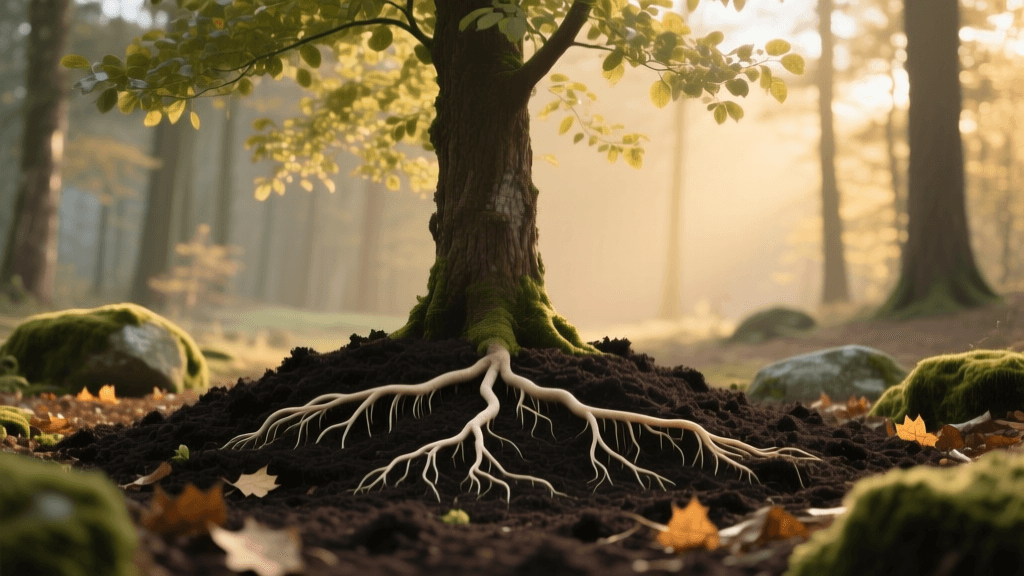
Eco-Friendly Tree Fertilization: Sustainable Soil Care
The Shift Toward Sustainable Arboriculture
In natural forest ecosystems, trees are entirely self-sustaining. They drop leaves, shed twigs, and rely on a complex, undisturbed soil food web to recycle nutrients continuously. However, in urban and suburban landscapes, this natural cycle is constantly interrupted. We rake away fallen leaves, compact the soil with foot traffic and mowers, and strip away the organic matter that trees desperately need to thrive. Historically, the solution to this nutrient deficit has been the heavy application of synthetic fertilizers. Today, a growing movement of eco-conscious arborists and homeowners is shifting toward sustainable, eco-friendly tree fertilization methods that prioritize long-term soil biology over quick-fix chemical injections.
Sustainable tree care is not just about feeding the tree; it is about feeding the soil. By fostering a rich, living soil ecosystem, you create a resilient environment where trees can naturally access water, resist pests, and sequester carbon. This comprehensive guide explores the most effective eco-friendly tree fertilization techniques, complete with actionable steps, cost estimates, and scientifically backed methodologies.
The Hidden Ecological Cost of Synthetic Fertilizers
Before diving into sustainable alternatives, it is crucial to understand why synthetic fertilizers are fundamentally at odds with eco-friendly landscaping. Most commercial tree fertilizer spikes and granular blends are composed of highly soluble, salt-based nitrogen, phosphorus, and potassium (NPK). While these salts can force a rapid flush of green foliage, they come with severe ecological drawbacks:
- Soil Microbiome Destruction: High concentrations of synthetic salts dehydrate and kill beneficial soil bacteria and mycorrhizal fungi. Over time, the soil becomes sterile and entirely dependent on external chemical inputs.
- Groundwater Contamination: Because synthetic nitrogen is highly water-soluble, a significant percentage leaches past the root zone during heavy rains, contaminating local watersheds and contributing to toxic algal blooms.
- Osmotic Stress and Root Burn: If applied incorrectly or during drought conditions, the salts in synthetic fertilizers draw moisture out of the tree's fine feeder roots, causing severe dehydration and root burn.
- Pest Vulnerability: The rapid, succulent growth spurred by synthetic nitrogen is highly attractive to sap-sucking insects like aphids and scale, increasing the need for chemical pesticides.
According to the University of Minnesota Extension, mature trees in reasonably healthy soils rarely require heavy synthetic fertilization, and over-fertilization can actually accelerate decline by promoting top growth that the compromised root system cannot support.
Core Pillar 1: Mycorrhizal Fungi Inoculation
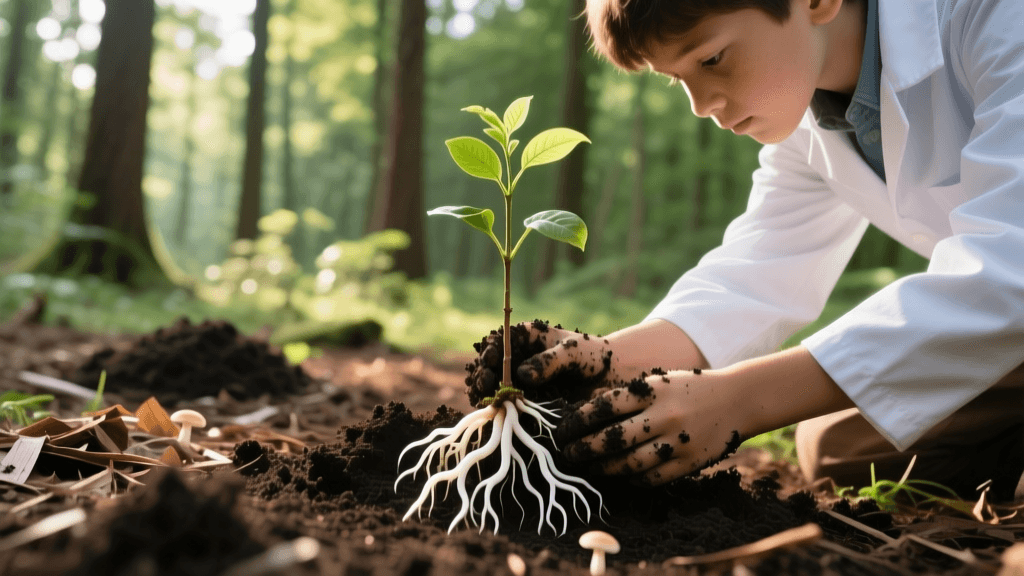
If there is a silver bullet in sustainable tree care, it is mycorrhizal fungi. These remarkable fungi form a symbiotic relationship with tree roots, effectively extending the root system's reach by hundreds of times. The fungal hyphae act as microscopic straws, mining the soil for water, phosphorus, and micronutrients, and trading them to the tree in exchange for carbohydrates produced through photosynthesis.
Endo vs. Ectomycorrhizal Fungi
Different tree species require different types of fungi. It is vital to select the correct inoculant for your specific trees:
- Ectomycorrhizal Fungi: Form a sheath around the outside of the root tips. Essential for most conifers (pines, spruces) and hardwoods like oaks, beeches, and birches.
- Endomycorrhizal Fungi (Arbuscular): Penetrate the root cells directly. Required for maples, ashes, fruit trees, and most ornamental shrubs.
Application and Cost
You can purchase granular mycorrhizal inoculants (such as those containing Glomus intraradices or Pisolithus tinctorius) from specialized soil biology suppliers. The Penn State Extension highlights that introducing these fungi is especially critical in new construction zones where topsoil has been stripped away.
How to Apply: For existing trees, use a soil probe or auger to create 2-inch wide holes, 8 to 12 inches deep, in a grid pattern beneath the tree's drip line. Drop a pinch of granular inoculant into each hole and backfill with compost. For new plantings, dust the root ball directly before backfilling. A one-pound bag of professional-grade inoculant costs between $30 and $50, which is enough to treat dozens of mature trees, making it incredibly cost-effective over time.
Core Pillar 2: Aerated Compost Tea (ACT)
Aerated Compost Tea is a liquid extract brewed from high-quality compost that is teeming with billions of beneficial bacteria, fungi, protozoa, and nematodes. Unlike synthetic liquid feeds that provide direct chemical nutrition, ACT inoculates the soil with the biological workforce required to break down existing organic matter and make it bioavailable to the tree.
Brewing Your Own ACT
Brewing ACT at home is simple and highly economical. You will need a 5-gallon bucket, an aquarium air pump with aeration stones, and a mesh brew bag.
- Fill the bucket with non-chlorinated water (if using tap water, let it sit for 24 hours to allow chlorine to off-gas, as chlorine kills beneficial microbes).
- Place 2 to 3 cups of high-quality, thermophilic compost or worm castings into the mesh bag and suspend it in the water.
- Add 1 tablespoon of unsulfured blackstrap molasses. This serves as a carbohydrate food source to rapidly multiply the bacterial population.
- Turn on the air pump and let the tea brew for 24 to 36 hours. The constant oxygenation prevents anaerobic pathogens from developing.
Application: Dilute the finished tea at a 1:3 ratio with water and apply it as a deep soil drench beneath the tree canopy. The entire 5-gallon batch costs less than $5 to produce and provides a massive biological boost to the soil food web.
Core Pillar 3: Biochar and Vertical Mulching
Urban soils are notoriously compacted, lacking the pore space necessary for oxygen and water infiltration. Vertical mulching is a sustainable physical intervention that relieves compaction while introducing long-lasting soil amendments.
The Biochar Advantage: Biochar is organic matter that has been pyrolyzed (burned in a low-oxygen environment) to create a highly porous, stable form of carbon. When mixed into the soil, biochar acts like a microscopic coral reef, providing permanent habitat for soil microbes and holding onto water and nutrients that would otherwise leach away. Because biochar does not decompose quickly, it acts as a carbon sink, sequestering carbon in the soil for hundreds of years.
The Vertical Mulching Process:
- Use a 2-inch auger bit on a heavy-duty drill to bore holes 18 inches deep, spaced 2 feet apart in concentric circles under the tree's drip line.
- Create a backfill mixture consisting of 70% coarse organic compost, 20% biochar, and 10% mycorrhizal inoculant.
- Fill the holes with the mixture. This creates vertical columns of rich, aerated soil that encourage tree roots to grow deep and strong, bypassing the compacted surface layers.
Eco-Friendly Fertilizer Comparison Chart
To help you make informed decisions for your landscape, the table below compares traditional synthetic methods with sustainable, eco-friendly alternatives based on environmental impact, release rates, and overall soil health.
| Method | Release Rate | Soil Microbiome Impact | Est. Cost (Mature Tree) | Eco-Score |
|---|---|---|---|---|
| Synthetic NPK Spikes | Fast (Weeks) | Negative (Salt Burn) | $25 - $40 | 1/5 |
| Granular Organic Compost | Slow (Months) | Positive (Feeds Microbes) | $15 - $30 | 4/5 |
| Mycorrhizal Inoculant | Permanent Symbiosis | Highly Positive (Expands Web) | $20 - $50 | 5/5 |
| Aerated Compost Tea | Immediate (Biological) | Highly Positive (Inoculates) | $5 - $10 | 5/5 |
| Biochar / Vertical Mulch | Centuries (Structural) | Highly Positive (Habitat) | $40 - $80 | 5/5 |
Core Pillar 4: Sustainable Mulching Practices
No eco-friendly tree care program is complete without proper mulching. Mulch acts as a slow-release, natural fertilizer. As wood chips and leaves break down, they feed the soil biology and provide a steady drip of nutrients to the tree. Furthermore, mulch regulates soil temperature, retains moisture, and suppresses competitive turf grass.
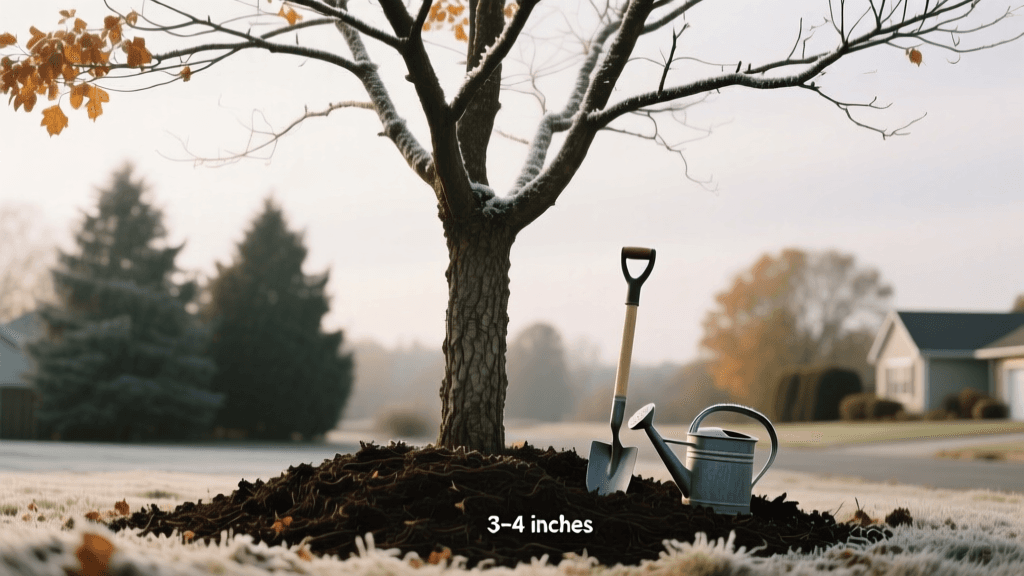
However, improper mulching can be fatal. The industry standard for sustainable mulching is the 3-3-3 Rule:
- 3 Inches Deep: Apply no more than 2 to 3 inches of organic mulch. Deeper layers can suffocate roots and create anaerobic conditions.
- 3 Feet Wide: Maintain a mulch ring that extends at least 3 feet from the trunk (ideally out to the drip line for maximum benefit).
- 3 Inches Away: Keep the mulch at least 3 inches away from the actual trunk of the tree. Piling mulch against the bark (commonly known as 'volcano mulching') traps moisture, invites fungal cankers, and encourages girdling roots.
According to guidelines published by The Morton Arboretum, utilizing locally sourced arborist wood chips is one of the most sustainable and cost-effective mulching strategies available, often obtainable for free from local tree service companies.
Seasonal Timing for Eco-Friendly Soil Care
Timing your sustainable soil treatments correctly is essential for maximizing their efficacy. Unlike synthetic fertilizers that force immediate growth, biological treatments require time to integrate into the soil ecosystem.
- Early Fall (September to October): This is the optimal window for vertical mulching, mycorrhizal inoculation, and heavy compost applications. Soil temperatures are still warm enough to encourage microbial activity and root growth, but the air is cool enough to prevent top-growth stress. Trees use this time to store energy and build root mass for the following spring.
- Mid-Spring (April to May): This is the best time to apply Aerated Compost Tea. As soil temperatures rise above 50°F (10°C), the biological activity in the soil wakes up. A spring drench of ACT helps populate the soil with beneficial bacteria just as the tree begins its heavy nutrient demand for leaf flush and canopy expansion.
Conclusion
Transitioning to eco-friendly tree fertilization is a profound shift in how we view our landscapes. By moving away from sterile, salt-based chemicals and embracing the complex biology of mycorrhizal fungi, compost teas, biochar, and proper mulching, we do more than just keep our trees alive. We build resilient, self-sustaining ecosystems that improve local water quality, sequester carbon, and provide vibrant, lasting shade for generations to come. Sustainable tree care is an investment in the living soil, and the dividends it pays are visible in every lush, healthy canopy.