Tree Care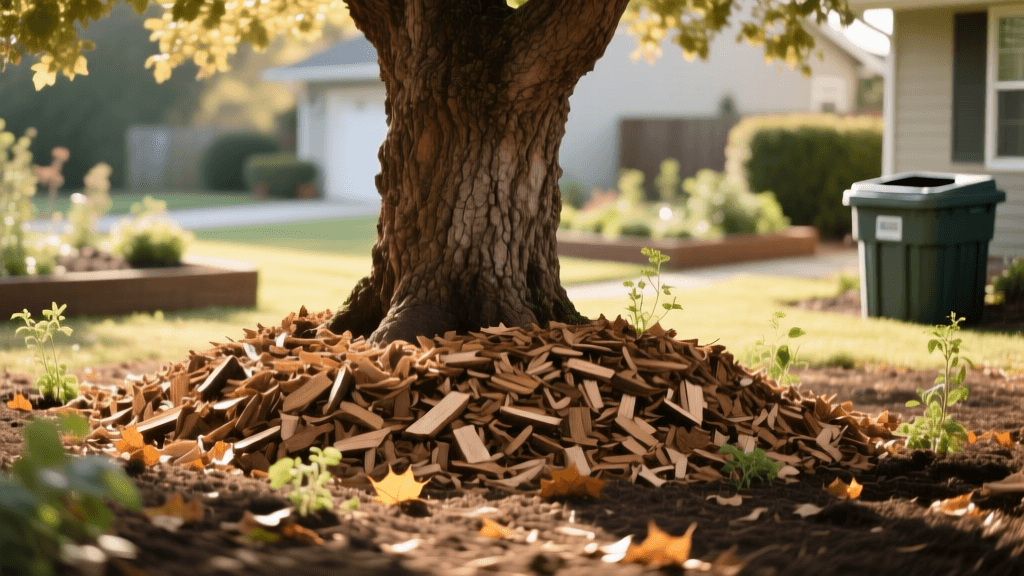
Eco-Friendly Tree Mulching: Sustainable Soil Health
The Shift Toward Sustainable Tree Care
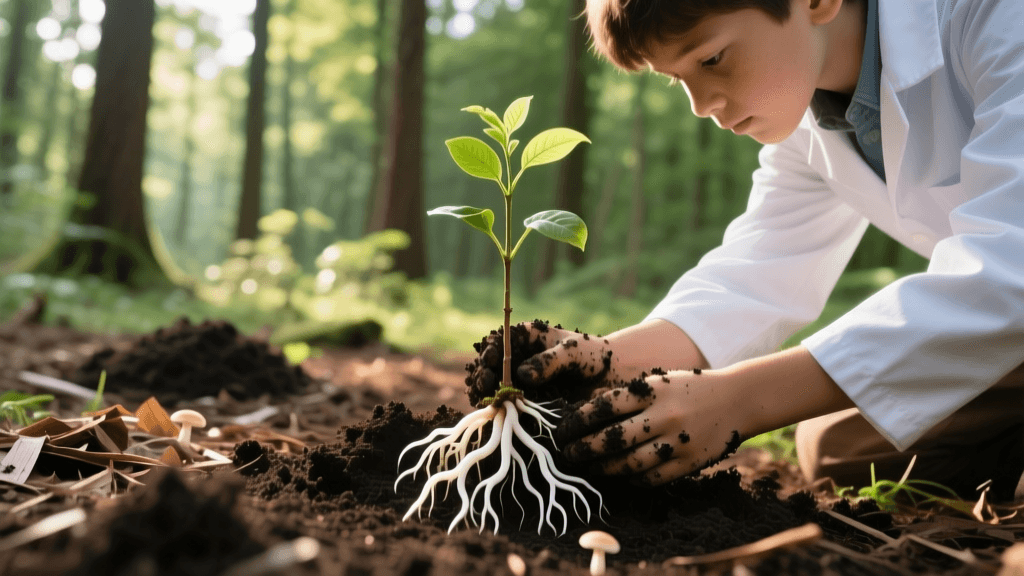
When we observe a thriving, old-growth forest, we rarely see bare soil. Instead, the forest floor is blanketed with a diverse, multi-layered tapestry of fallen leaves, decaying branches, pine needles, and living groundcovers. This natural detritus is the lifeblood of the urban and suburban trees we care for in our landscapes. Unfortunately, modern landscaping practices often strip trees of these essential ecological benefits, replacing them with synthetic fertilizers, dyed wood chips, and impermeable plastic weed barriers. Transitioning to eco-friendly tree mulching is not just an aesthetic choice; it is a fundamental shift toward sustainable soil health, water conservation, and long-term tree vitality.
Sustainable tree care focuses on mimicking natural forest ecosystems. By utilizing organic, locally sourced materials and living mulches, homeowners can foster robust mycorrhizal fungal networks, improve soil structure, and drastically reduce the need for chemical interventions. This comprehensive guide explores the most effective, eco-friendly mulching methods, providing actionable measurements, cost comparisons, and seasonal timing to help you cultivate a resilient, thriving landscape.
The Ecological Cost of Conventional Landscaping
Before adopting sustainable methods, it is crucial to understand the hidden environmental costs of conventional tree care. Many homeowners and commercial landscapers rely on dyed hardwood mulches and synthetic landscape fabrics. While these materials may offer a uniform, manicured appearance, they actively degrade soil health over time.
- Dyed Mulches: Often made from recycled construction waste or pallets, dyed mulches can leach heavy metals, chromated copper arsenate (CCA), and carbon black dyes into the soil. These chemicals harm beneficial soil microbes and earthworms, which are essential for nutrient cycling.
- Landscape Fabrics: Woven and non-woven geotextiles are frequently installed to suppress weeds. However, they block vital gas exchange between the soil and the atmosphere, suffocating tree roots and preventing the natural incorporation of organic matter. Over time, soil beneath these barriers becomes compacted and biologically dead.
- Synthetic Fertilizers: Relying on quick-release synthetic fertilizers provides a temporary nitrogen spike but degrades soil structure and leads to nutrient runoff, polluting local waterways and contributing to harmful algal blooms.
According to the Morton Arboretum, proper organic mulching is one of the most beneficial practices for tree health, yet improper materials and application methods remain a leading cause of urban tree decline.
Arborist Wood Chips: The Eco-Friendly Gold Standard
Arborist wood chips are the undisputed champions of sustainable tree mulching. Unlike uniform, bagged bark mulches, fresh arborist chips are a heterogeneous mix of wood, bark, cambium, and leaves. This varied texture and composition provide a complex carbon source that feeds a diverse array of soil organisms, particularly mycorrhizal fungi. These fungi form symbiotic relationships with tree roots, extending their reach and increasing their ability to absorb water and essential micronutrients.
Dispelling the Nitrogen Robbery Myth
A persistent myth in horticulture is that fresh wood chips will 'rob' the soil of nitrogen as they decompose, starving the tree. Extensive research, including studies highlighted by Penn State Extension, has thoroughly debunked this. While the very top layer of decomposing chips may experience a temporary nitrogen tie-up, the soil beneath the mulch layer remains unaffected. In fact, as the chips slowly break down, they release a steady, slow-release stream of organic nitrogen and humic acids back into the soil profile.
Sourcing and Cost Analysis
One of the most significant advantages of arborist wood chips is their sustainability and cost-effectiveness. They are a byproduct of routine tree maintenance and storm damage cleanup, meaning they divert massive amounts of green waste from landfills.
- Local Tree Services: Call local arborists and ask if they need a place to drop a load of chips. This is often completely free, though it requires flexibility regarding delivery timing and volume (often 10 to 20 cubic yards).
- ChipDrop Services: Platforms like ChipDrop connect homeowners with local arborists looking to offload wood chips. Costs typically range from $0 to a $50 delivery fee, making it vastly more economical than commercial alternatives.
- Municipal Recycling Centers: Many city waste management facilities offer free or low-cost ($10 to $20 per cubic yard) composted yard waste and wood chips to residents.
Compared to dyed commercial mulch, which costs $35 to $55 per cubic yard and requires frequent replacement, arborist chips offer superior ecological benefits at a fraction of the cost.
Living Mulches: Groundcovers That Give Back
For an even more dynamic and sustainable approach, consider integrating living mulches beneath your trees. Living mulches are low-growing, shade-tolerant plants that protect the soil, retain moisture, and actively contribute to soil fertility.
Top Sustainable Groundcover Recommendations
- Dutch White Clover (Trifolium repens): A nitrogen-fixing legume that thrives in partial shade. Clover pulls nitrogen from the atmosphere and deposits it into the soil via root nodules, naturally fertilizing the tree without synthetic inputs.
- Creeping Comfrey (Symphytum grandiflorum): Known as a dynamic accumulator, comfrey's deep taproots mine subsoil for potassium, phosphorus, and calcium, bringing these nutrients to the surface where they become available to tree feeder roots.
- Native Sedges (Carex species): Excellent for deep shade where turfgrass fails. Sedges require minimal mowing, provide habitat for beneficial insects, and possess dense root systems that prevent soil erosion.
Eco-Friendly Mulch Comparison Chart
Choosing the right material depends on your specific landscape goals, budget, and ecological priorities. The table below compares popular eco-friendly mulching options.
| Mulch Type | Avg. Cost (per Cu. Yd.) | Water Retention | Nutrient Release Rate | Ecological Impact |
|---|---|---|---|---|
| Arborist Wood Chips | $0 - $20 | Excellent | Slow (2-4 years) | High (Fosters fungi, diverts waste) |
| Leaf Mold (Composted Leaves) | $0 (DIY) - $30 | Very Good | Fast (6-12 months) | High (Recycles local yard waste) |
| Living Mulch (Clover/Sedges) | $15 - $40 (Seed/Plugs) | Excellent | Continuous (Nitrogen fixing) | Very High (Supports pollinators) |
| Pine Needles (Straw) | $10 - $25 (per bale) | Good | Very Slow | Moderate (Good for acid-loving trees) |
| Composted Yard Waste | $25 - $40 | Good | Fast (Immediate availability) | High (Closes the local nutrient loop) |
Step-by-Step Sustainable Mulching Guide
Applying mulch correctly is just as important as choosing the right material. Improper application can lead to trunk rot, girdling roots, and pest infestations. Follow these actionable steps to ensure your trees receive maximum benefit.
Step 1: Clear the Base Using the Smothering Method
Avoid using chemical herbicides like glyphosate to clear grass and weeds around the tree base. Instead, use a sustainable sheet-mulching technique. Lay down overlapping layers of plain, uncoated brown cardboard directly over the existing grass or weeds. Wet the cardboard thoroughly. This blocks sunlight, naturally killing the vegetation while allowing water and gas to permeate the soil. Over a few months, the cardboard will decompose, adding carbon to the soil and inviting earthworms to the surface.
Step 2: Measure the Application Zone
The Arbor Day Foundation recommends mulching out to the tree's drip line (the outer edge of the canopy). For a mature shade tree, this may mean a mulch ring 10 to 20 feet in diameter. If the drip line is impractical for your yard space, establish a minimum radius of 3 to 4 feet from the trunk for young trees, expanding it as the tree grows.
Step 3: Apply the 'Donut' Technique
Never pile mulch against the tree trunk—a harmful practice known as 'volcano mulching.' Moisture trapped against the bark invites fungal pathogens, boring insects, and rodent damage. Instead, create a 'donut' shape:
- Keep the mulch exactly 3 inches away from the root flare (the base of the trunk where it meets the soil).
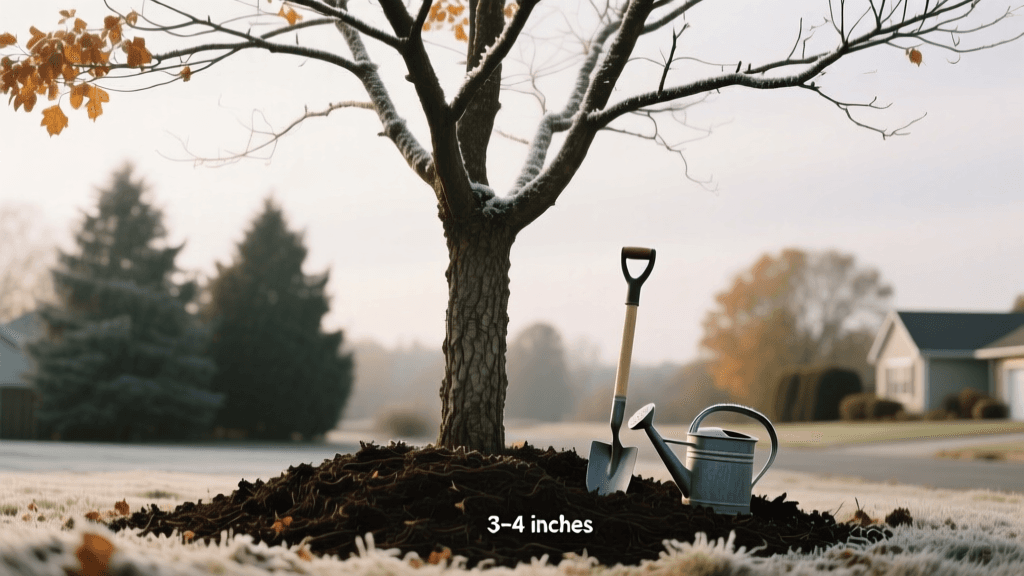
- Apply the arborist chips or leaf mold to a depth of 3 to 4 inches. Any deeper, and you risk restricting oxygen flow to the fine feeder roots.
- Feather the outer edge of the mulch ring down to ground level to prevent runoff and create a natural transition.
Step 4: Hydrate and Inoculate
After applying the dry wood chips, water the ring deeply. This settles the material, eliminates large air pockets, and kickstarts the decomposition process. For an extra sustainable boost, you can water the mulch with compost tea or a mycorrhizal inoculant to immediately introduce beneficial biology to the new environment.
Seasonal Maintenance and Timing
The best time to apply or refresh your eco-friendly mulch is in early spring (before soil temperatures consistently exceed 55°F) or in late autumn (after the first hard frost). Spring application helps retain soil moisture heading into the summer heat, while autumn application insulates the root zone against freeze-thaw cycles that can heave and damage shallow roots.
Because arborist wood chips decompose slowly, you will not need to replace them annually. Simply inspect the ring each spring. If the depth has settled below 2 inches, 'top dress' the area with a fresh 1-to-2-inch layer of chips. Avoid tilling or turning the old mulch into the soil, as this disrupts the delicate fungal networks that have established themselves over the previous year.
Conclusion
Embracing eco-friendly tree mulching is a powerful way to steward your local environment. By rejecting synthetic dyes and plastic barriers in favor of arborist wood chips, living groundcovers, and natural sheet mulching, you actively build soil resilience, conserve municipal water supplies, and support local biodiversity. Sustainable tree care is not about forcing nature into a rigid, manicured box; it is about partnering with natural ecological processes to create a landscape that is as healthy as it is beautiful.