Tree Care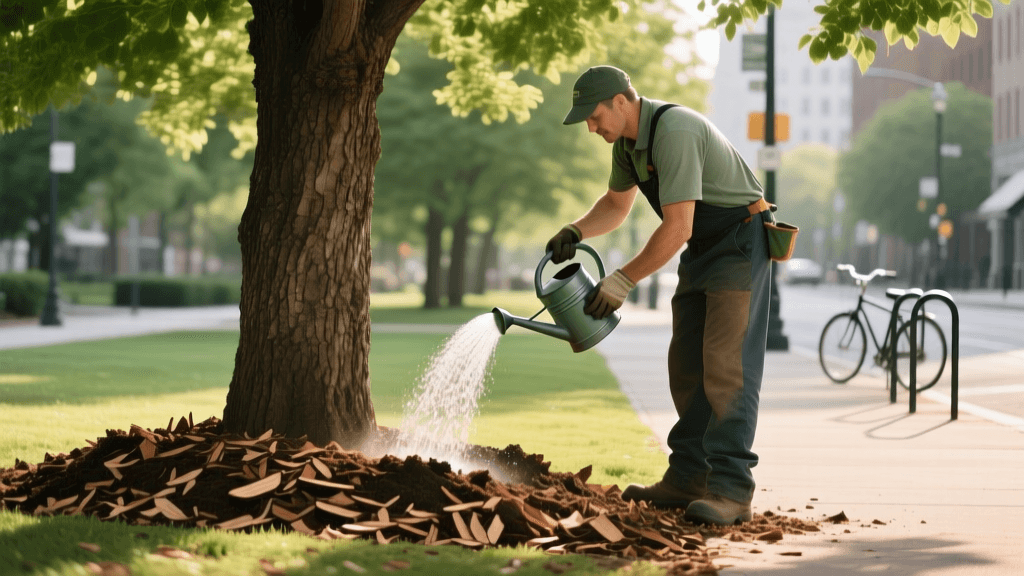
Eco-Friendly Tree Mulching and Watering for Drought Resilience
As extreme weather patterns, prolonged droughts, and urban heat islands become increasingly common, homeowners and land managers must fundamentally rethink their approach to urban forestry. Traditional lawn care often treats trees as passive ornaments, relying on synthetic fertilizers, excessive sprinkler irrigation, and aesthetic but harmful mulching practices. However, adopting eco-friendly and sustainable tree care methods is not just an environmental imperative; it is a practical strategy to build drought resilience, reduce water bills, and foster a thriving soil microbiome.
Transitioning to sustainable tree care requires a shift from surface-level maintenance to deep-root ecology. By mimicking natural forest floor processes and utilizing water-wise irrigation technologies, you can cultivate robust trees capable of withstanding climate stressors. This guide explores actionable, eco-conscious mulching and watering strategies designed to conserve resources and promote long-term canopy health.
The Ecology of Sustainable Tree Mulching
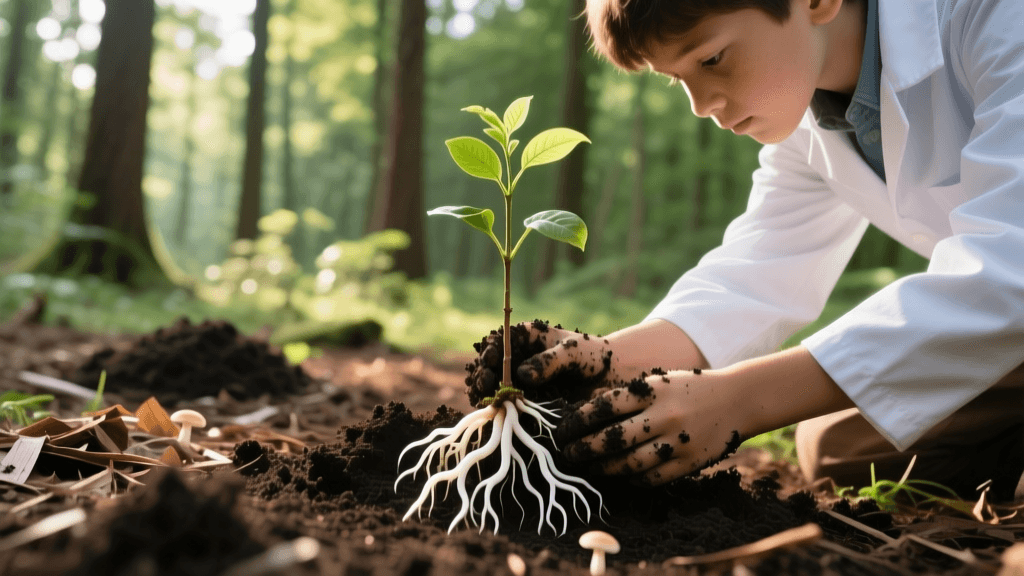
In a natural forest, trees are surrounded by a diverse, decomposing layer of organic matter. This leaf litter regulates soil temperature, retains moisture, suppresses weeds, and slowly releases nutrients as it breaks down. Sustainable mulching replicates this process, feeding the complex web of mycorrhizal fungi and beneficial bacteria that form symbiotic relationships with tree roots. According to the Arbor Day Foundation, proper mulching can reduce soil moisture evaporation by up to 70 percent, drastically cutting down the need for supplemental irrigation.
The Dangers of the 'Mulch Volcano'
One of the most pervasive and damaging trends in landscaping is the 'mulch volcano'—piling mulch high against the trunk of the tree in a cone shape. This practice is highly detrimental to tree health for several reasons:
- Bark Decay: Tree bark is designed to be exposed to air. Burying it under damp mulch invites fungal pathogens and causes the bark to rot, compromising the tree's vascular system.
- Girdling Roots: Excessive mulch encourages secondary roots to grow into the mulch layer rather than deep into the soil. These roots can eventually wrap around the trunk, strangling the tree.
- Pest Havens: Deep mulch piles provide an ideal, protected habitat for rodents and insects that chew on the vulnerable root collar during winter months.
Choosing the Right Organic Mulch Materials
Not all mulches are created equal. Sustainable landscaping prioritizes locally sourced, organic materials that improve soil structure over time. Avoid dyed wood chips (which can contain chemical contaminants) and synthetic rubber mulches (which leach heavy metals and offer no biological value). Below is a comparison of the best eco-friendly mulch options:
| Mulch Type | Cost Estimate | Water Retention | Soil Amendment Value | Best Use Case |
|---|---|---|---|---|
| Arborist Wood Chips | Free to $20/yard | High | Moderate (slow breakdown) | Mature trees, large planting beds |
| Composted Leaf Mold | $30 - $40/yard | Very High | Excellent (rich in microbes) | Young trees, sensitive species |
| Pine Bark Nuggets | $40 - $50/yard | Moderate | Low (highly acidic, slow decay) | Acid-loving trees (e.g., Oaks, Pines) |
| Straw / Salt Marsh Hay | $10 - $15/bale | Moderate | High (breaks down quickly) | Temporary winter protection |
The 3-3-3 Rule for Proper Application
To apply mulch sustainably and safely, arborists recommend the '3-3-3 Rule':
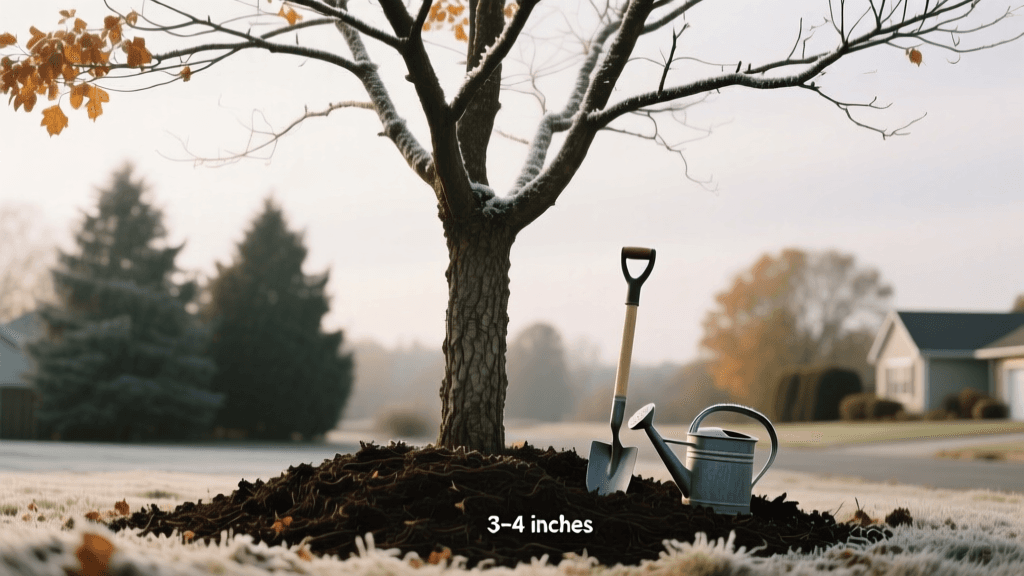
- 3 Inches Deep: Apply a layer no deeper than 3 inches. Deeper layers restrict oxygen flow to the root zone.
- 3 Feet Radius: Extend the mulch ring at least 3 feet from the trunk in all directions. For mature trees, extending the mulch to the drip line is ideal, as this is where the most active feeder roots reside.
- 3 Inches Away: Keep the mulch at least 3 inches away from the actual trunk, creating a 'donut' shape to expose the root flare.
Eco-Conscious Watering and Deep Root Hydration
Traditional overhead sprinklers are highly inefficient for trees. Much of the water is lost to wind drift and evaporation before it ever reaches the deep root zone. Furthermore, wetting the foliage encourages fungal diseases like powdery mildew and apple scab. Sustainable tree watering focuses on slow, deep hydration that encourages roots to grow downward, anchoring the tree and making it resilient to surface drought.
Slow-Release Deep Watering Techniques
To maximize water efficiency, utilize tools that deliver moisture directly to the subsoil at a slow rate:
- Tree Watering Bags (e.g., Treegator): These heavy-duty plastic bags wrap around the trunk and hold 15 to 20 gallons of water. They feature micro-emitters at the base that slowly release water over 5 to 9 hours. Cost: $25 to $35 per bag. Best for: Newly planted trees (1-3 years old).
- Soaker Hoses: Made from recycled rubber, soaker hoses 'sweat' water along their entire length. Coil the hose in concentric circles starting 18 inches from the trunk and extending to the drip line. Run on low pressure for 2-3 hours.
- Olla Clay Pots: An ancient, zero-electricity irrigation method. Bury unglazed terracotta pots (Ollas) near the tree's root zone, leaving the neck exposed. Fill them with water, and the porous clay will slowly seep moisture into the surrounding soil only when the soil dries out. Cost: $15 to $40 per pot.
Watering Measurements and Timing
A general rule of thumb provided by The Morton Arboretum is to provide 10 to 15 gallons of water per inch of trunk caliper (measured at knee height) per week during the growing season. For a newly planted tree with a 2-inch caliper, this means 20 to 30 gallons weekly. Always water in the early morning (between 4:00 AM and 8:00 AM) to minimize evaporation and allow foliage to dry before nightfall.
Rainwater Harvesting and Greywater Diversion
True sustainability involves reducing reliance on municipal water supplies. According to the EPA WaterSense program, outdoor water use accounts for nearly 30% of total household water consumption. You can drastically reduce this footprint through harvesting:
- Rain Barrels: Install 50-gallon rain barrels at your downspouts. Elevate the barrel on cinder blocks to increase gravity-fed water pressure for your soaker hoses.
- Downspout Diverters: Bury corrugated flexible piping attached to your gutter downspouts, directing the runoff into a shallow, mulch-filled rain garden surrounding your mature trees.
- Greywater Use: If local codes permit, route laundry greywater to your landscape. Caution: Use only biocompatible, sodium-free, and boron-free detergents, as boron is highly toxic to most tree species.
Seasonal Sustainable Care Schedule
Maintaining an eco-friendly tree care regimen requires adapting to the seasons. Follow this structured calendar to ensure your trees remain resilient year-round:
- Spring (March - May): Refresh the mulch layer to maintain the 3-inch depth after winter decomposition. Install rain barrels before the spring showers. Begin deep watering only if spring rainfall is less than 1 inch per week.
- Summer (June - August): Deploy Treegator bags for young trees during dry spells. Water mature trees deeply once every 10-14 days using a soaker hose. Avoid heavy pruning, which stimulates vulnerable new growth that requires excess water.
- Fall (September - November): Rake fallen leaves directly into the tree's mulch ring rather than bagging them for the landfill. This provides a free, nutrient-rich leaf mold. Continue deep watering until the ground freezes to prevent winter desiccation.
- Winter (December - February): Remove irrigation bags and store them indoors to prevent UV degradation. Protect young trunks from rodent damage using biodegradable paper tree wrap rather than plastic guards.
Conclusion
Embracing eco-friendly tree mulching and watering techniques is a powerful way to steward your local environment. By abandoning harmful mulch volcanoes, utilizing slow-release deep hydration tools, and harvesting rainwater, you cultivate trees that are not only beautiful but deeply resilient to the challenges of a changing climate. Sustainable tree care is an investment in the future canopy, ensuring that your landscape remains a thriving, water-wise ecosystem for decades to come.