Home & Garden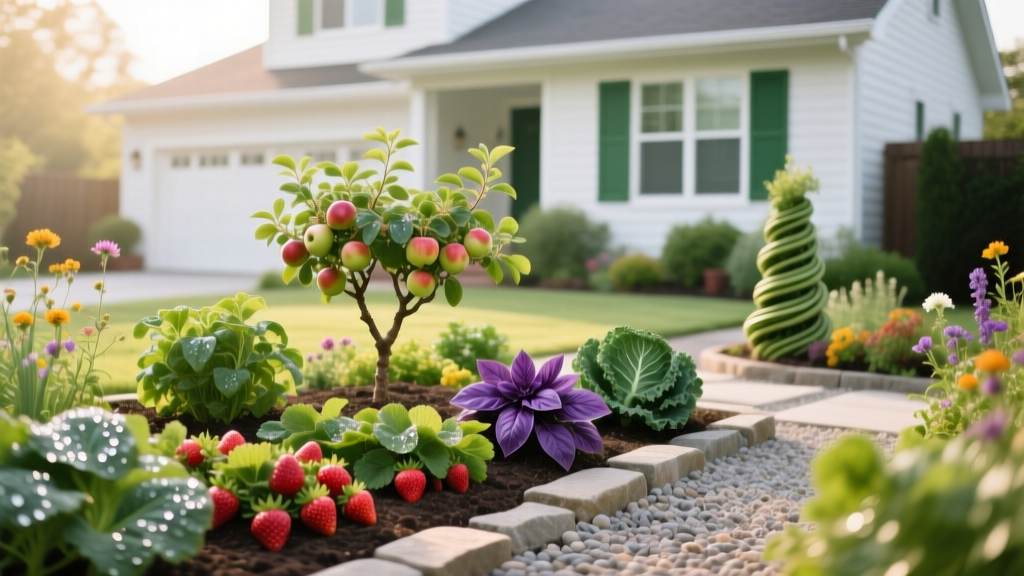
Edible Front Yard Landscaping Ideas For Suburban Homes
Functional Beauty: Blending Edibility with Curb Appeal
Front yard landscaping no longer needs to prioritize aesthetics over utility. Across suburban neighborhoods in USDA Hardiness Zones 5–8—where the majority of U.S. single-family homes reside—homeowners are reimagining lawn space as productive, pollinator-friendly, and visually cohesive edible gardens. Unlike traditional vegetable plots tucked behind fences, edible front yards integrate food-producing plants into formal or cottage-style designs without sacrificing neighborhood harmony. This shift aligns with recommendations from the American Horticultural Society’s 2022 Home Garden Trends Report, which found that 68% of surveyed suburban gardeners now prioritize multi-functional plantings in visible landscape zones.
Hardy Perennials That Feed and Flourish
Perennial edibles offer long-term structure while reducing annual replanting labor. Swiss chard ‘Bright Lights’ thrives in Zones 4–9, producing colorful, edible stems for up to three years when planted in full sun and well-drained soil with pH 6.0–7.0. Its upright habit and vibrant foliage serve as ornamental focal points, especially when interplanted with lavender (Lavandula angustifolia), a Zone 5–9 perennial whose fragrant purple blooms attract beneficial insects from late June through early September.
Blueberries (Vaccinium corymbosum) exemplify dual-purpose design: their glossy foliage turns fiery red in autumn, and they yield fruit in early summer. They require acidic soil (pH 4.5–5.5), consistent moisture, and full sun—conditions successfully replicated at the Chicago Botanic Garden’s Edible Landscape Demonstration Garden, where cultivars like ‘Bluecrop’ and ‘Patriot’ have produced an average of 5–10 lbs per mature bush annually since 2019.
Soil Preparation Essentials
Before planting, conduct a soil test—available through county extension offices or commercial labs—to determine pH and nutrient levels. Amend alkaline soils with elemental sulfur (1.2 lbs per 100 sq ft lowers pH by one unit in loam) or peat moss (3 inches incorporated to 6-inch depth). For heavy clay, add 2–3 inches of compost and till to a depth of 12 inches to improve drainage and root penetration.
- Test soil every 2–3 years to monitor pH drift
- Maintain 2–4 inches of organic mulch (shredded bark or compost) to suppress weeds and retain moisture
- Avoid synthetic fertilizers near edible plantings; opt instead for slow-release organic amendments like alfalfa meal (2–3 lbs per 100 sq ft)
Structural Elements That Support Growth and Style
Garden structures extend functionality while anchoring design. A 6-foot-tall cedar arbor, treated with non-toxic linseed oil finish, supports vigorous grapevines (Vitis labrusca cultivars like ‘Concord’) in Zones 5–9 and provides shade for understory herbs such as lemon balm (Melissa officinalis), which blooms white from July to September and tolerates partial shade.
At the Brooklyn Botanic Garden’s Native Plant Garden, low-profile raised beds constructed from reclaimed brick (18 inches tall × 36 inches wide) house compact tomato varieties like ‘Mountain Magic’, yielding up to 12 lbs per plant across a 90-day harvest window. These beds elevate root zones above compacted suburban subsoil and allow precise control over soil composition—particularly valuable where native soil pH exceeds 7.2.
Vertical Integration Strategies
Vertical gardening maximizes limited front-yard space. Use galvanized steel trellises rated for 150+ lbs load capacity to support pole beans (Phaseolus vulgaris), which produce daily harvests for 6–8 weeks beginning 55 days after sowing. Train kiwi vines (Actinidia arguta ‘Issai’) on 8-foot freestanding pergolas; this self-fertile cultivar bears fruit in Zones 4–8 and requires 200+ chilling hours below 45°F annually.
- Install drip irrigation lines beneath mulch before planting to reduce foliar disease risk
- Space trellised crops 12–18 inches apart to ensure air circulation
- Prune woody vines like grapes during dormancy (late February in Zone 6) to maintain shape and fruit quality
Ornamental Edibles for Seasonal Interest
Many edible plants rival traditional ornamentals in visual impact. Purple basil (Ocimum basilicum ‘Dark Opal’) forms dense 18-inch mounds with deep burgundy leaves and lavender flowers from mid-July until frost. It prefers pH 6.0–7.5 and full sun—ideal for massing along property borders or spilling from stone retaining walls.
Artichokes (Cynara scolymus) deliver architectural drama: silvery, deeply lobed foliage reaches 4–5 feet tall and wide in Zones 7–11, with large, edible flower buds appearing in late spring. At the Missouri Botanical Garden’s Climatron greenhouse, artichoke trials demonstrated optimal bud formation when soil temperatures remain between 55°F and 75°F for 10 consecutive days—a condition reliably met in St. Louis’ Zone 6b climate during April–May.
Daylilies (Hemerocallis spp.) are often overlooked as edibles, yet their young shoots, flower buds, and petals are all safe to consume. Cultivars like ‘Stella de Oro’ bloom continuously from late May through September in Zones 3–10, tolerate pH 6.0–7.8, and thrive in lean soils where many vegetables struggle.
Design Principles for Suburban Context
Successful edible front yards adhere to three spatial principles: repetition, scale, and seasonal sequencing. Repeat core edibles—such as globe artichokes spaced at 36-inch intervals—to create rhythm. Limit vertical elements to heights no greater than 7 feet to comply with most municipal sight-line ordinances. Sequence bloom and harvest times so something is visually engaging or productive each month: garlic scapes emerge in May, strawberries ripen in June, tomatoes peak in August, and kale sweetens after October frosts.
The University of Vermont Extension’s 2021 Front Yard Food Project documented that suburban lots averaging 6,500 sq ft allocated just 12% (780 sq ft) to edible plantings while maintaining compliance with HOA guidelines—primarily through low-profile herb spirals, berry hedges, and flowering fruit trees pruned to under 15 feet tall.
Climate-Adapted Plant Selection
Select cultivars validated for local conditions. In Zone 7a (e.g., Richmond, VA), ‘Black Pearl’ pepper produces glossy black fruits that mature to red in 75 days and withstand humidity better than standard bell peppers. In Zone 5b (e.g., Minneapolis), ‘Northblue’ blueberry yields reliably despite winter lows of −20°F, provided snow cover exceeds 6 inches for insulation.
“Edible landscapes succeed not by hiding function, but by elevating it to design intention. When Swiss chard replaces boxwood, and serviceberry replaces Bradford pear, beauty and sustenance become inseparable.” — Dr. Linda Chalker-Scott, Washington State University Extension, 2020
| Plant | Zones | Bloom/Harvest Window | Soil pH Range | Mature Height |
|---|---|---|---|---|
| ‘Golden Nugget’ squash | 3–10 | July–October | 6.0–7.5 | 2–3 ft vining |
| ‘Red Ace’ beet | 2–11 | 60–70 days from sowing | 6.0–7.0 | 12 inches |
| ‘Fragrant Cloud’ rose | 5–9 | May–October (repeat bloom) | 6.0–7.0 | 4–5 ft |
Serviceberry (Amelanchier spp.) bridges native ecology and edibility: its white spring blossoms feed early pollinators, and its blue-black berries ripen in early June—just before strawberries—providing a staggered harvest. Planted as a 15-foot specimen tree or trained as a multi-stemmed shrub, it tolerates pH 5.5–7.5 and grows vigorously in Zones 2–9. The Arnold Arboretum in Boston has tracked 22-year growth records showing average annual height gain of 14 inches in full sun on loamy glacial till soils.
Chives (Allium schoenoprasum) form tidy 12-inch clumps with lavender pom-pom flowers in late May, attracting hoverflies that prey on aphids. They thrive in pH 6.0–7.0 and require only 1 inch of water weekly once established—making them ideal for drought-resilient front yards in Zone 6 and warmer.
Rhubarb (Rheum x hybridum) delivers bold texture with massive, celery-green stalks emerging in early spring. It requires 1,000+ chilling hours and performs best in Zones 3–8, preferring pH 6.0–6.8. At Cornell University’s Long Island Horticultural Research & Extension Center, rhubarb crowns planted in fall showed 32% higher first-year yield than spring-planted stock, underscoring timing’s critical role.
Strawberries (Fragaria × ananassa) planted in staggered rows along walkway edges provide groundcover and fruit. Day-neutral cultivars like ‘Tristar’ produce fruit continuously from June through October in Zones 4–8, given consistent moisture and pH 5.5–6.5. Mulch with straw—not plastic—to prevent crown rot and maintain soil temperature within the optimal 60–65°F range for root development.
Walking paths lined with creeping thyme (Thymus serpyllum) tolerate light foot traffic, release fragrance when stepped on, and bloom lavender from June to August. It thrives in pH 6.5–8.0 and requires minimal irrigation once established—ideal for low-maintenance, high-impact edging in Zones 4–9.
Finally, avoid invasive species—even those labeled “edible.” Japanese knotweed (Fallopia japonica), though historically consumed, is prohibited in 23 states due to its aggressive spread. Instead, choose native alternatives like eastern prickly pear (Opuntia humifusa), whose pads and fruits are edible and which thrives in Zones 4–9 with zero irrigation once established.