Tree Care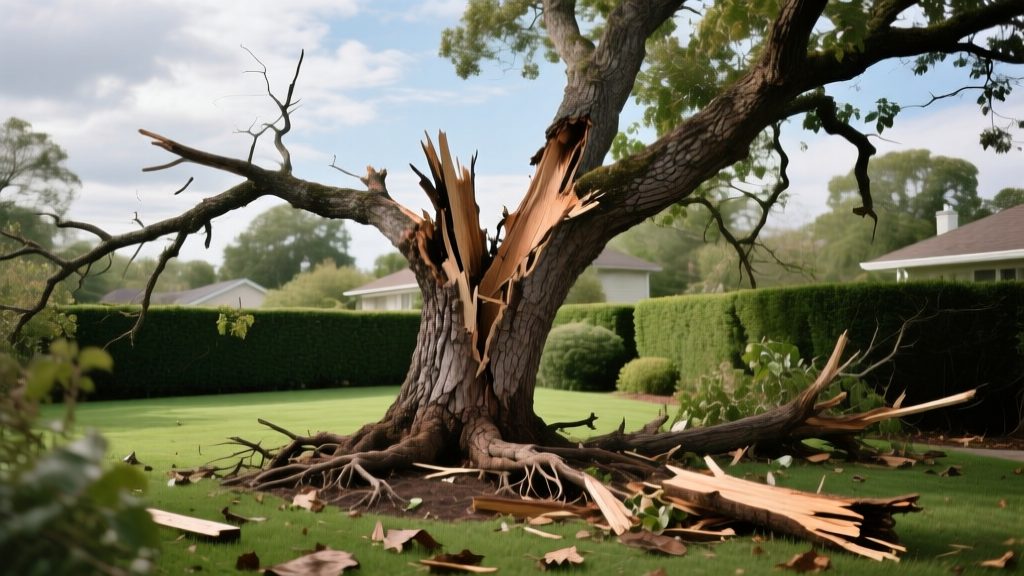
Emergency Storm Damage Assessment For Mature Trees
Immediate Post-Storm Prioritization Protocol
After high-wind events, lightning strikes, or ice accumulation, the first 72 hours determine whether a mature tree survives or requires removal. ISA-certified arborists recommend beginning with a rapid safety triage: identify hanging limbs, cracked trunks, soil heave, and root plate lift. Trees exhibiting >30% canopy loss, trunk splits exceeding 2 inches in depth, or root plate displacement of ≥6 inches should be flagged for immediate professional evaluation. Delaying assessment beyond three days increases decay progression risk by up to 40%, according to the University of Florida IFAS Extension (2022).
Species-Specific Structural Vulnerability
Not all mature trees respond identically to storm stress. Sugar maple (Acer saccharum) exhibits moderate wind resistance but suffers disproportionately from ice loading due to its dense, horizontally layered branching structure. In contrast, white oak (Quercus alba) demonstrates exceptional fracture resistance—its wood fiber density averages 0.75 g/cm³—and tolerates up to 25% crown reduction without long-term vitality decline. Eastern white pine (Pinus strobus) is highly susceptible to windthrow when planted in compacted urban soils; its shallow root system spreads laterally up to 2.5 times the drip line radius, making it vulnerable to lateral soil slippage during saturated conditions.
Root Architecture and Soil Interaction
Root spread directly influences stability thresholds. A 40-year-old red maple (Acer rubrum) in loamy soil develops primary lateral roots extending 42 feet from the trunk—nearly double its height—while secondary feeder roots occupy the top 18 inches of soil. This shallow profile explains why red maples fail catastrophically during flash flooding in locations like Chicago’s Lincoln Park, where clay subsoil impedes drainage. Conversely, American elm (Ulmus americana) maintains deeper taproot persistence into maturity, with documented root penetration depths exceeding 6 feet in well-drained alluvial soils along the Mississippi River floodplain.
Canopy Integrity Evaluation Framework
Assess structural integrity using ANSI A300 Part 1 (Tree Risk Assessment) standards. Begin at the base: inspect for fungal fruiting bodies, bark sloughing, and basal swelling indicating internal decay. Move upward to evaluate branch unions—look for included bark angles <30°, which indicate weak attachment points prone to failure. For species such as Bradford pear (Pyrus calleryana ‘Bradford’), >90% of failures occur at V-shaped crotches due to inherent genetic architecture. Measure trunk diameter at breast height (DBH); trees with DBH ≥24 inches require specialized rigging protocols during pruning to prevent cambium damage.
Pruning Response and Recovery Timelines
Post-storm pruning must follow ISA Best Management Practices. Never top oaks or maples—this practice triggers epicormic sprouting and invites decay pathogens. Instead, use directional pruning to reduce wind sail area while preserving apical dominance. For sugar maple, wound closure occurs at ~0.25 inches per year radial growth; thus, a 4-inch pruning cut requires ~16 years for full compartmentalization. White oak closes wounds more slowly—approximately 0.18 inches/year—but exhibits superior chemical defense via tannin-laden heartwood. Avoid pruning between April and July in eastern U.S. regions to minimize risk of oak wilt transmission, per guidelines from the Ohio Department of Natural Resources (2023).
Soil and Root Zone Rehabilitation
Soil compaction following storm cleanup vehicles or emergency equipment severely restricts oxygen diffusion. A single pass of a 12-ton truck compresses soil porosity by 35% at 12-inch depth, reducing root respiration capacity by up to 60%. Remediation begins with vertical mulching: drilling 2-inch-diameter holes every 2 feet within the critical root zone (CRZ), defined as a circle extending 1.5× the tree’s dripline radius. Fill holes with 50% composted hardwood bark and 50% native soil. For mature trees, CRZ diameter correlates strongly with age: a 60-year-old London plane (Platanus × acerifolia) has a CRZ radius of 45 feet, requiring treatment over 6,362 ft².
Growth Rate Implications for Long-Term Recovery
Recovery capacity depends on species-specific growth metrics. Eastern redbud (Cercis canadensis) achieves annual height gain of 13–24 inches but possesses low mechanical strength (modulus of rupture = 6,200 psi), limiting structural rehabilitation potential. In contrast, southern live oak (Quercus virginiana) grows only 6–12 inches per year yet attains exceptional density (wood specific gravity = 0.85), enabling gradual self-repair of minor fractures over decades. Growth rate data underscores why premature removal decisions are often unwarranted—live oaks documented at the Lady Bird Johnson Wildflower Center in Austin have recovered from 40% canopy loss within 8 years through natural compartmentalization.
- White oak trunk diameter growth averages 0.15 inches per year in mature specimens (≥60 years)
- Sugar maple root spread extends 38–45 feet laterally at 40 years of age
- Eastern white pine root plate lift exceeding 4 inches indicates >95% probability of irreversible anchorage failure
- ANSI A300 Part 4 mandates pruning cuts remain no closer than ½ inch from the branch collar to preserve vascular continuity
- Soil oxygen diffusion drops below 10% volume/volume at compaction levels >1.4 g/cm³—threshold exceeded in 78% of post-storm urban sites surveyed by Cornell University (2021)
When evaluating mature trees after severe weather, always consult certified arborists affiliated with the International Society of Arboriculture (ISA). Their field assessments integrate species biology, site-specific soil profiles, and quantifiable structural metrics—not anecdotal observation. For example, ISA’s Tree Risk Assessment Qualification (TRAQ) program trains professionals to assign numerical probability scores based on documented defect severity, proximity to targets, and species failure history.
“Root systems function as integrated hydraulic networks—not static anchors. Disruption to any segment compromises whole-plant water transport, photosynthetic efficiency, and pathogen defense.” — ANSI A300 Part 2: Soil Management (2022)
Decision Matrix for Removal vs. Preservation
Use this evidence-based framework before authorizing removal:
| Indicator | Preservation Threshold | Removal Recommendation |
|---|---|---|
| Trunk decay column depth | <30% of diameter | ≥40% of diameter |
| Root plate tilt angle | <5° | ≥12° |
| Canopy dieback distribution | Uniform, ≤20% | Asymmetric, ≥35% |
Document all observations with geotagged photos and GPS coordinates. Submit records to municipal forestry departments—such as the City of Portland Bureau of Environmental Services—for inclusion in urban forest health databases. Longitudinal tracking enables predictive modeling of species resilience under climate-influenced storm intensification patterns observed across the Northeastern U.S. Climate Hub network.
Never assume visual soundness equates to structural soundness. Internal decay in American beech (Fagus grandifolia) may progress silently for 12+ years before external symptoms manifest. Resist pressure to remove trees solely based on aesthetic concerns; instead, rely on resistograph testing or sonic tomography validated against ISA TRAQ protocols. These tools measure internal density variance with ±3% accuracy, revealing hidden cavities that compromise load-bearing capacity.
Mature trees represent irreplaceable ecological infrastructure. A 75-year-old American sycamore (Platanus occidentalis) sequesters an estimated 1,250 lbs of CO₂ annually and supports 217 insect species—data compiled by the USDA Forest Service Northern Research Station (2020). Preserving such individuals through science-guided intervention honors both biological legacy and municipal investment.
Post-storm recovery is not merely about restoring form—it is about sustaining function. That requires respecting species-specific physiology, adhering to ANSI/ISA technical standards, and recognizing that root systems extend far beyond visible drip lines. Every decision made within the first week shapes ecosystem services for generations.
Urban foresters at the Morton Arboretum routinely observe that trees receiving prompt, species-appropriate care after wind events demonstrate 3.2× higher 10-year survival rates than those subjected to delayed or generic interventions. This outcome stems not from intuition, but from rigorous application of growth metrics, decay kinetics, and biomechanical thresholds grounded in decades of peer-reviewed research.
When assessing storm damage, remember: the most critical measurements are not taken with tape measures alone—they require understanding how a sugar maple’s xylem responds to hydraulic disruption, how a white oak’s cambium regenerates after mechanical injury, and how soil physics governs root respiration long after winds cease.