Gardening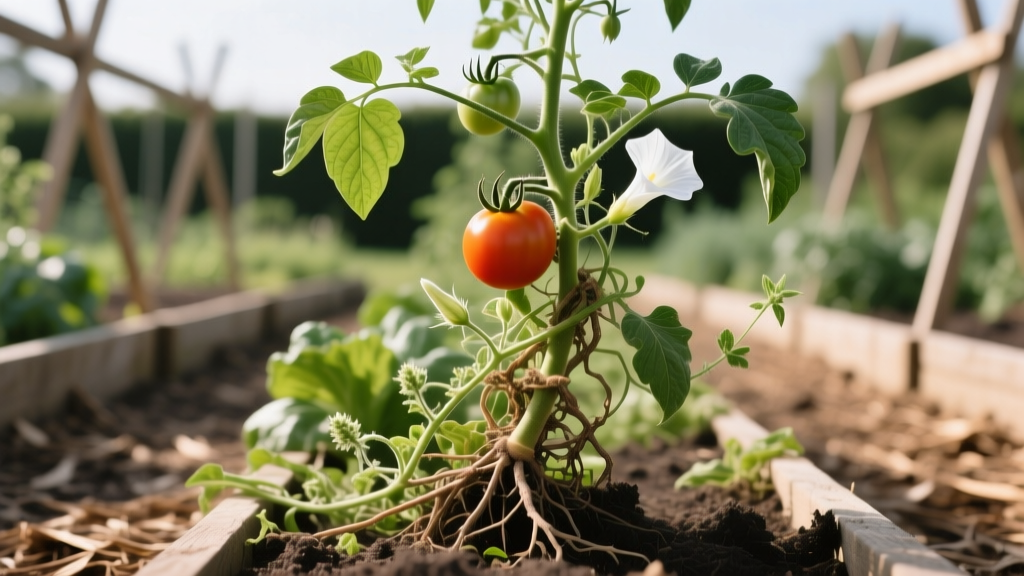
How to Identify and Eradicate Bindweed in Vegetable Gardens
James MillerPublished
The Ultimate Guide to Identifying and Eradicating Bindweed in Vegetable Gardens
For vegetable gardeners, few sights are more discouraging than the delicate, twining stems of bindweed wrapping around the tender shoots of your tomatoes, pole beans, or peas. Often mistaken for morning glories due to their similar trumpet-shaped flowers, bindweeds are actually some of the most aggressive and difficult-to-control perennial weeds in the world. Once established in a raised bed or garden plot, they can quickly choke out crops, compete fiercely for water and nutrients, and reduce your harvest yields significantly.
Eradicating bindweed requires patience, persistence, and a strategic approach. A single season of neglect can result in a massive underground root network that will plague your garden for years. In this comprehensive guide, we will explore how to accurately identify the specific type of bindweed invading your garden, understand its formidable biology, and deploy effective organic and chemical removal strategies to reclaim your vegetable beds.
Field Bindweed vs. Hedge Bindweed: Know Your Enemy
Before you can effectively eliminate bindweed, you must correctly identify which species you are dealing with. In most home gardens, the culprits are either Field Bindweed (Convolvulus arvensis) or Hedge Bindweed (Calystegia sepium). While they share similar vining habits and white-to-pink flowers, their growth patterns and leaf structures differ slightly. According to the Penn State Extension, accurate identification helps tailor your eradication timeline, as hedge bindweed tends to be slightly more aggressive in above-ground growth, while field bindweed develops deeper, more drought-resistant taproots.
| Feature | Field Bindweed (Convolvulus arvensis) | Hedge Bindweed (Calystegia sepium) |
|---|---|---|
| Leaf Shape | Arrowhead-shaped, small (1-2 inches), with rounded lobes at the base. | Large, triangular to heart-shaped (2-6 inches) with distinct pointed lobes at the base. |
| Flower Size | Small, trumpet-shaped (0.5 to 1 inch across), white or pale pink. | Large, trumpet-shaped (2 to 3 inches across), almost always pure white. |
| Vining Habit | Twines tightly around low-lying crops and groundcovers. | Climbs aggressively up tall structures, trellises, and tall crops like corn or pole beans. |
| Root System | Extensive, deep taproots reaching up to 20 feet in mature specimens. | Shallow but highly branched, spreading rapidly in the top 12 inches of soil. |
The Biology of Survival: Why Bindweed is So Hard to Kill
To defeat bindweed, you must understand its primary defense mechanism: its root system. The Royal Horticultural Society notes that bindweed roots are incredibly brittle and possess dormant buds along their entire length. If you use a rototiller or a spade to chop through the roots, you are not killing the plant; you are essentially taking a cutting. A single one-inch fragment of bindweed root left in the soil can regenerate into a completely new, fully mature plant within weeks.
Furthermore, bindweed stores massive amounts of carbohydrates in its deep rhizomes. When you pull the top growth off, the plant simply draws on these stored reserves to push up new shoots. This is why surface-level weeding and standard mulching almost never work against an established bindweed infestation.
Proven Organic and Cultural Control Methods
Because you are growing edible crops, organic and cultural controls are usually the safest and most preferred methods for managing bindweed in vegetable gardens. These methods require diligence but will eventually starve the root system without introducing synthetic chemicals to your food supply.
1. The Exhaustion Method (Persistent Hand-Pulling)
The goal of the exhaustion method is to continually remove the above-ground foliage before the leaves can photosynthesize and send energy back down to the roots. You must snap or cut the vines at the soil line every 5 to 7 days. Do not pull hard enough to break the root, as this leaves fragments behind. Instead, use a sharp hoe or scissors to cut the vine at the soil surface. If you maintain this strict schedule, the root system will eventually deplete its carbohydrate reserves and die. Be warned: this can take an entire growing season of relentless vigilance.
2. Smothering and Cardboard Mulching
Standard wood chips or straw mulch will not stop bindweed; the shoots will easily pierce through 3 inches of organic matter. To smother bindweed organically, you must use heavy-duty landscape fabric or overlapping layers of thick corrugated cardboard.
- Clear the area of all desirable plants.
- Lay down overlapping cardboard, ensuring there are no gaps at the seams.
- Cover the cardboard with at least 4 to 6 inches of heavy arborist wood chips or compost.
- Leave the area fallow for a minimum of 6 to 12 months.
Even with this method, bindweed may eventually find a seam or edge to push through, requiring immediate spot-treatment.
3. Soil Solarization
If you have an empty raised bed or garden plot during the peak heat of summer, soil solarization is highly effective. According to the University of California Integrated Pest Management (UC IPM) program, solarization uses the sun's radiant heat to bake the soil, killing weed seeds, roots, and soil-borne pathogens.
- Cultivate the soil lightly and water it deeply (moist soil conducts heat better than dry soil).
- Cover the plot with clear, 2-mil to 4-mil polyethylene plastic sheeting. Clear plastic is much more effective than black plastic for solarization.
- Bury the edges of the plastic in a shallow trench to create an airtight seal.
- Leave the plastic in place for 4 to 6 weeks during the hottest months of the year (July and August).
Chemical Control: The Paintbrush Method
In severe cases where organic methods have failed, targeted chemical control may be necessary. Pre-emergent herbicides are completely ineffective against established perennial bindweed. You must use a systemic post-emergent herbicide, such as glyphosate, which travels down the vine and into the root system. However, spraying herbicides in a vegetable garden is incredibly risky, as drift will instantly kill your broadleaf crops like tomatoes, peppers, and squash.
How to Apply Herbicide Safely in Edible Gardens
Never use a pump sprayer for bindweed in a vegetable bed. Instead, use the paintbrush method:
Pro Tip: Mix a 2% solution of glyphosate according to the label instructions. Put on heavy nitrile gloves, and then wear a cheap cotton glove over the nitrile one. Dip your cotton-gloved index finger and thumb into the solution, grab the bindweed vine, and pull your fingers up the stem to coat the leaves. Alternatively, use a small foam paintbrush to carefully paint the chemical directly onto the bindweed leaves, avoiding any contact with your vegetables.
Allow 10 to 14 days for the chemical to translocate to the roots before cutting the vine. Do not apply herbicides to drought-stressed bindweed, as the plant will have closed its stomata and will not absorb the chemical effectively.
Why Tilling Makes Bindweed Worse
Many new gardeners make the fatal mistake of rototilling a bed infested with bindweed, believing they are destroying the weed. In reality, a rototiller acts as a vegetative propagator. The tines chop the long, brittle rhizomes into dozens of tiny pieces, scattering them throughout the topsoil. Within a month, instead of one large bindweed plant, you will have fifty new ones. Always rely on manual extraction, smothering, or targeted chemical wicking rather than mechanical tillage when dealing with this weed.
Prevention and Long-Term Soil Health
Once you have successfully eradicated bindweed, preventing its return is paramount. Bindweed seeds can remain viable in the soil for up to 50 years. Avoid using cheap, unverified topsoil or municipal compost that may contain bindweed seeds or root fragments. If you are bringing in new soil for a raised bed, inspect it carefully and consider solarizing it before planting.
Finally, maintain vigorous, dense crop canopies. While bindweed can climb over almost anything, a healthy, heavily planted garden utilizing intensive spacing and companion planting will shade the soil surface, making it slightly more difficult for new bindweed seedlings to establish the photosynthetic momentum they need to survive. By combining vigilant identification, relentless organic exhaustion, and careful spot-treatments, you can win the war against bindweed and enjoy a thriving, productive vegetable garden.
