Tree Care
Essential Fall Tree Care: Mulching, Watering, and Winter Prep
The Hidden Life of Trees in Autumn
As the vibrant colors of autumn begin to fade and deciduous trees drop their leaves, many homeowners mistakenly believe that tree care ends with the raking of the lawn. However, fall and early winter are arguably the most critical seasons for establishing long-term tree health, structural integrity, and resilience against extreme weather. While the canopy may appear dormant, a tree's root system remains highly active beneath the soil surface well into the late fall and early winter months.
During this period, trees are actively storing carbohydrates and expanding their root networks to prepare for the stress of the upcoming spring growth cycle. Neglecting seasonal maintenance during these cooler months can lead to severe consequences, including winter desiccation, frost cracking, root dieback, and devastating wildlife damage. By implementing a strategic fall tree care regimen, you can ensure your landscape trees survive the harshest winter conditions and emerge vigorously in the spring.
The Fall Deep Watering Protocol
One of the most common misconceptions in urban forestry is that trees do not need water once the temperatures drop. In reality, winter desiccation—where a tree loses more moisture through its bark and evergreen needles than it can absorb from frozen soil—is a leading cause of tree mortality in cold climates. To combat this, you must implement a deep watering protocol leading up to the first hard ground freeze.
Measuring Soil Moisture and Hydration Needs
Before watering, assess the soil moisture using a simple soil probe or a long screwdriver. If you cannot easily push a 12-inch screwdriver into the soil near the tree's drip line, the ground is too dry. According to the Colorado State University Extension, newly planted trees require approximately 10 to 15 gallons of water per week during the fall, while established trees benefit from a deep soaking every two to three weeks until the ground freezes solid.
- Young Trees (1-3 years): Apply 10-15 gallons of water slowly around the root ball using a soaker hose or a 5-gallon bucket with small drainage holes drilled into the bottom.
- Mature Trees: Use an oscillating sprinkler or a root feeder attachment to deliver water deeply into the top 12-18 inches of soil, extending out to the drip line.
- Evergreens: These require special attention as they continue to lose moisture through their needles all winter. Ensure the soil around evergreens is thoroughly saturated before the first freeze.
Mulching for Moisture Retention and Insulation
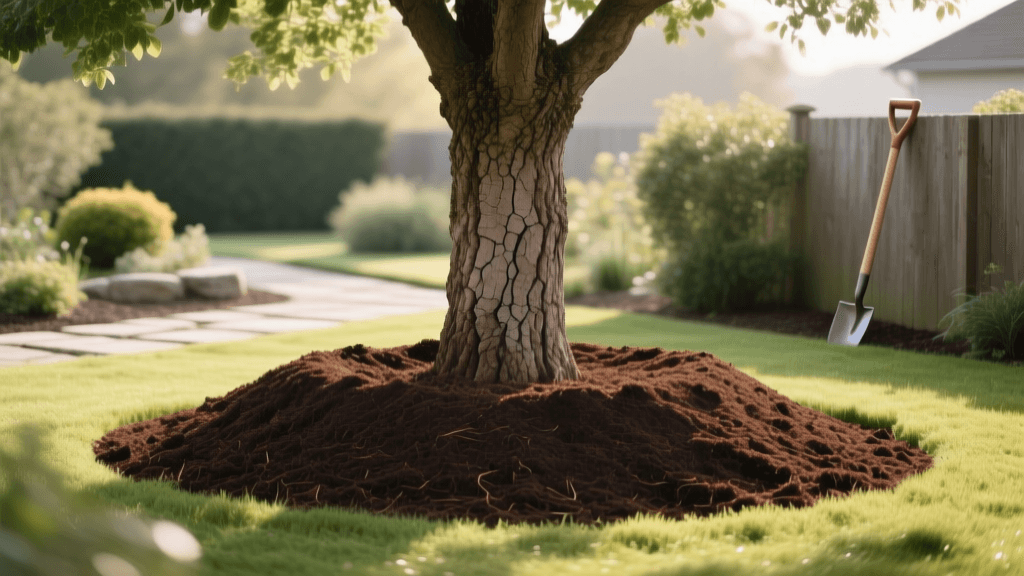
Proper mulching is the single most effective practice for protecting tree roots from temperature extremes and conserving soil moisture. However, incorrect mulching techniques can be just as harmful as neglecting it altogether. The Arbor Day Foundation strongly advocates for the '3-3-3 Rule' of mulching: a 3-inch deep layer, spanning a 3-foot radius around the trunk, while keeping a 3-inch gap between the mulch and the trunk itself.
The Dangers of Volcano Mulching
Piling mulch high against the trunk—a practice known as 'volcano mulching'—traps moisture against the bark, inviting fungal pathogens, promoting girdling roots, and providing a warm winter haven for bark-gnawing rodents. Always maintain a 'donut' shape around the base of the tree.
| Mulch Material | Pros | Cons | Best Use Case |
|---|---|---|---|
| Shredded Hardwood | Excellent moisture retention, breaks down slowly, adds organic matter. | Can mat down if not fluffed annually. | Most deciduous landscape trees. |
| Pine Bark Nuggets | Long-lasting, aesthetically pleasing, resists washing away. | Breaks down very slowly, can alter soil pH slightly. | Acid-loving trees and sloped terrain. |
| Pine Needles (Straw) | Lightweight, allows excellent water penetration, highly acidic. | Blows away easily in high winds, flammable when dry. | Evergreens, pines, and spruces. |
| Rubber Mulch | Does not decompose, pest resistant. | Leaches toxic chemicals, traps heat, adds no soil value. | Avoid using around living trees. |
Preventing Sunscald and Frost Cracks
Winter sunscald and frost cracks primarily affect young trees and species with thin bark, such as maples, lindens, ash, crabapples, and honeylocusts. During sunny winter days, the dark bark on the south and southwest sides of the trunk absorbs heat, causing the dormant cells beneath the bark to become active. When the sun sets and temperatures plummet rapidly below freezing, these active cells freeze and burst, resulting in vertical splits known as frost cracks or sunscald.
How to Apply Tree Wrap
To prevent this thermal shock, wrap the trunks of susceptible trees in late fall. Purchase commercial crepe paper tree wrap or a breathable polypropylene tree guard. Start wrapping at the base of the trunk and work your way up to the first set of lower branches. Overlap the wrap by about one-third of its width with each turn. Secure the top with a piece of weather-resistant tape or twine. Crucial Note: Always remove the wrap in early spring once the threat of hard freezes has passed; leaving it on year-round can trap moisture and harbor insect pests.
Defending Against Winter Wildlife
When deep snow covers the ground and natural food sources become scarce, wild animals will turn to your landscape trees for sustenance. Voles, rabbits, and deer can strip bark from the trunk and sever young roots, effectively girdling and killing the tree.
- Vole and Rabbit Protection: Install a physical barrier using 1/4-inch galvanized hardware cloth. Create a cylinder around the trunk that stands at least 18 to 24 inches above the anticipated snow line. Bury the bottom edge 2 to 3 inches into the soil to prevent voles from tunneling underneath.
- Deer Deterrents: For deer, hardware cloth is insufficient. Use heavy-duty plastic tree tubes or corrugated plastic drain pipe slitted down the side and wrapped around the trunk. Alternatively, apply a pungent, weather-resistant liquid repellent like 'Liquid Fence' or 'Deer Out' to the lower branches in late November.
Late Fall Fertilization and Soil Care
Fall is an ideal time to address soil deficiencies, but the type of fertilizer you use matters immensely. Avoid high-nitrogen, quick-release synthetic fertilizers in the autumn, as these can stimulate tender new top growth that will be immediately killed by frost, depleting the tree's energy reserves. Instead, opt for a slow-release, organic fertilizer or a specialized root-stimulator formula rich in phosphorus and potassium, which promote deep root development and cellular winter hardiness.
'A comprehensive soil test conducted through your local university extension office is the most cost-effective investment you can make. It provides exact amendments needed to balance pH and micronutrients before the ground freezes.' — Purdue University Extension Forestry Guidelines
Winter Pruning Rules: When to Cut and When to Wait
While major structural pruning is often reserved for the dead of winter when the tree's architecture is visible and disease vectors are dormant, fall pruning requires a cautious approach. Pruning in early fall can trigger new growth that will not harden off in time for winter. Furthermore, pruning wounds heal much slower in the autumn, leaving the tree vulnerable to decay fungi that are actively releasing spores in the damp fall air.
Limit your fall pruning strictly to the 'Three Ds': Dead, Damaged, and Diseased wood. Removing hazardous, broken limbs before heavy winter snows and ice storms accumulate is a vital safety measure. Wait until the tree has entered full dormancy—usually after the coldest part of winter has passed in late February or early March—to perform any aesthetic or structural canopy reductions.
Summary Checklist for Seasonal Success
Mastering seasonal tree maintenance requires a proactive approach. By dedicating a few weekends in late autumn to deep watering, applying the correct mulch layer, wrapping vulnerable trunks, and installing wildlife barriers, you safeguard your landscape's most valuable assets. Trees are long-term investments; the care you provide during the dormant season dictates the vitality, safety, and beauty of your canopy for decades to come.