Tree Care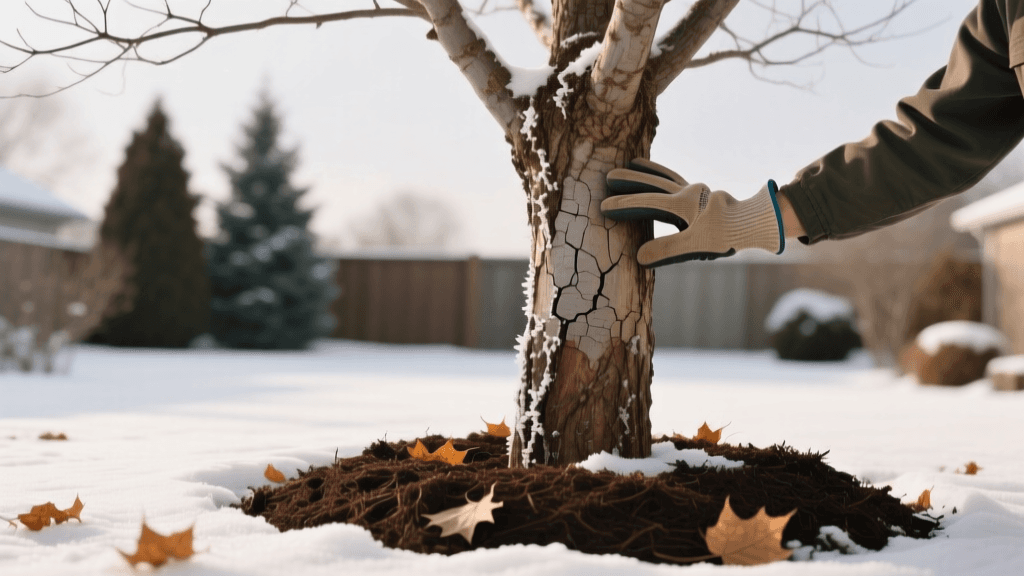
Essential Winter Tree Care: A Seasonal Health Guide
Understanding Tree Dormancy and Winter Stress
Winter is often viewed as a time when the landscape goes to sleep, but for your trees, it is a period of critical physiological transition. As temperatures drop and daylight hours shorten, trees enter a state of dormancy to conserve energy and survive freezing conditions. However, dormancy does not mean invulnerability. Fluctuating temperatures, harsh winds, heavy snow loads, and winter drought can cause severe damage to both young and mature trees. Proper seasonal maintenance is essential to ensure your trees emerge healthy and vibrant in the spring.
According to the University of Minnesota Extension, winter injury is one of the leading causes of long-term health decline in urban and suburban trees. By implementing a proactive winter tree care strategy, homeowners can mitigate risks associated with frost cracks, sunscald, desiccation, and rodent damage. This comprehensive guide provides actionable, step-by-step instructions for winterizing your landscape.
Late Fall and Early Winter Watering Strategies
One of the most common misconceptions in tree care is that trees do not need water once the leaves drop. In reality, winter desiccation—where trees lose moisture through their bark and evergreen needles faster than they can absorb it from frozen soil—is a major threat. Evergreens are particularly susceptible because they retain their foliage throughout the winter months.
When and How to Water
Continue watering your trees until the ground freezes solid. In most temperate climates, this means watering well into late November or even early December. The goal is to ensure the soil profile is fully saturated before the frost line penetrates deeply.
- Measurement Rule: Provide approximately 10 gallons of water per inch of trunk diameter (caliper) measured at knee height.
- Application Method: Use a soaker hose or a slow-drip sprinkler placed at the drip line (the outer edge of the tree canopy). Avoid watering directly against the trunk.
- Timing: Water during the warmest part of the day, typically between 10:00 AM and 2:00 PM, to allow moisture to penetrate before nighttime freezes.
Cost Consideration: Running a soaker hose for two hours typically costs between $1 and $3 in municipal water, a minor investment compared to the cost of replacing a mature tree, which can exceed $1,500.
Proper Winter Mulching Techniques
Mulch acts as an insulating blanket for the soil, regulating temperature fluctuations and retaining vital moisture. However, improper mulching can lead to root rot, bark decay, and pest infestations.
The Donut Method
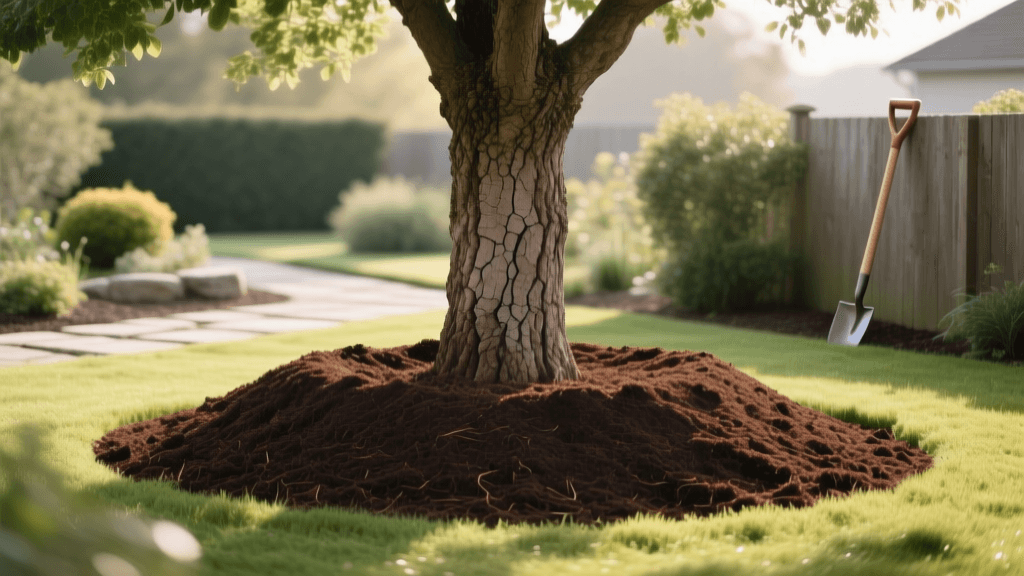
Always apply mulch using the donut method, keeping it away from the base of the trunk. Volcano mulching—piling mulch high against the trunk—traps moisture against the bark, creating an ideal environment for fungal pathogens and inviting rodent nesting.
- Depth: Maintain a mulch layer 2 to 4 inches deep.
- Radius: Extend the mulch ring at least 3 feet from the trunk, or ideally to the drip line for younger trees.
- Material: Use organic, coarse materials like shredded hardwood bark, pine needles, or wood chips. Avoid fine mulches that can compact and restrict oxygen flow to the roots.
Cost Consideration: Bulk hardwood mulch costs approximately $30 to $45 per cubic yard, while bagged mulch costs $4 to $6 per 2-cubic-foot bag. A cubic yard will cover roughly 100 square feet at a 3-inch depth.
Protecting Bark from Frost Cracks and Sunscald
Young trees and species with thin bark—such as maple, linden, crabapple, and cherry—are highly vulnerable to sunscald and frost cracks. Sunscald occurs when the winter sun warms the bark on the south or southwest side of the tree, stimulating cellular activity. When the sun sets and temperatures plummet, the active cells freeze and die, resulting in elongated, sunken cankers.
Tree Wrapping Best Practices
To prevent this thermal shock, wrap the trunks of susceptible trees. Commercial tree wrap, typically made of corrugated cardboard or polypropylene fabric, is highly effective.
- Begin wrapping at the base of the trunk, slightly below the soil line.
- Overlap each layer by about one-third as you spiral upward.
- Stop wrapping just below the lowest scaffold branches.
- Secure the top with a piece of masking tape or twine (never use wire or duct tape, which can girdle the tree).
Timing: Apply wrap around Thanksgiving and remove it promptly around Easter. Leaving wrap on during the spring and summer traps moisture and provides a hiding place for boring insects.
Winter sunscald can permanently compromise the vascular system of a young tree. Wrapping is a simple, low-cost intervention that yields massive dividends in long-term tree health and structural integrity. - Arbor Day Foundation
Winter Pruning for Health and Disease Prevention
While light pruning can be done year-round, major structural pruning is best performed during the deep dormancy of late winter (January to early March). Pruning during this window offers several distinct health advantages.
- Disease Prevention: Fungal spores and bacterial pathogens are largely inactive in freezing temperatures. Pruning oaks in winter is mandatory in many regions to prevent the spread of Oak Wilt, a devastating vascular disease transmitted by sap-feeding beetles.
- Visibility: Without leaves blocking the view, arborists and homeowners can clearly see the tree branching structure, making it easier to identify crossing branches, weak crotches, and deadwood.
- Wound Response: Trees will rapidly compartmentalize pruning cuts as soon as the spring growth flush begins, minimizing the window of vulnerability for decay organisms.
Product Note: Avoid using pruning sealants or wound paints. Research from university extension programs has conclusively shown that these products impede the tree natural compartmentalization process and can actually promote decay.
Managing Winter Pests and Rodent Damage
When deep snow covers the ground, mice, voles, and rabbits turn to tree bark and shallow roots as their primary food source. Girdling—where rodents eat the bark completely around the circumference of the trunk—will kill the tree by severing the phloem.
Installing Physical Barriers
To protect young trees, install physical barriers before the first heavy snowfall.
- Hardware Cloth: Use 1/4-inch galvanized hardware cloth to create a cylinder around the trunk.
- Installation: Bury the bottom edge 2 inches below the soil line to prevent voles from tunneling underneath. Ensure the cylinder stands 18 to 24 inches above the anticipated snow line.
- Clearance: Leave at least 2 inches of space between the wire and the trunk to allow for growth and prevent bark abrasion.
Mitigating De-Icing Salt Damage
For trees planted near roads, driveways, and walkways, winter de-icing salts pose a severe threat to root health and soil structure. Sodium chloride (rock salt) can accumulate in the soil, causing toxicity that manifests as marginal leaf browning and branch dieback the following summer.
Alternatives and Soil Flushing
- Safer Alternatives: Use calcium magnesium acetate (CMA) or potassium chloride instead of sodium chloride near sensitive tree zones. While CMA is more expensive (approx. $40 to $50 per 50lb bag), it is significantly less toxic to plant life.
- Physical Barriers: Erect burlap screens to protect trees from salt spray kicked up by vehicles and snowplows.
- Spring Flushing: If salt exposure is unavoidable, deeply water the soil around the tree in early spring to leach excess sodium below the root zone.
Seasonal Tree Maintenance Checklist
Use the following table to track your seasonal tree care tasks and ensure no critical maintenance steps are overlooked during the transition from autumn to winter.
| Task Category | Specific Action | Optimal Timing | Estimated Cost (DIY) |
|---|---|---|---|
| Hydration | Deep root watering evergreens and new plantings | Late Oct to Ground Freeze | $1 to $5 per tree |
| Mulching | Refresh mulch ring using the donut method | November | $10 to $20 per tree |
| Trunk Protection | Wrap thin-barked species to prevent sunscald | Thanksgiving | $5 to $10 per roll |
| Pest Control | Install hardware cloth to deter voles and rabbits | Early November | $15 to $25 per tree |
| Pruning | Structural pruning and deadwood removal | Jan to Early March | $50+ (tool cost) |
| Wrap Removal | Remove trunk wraps and inspect for pests | Early April (Easter) | $0 |
Conclusion
Effective seasonal maintenance is the cornerstone of long-term tree health. By understanding the unique physiological stresses that trees face during the winter months, homeowners can implement targeted strategies to protect their landscape investments. From deep winter watering and proper mulching to strategic pruning and rodent deterrence, these proactive measures ensure your trees remain resilient against the elements. Remember that a little preparation in the late fall and winter translates directly to vigorous, healthy growth when spring finally arrives.