Tree Care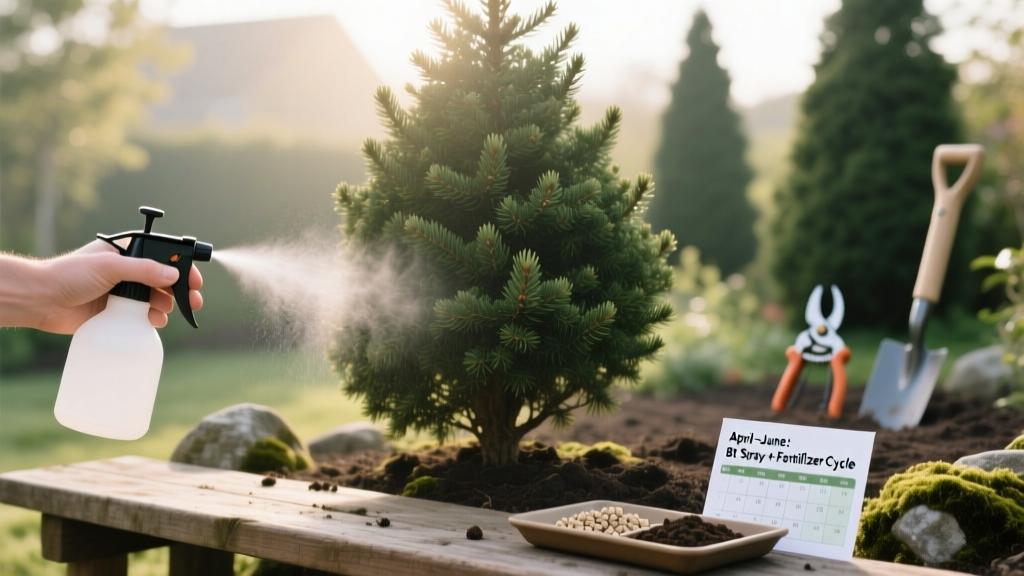
2026 Evergreen Bagworm Bt Spray & Fertilizer Timing Guide
Emily WatsonPublished
Integrating Pest Control and Nutrition for Evergreens in 2026
Welcome to the 2026 growing season. As homeowners and landscapers look to maintain lush, vibrant landscapes, evergreen trees such as arborvitae, junipers, pines, and spruces remain foundational elements of yard design. However, these resilient trees face a persistent and destructive threat: the bagworm. While many gardeners view pest management and soil nutrition as entirely separate tasks, modern arboriculture emphasizes a holistic approach. Your fertilizer types and schedules directly influence your trees' natural defenses and their susceptibility to pests. In this comprehensive guide, we will explore the critical intersection of bagworm removal timing, Bacillus thuringiensis (Bt) spray applications, and strategic evergreen fertilization schedules to keep your trees thriving all year long.
The Hidden Link Between Evergreen Fertilization and Bagworm Infestations
Bagworms (Thyridopteryx ephemeraeformis) are notorious for defoliating evergreen species. According to Penn State Extension, these pests can cause irreversible damage and even tree death if left unchecked, as evergreens cannot easily regenerate needles on older, bare branches. What many homeowners do not realize is that their fertilization habits can inadvertently roll out the welcome mat for these destructive caterpillars.
When you apply high-nitrogen, quick-release fertilizers in late spring, you force the evergreen to push rapid, soft, and succulent new needle growth. This tender tissue is exceptionally easy for young bagworm larvae to chew through and digest. Furthermore, excessive nitrogen can alter the biochemical makeup of the plant, reducing the production of natural defensive compounds like tannins and resins. By aligning your fertilizer schedule with the bagworm lifecycle, you can promote hardened, resilient growth that naturally deters feeding, while ensuring your tree has the energy reserves needed to recover from any minor damage.
Why Fertilizer Type Matters: Quick-Release vs. Slow-Release Nitrogen
To minimize bagworm attraction in 2026, the type of fertilizer you choose is just as important as when you apply it. Evergreens generally require less nitrogen than deciduous trees or turfgrass. A balanced, slow-release fertilizer is the gold standard for pest-resistant evergreen care.
- Quick-Release Synthetic Fertilizers: Products high in water-soluble nitrogen (like ammonium nitrate) cause immediate growth spurts. While this might make your arborvitae look lush in May, it creates a buffet for hatching bagworms in June. Avoid using these during the peak spring emergence window.
- Slow-Release and Organic Fertilizers: Formulations utilizing coated urea, sulfur-coated nitrogen, or organic sources (such as feather meal, bone meal, or composted manure) provide a steady, low-dose drip of nutrients. This encourages dense, hardened needle growth that is much more difficult for early-instar bagworms to consume.
- Optimal N-P-K Ratios: Look for evergreen-specific fertilizers with ratios like 16-4-8 or 12-6-6. Ensure the product contains micronutrients like iron and magnesium, which support deep green coloration and robust cellular walls without overstimulating soft vegetative growth.
The 2026 Bagworm Lifecycle and Bt Spray Timing
To effectively use Bacillus thuringiensis var. kurstaki (Btk), you must understand the enemy. Bagworms overwinter as eggs inside the protective silk and foliage bags spun by their mothers. In most temperate zones, these eggs hatch between late May and mid-June, depending on local spring temperatures and accumulated degree days.
According to the University of Minnesota Extension, the newly hatched larvae are incredibly small—often no larger than a pinhead—and immediately begin spinning their own tiny protective cases. Btk is a naturally occurring soil bacterium that produces proteins toxic to the digestive systems of caterpillars. However, it must be ingested by the larvae to work. If you spray Btk too early, the UV light and rain will degrade the bacteria before the eggs hatch. If you spray too late (in late July or August), the larvae will have grown large, their protective bags will be thick, and they will be highly resistant to Bt, requiring harsher chemical interventions.
The Ultimate 2026 Integrated Fertilizer and Bt Spray Schedule
Coordinating your soil nutrition with your foliar pest control is the key to a low-maintenance, high-health landscape. Below is the recommended 2026 schedule for integrating evergreen fertilization with bagworm management.
| Time of Year | Fertilizer Action | Bagworm and Bt Action |
|---|---|---|
| Early Spring (March - April) | Apply slow-release granular evergreen fertilizer. Water deeply to activate. | Inspect trees for old, overwintering bags. Manually remove and destroy them to eliminate thousands of future eggs. |
| Mid-Spring (May) | Hold off on additional nitrogen. Focus on deep watering to reduce drought stress. | Monitor local degree-day trackers for bagworm hatch predictions. Prepare Bt sprayer equipment. |
| Early Summer (June) | Avoid fertilizing. Allow the spring slow-release nutrients to sustain steady growth. | Apply first Bt spray when larvae are small and actively feeding. Repeat in 10 to 14 days. |
| Mid-Summer (July) | Do not fertilize. High heat and nitrogen can cause fertilizer burn and stress. | Inspect for surviving larvae. If large bags are present, Bt will no longer work; switch to manual removal or targeted spinosad. |
| Early Fall (September - October) | Apply a low-nitrogen, high-potassium winterizer fertilizer to promote root growth and winter hardiness. | Final manual inspection. Remove any late-season bags before they mate and lay overwintering eggs. |
Step-by-Step Bt Application and Fertilizer Watering Techniques
Executing this schedule requires proper technique to ensure both the fertilizer and the Bt spray perform optimally without interfering with one another.
Applying Bt Kurstaki Effectively
When the June hatching window arrives, mix your Bt concentrate according to the 2026 manufacturer label instructions—typically around 1 to 2 tablespoons per gallon of water. Because bagworms feed on the needles, you must achieve complete canopy coverage. Use a pump sprayer or a hose-end attachment capable of reaching the uppermost branches of your arborvitae or pines. Spray in the early morning or late evening to minimize UV degradation of the bacteria. Adding a non-ionic horticultural surfactant or spreader-sticker to your tank mix is highly recommended; this helps the Bt solution adhere to the waxy, water-repellent surface of evergreen needles, ensuring the caterpillars ingest a lethal dose when they feed.
Watering in Spring Fertilizers
When applying your early spring slow-release granular fertilizer, broadcast it evenly under the drip line of the tree, keeping the granules at least three inches away from the main trunk to prevent collar rot. Immediately water the area with at least half an inch of irrigation. This washes the fertilizer prills off any low-hanging branches (preventing foliar burn) and moves the nutrients into the top few inches of soil where the feeder roots are actively absorbing moisture. Deep, infrequent watering is always preferred over shallow, daily sprinkling, as it encourages deep root systems that can better withstand summer droughts and pest pressure.
Late-Season Care and Winter Preparation
As the 2026 season transitions into autumn, your fertilization strategy must shift entirely. Applying nitrogen in late summer or early fall will stimulate new, tender growth that will not have time to harden off before the first freeze, leading to severe winter dieback. Instead, if a soil test indicates a deficiency, apply a specialized autumn winterizer that focuses on potassium and phosphorus. These nutrients fortify the tree's cellular structure, improve cold tolerance, and support robust root development during the dormant months.
Simultaneously, conduct your final bagworm sweep. Any bags left on the tree in November contain hundreds of fertilized eggs waiting for the following spring. By combining a disciplined, slow-release fertilizer schedule with precisely timed Bt applications and rigorous manual removal, you can break the bagworm lifecycle and ensure your evergreens remain the stunning, pest-free anchors of your landscape for decades to come.
