Tree Care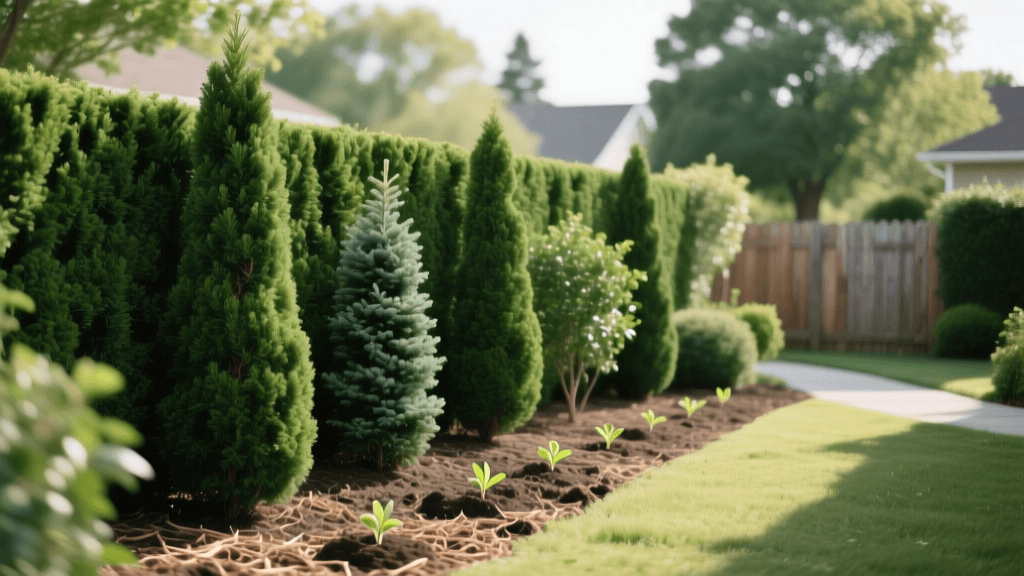
Designing Evergreen Privacy Screens: Trees and Spacing
Designing a living privacy screen is one of the most rewarding landscaping investments you can make for your property. Unlike wooden fences or vinyl barriers, which can cost upwards of $30 to $50 per linear foot and require ongoing maintenance against rot or weathering, a well-planned evergreen tree screen increases your property value, provides critical wildlife habitat, and acts as a natural windbreak and noise buffer. However, the success of your living fence hinges entirely on the planning phase. Selecting the wrong species, miscalculating mature spacing, or ignoring soil drainage can lead to a decade of frustration, disease, and wasted money. This comprehensive guide will walk you through the design, species selection, spacing mathematics, and planting techniques required to establish a thriving, dense evergreen privacy screen.
Step 1: Site Assessment and Microclimate Mapping
Before purchasing a single tree, you must understand the canvas you are working with. Evergreens are particularly sensitive to poor drainage and winter wind desiccation, making site prep critical.
Sunlight, Soil Drainage, and pH
Most privacy screen conifers require full sun (at least six hours of direct sunlight daily) to maintain dense foliage from the ground up. If planted in heavy shade, species like Arborvitae will thin out, defeating the purpose of a privacy screen. Perform a percolation test to assess drainage: dig a hole 12 inches deep and 12 inches wide, fill it with water, and let it drain. Refill it and measure the drainage rate. Ideal soil drains at a rate of 1 to 2 inches per hour. If your soil is heavy clay and drains slower than 1 inch per hour, you will need to amend the planting beds or select moisture-tolerant species. Additionally, most conifers prefer a slightly acidic to neutral soil pH between 6.0 and 7.0. Purchase a digital soil probe or mail a sample to your local university extension office for a comprehensive nutrient analysis before planting.
Utility and Property Line Clearance
Always call 811 before digging to have underground utilities marked. Furthermore, check your local municipal codes regarding property line setbacks. Many jurisdictions require tall plantings to be set back 5 to 10 feet from the property line to prevent neighbor disputes over encroaching branches and root systems.
Step 2: Choosing the Right Evergreen Species
Not all evergreens are created equal. The ideal privacy screen tree should have a fast growth rate, dense branching habit, and resistance to local pests. Below is a comparison chart of the most popular privacy screen trees, including estimated costs for 6-foot to 8-foot balled-and-burlapped (B&B) specimens.
| Species | Mature Height | Mature Width | Growth Rate | USDA Zones | Est. Cost (6ft B&B) |
|---|---|---|---|---|---|
| Green Giant Arborvitae | 40-60 ft | 12-18 ft | Fast (3-5 ft/yr) | 5-8 | $120 - $180 |
| Emerald Green Arborvitae | 12-15 ft | 3-4 ft | Moderate (1-2 ft/yr) | 3-8 | $80 - $120 |
| Leyland Cypress | 60-70 ft | 15-20 ft | Very Fast (4-6 ft/yr) | 6-10 | $150 - $220 |
| Nellie Stevens Holly | 20-30 ft | 10-15 ft | Fast (2-3 ft/yr) | 6-9 | $180 - $250 |
| Eastern Redcedar | 40-50 ft | 8-15 ft | Moderate (1-3 ft/yr) | 2-9 | $90 - $140 |
Step 3: The Mathematics of Tree Spacing
The most common mistake homeowners make is planting trees too closely together to achieve instant privacy. Overcrowding leads to severe competition for water and nutrients, stunted growth, and the rapid spread of fungal diseases like Seiridium canker or Cercospora blight due to poor air circulation.
Single Row vs. Staggered Double Row
For narrow property lines, a single row is your only option. The general rule of thumb for single-row spacing is to divide the tree's mature width by two. For example, if a Green Giant Arborvitae reaches a mature width of 15 feet, plant them 7 to 8 feet apart, center-to-center. If you have the space (at least 12 to 15 feet of width), a staggered double row is vastly superior. By planting two parallel rows in a zig-zag pattern, you create an impenetrable visual and acoustic barrier much faster. In a staggered layout, you can increase the distance between trees within the same row to 10 feet, while keeping the distance between the two rows at 6 to 8 feet.
Buffer Zones and Foundations
Never plant large evergreens directly against your home's foundation. Maintain a minimum distance of 10 to 15 feet from the house to prevent root interference with footings and to allow access for exterior maintenance. Keep trees at least 5 feet away from paved driveways to avoid frost heave and root cracking.
Step 4: Professional Planting Techniques
Proper planting ensures your investment survives the critical first two years of establishment.
Digging and Bed Preparation
Do not dig individual holes; instead, trench the entire length of the screen or till a continuous bed 4 to 5 feet wide. This encourages lateral root expansion and prevents the 'bathtub effect,' where water pools in individual holes surrounded by compacted clay. Dig the trench so the depth matches the exact height of the root ball. Planting too deep is the number one killer of evergreens. The root flare (where the trunk widens at the base) must be slightly above the surrounding grade.
Backfilling and Mulching
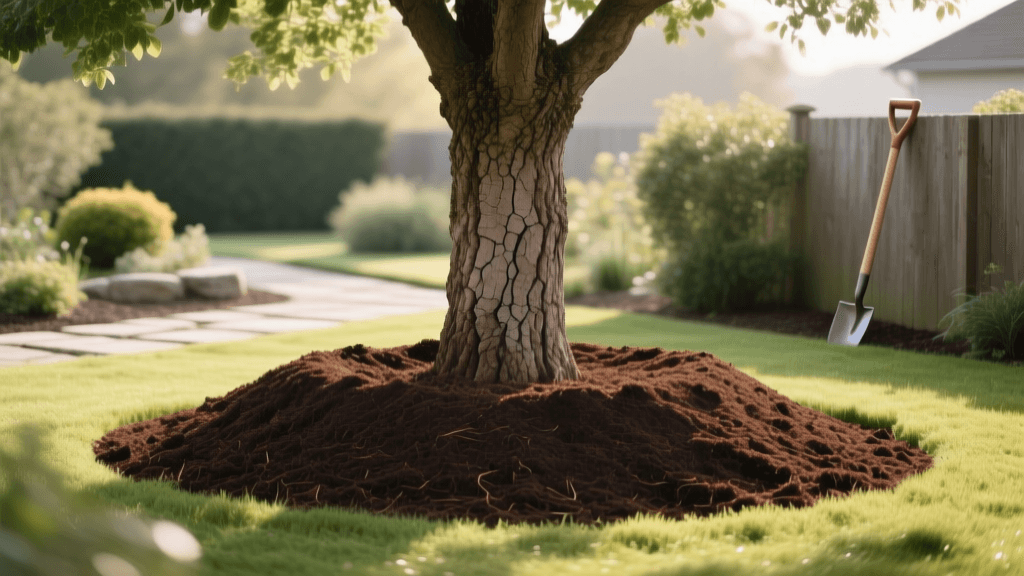
Backfill with the native soil you removed. Avoid adding heavy compost or potting soil directly into the planting hole, as this creates a textural boundary that discourages roots from venturing into the native earth. Once planted, apply a 3-inch layer of shredded hardwood mulch over the entire bed. Crucially, keep the mulch pulled back 3 inches from the trunk of every tree to prevent bark rot and vole damage.
Expert Insight: 'Planting too deep is the number one killer of landscape trees. The root flare must always be visible above the soil line to prevent stem girdling roots and trunk rot. When establishing windbreaks or privacy screens, proper depth and mulching are non-negotiable for long-term survival.' — University of Minnesota Extension, Department of Forest Resources.
Step 5: Irrigation and First-Year Maintenance
Evergreens do not go fully dormant in the winter; they continue to lose moisture through their needles, especially on bright, windy days.
Watering Schedules
During the first growing season, provide 10 to 15 gallons of water per tree, per week, either through rainfall or deep, slow irrigation using soaker hoses or Gator bags. In late autumn, give the entire screen a massive, deep watering before the ground freezes. This 'winter watering' is vital to prevent winter burn, a condition where frozen ground prevents roots from replacing the moisture lost to harsh winter winds.
Pest Monitoring and Pruning
Monitor your screen closely for bagworms and spider mites, which thrive in the dense, dry microclimates of evergreen screens. If you spot the distinctive 2-inch spindle-shaped bags of the bagworm, hand-pick them and drop them into soapy water. For spider mites, which cause a stippled, dusty appearance on the needles, a strong blast of water or an application of horticultural oil in the dormant season can keep populations in check. To encourage a dense, bushy habit, lightly shear the terminal (top) leader and lateral branch tips in early spring before the new growth hardens off. Never cut back into the 'dead zone' (the older, needle-less brown wood near the trunk), as most conifers, particularly Arborvitae and Cypress, will not generate new foliage from old wood.
Conclusion
Designing an evergreen privacy screen requires patience, precise mathematics, and an understanding of horticultural best practices. By selecting the right species for your microclimate, utilizing staggered spacing formulas, and adhering to proper planting depths, you will cultivate a magnificent living fence that provides beauty, privacy, and ecological benefits for decades to come.