Tree Care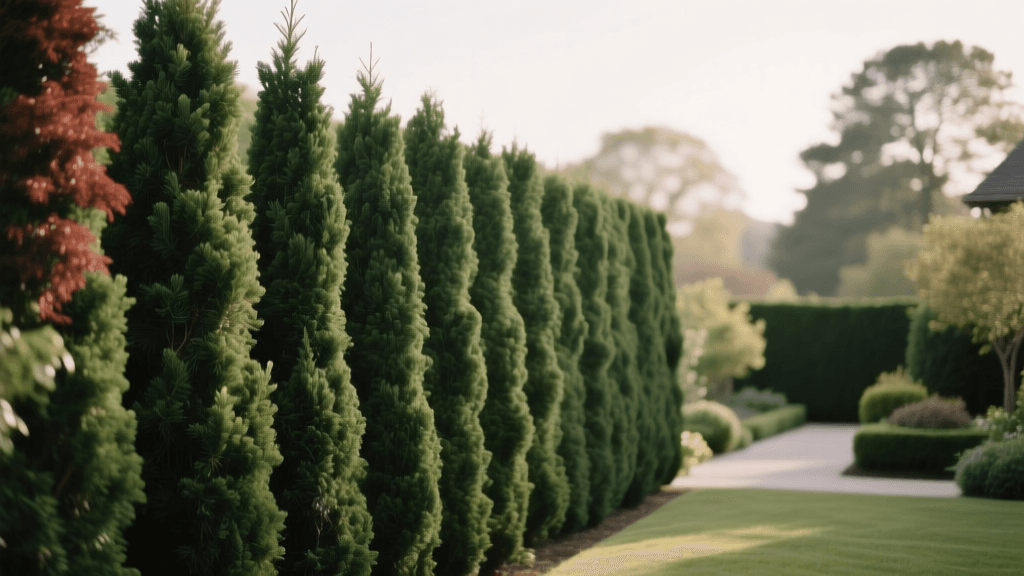
Designing Evergreen Privacy Screens: A Planting Guide
Introduction to Living Privacy Screens
When designing a residential landscape, privacy is often just as important as aesthetics. While wooden or vinyl fences provide immediate boundaries, they lack the ecological benefits, noise-reduction qualities, and natural beauty of a living privacy screen. Designing an evergreen privacy screen requires careful planning, proper species selection, and strategic placement to ensure your landscape matures into a dense, impenetrable barrier without causing structural or boundary disputes.
A well-planned tree screen not only blocks unwanted views from neighbors or busy streets but also serves as a highly effective windbreak, reducing winter heating costs by up to 20 percent. This comprehensive guide will walk you through the design, planning, and execution of a professional-grade evergreen privacy screen, complete with spacing metrics, cost analyses, and maintenance schedules.
Assessing Your Site for Tree Placement
Before selecting your trees, you must evaluate the environmental conditions of your planting zone. Evergreens are particularly sensitive to soil drainage and sunlight exposure. Most privacy-friendly conifers require full sun (at least six hours of direct sunlight daily) and well-draining soil. Heavy clay soils can lead to root rot, which is devastating for species like the Leyland Cypress.
Mapping Utilities and Property Lines
The most critical step in the planning phase is identifying underground utilities and property boundaries. Planting large-rooted trees over gas lines, water mains, or sewer laterals can result in catastrophic infrastructure damage. Always call your local utility locating service (such as 811 in the United States) at least two weeks before digging. Furthermore, verify your property lines with a recent survey. Planting trees directly on the property line can lead to shared ownership disputes; it is highly recommended to plant your privacy screen at least two to three feet inside your property boundary.
Overhead Clearance and Setbacks
According to the Arbor Day Foundation's 'Right Tree, Right Place' initiative, planting tall-growing trees beneath overhead power lines is a leading cause of utility outages and hazardous pruning requirements. If your planned screen runs beneath utility lines, you must select dwarf or slow-growing evergreen varieties, or shift the planting bed further into your yard to maintain a safe horizontal clearance of at least 15 feet from overhead wires.
Top Evergreen Species for Privacy Screens
Choosing the right tree is the foundation of your design. You need species that maintain their lower branches as they mature, possess a narrow to pyramidal growth habit, and tolerate close planting. Below is a comparison of the top four evergreen trees used in residential privacy screen designs.
| Tree Species | Mature Height | Growth Rate | Recommended Spacing | Best USDA Zones |
|---|---|---|---|---|
| 'Green Giant' Arborvitae | 40-60 ft | Fast (3-5 ft/yr) | 5-6 feet | 5-8 |
| Leyland Cypress | 60-70 ft | Fast (3-4 ft/yr) | 6-8 feet | 6-10 |
| Nellie Stevens Holly | 15-25 ft | Moderate (1-2 ft/yr) | 4-5 feet | 6-9 |
| Eastern Redcedar | 40-50 ft | Moderate (1-2 ft/yr) | 6-8 feet | 2-9 |
Design Note: The 'Green Giant' Arborvitae (Thuja standishii x plicata) is widely considered the gold standard for modern privacy screens. It is highly resistant to deer browsing and bagworms, which frequently decimate other arborvitae varieties. For warmer, more humid climates (Zones 8-10), the Nellie Stevens Holly offers a fantastic broadleaf evergreen alternative that produces beautiful red berries in the winter.
Calculating Spacing and Layout
A common mistake in landscape planning is planting trees too closely together in a single straight line. While this creates a faster initial screen, it leads to intense competition for water and nutrients, stunting growth and increasing the risk of fungal diseases due to poor air circulation.
The Staggered Double-Row Method
For the most effective and visually appealing privacy screen, landscape architects recommend a staggered double-row layout. Penn State Extension advises using staggered planting for windbreaks and privacy screens because it eliminates the 'tunnel effect' and provides a denser visual barrier even if one tree fails or requires removal.
- Row Spacing: Space the two rows 6 to 8 feet apart.
- Tree Spacing: Within each row, space the trees 8 to 10 feet apart (for large species like Green Giants).
- The Stagger: Offset the trees in the second row so they sit directly behind the gaps in the first row, forming a zig-zag or triangular pattern.
This layout allows the canopies to interlock seamlessly within three to four years, creating a solid wall of greenery while giving the root systems enough lateral space to establish properly.
Layering Your Privacy Screen Design
A towering wall of identical evergreens can sometimes look imposing or monotonous. To elevate your landscape design, incorporate a layered planting scheme. Plant your primary evergreen screen in the rear, and design a secondary understory layer 4 to 6 feet in front of the trees.
Consider using semi-evergreen or deciduous flowering shrubs for the foreground. Excellent choices include:
- Viburnum dentatum (Arrowwood): Provides white spring flowers, blue fall berries, and excellent autumn foliage color.
- Hydrangea quercifolia (Oakleaf Hydrangea): Thrives in the dappled shade created by the evergreens and offers massive, showy blooms.
- Itea virginica (Virginia Sweetspire): A fantastic, low-maintenance shrub that tolerates varied soil conditions and offers brilliant red fall color.
This multi-tiered approach softens the landscape, promotes local biodiversity by providing varied habitats for birds and pollinators, and ensures your yard remains visually interesting throughout all four seasons.
Cost Analysis: Trees vs. Fencing
When budgeting for privacy, homeowners often weigh the cost of a living screen against traditional hardscape fencing. While a fence provides instant privacy, a tree screen offers a higher long-term return on investment by increasing property value and reducing energy costs.
Estimated Material and Installation Costs
Below is a comparative cost breakdown for a 50-linear-foot privacy barrier:
- Wood Privacy Fence (6 ft tall): Materials and professional labor typically range from $35 to $55 per linear foot, totaling $1,750 to $2,750. Fences require staining, sealing, and eventual replacement due to rot or storm damage.
- Evergreen Tree Screen (Single Row, 8 trees): Purchasing 6-to-7-foot Balled and Burlapped (B&B) 'Green Giants' costs approximately $130 to $180 per tree. Including soil amendments, mycorrhizal inoculants, and mulch, the material cost is roughly $1,200 to $1,600. Professional planting labor will add $600 to $900, bringing the total to $1,800 to $2,500.
While the upfront costs are comparable, the living screen requires minimal long-term capital expenditure compared to the maintenance and eventual replacement of a wooden fence.
Step-by-Step Planting Guide
Proper planting technique is non-negotiable for the survival of your privacy screen. The best time to plant evergreens is in early fall (September to October) or early spring (March to April), allowing the roots to establish before the stress of summer heat or winter freezes.
- Digging the Hole: Dig a hole that is two to three times as wide as the root ball, but no deeper. The top of the root ball should sit slightly above (about 1 to 2 inches) the surrounding grade to account for soil settling and prevent water from pooling around the trunk.
- Preparing the Roots: If the tree is container-grown, use a pruning saw to make three or four vertical slices down the sides of the root ball to sever circling roots. For B&B trees, cut away all wire baskets and synthetic burlap once the tree is positioned in the hole.
- Backfilling: Use the native soil you removed from the hole to backfill. Avoid amending the backfill soil heavily with compost, as this can create a 'bathtub effect' where water pools in the loose soil and drowns the roots. Instead, top-dress the surrounding area with compost.
- Applying Mycorrhizae: Dust the root ball with a granular mycorrhizal fungi inoculant during backfilling. This beneficial fungus forms a symbiotic relationship with the tree roots, vastly expanding their ability to absorb water and nutrients.
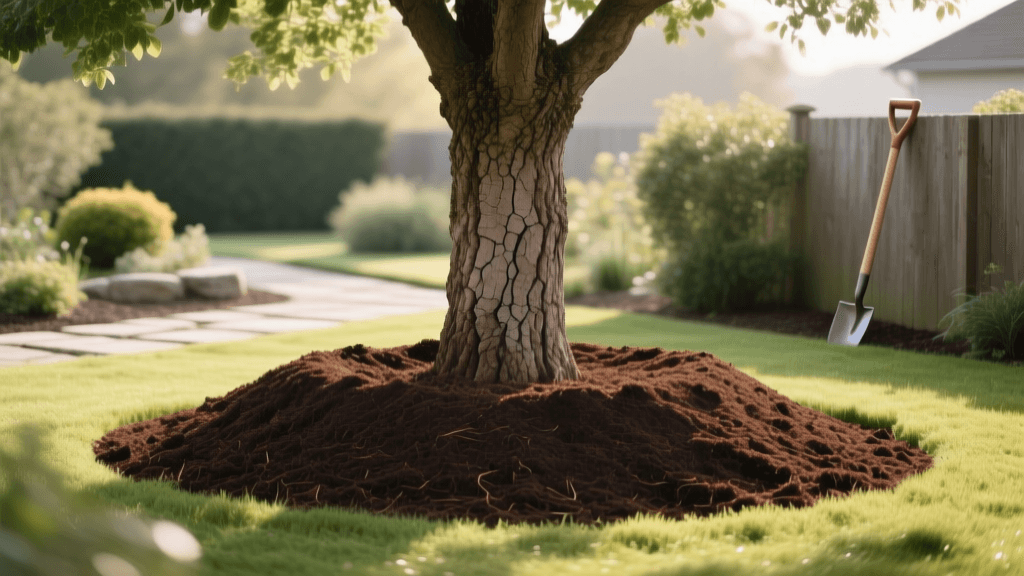
- Mulching: Apply a 3-inch layer of premium hardwood mulch in a wide 'donut' shape around the tree. Keep the mulch at least 3 inches away from the trunk flare to prevent bark rot and rodent damage.
First-Year Maintenance and Watering
The first 12 to 18 months are critical for your privacy screen. Evergreens do not show drought stress as obviously as deciduous trees; by the time their needles turn brown, the damage is often irreversible.
Hydration Schedule
Newly planted evergreens require deep, infrequent watering to encourage deep root growth. A general rule of thumb is to provide 10 gallons of water per inch of trunk diameter each week during the growing season. Utilizing a soaker hose or a drip irrigation system laid beneath the mulch is the most efficient method, ensuring water penetrates the root zone without wetting the foliage, which can invite fungal pathogens like Cercospora needle blight.
Pruning and Fertilization
Avoid heavy pruning during the first two years. Allow the trees to establish their natural form. If lateral branches are encroaching on walkways, perform selective tip-pruning in late spring after the first flush of growth has hardened off. Do not fertilize newly planted evergreens during their first year; wait until the second spring to apply a slow-release, balanced fertilizer (such as a 10-10-10 NPK) formulated specifically for evergreen shrubs and trees.
By investing time in the planning and design phase, your evergreen privacy screen will mature into a stunning, low-maintenance landscape feature that provides sanctuary, beauty, and ecological value for decades to come.