Tree Care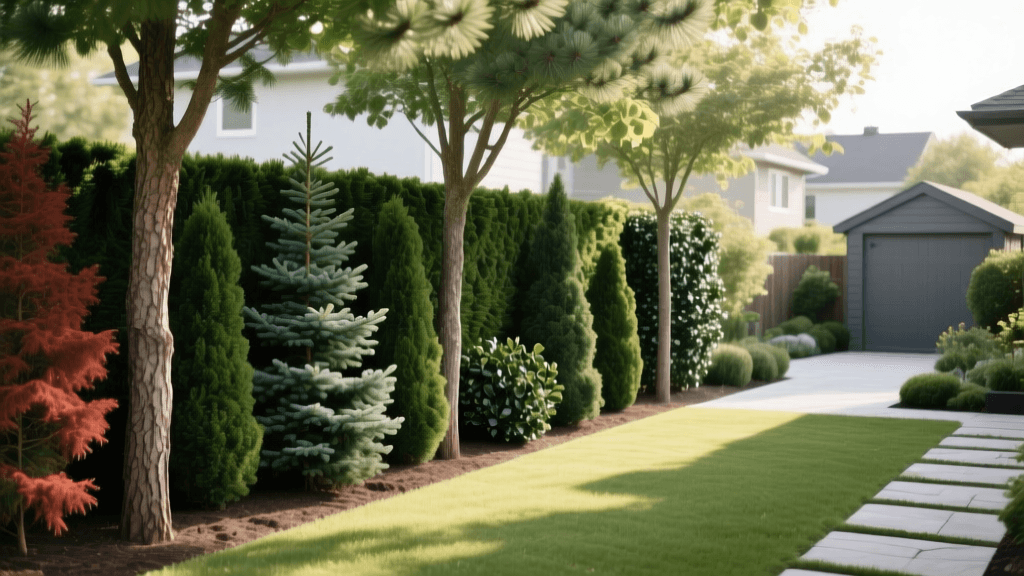
Designing a Year-Round Evergreen Privacy Screen for Yards
Why Choose an Evergreen Privacy Screen?
When planning your landscape design, establishing a privacy screen is one of the most rewarding investments you can make. Unlike wooden or vinyl fences, which can cost upwards of $30 to $50 per linear foot and offer a static, artificial barrier, a living evergreen screen provides dynamic beauty, natural noise dampening, and significant wind reduction. According to landscape architecture principles, a well-placed windbreak can reduce winter heating costs by 10% to 25% by blocking harsh northern winds.
From a design perspective, evergreens offer year-round foliage, ensuring your backyard oasis remains secluded even in the dead of winter. However, successful implementation requires careful planning regarding species selection, spatial layout, and long-term maintenance. Rushing into planting without a blueprint often leads to overcrowded roots, disease susceptibility, and encroachment on property lines.
Best Evergreen Trees for Privacy Screens
Selecting the right tree is the foundation of your design. You must consider your local climate, soil type, and the ultimate mature width of the tree. The USDA Plant Hardiness Zone Map is an essential tool for verifying that your chosen species will survive local winter lows. Below is a comparison of the most reliable evergreen species used in residential privacy screens.
| Species | Hardiness Zones | Growth Rate | Mature Height | Mature Width |
|---|---|---|---|---|
| Green Giant Arborvitae | 5 - 8 | Fast (3-5 ft/yr) | 40 - 60 ft | 12 - 18 ft |
| Leyland Cypress | 6 - 10 | Fast (3-4 ft/yr) | 50 - 70 ft | 15 - 20 ft |
| Nellie Stevens Holly | 6 - 9 | Moderate (1-2 ft/yr) | 15 - 25 ft | 8 - 12 ft |
| Eastern Redcedar | 2 - 9 | Moderate (1-3 ft/yr) | 40 - 50 ft | 8 - 15 ft |
| Spartan Juniper | 4 - 9 | Moderate (1-2 ft/yr) | 15 - 20 ft | 4 - 5 ft |
The 'Green Giant' Arborvitae is widely considered the gold standard for rapid screening due to its disease resistance and adaptability. For smaller urban yards where horizontal space is limited, the columnar Spartan Juniper provides excellent vertical screening without overwhelming the property.
Strategic Spacing and Layout Planning
A common mistake in landscape planning is planting trees too closely together to achieve instant privacy. Overcrowding leads to competition for water and nutrients, poor air circulation, and increased vulnerability to fungal diseases. The Clemson Cooperative Extension recommends spacing trees based on their mature width rather than their nursery size.
Single Row vs. Staggered Double Row
- Single Row: Ideal for narrow property lines. Space trees at a distance equal to 50% to 75% of their mature width. For example, if a Green Giant Arborvitae reaches 15 feet wide, plant them 8 to 11 feet apart, center-to-center.
- Staggered Double Row: Best for larger properties and superior windbreaking. Plant two parallel rows, offsetting the trees in a zig-zag pattern. Space the rows 6 to 8 feet apart, and space the trees within each row 10 to 12 feet apart. This creates a dense, impenetrable visual barrier much faster than a single row.
Setbacks and Property Lines
Always check local zoning ordinances and HOA regulations before planting. As a general rule, plant trees at least 5 to 10 feet inside your property line to account for mature trunk flare and branch overhang. Keep large evergreens at least 15 feet away from home foundations, septic systems, and overhead utility lines.
Soil Preparation and Planting Timeline
Proper soil preparation is critical for the long-term health of your privacy screen. Evergreens prefer well-draining soil with a slightly acidic pH (5.5 to 6.5). Before digging, conduct a percolation test: dig a 12-inch hole, fill it with water, and let it drain. If it takes longer than 24 hours to drain, you have heavy clay soil and may need to amend it with organic compost or consider raised planting berms.
When to Plant
The optimal time to plant evergreens is in early fall (September to October). This allows the root system to establish in cool, moist soil before the stress of summer heat or winter freezes. Spring planting (March to April) is the second-best option, provided you commit to a rigorous summer watering schedule.
Digging the Hole
According to the Arbor Day Foundation, the planting hole should be two to three times as wide as the root ball, but no deeper. The root flare (where the trunk widens at the base) must sit slightly above the surrounding grade to prevent root rot. Backfill with native soil mixed with 20% organic compost, and water thoroughly to eliminate air pockets.
Budgeting and Cost Breakdown
Planning a privacy screen requires a realistic budget. While trees are generally cheaper than fencing, the initial investment and maintenance costs must be factored into your landscape design plan. Below is an estimated cost breakdown for a 50-foot privacy screen using 6-foot tall Green Giant Arborvitae (spaced 8 feet apart, requiring roughly 7 trees).
| Item | Unit Cost | Total Cost (50 ft Screen) |
|---|---|---|
| 6-ft B&B Arborvitae Trees | $120 - $180 each | $840 - $1,260 |
| Soil Amendments & Compost | $5 per bag | $75 - $100 |
| Mulch (Hardwood/Pine Bark) | $40 per cubic yard | $60 - $80 |
| Drip Irrigation Kit | $75 flat rate | $75 |
| Professional Labor (Optional) | $50 - $85 per tree | $350 - $595 |
| Total Estimated DIY Cost | $1,050 - $1,515 |
Compare this to a 50-foot wooden privacy fence, which typically costs between $1,500 and $2,500 for materials and labor. The living screen offers a comparable or lower upfront cost, with the added benefit of increasing your property's overall landscape value.
Long-Term Maintenance and Pruning
A well-designed privacy screen requires a structured maintenance schedule to remain dense and healthy.
- Watering: During the first two growing seasons, provide 1 to 1.5 inches of water per week. A soaker hose or drip irrigation system laid beneath the mulch is the most efficient delivery method.
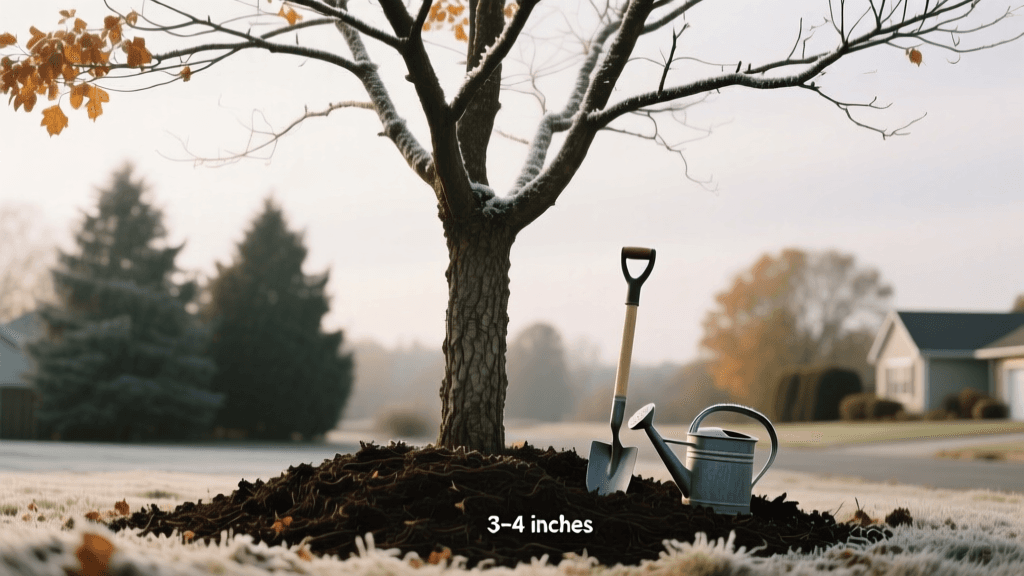
- Mulching: Apply a 2 to 3-inch layer of organic mulch around the base of the trees, extending to the drip line. Keep the mulch 3 inches away from the trunk to prevent vole damage and bark rot.
- Pruning: Light shearing in early summer encourages dense, bushy growth. Never cut back into the dead zone (the brown, inner foliage where no needles grow), as most evergreens will not regenerate new growth from old wood.
- Fertilizing: Apply a slow-release, balanced fertilizer (such as a 10-10-10 or 14-14-14 NPK) in early spring before new growth emerges.
Pro Tip: Always sanitize your pruning shears with a 10% bleach solution or rubbing alcohol between cuts to prevent the spread of fungal pathogens like Seiridium canker, which is common in Leyland Cypress and Arborvitae.
By meticulously planning your evergreen privacy screen—from species selection and spatial layout to budgeting and long-term care—you will cultivate a stunning, natural barrier that enhances your property's privacy, ecology, and aesthetic appeal for decades to come.