Tree Care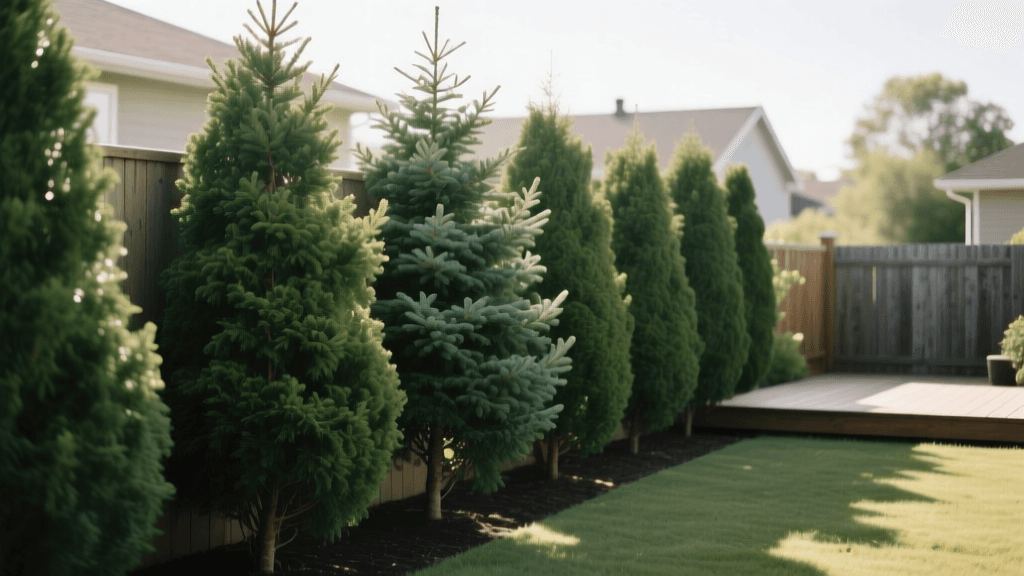
How to Design an Evergreen Privacy Tree Screen Layout
Why Choose an Evergreen Privacy Screen?
When designing a residential landscape, creating a secluded outdoor living space is often a top priority. While wooden or vinyl fences provide immediate barriers, they can be costly, require ongoing maintenance, and offer little ecological value. An evergreen privacy tree screen, on the other hand, acts as a living wall that softens the landscape, dampens street noise, and serves as an effective winter windbreak. According to the Arbor Day Foundation, strategically placed evergreen trees can reduce winter heating costs by deflecting harsh winds, making them a functional design element as well as an aesthetic one. Planning a living screen requires careful consideration of mature tree sizes, growth rates, and local climate conditions to ensure your investment thrives for decades.
Top Evergreen Trees for Privacy Screens
Selecting the right species is the most critical step in your design plan. You must balance the desire for rapid growth with the long-term health and disease resistance of the tree. Fast-growing species often have shorter lifespans or weaker wood, while slower-growing evergreens provide denser, more resilient foliage. Below is a comparison chart of four highly rated evergreen species commonly used for privacy screens in North America.
| Species | Mature Height | Mature Width | Annual Growth | Best USDA Zones |
|---|---|---|---|---|
| Thuja 'Green Giant' | 40-60 ft | 12-18 ft | 3-5 ft | 5-8 |
| Leyland Cypress | 50-70 ft | 15-25 ft | 3-4 ft | 6-10 |
| Emerald Green Arborvitae | 12-15 ft | 3-4 ft | 1-2 ft | 2-7 |
| Eastern Redcedar | 40-50 ft | 8-20 ft | 1-3 ft | 2-9 |
The Thuja 'Green Giant' is widely considered the gold standard for modern privacy screens due to its remarkable disease resistance and rapid growth. Leyland Cypress, while incredibly fast-growing, is highly susceptible to fungal diseases like Seiridium canker, especially in humid climates, as noted by Penn State Extension. For smaller urban yards where space is limited, the narrow Emerald Green Arborvitae provides excellent year-round density without encroaching on neighboring properties.
Planning Your Layout: Spacing and Placement
A common mistake in landscape planning is planting trees too closely together. While tight spacing creates an immediate screen, it forces trees to compete for water, nutrients, and sunlight, ultimately leading to stunted growth, interior dieback, and increased susceptibility to pests.
Single Row vs. Staggered Double Row
For most residential properties, a single row is the only option due to space constraints. If planting a single row of Thuja 'Green Giant', space the trunks 8 to 10 feet apart. If you are using Emerald Green Arborvitae, a spacing of 2.5 to 3 feet is ideal. If your property allows for it, a staggered double row creates a much denser, impenetrable barrier and allows for faster visual screening. In a staggered layout, plant two parallel rows spaced 6 feet apart, with the trees in the second row planted midway between the trees in the first row.
Property Lines and Setbacks
Always verify your property boundaries before digging. Plant trees at least 3 to 5 feet inside your property line to account for mature trunk width and branch overhang. This prevents future disputes with neighbors and keeps branches away from public sidewalks. Additionally, always call your local utility locating service (such as 811 in the United States) at least three days before digging to ensure you do not sever underground gas, water, or fiber-optic lines.
Budgeting: Costs and Material Sizing
The cost of establishing a privacy screen varies dramatically based on the size of the trees at the time of purchase. Homeowners generally choose between container-grown saplings and Balled and Burlapped (B&B) specimens.
- 2-Gallon Containers (2-3 ft tall): Cost $25 to $45 per tree. These are lightweight and easy to plant yourself, but you will wait 3 to 5 years for a solid privacy screen.
- 7-Foot B&B Specimens: Cost $120 to $250 per tree, plus delivery and heavy equipment rental. These provide instant privacy but require professional installation or a mini-skid steer to move the 150-pound root balls.
- Labor Costs: Professional landscaping crews typically charge $50 to $100 per tree for labor, soil amendment, and basic mulching.
To calculate your budget, measure the linear footage of the area you wish to screen. Divide that number by your chosen spacing distance, add one extra tree for the end of the row, and multiply by the per-tree cost. For a 50-foot screen using 'Green Giants' spaced 8 feet apart, you will need 7 trees. At $150 per B&B tree, the material cost alone will be $1,050.
Soil Preparation and Planting Techniques
Proper planting technique is non-negotiable for the long-term survival of your privacy screen. According to the University of Minnesota Extension, the most common cause of tree failure is planting the root ball too deeply. Before planting, it is highly recommended to conduct a soil test. Most evergreens prefer a slightly acidic soil pH between 6.0 and 6.5. If your soil is too alkaline, you may need to incorporate elemental sulfur into the surrounding native soil over time to adjust the pH.
The Digging and Planting Process
Dig a hole that is two to three times wider than the root ball, but no deeper. The root flare—the point where the trunk widens at the base and transitions into roots—must sit slightly above the surrounding soil grade. Backfill the hole with the native soil you removed, avoiding the temptation to add heavy compost or fertilizer directly into the planting hole, which can discourage roots from expanding into the native earth. Water the tree deeply immediately after planting to eliminate air pockets.
Mulching for Moisture Retention
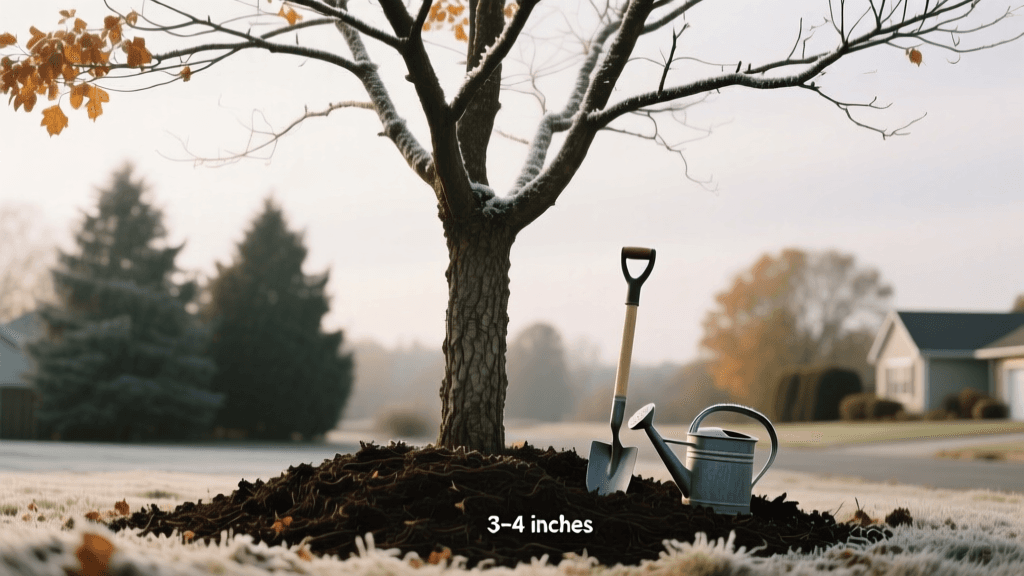
Apply a 2 to 3-inch layer of organic hardwood mulch in a wide donut shape around the base of each tree. Keep the mulch at least 3 inches away from the trunk to prevent rot and rodent damage. Mulch regulates soil temperature, suppresses competitive weeds, and retains vital moisture during the critical first two years of establishment.
Long-Term Maintenance and Pruning
An evergreen screen requires dedicated care during its first three growing seasons. Water your newly planted trees deeply once or twice a week, providing roughly 1 to 1.5 inches of water per week. Drip irrigation systems or soaker hoses laid along the base of the screen are highly recommended for efficient, targeted watering.
In colder climates, winter burn can be a significant issue for newly planted evergreens. The combination of frozen ground and harsh winter winds prevents the tree from replacing moisture lost through its needles. To combat this, consider applying an anti-desiccant spray in late fall, which coats the needles with a protective, breathable wax layer. Additionally, burlap screens can be erected on the windward side of the trees during their first winter to prevent severe desiccation.
Pruning is rarely required for naturally dense evergreens like the 'Green Giant', but light tip-pruning in late winter can encourage bushier lateral growth. Never shear the top leader of an evergreen privacy tree, as this destroys its natural form and can invite disease. Remove any dead, damaged, or crossing branches using sterilized bypass pruners. With proper planning, precise spacing, and dedicated early care, your evergreen privacy screen will mature into a lush, vibrant, and enduring natural barrier that enhances your property value and outdoor comfort for decades.