Tree Care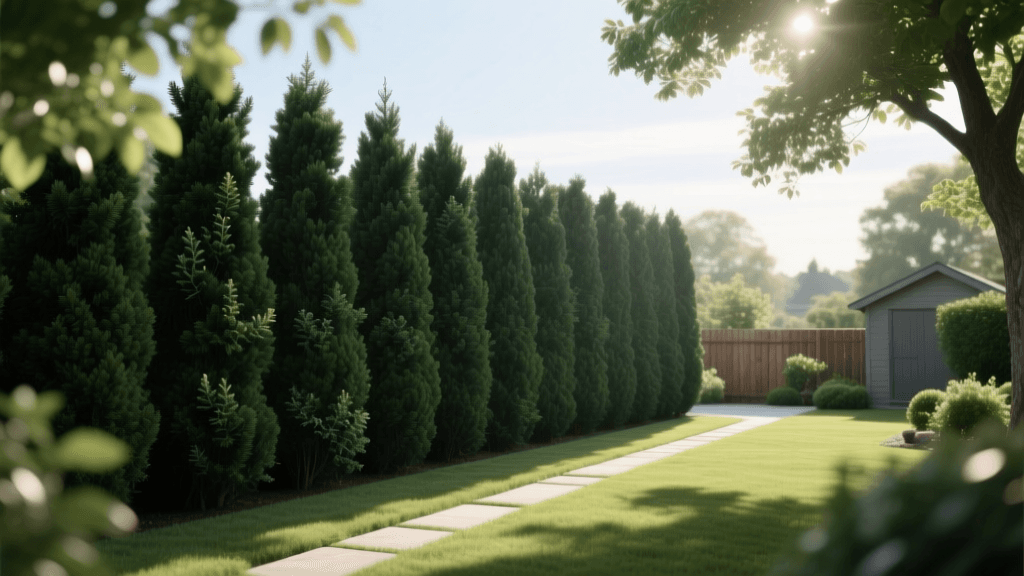
How to Plan and Plant an Evergreen Tree Privacy Screen
Replacing a wooden or vinyl fence with a living evergreen privacy screen is one of the most rewarding landscape design investments you can make. Not only do trees soften the architectural lines of your property, but they also provide year-round seclusion, act as natural windbreaks, and absorb neighborhood noise. However, designing and planning a tree privacy screen requires more than simply digging holes and dropping in saplings. It demands careful consideration of mature heights, growth rates, soil conditions, and local property lines. In this comprehensive planning guide, we will walk you through the exact steps to design, budget, and plant a thriving evergreen privacy screen that will serve your landscape for decades.
Step 1: Assessing Your Site and Soil
Before selecting your tree species, you must thoroughly assess your planting site. Evergreens generally require well-draining soil and ample sunlight to maintain their dense foliage. Start by determining your USDA Plant Hardiness Zone, which dictates which species will survive your local winter temperatures. Next, evaluate the sunlight exposure. Most screening evergreens, such as arborvitae and junipers, require a minimum of six hours of direct, unfiltered sunlight daily. If your planting area is heavily shaded by existing structures or larger deciduous trees, your options will be limited to shade-tolerant species like the Canadian Hemlock or certain hollies.
Soil drainage is equally critical. Perform a simple percolation test by digging a hole 12 inches deep and 12 inches wide, filling it with water, and letting it drain. Refill it and time the drainage. If the water level drops slower than one inch per hour, you have poorly draining clay soil. According to The Morton Arboretum, planting trees in compacted or poorly drained soil is a leading cause of root rot and premature tree failure. If drainage is poor, plan to amend the soil with organic compost or consider planting on a raised berm to elevate the root crown above the water table.
Step 2: Choosing the Right Evergreen Species
Choosing the right evergreen is the cornerstone of your design. You must balance your desire for rapid privacy with the long-term maintenance requirements of the tree. Fast-growing trees often have shorter lifespans and are more susceptible to wind damage and disease, while slow-growing trees provide enduring, robust screens but require patience. Below is a comparison chart of the most popular evergreen screening trees to help you make an informed design decision:
| Species | Mature Height | Growth Rate | USDA Zones | Best Soil Type |
|---|---|---|---|---|
| Green Giant Arborvitae | 40 - 60 ft | Fast (3-5 ft/yr) | 5 - 8 | Loamy, well-draining |
| Leyland Cypress | 50 - 70 ft | Very Fast (4-6 ft/yr) | 6 - 10 | Adaptable, prefers good drainage |
| Eastern Red Cedar | 40 - 50 ft | Medium (1-2 ft/yr) | 2 - 9 | Tolerates poor, dry, rocky soils |
| Nellie Stevens Holly | 20 - 30 ft | Medium (2-3 ft/yr) | 7 - 9 | Slightly acidic, well-draining |
| Canadian Hemlock | 40 - 70 ft | Slow (1-2 ft/yr) | 3 - 7 | Moist, acidic, well-draining |
Step 3: Calculating Spacing and Layout
A common mistake in privacy screen planning is planting trees too closely together. While tight spacing creates an immediate visual barrier, it forces the trees to compete fiercely for water, nutrients, and sunlight. This competition leads to sparse inner foliage, increased susceptibility to fungal diseases due to poor air circulation, and stunted root systems.
For a standard single-row privacy screen, space Green Giant Arborvitae or Leyland Cypress trees 5 to 6 feet apart, measured from the center of one trunk to the next. If you have the yard space, a staggered double-row design is vastly superior. Plant two parallel rows with trees spaced 8 feet apart in each row, offsetting the second row so the trees sit in the gaps of the first row. This creates a denser, more natural-looking screen and allows for better airflow.
Always verify your local property lines and municipal easements before finalizing your layout. The Clemson University Home & Garden Information Center recommends planting large screening trees at least 5 to 10 feet away from property lines, foundations, and underground utility lines to prevent future legal disputes and structural damage as the root systems and trunks expand.
Step 4: Planting Timeline and Budgeting
Budgeting for a living fence requires looking beyond the initial purchase price of the trees. For a 50-foot privacy screen using 6-foot tall, balled-and-burlapped (B&B) Green Giant Arborvitae, you will need approximately 9 trees (spaced 5.5 feet apart). Expect to pay between $80 and $150 per tree for high-quality, locally sourced B&B specimens. Container-grown trees (typically 3 to 4 feet tall) are cheaper, ranging from $40 to $75 each, but will take an extra two years to achieve the same level of privacy.
Additional costs to factor into your design budget include:
- Soil Amendments: $50 - $100 for bulk compost or peat moss.
- Mulch: $40 - $80 for 2 to 3 cubic yards of hardwood bark mulch.
- Delivery Fees: $100 - $250 depending on the weight and distance of B&B trees.
- Professional Planting (Optional): $150 - $300 per tree if you hire a landscape contractor to dig and place heavy root balls.
Timing is everything. The optimal window for planting evergreen privacy screens is early fall, roughly six weeks before your first expected hard frost. Fall planting allows the trees to establish their root systems in the cool, moist soil without the stress of supporting summer top-growth. Early spring, just after the ground thaws, is the second-best option.
Step 5: Proper Planting Execution
When planting, follow the guidelines set forth by the Arbor Day Foundation. Dig a hole that is two to three times wider than the root ball, but exactly the same depth. Never plant an evergreen deeper than it was growing in the nursery. The root flare—the point where the trunk widens and transitions into the root system—must remain slightly above the surrounding soil grade. Planting too deep suffocates the roots and invites fatal trunk rot.
Backfill the hole with the native soil you removed, mixing in no more than 20% organic compost. Avoid the temptation to fill the hole entirely with rich potting soil, as this creates a "bathtub effect" where water pools in the loose soil and drowns the roots. Water the tree deeply immediately after planting to eliminate air pockets.
Pro-Tip: Never pile mulch against the trunk of your newly planted evergreens. "Volcano mulching" traps moisture against the bark, leading to rot and inviting boring insects. Always maintain a 2-inch gap between the mulch and the trunk base.
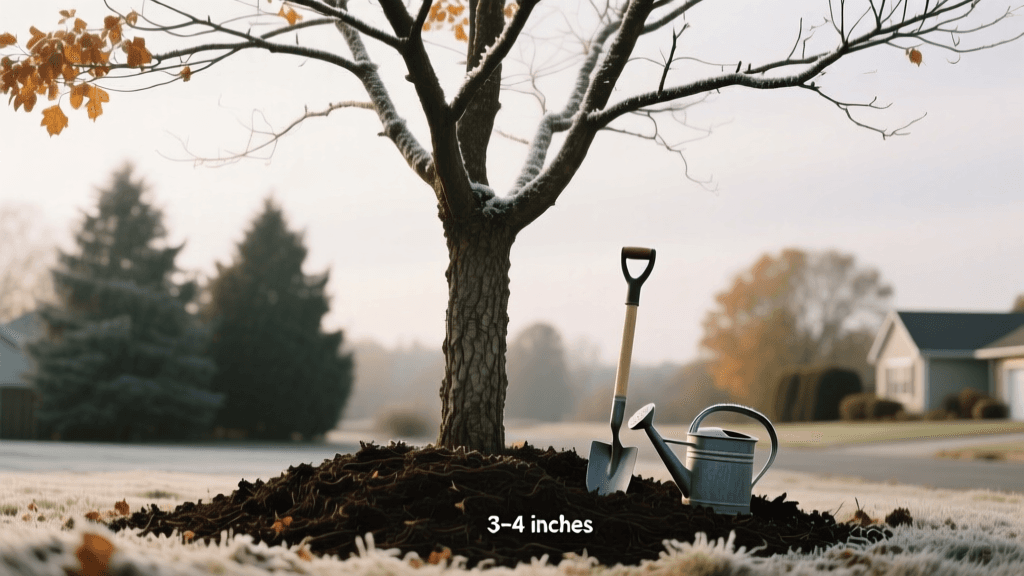
Apply a 2 to 3-inch layer of organic mulch in a wide ring around the base of the tree, extending out to the drip line if possible. This conserves soil moisture, suppresses competing weeds, and regulates soil temperature during extreme seasonal shifts.
Long-Term Care and Maintenance
A well-planned privacy screen requires dedicated care during its first three years. Evergreens do not show drought stress as obviously as deciduous trees; by the time their needles turn brown, the damage is often irreversible. Implement a strict watering schedule, providing 10 to 15 gallons of water per tree, once a week, during the first two growing seasons. Use a slow-release soaker hose or a drip irrigation system to ensure the water penetrates deeply into the root zone rather than running off the surface.
Pruning should be minimal but strategic. In late winter or early spring, shear the terminal leader (the main upward-growing branch) of fast-growing species like the Green Giant Arborvitae once it reaches your desired maximum height. This redirects the tree's energy into lateral branching, resulting in a thicker, denser privacy screen that can withstand heavy snow and ice loads without splitting.
By meticulously planning your site layout, selecting the right species for your microclimate, and adhering to proper planting depths and spacing, your evergreen privacy screen will thrive. It will transform your yard into a secluded, tranquil oasis, increasing both the ecological value and the aesthetic beauty of your property for generations to come.