Tree Care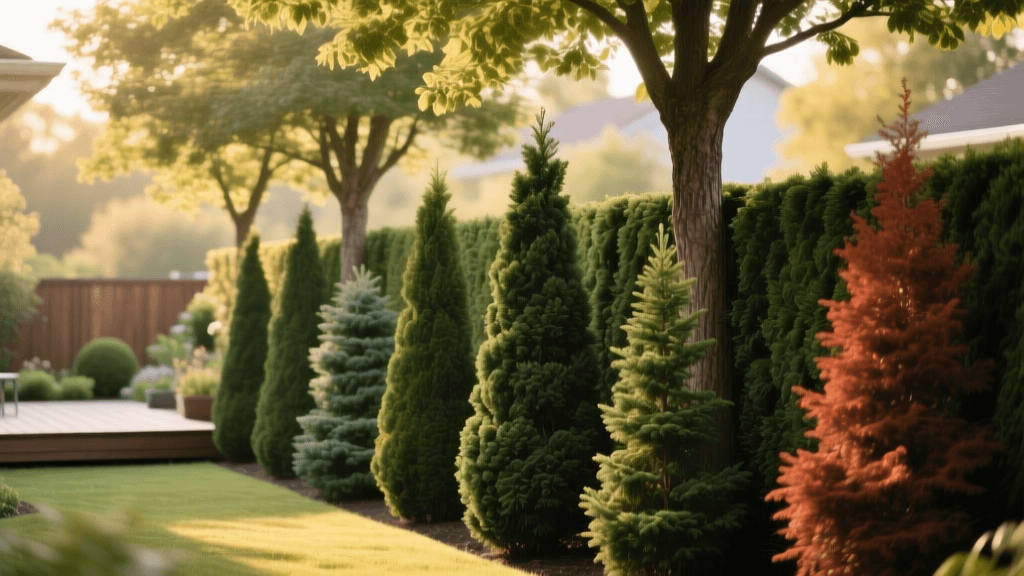
Best Evergreen Trees for Privacy Screens: A Planning Guide
Designing a natural privacy screen is one of the most rewarding landscape projects you can undertake. Unlike wooden fences or vinyl barriers, a living screen of evergreen trees provides year-round seclusion, dampens street noise, acts as a winter windbreak, and creates a vital habitat for local wildlife. However, a successful privacy screen requires meticulous planning, from selecting the right species for your hardiness zone to calculating precise spacing and budgeting for long-term maintenance. In this comprehensive planning guide, we will walk you through the exact steps, measurements, and costs required to design and plant a thriving evergreen privacy screen.
Why Choose Evergreens for Privacy?
When homeowners think of privacy, they often default to hardscaping. While a six-foot cedar fence offers immediate seclusion, it does little to block the noise of a busy road or the harsh winds of a winter storm. Evergreen trees, on the other hand, offer a multi-functional landscape solution. Their dense, needle-bearing canopies absorb and deflect sound waves, making them excellent acoustic buffers. Furthermore, according to the Morton Arboretum, strategically placed evergreen windbreaks can reduce winter heating costs by up to 20 percent by slowing down cold winds before they hit your home.
Beyond utility, evergreens provide immense ecological value. Species like the Eastern Redcedar offer winter shelter and berry-like cones for birds, transforming a sterile property line into a vibrant ecosystem. The key to success lies in matching the tree's mature dimensions and environmental needs to your specific site conditions.
Top Evergreen Species for Privacy Screens
Not all evergreens are created equal. Some grow rapidly but have shorter lifespans, while others grow slowly but provide dense, impenetrable barriers for centuries. When planning your screen, you must consider your USDA Hardiness Zone, soil drainage, and sun exposure. Below is a comparison chart of the most reliable evergreen species used in residential privacy screening.
| Species | Hardiness Zones | Mature Height | Mature Width | Growth Rate | Est. Cost (6ft Tree) |
|---|---|---|---|---|---|
| Thuja 'Green Giant' | 5-8 | 40-60 ft | 12-18 ft | Fast (3-5 ft/yr) | $80 - $120 |
| Eastern Redcedar | 2-9 | 40-50 ft | 8-20 ft | Medium (1-2 ft/yr) | $60 - $90 |
| Norway Spruce | 3-7 | 40-60 ft | 25-30 ft | Fast (2-3 ft/yr) | $70 - $110 |
| Leyland Cypress | 6-10 | 60-70 ft | 15-25 ft | Fast (3-4 ft/yr) | $90 - $130 |
| American Holly | 5-9 | 15-30 ft | 10-20 ft | Slow-Med (1-2 ft/yr) | $100 - $150 |
The Thuja 'Green Giant' is widely considered the gold standard for modern privacy screens due to its rapid growth, disease resistance, and uniform pyramidal shape. However, if you live in a colder climate (Zone 3 or 4), the Norway Spruce is a much safer, cold-hardy investment.
Spacing and Layout: The Math Behind the Screen
The most common mistake in privacy screen planning is planting trees too close together. While it is tempting to space trees tightly to achieve an instant green wall, overcrowding leads to fierce competition for water, nutrients, and sunlight. This stress makes the trees highly susceptible to fungal diseases and pest infestations, such as spider mites and bagworms.
To calculate proper spacing, look at the mature width of the species, not the height. For example, if you are planting Thuja Green Giants (which reach 15 feet wide at maturity), a single-row screen should be spaced 8 to 10 feet apart. This allows the canopies to eventually merge into a solid wall while leaving enough root space for healthy development.
The Staggered Row Technique
If you have the property space and desire a denser, more soundproof barrier, opt for a staggered double row. Plant the first row with standard spacing, and then plant a second row offset by half the distance, forming a zig-zag pattern. The rows should be spaced 6 to 8 feet apart from each other. This method eliminates the gaps that occur in single rows and creates a much thicker windbreak.
Pro-Tip: Always check your local property line ordinances and HOA regulations before planting. Plant trees at least 5 to 10 feet inside your property line to prevent future disputes with neighbors over encroaching branches or root systems.
Soil Preparation and Planting Timeline
Timing is everything when establishing large evergreens. The optimal planting windows are early spring (after the ground thaws but before the summer heat) or early fall (at least six weeks before the first hard freeze). Fall planting is often preferred because the cooler air temperatures reduce transplant shock while the soil remains warm enough to encourage vigorous root growth.
Before digging, conduct a percolation test to ensure your soil drains adequately. Evergreens despise wet feet and will quickly succumb to root rot in heavy, waterlogged clay. If your soil drains poorly, you may need to plant the trees slightly elevated or install a French drain system.
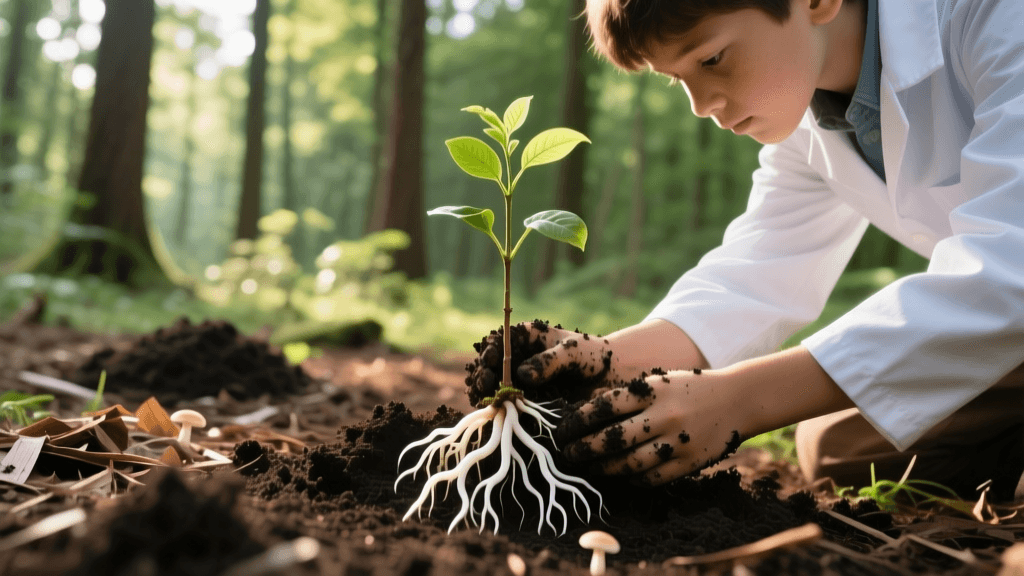
According to the University of Minnesota Extension, the planting hole should be dug two to three times as wide as the root ball, but no deeper. The root flare (where the trunk widens at the base) must sit slightly above the surrounding grade. Backfill with the native soil you removed, avoiding the temptation to heavily amend the hole with rich compost, which can create a bathtub effect that traps water around the roots.
Budgeting: Costs for Trees, Soil, and Labor
Planning a privacy screen requires a realistic budget. The costs extend far beyond the price of the trees themselves. Here is a breakdown of estimated expenses for a 100-foot privacy screen using 6-foot tall Thuja Green Giants spaced 8 feet apart (requiring roughly 13 trees).
- Trees (Balled and Burlapped): $100 each x 13 = $1,300
- Delivery Fees: $150 - $300 (Heavy equipment delivery)
- Soil Testing & Amendments: $50 (Test kit) + $100 (Lime/Sulfur if needed)
- Mulch (Hardwood or Pine Bark): $150 (Approx. 3 cubic yards to create 3-foot rings around each tree)
- Drip Irrigation System: $200 (Crucial for the first two years of establishment)
- Professional Planting Labor (Optional): $1,500 - $2,500 (Includes augering, backfilling, and cleanup)
For a DIY approach, you are looking at an investment of roughly $1,800 to $2,100. Hiring a professional landscape crew will push the total project cost to between $3,500 and $4,500, but it guarantees proper handling of heavy root balls and correct planting depth.
Integrating Hardscape and Landscape Lighting
A true design-focused privacy screen incorporates more than just trees. Consider integrating a low retaining wall or a decorative trellis at the base of your evergreens to create a tiered, architectural look. This not only enhances the visual appeal of your property but can also help manage soil erosion on sloped terrain.
Furthermore, planning for landscape lighting during the initial design phase is highly recommended. Installing low-voltage LED uplights at the base of every third or fourth tree will cast dramatic shadows through the evergreen boughs at night. This highlights the texture of the foliage and extends the usability and aesthetic enjoyment of your outdoor living spaces well into the evening hours. Ensure that all low-voltage wiring is buried at least 6 inches deep and routed away from the primary root zones to avoid damage during future landscaping tasks.
Long-Term Maintenance and Pruning
A privacy screen is a long-term investment that requires dedicated care during its first three years. Evergreens have shallow root systems and are highly vulnerable to drought stress. Implement a deep-watering schedule using a soaker hose or drip line, providing 1 to 1.5 inches of water per week during the growing season.
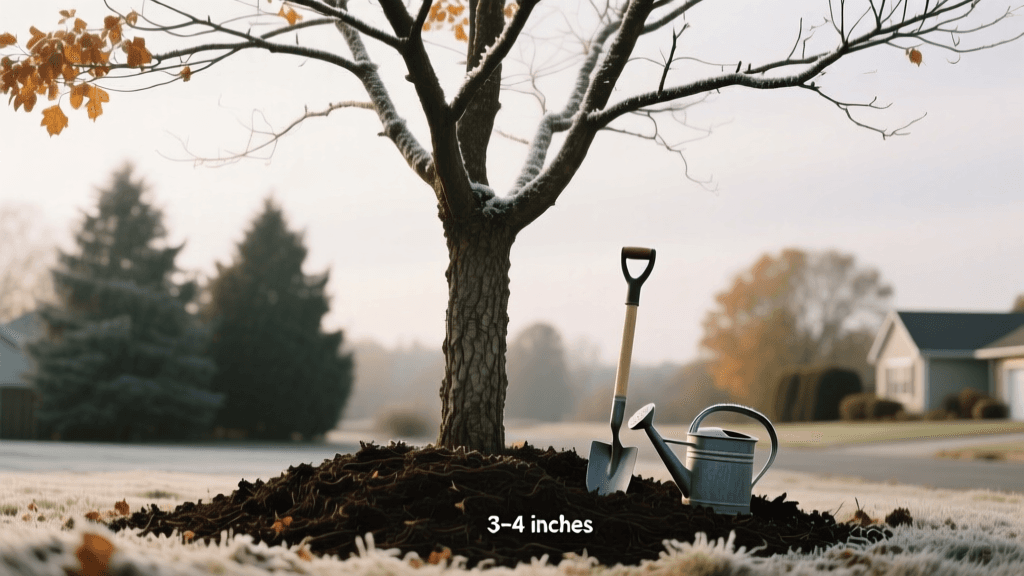
Mulching is non-negotiable. Apply a 3-inch layer of organic mulch in a donut shape around the base of each tree. Keep the mulch at least 3 inches away from the trunk to prevent bark rot and rodent damage. As the Arbor Day Foundation emphasizes, proper mulching regulates soil temperature and retains vital moisture.
Pruning should be minimal and strategic. Unlike deciduous trees, most conifers do not regenerate foliage from old, bare wood. Therefore, never prune back past the green growth. Light shearing in late spring or early summer can encourage denser lateral branching, thickening your privacy screen and ensuring it remains a lush, impenetrable barrier for decades to come.