Pest Control
Expert Grub Control: IPM Strategies for a Healthy Lawn
Understanding White Grubs and Lawn Damage
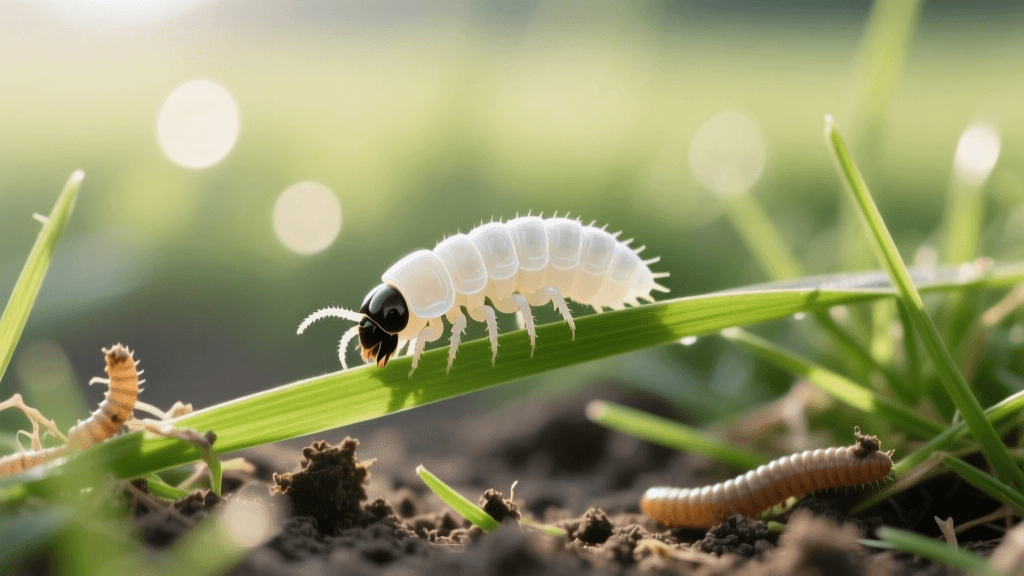
White grubs are the larval stage of scarab beetles, including Japanese beetles, June bugs, and European chafers. These C-shaped, cream-colored larvae live just beneath the soil surface, where they voraciously feed on the roots of turfgrass. When grub populations explode, they sever the root system, cutting off the grass's ability to absorb water and nutrients. The result is irregular brown patches of dead grass that feel spongy underfoot and can be rolled back like a loose carpet.
Beyond the direct damage caused by root feeding, heavy grub infestations often invite secondary, highly destructive pests. Foraging animals such as skunks, raccoons, armadillos, and crows will tear up your lawn overnight to feast on the protein-rich larvae, leaving behind deep craters and shredded turf that is far more difficult to repair than the grub damage itself. To protect your landscape, professional lawn care operators rely on Integrated Pest Management (IPM) rather than blind, calendar-based spraying.
The IPM Approach: Scouting and Thresholds
The cornerstone of expert grub control is the IPM threshold model. Not every grub in your soil requires eradication; turfgrass can tolerate a certain number of root feeders without showing visible damage. Treating a lawn when grub populations are below the economic or aesthetic threshold wastes money, harms beneficial soil organisms, and introduces unnecessary chemicals into the environment.
How to Scout for Grubs Like a Pro
Scouting should be performed in late summer or early fall when grubs are fully grown and feeding aggressively, or in early spring before they pupate. Follow this professional scouting method:
- Identify Target Zones: Focus on areas of the lawn that are highly susceptible, such as full-sun areas, south-facing slopes, and turf adjacent to paved surfaces where soil temperatures are higher.
- Cut the Sod: Using a sharp spade or a specialized sod cutter, cut three sides of a 1-foot by 1-foot square, about 2 to 3 inches deep.
- Peel and Inspect: Peel back the turf flap like a hinge. Sift through the top 2 inches of soil and thatch, counting every white grub you find.
- Extrapolate the Data: Multiply your count by the number of square feet in your target zones to estimate the overall population density.
According to turfgrass entomologists at Purdue University Extension, a healthy, well-irrigated lawn can tolerate up to 15 grubs per square foot before curative treatment is necessary, whereas stressed or poorly irrigated turf may show severe damage at thresholds as low as 5 to 10 grubs per square foot.
Preventative vs. Curative Control Strategies
Choosing the right chemical or biological intervention depends entirely on the time of year and the life stage of the grub. Preventative controls target eggs and early-instar (young) grubs, while curative controls are designed to knock down mature, late-instar grubs that are actively destroying roots in the fall.
| Strategy | Active Ingredient | Brand Examples | Application Timing | Target Stage | Est. Cost per 1k sq ft |
|---|---|---|---|---|---|
| Preventative | Chlorantraniliprole | Acelepryn, Scotts GrubEx | May - June | Eggs / 1st Instar | $15 - $25 |
| Preventative | Imidacloprid | Merit, Bayer Advanced | June - July | 1st / 2nd Instar | $10 - $18 |
| Curative | Trichlorfon | Dylox, Bayer 24-Hour | August - September | 2nd / 3rd Instar | $12 - $20 |
| Curative | Carbaryl | Sevin | August - September | 2nd / 3rd Instar | $8 - $15 |
Chemical Control Best Practices
Preventative Treatments (Spring/Early Summer)
Chlorantraniliprole is widely considered the gold standard for preventative grub control among turf professionals. Unlike older neonicotinoids, it has an excellent environmental profile and is highly safe for pollinators and earthworms when applied correctly. Apply products containing chlorantraniliprole between mid-May and mid-June. Because it takes several weeks to translocate through the soil profile and plant tissue, early application is critical. Always irrigate the lawn with 1/4 to 1/2 inch of water immediately after application to wash the active ingredient off the grass blades and into the thatch layer where grubs hatch.
Curative Treatments (Late Summer/Fall)
If you missed the preventative window and your scouting reveals threshold-level damage in late August or September, you must switch to a curative product. Trichlorfon (commonly sold as Dylox) is a fast-acting contact and stomach poison that degrades rapidly in the soil, usually within a week. This makes it highly effective for immediate knockdown but useless as a long-term preventative. Because trichlorfon binds tightly to thatch, lawns with thick thatch layers (over 1/2 inch) should be dethatched or heavily aerated prior to application to ensure the chemical reaches the soil.
Biological and Organic Grub Control
For homeowners and organic lawn care professionals seeking non-chemical alternatives, biological controls offer a highly effective, environmentally sound approach to IPM.
Beneficial Nematodes (Heterorhabditis bacteriophora)
Entomopathogenic nematodes are microscopic, unsegmented worms that actively hunt down and infect white grubs with fatal bacteria. The Heterorhabditis bacteriophora (Hb) species is the most effective against scarab beetle larvae. To achieve professional results, apply 1 to 2 billion nematodes per acre. Nematodes are highly sensitive to UV light and desiccation, so they must be applied at dusk or on a heavily overcast day. The soil temperature must be consistently above 60°F, and the lawn must be irrigated immediately after application to wash the nematodes into the root zone. Expect to pay between $40 and $60 per 10 million nematodes, making this a premium but highly sustainable option.
Milky Spore Disease (Paenibacillus popilliae)
Milky spore is a naturally occurring bacterium that specifically targets Japanese beetle grubs. While it is a popular organic choice, experts caution that it is not a quick fix. It can take 3 to 5 years for the spores to build up to effective levels in the soil, and it offers zero protection against European chafers or June bugs. If you choose milky spore, apply it in a grid pattern using a drop spreader in early fall when grubs are actively feeding, and avoid using any broad-spectrum chemical insecticides that could disrupt the soil biology required for the spores to thrive.
Cultural Practices for Long-Term Prevention
Chemical and biological controls are only half the battle. Expert turf managers know that cultural practices dictate a lawn's natural resilience against root-feeding pests.
- Optimize Mowing Height: Never scalp your lawn. Maintain a mowing height of 3 to 4 inches during the growing season. Taller grass develops deeper, more extensive root systems, meaning the plant can sustain more grub feeding before showing visible stress.
- Deep, Infrequent Irrigation: Grubs thrive in consistently moist, shallow topsoil. Water your lawn deeply (1 inch per week) but infrequently to encourage roots to grow deep into the soil profile. Allowing the top inch of soil to dry out between waterings can naturally desiccate young grubs and deter female beetles from laying eggs in the turf.
- Core Aeration: Compacted soil stresses turfgrass and creates a shallow root zone that is highly vulnerable to grub damage. Annual core aeration in the fall relieves compaction, improves water infiltration, and promotes a robust root system capable of outgrowing minor grub feeding.
By combining precise scouting, targeted chemical or biological interventions, and rigorous cultural maintenance, you can implement a foolproof IPM strategy that keeps white grubs in check while preserving the ecological balance of your landscape.