Pest Control
Expert Grub Control: Timing, Products, and IPM Tips
The Hidden Threat Beneath Your Turf
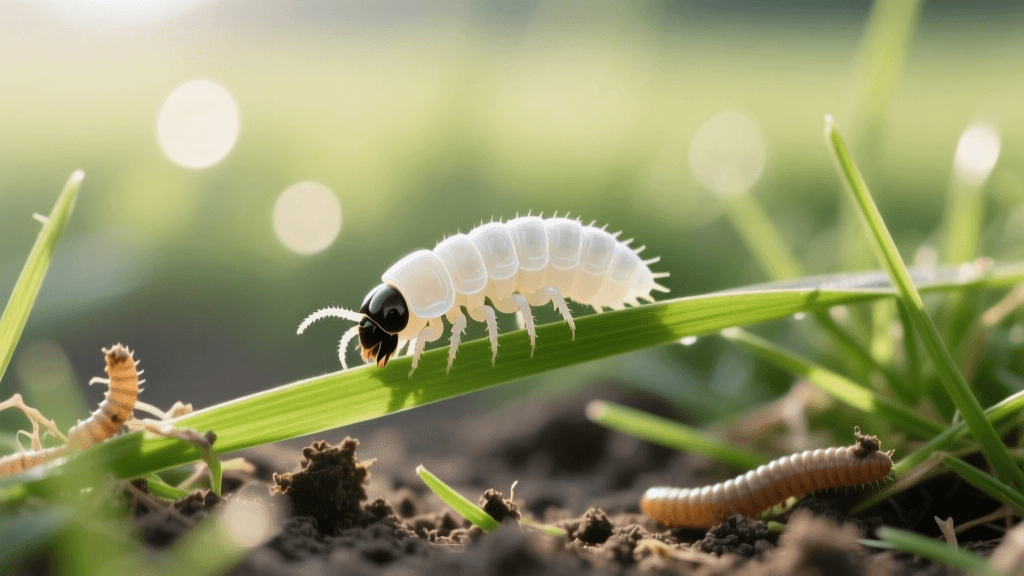
White grubs are the larval stage of various scarab beetles, including Japanese beetles, June bugs, and European chafers. These C-shaped, cream-colored pests live just below the soil surface, feeding aggressively on the root systems of cool-season and warm-season grasses. Left unchecked, a severe grub infestation will sever the turf from its roots, leading to widespread brown patches, spongy soil, and secondary damage from foraging wildlife like skunks, raccoons, and crows.
As a senior lawn care specialist, I often see homeowners waste money on the wrong products applied at the wrong time of year. Effective grub management is not about simply spraying a chemical and hoping for the best; it requires a strategic Integrated Pest Management (IPM) approach. This guide will walk you through the expert best practices for scouting, timing, product selection, and cultural prevention to keep your lawn pristine.
Understanding the White Grub Life Cycle
Timing is the single most critical factor in grub control. To apply treatments effectively, you must understand the pest's life cycle, which generally follows a one-year (annual) pattern in most North American lawns.
- Spring (April - May): Overwintered mature grubs move closer to the surface to feed briefly before pupating into adult beetles. Damage is usually minimal at this stage.
- Early Summer (June - July): Adult beetles emerge, mate, and lay eggs in the top few inches of moist soil. These eggs hatch in mid-to-late summer.
- Late Summer to Early Fall (August - October): The newly hatched grubs (first and second instars) are small, close to the surface, and feeding voraciously on grassroots. This is when the most severe turf damage occurs and when curative treatments are most effective.
- Late Fall to Winter (November - March): As soil temperatures drop, grubs burrow deep below the frost line to overwinter, becoming entirely inaccessible to surface-applied treatments.
Expert Scouting: How to Diagnose a Grub Infestation
Before reaching for a chemical, you must confirm the presence of grubs and determine if the population exceeds the economic injury threshold. Grubs are notorious for mimicking the symptoms of drought stress, fungal diseases, or dog urine spots.
The Tug Test: Walk over to a brown or thinning patch of grass and grasp the blades firmly. Pull gently. If the turf rolls back easily like a loose carpet, the roots have been severed, and grubs are likely the culprit.
The Square Foot Dig: Using a flat-edged spade, cut three sides of a 1-foot by 1-foot square of turf, about 3 inches deep. Peel the sod back and count the grubs in the soil and on the roots. Replace the sod and water it immediately to save the grass.
Expert Insight & Authoritative Thresholds: According to the Purdue University Extension Turfgrass Science program, a healthy, well-maintained lawn can typically tolerate up to 5 to 7 white grubs per square foot without sustaining visible damage. However, if your scouting reveals a population exceeding 10 grubs per square foot, curative action is required to prevent severe root destruction and secondary wildlife damage.
Preventative vs. Curative Grub Control Strategies
Integrated Pest Management relies on choosing the right tool for the right season. Preventative treatments are applied before eggs hatch, while curative treatments are used to kill actively feeding grubs in late summer or fall.
| Strategy | Active Ingredient | Application Window | Target Stage | Est. Cost / 1,000 sq ft |
|---|---|---|---|---|
| Preventative | Chlorantraniliprole | April - June | Eggs / Early Instar | $0.12 - $0.18 |
| Preventative | Imidacloprid | June - Mid-July | Eggs / Early Instar | $0.08 - $0.12 |
| Curative | Trichlorfon | August - October | Active Larvae (2nd/3rd Instar) | $0.15 - $0.22 |
| Curative | Carbaryl | September - October | Active Larvae | $0.10 - $0.15 |
Preventative Treatments: The Proactive Approach
Preventatives are the cornerstone of a low-stress lawn care program. They offer a wide application window and are generally safer for the environment and non-target organisms when applied correctly.
Chlorantraniliprole (e.g., Scotts GrubEx1, Acelepryn): This is the gold standard for preventative grub control. It has a long residual effect and is highly effective against a broad spectrum of turf pests. Apply between April and early June. It takes a few weeks to translocate through the soil, which is why early application is vital.
Imidacloprid (e.g., Bayer Advanced Season Long Grub Control): A neonicotinoid that works well when applied closer to the egg-hatch window, typically from mid-June to mid-July. It is highly toxic to bees, so avoid applying it to lawns with blooming clover or broadleaf weeds.
Expert Application Tip: All preventative granular products must be watered in with 0.25 to 0.5 inches of irrigation immediately after application to move the active ingredient out of the thatch layer and into the top 2 inches of soil where eggs are laid.
Curative Treatments: The Rescue Approach
If you missed the preventative window or your scouting in August reveals more than 10 grubs per square foot, you must switch to a fast-acting curative product.
Trichlorfon (e.g., Bayer Advanced 24 Hour Grub Killer): This is a fast-acting organophosphate that kills grubs within 24 hours of contact. It is highly effective in late summer and early fall when grubs are near the surface. However, it degrades rapidly in soils with high pH (alkaline soils) and has a short residual life of only a few weeks.
Carbaryl (e.g., Sevin): Another curative option, though generally considered slightly less effective on larger, third-instar grubs than Trichlorfon. It is often used in early fall when soil temperatures begin to drop.
Expert Application Tip: Curative treatments require heavy watering. Apply at least 0.5 inches of water immediately to drive the chemical into the root zone. If the soil is dry and hydrophobic, lightly water the lawn the day before application to soften the ground.
Organic and Biological Control Methods
For homeowners looking to minimize synthetic chemical use, biological controls offer excellent, eco-friendly alternatives when managed correctly.
Beneficial Nematodes (Heterorhabditis bacteriophora): These microscopic, soil-dwelling worms actively seek out and infect white grubs, releasing bacteria that kill the host within 48 hours. The Hb strain is the most effective against scarab grubs. Best Practice: Apply nematodes in late summer when soil temperatures are between 60°F and 85°F. They are highly sensitive to UV light and desiccation, so apply them in the early evening and irrigate immediately. Keep the soil consistently moist for 10 to 14 days post-application.
Milky Spore (Paenibacillus popilliae): This is a naturally occurring bacterium that specifically targets Japanese beetle grubs. While highly effective in the long term, it is not a quick fix. It takes 2 to 5 years for the spores to build up to effective levels in the soil, and it is completely ineffective against European chafer or June bug grubs. It is best used as a neighborhood-wide, long-term inoculation strategy rather than an acute rescue treatment.
Cultural Best Practices for Long-Term Prevention
A robust, deeply rooted lawn is your first line of defense. Grubs thrive in weak, shallow-rooted turf and moist, shallow-watered soil environments.
- Deep, Infrequent Irrigation: Adult beetles prefer to lay eggs in moist, easily penetrable soil. By watering deeply (1 inch per week) and infrequently, you encourage deep root growth that can tolerate minor grub feeding, while allowing the topsoil to dry out slightly, making it less hospitable for egg-laying.
- Mow High: Maintain a mowing height of 3 to 4 inches for cool-season grasses. Taller grass shades the soil, reducing surface moisture and masking the visual thinning caused by minor grub activity. It also promotes a massive root system that can outpace grub damage.
- Aeration and Dethatching: A thick layer of thatch harbors pests and prevents water and insecticides from reaching the soil. Core aerate your lawn annually to relieve compaction and improve soil health, encouraging beneficial microbes and predators that naturally keep grub populations in check.
Final Expert Takeaways
Successful grub control is a game of timing and observation. Do not apply expensive curative chemicals in the spring when grubs are pupating, and do not rely on slow-acting preventatives in September when grubs are already destroying your roots. Scout your lawn regularly using the square-foot method, respect the economic thresholds established by university extension programs, and always water in your treatments. By combining smart chemical timing with resilient cultural practices, you can maintain a thick, vibrant lawn that naturally resists severe grub damage year after year.