Tree Care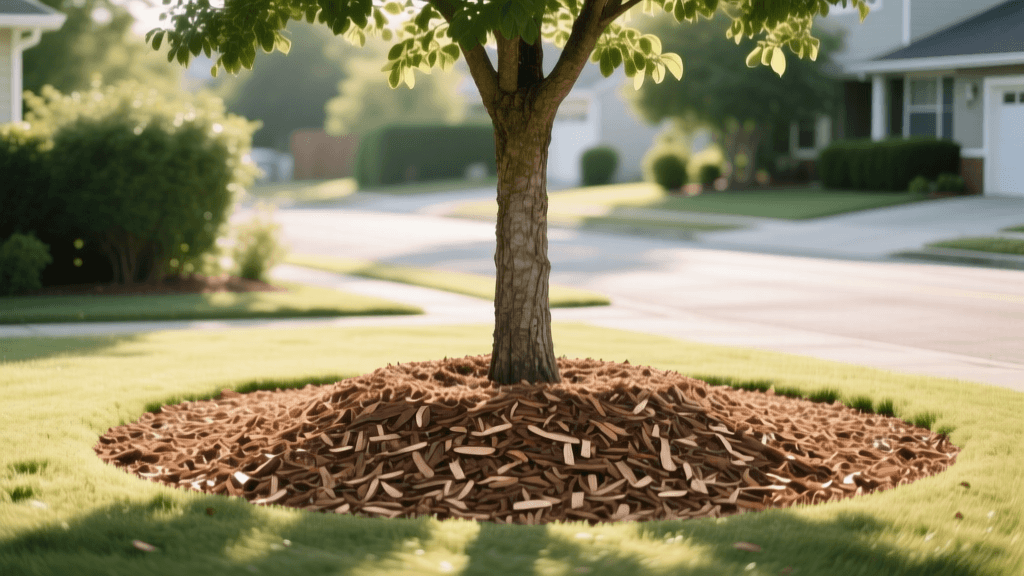
Mastering Tree Mulching: Expert Tips to Prevent Decay
The Foundation of Tree Health: Mimicking the Forest Floor
Mulching is widely recognized as one of the most beneficial practices for maintaining tree health in residential and urban landscapes. In a natural forest ecosystem, trees thrive under a continuous, decomposing layer of organic matter. This natural blanket regulates soil temperature, retains vital moisture, suppresses competing weeds, and slowly releases essential nutrients into the soil profile as it breaks down. However, when applied incorrectly in a landscaped environment, mulch can transition from a vital health booster to a silent killer of mature and young trees alike.
As a homeowner or landscape, understanding the biological needs of a tree's root system and trunk base is critical. The goal of any mulching regimen should be to replicate the forest floor without compromising the structural integrity or respiratory functions of the tree. This comprehensive guide details expert tips, precise measurements, and best practices to ensure your trees receive the maximum benefit from mulch while avoiding the most common and devastating application errors.
The Anatomy of the Base: Exposing the Root Flare
Before applying any material around a tree, you must understand the anatomy of the tree's base. The most critical structural feature at ground level is the root flare (also known as the trunk flare). This is the area where the main trunk widens and transitions into the primary structural roots. The root flare is designed to be exposed to the air; its bark is adapted to withstand atmospheric conditions and facilitate vital gas exchange for the underlying vascular tissues.
When the root flare is buried under soil, heavy turfgrass, or excessive mulch, the tree is effectively suffocated. The lack of oxygen leads to cellular death in the phloem and cambium layers. Furthermore, constant moisture trapped against the trunk bark invites fungal pathogens and wood-decaying organisms. Identifying and exposing the root flare is the mandatory first step in any professional mulching protocol. If your tree looks like a telephone pole going straight into the ground, the root flare is buried, and corrective action is required immediately.
The Perils of Volcano Mulching
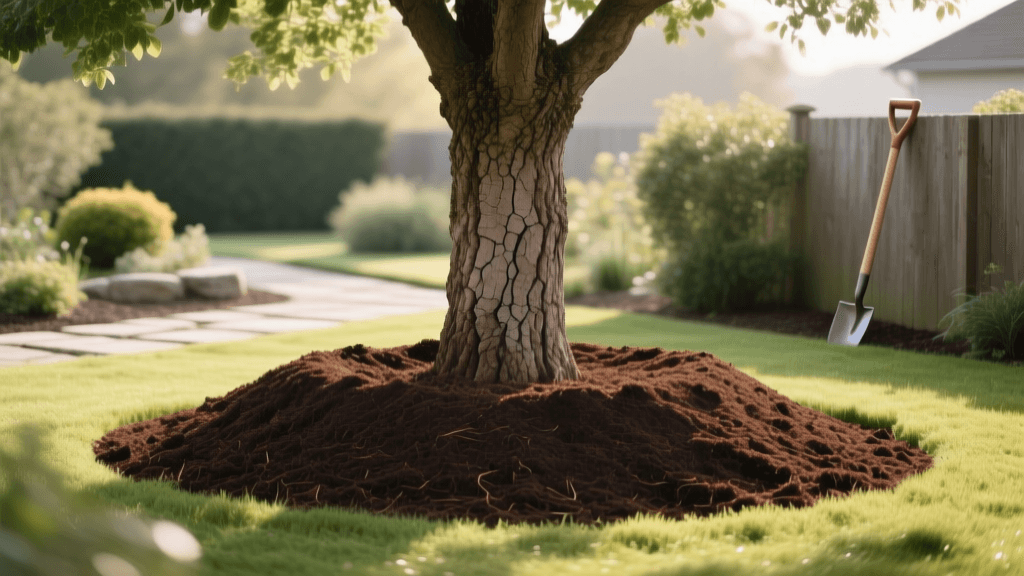
The most pervasive and damaging mistake in urban forestry is known as 'volcano mulching.' This occurs when mulch is piled high against the trunk of the tree, resembling a cone or volcano. While often done with good intentions by homeowners or misguided landscaping crews aiming for a neat aesthetic, volcano mulching is a primary catalyst for premature tree decline.
According to the University of Florida IFAS Extension, burying the root flare with mulch or soil is a leading cause of urban tree decline. Excessive mulch against the trunk restricts oxygen to the roots, encourages the growth of girdling roots, and creates a hospitable environment for lethal fungal pathogens and bark-boring insects.
The consequences of volcano mulching are severe and often irreversible by the time symptoms appear in the canopy. The trapped moisture causes the bark to rot, compromising the tree's ability to transport nutrients. Additionally, the dark, warm environment under a thick mulch pile encourages secondary roots to sprout from the trunk. These 'girdling roots' will eventually wrap around the main trunk, strangling the tree's own vascular system over a period of five to ten years.
Expert Best Practices: The 3-3-3 Rule
To achieve optimal results, arborists and urban foresters rely on a simple, easy-to-remember framework known as the 3-3-3 Rule. This guideline ensures that mulch is applied in a manner that benefits the root zone without threatening the trunk.
1. Three Inches from the Trunk
Never allow mulch to touch the bark of the tree. Maintain a strict clearance of at least three inches between the edge of the mulch ring and the base of the trunk. The root flare must remain completely visible and exposed to the air. Think of the mulch ring as a donut, not a pyramid.
2. Three Inches Deep
The ideal depth for organic mulch is two to four inches, with three inches being the sweet spot for most applications. A layer thinner than two inches will fail to suppress weeds or retain adequate moisture. Conversely, a layer thicker than four inches can restrict water infiltration and limit oxygen diffusion into the soil. If you are dealing with poorly drained, heavy clay soils, err on the side of caution and limit the depth to two inches to prevent waterlogging.
3. Three Feet Wide (Minimum)
The mulch ring should extend outward from the trunk to cover as much of the root zone as possible. A minimum radius of three feet (a six-foot diameter circle) is recommended for young or newly planted trees. For mature trees, the mulch ring should ideally extend all the way to the drip line (the outer edge of the tree canopy). Expanding the mulch ring eliminates competition from turfgrass, which is highly aggressive in consuming water and nutrients that the tree requires.
Mulch Material Comparison Chart
Not all mulches are created equal. Organic mulches are vastly superior to inorganic options because they improve soil structure and biology as they decompose. Below is a comparison of common organic mulch materials used in professional tree care.
| Mulch Type | Decomposition Rate | Moisture Retention | Best Use Case |
|---|---|---|---|
| Shredded Hardwood | Moderate | High | General landscape beds; stays in place on slopes. |
| Pine Bark Nuggets | Slow | Moderate | Flat areas; highly durable but can wash away on slopes. |
| Arborist Wood Chips | Slow to Moderate | High | Large trees, naturalized areas, and rural properties; excellent for soil building. |
| Composted Leaf Mold | Fast | Very High | Soil amendment and top-dressing; mimics forest floor perfectly. |
| Rubber Mulch (Inorganic) | None | Low | Playgrounds only; not recommended for tree health due to soil toxicity and heat retention. |
Arborist wood chips, often available for free from local tree service companies, are widely considered the gold standard for tree health. They provide an excellent carbon-to-nitrogen ratio on the soil surface, encouraging beneficial mycorrhizal fungi that form symbiotic relationships with tree roots.
Calculating Mulch Volume: Avoiding Waste and Over-Application
One of the most common logistical errors is purchasing too much or too little mulch, leading to either wasteful overspending or the temptation to pile it too thick. To calculate the exact amount of mulch required, use the following formula to determine cubic yards:
Formula: (Total Square Footage x Desired Depth in Inches) / 324 = Cubic Yards
Example: You want to create a mulch ring with a 10-foot radius (approx. 314 square feet) at a depth of 3 inches.
- 314 sq ft x 3 inches = 942
- 942 / 324 = 2.9 cubic yards
By doing the math beforehand, you ensure that you apply the correct depth without the leftover material that often tempts homeowners to dump the excess against the trunk.
Seasonal Timing for Application
Timing your mulch application can maximize its protective benefits. The best time to apply or refresh mulch is in the mid-to-late spring, after the soil has had a chance to warm up from the winter chill. Applying mulch too early in the spring can trap winter cold in the soil, delaying root growth and the breaking of dormancy. In the fall, a light application of composted leaf mold can help insulate the root zone against severe freezing and thawing cycles, which can cause frost heaving in newly planted trees.
Maintenance: Avoiding the Mulch Mountain
Mulch decomposes over time, which is beneficial for the soil. However, many landscaping services practice 'top-dressing' every single spring without removing the old layer. Over five years, this results in a massive, compacted 'mulch mountain' that repels water and suffocates roots.
Best practice dictates that before adding new mulch in the spring, you should use a steel rake to break up and fluff the existing layer. If the total depth already exceeds three inches, no new mulch is needed. Simply raking the old mulch restores its aesthetic appeal, breaks up hydrophobic fungal mats, and restores oxygen permeability to the soil below.
Pest and Disease Mitigation
Proper mulching directly impacts pest management. Thick, trunk-hugging mulch provides an ideal overwintering habitat for voles and mice. These rodents will chew through the tree's bark at the soil line during winter, effectively girdling and killing the tree. By maintaining the three-inch clearance from the trunk, you eliminate the protective cover these pests need to feed safely. Furthermore, keeping the trunk dry and exposed prevents the proliferation of Phytophthora and Armillaria, two devastating fungal pathogens that thrive in the dark, anaerobic conditions created by improper mulching.
Conclusion
Mastering the art of tree mulching requires shifting away from purely aesthetic landscaping trends and embracing horticultural science. By exposing the root flare, strictly adhering to the 3-3-3 Rule, selecting high-quality organic materials, and calculating your volume accurately, you provide your trees with the foundation they need to thrive for decades. Implement these expert best practices this season to safeguard your landscape's most valuable assets against decay, drought, and disease.