Lawn Care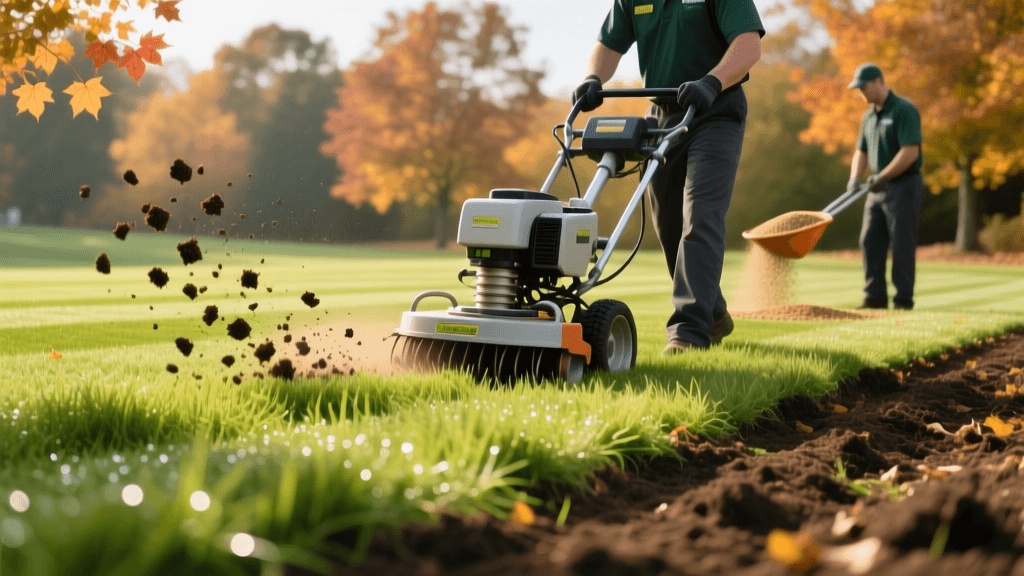
Fall Aeration and Overseeding Guide for Cool-Season Lawns
The Science of Fall Lawn Recovery
For homeowners managing cool-season grasses like Tall Fescue, Kentucky Bluegrass, and Perennial Ryegrass, autumn is not the time to put away the gardening tools. In fact, fall is the most critical window for seasonal lawn maintenance and long-term turf health. While spring seeding is a common misconception driven by garden center displays, late summer to early fall provides the optimal biological conditions for seed germination and deep root establishment.
According to Penn State Extension, cool-season grasses experience their most vigorous root growth when soil temperatures drop to between 50°F and 65°F. The soil retains residual summer warmth, acting as an incubator for new seed, while cooler air temperatures reduce heat stress and minimize the germination of competitive summer annual weeds like crabgrass. By combining core aeration with strategic overseeding, you relieve soil compaction, improve water infiltration, and introduce modern, disease-resistant grass cultivars to your existing turf.
Preparing for Core Aeration: Equipment and Soil Moisture
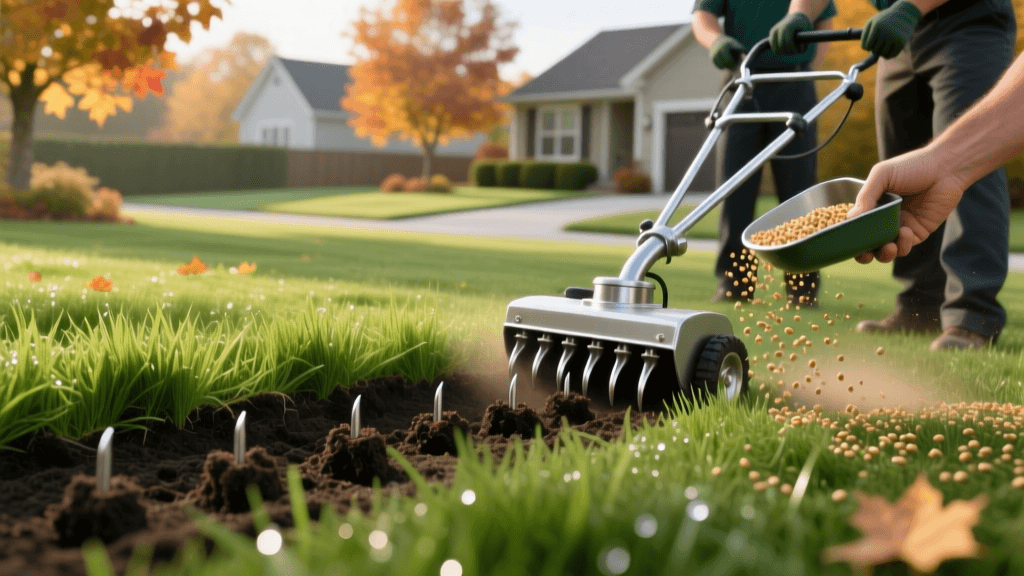
Core aeration involves physically removing small plugs of soil and thatch from the lawn to alleviate compaction. This process creates direct channels for oxygen, water, and nutrients to reach the root zone, which is vital for the health of your lawn heading into winter dormancy.
Renting the Right Equipment
Skip the manual aerator shoes or spike aerators; they do not remove soil cores and can actually increase compaction around the holes. Rent a gas-powered, walk-behind core aerator from a local hardware store. Expect to pay between $75 and $100 for a half-day rental. When operating the machine, ensure it extracts plugs that are 2 to 3 inches deep and spaced 2 to 3 inches apart.
Soil Moisture and Prep
Aeration requires the soil to be moist, but not saturated. Water your lawn deeply 24 hours before aerating so the tines can easily penetrate the soil. If the ground is too dry, the machine will bounce off the surface; if it is too wet, the cores will jam the tines. Before you begin, flag all sprinkler heads and shallow utility lines to prevent costly damage.
Overseeding: Seed Selection and Application Rates
Once the lawn is aerated, the open soil cores provide the perfect seedbed for overseeding. Choosing the right seed blend is paramount for seasonal health and drought tolerance. Avoid cheap contractor mixes that contain annual ryegrass or excessive weed seed. Instead, invest in certified, weed-free seed blends tailored to your specific microclimate.
| Grass Type | Best Use Case | Overseeding Rate (per 1,000 sq ft) | Germination Time |
|---|---|---|---|
| Tall Fescue | High traffic, drought-prone areas, full sun to partial shade | 8 - 10 lbs | 7 - 14 days |
| Kentucky Bluegrass | Rhizomatous spread, high aesthetic appeal, requires full sun | 2 - 3 lbs | 14 - 28 days |
| Perennial Ryegrass | Fast germination, erosion control, temporary winter color | 5 - 7 lbs | 5 - 10 days |
For most transition zone and northern lawns, a blend of 90% Tall Fescue and 10% Kentucky Bluegrass offers the best balance of deep-rooted drought tolerance and self-repairing rhizome growth.
Fertilization and Weed Control Considerations
New grass seedlings require immediate access to phosphorus to develop strong root systems. Apply a high-quality starter fertilizer, such as Scotts Turf Builder Starter Food for New Grass (24-25-4), on the same day you seed. The phosphorus (the middle number) is locked into the soil and will not leach away, providing sustained energy for the seedlings.
Crucial Weed Control Warning: If you applied a pre-emergent herbicide like Prodiamine or Dithiopyr in the spring or late summer, it will prevent grass seed from germinating. You must wait at least 8 to 12 weeks after application before overseeding. If you are dealing with active broadleaf weeds or grassy weeds during the fall seeding window, avoid traditional post-emergents. Instead, use a selective herbicide containing Mesotrione (e.g., Tenacity). Mesotrione is safe to use at the time of seeding for cool-season grasses and will bleach emerging weeds without harming the new turf.
The 6-Week Fall Aeration and Overseeding Timeline
Timing is everything in seasonal lawn maintenance. Use this structured timeline to guide your fall lawn care routine, starting roughly 45 days before your area's average first hard frost date.
| Week | Action Item | Specific Details and Measurements |
|---|---|---|
| Week 1 | Soil Test and Mow Low | Send a soil sample to your local university extension. Mow the existing lawn down to 1.5 inches to reduce competition for the new seed. |
| Week 2 | Core Aeration | Water deeply the night before. Run the aerator over the lawn in two perpendicular directions to maximize soil fracturing. |
| Week 3 | Seed and Fertilize | Spread seed at the recommended rate using a rotary spreader. Apply starter fertilizer. Leave the extracted soil plugs on the lawn to break down naturally. |
| Weeks 4-5 | Intensive Irrigation | Water 2 to 3 times daily for 10-15 minutes per zone. The top inch of soil must remain constantly moist, but not pooling, until germination is complete. |
| Week 6 | Transition Watering | As seedlings reach 1 inch, reduce watering frequency to once daily, but increase the duration to encourage deeper root growth. |
| Week 7+ | First Mow and Winter Prep | Mow when the new grass reaches 3.5 inches, cutting it down to 2.5 or 3 inches. Ensure blades are razor-sharp to avoid uprooting tender seedlings. |
Irrigation and Post-Overseeding Care Protocols
The most common point of failure in fall overseeding is improper irrigation. Grass seed will die within hours if it germinates and then dries out. Set your irrigation controller to run multiple short cycles per day. For example, water at 7:00 AM, 12:00 PM, and 4:00 PM for 10 minutes each. Adjust this schedule based on your soil type; clay soils retain moisture longer and may only need two cycles, while sandy soils drain rapidly and may require three or four.
Once the new grass has germinated and reaches a height of 3 to 3.5 inches, it is time for the first mow. Never remove more than one-third of the grass blade in a single mowing session. Bag the clippings for this first cut to ensure sunlight reaches the smaller, slower-germinating seedlings that are still establishing at the soil level.
Expert Insights and Authoritative Citations
Proper seasonal maintenance relies on understanding the biological rhythms of your turf. Turfgrass scientists universally agree that fall interventions yield the highest return on investment for cool-season lawns.
"Late summer to early fall is the optimal time to seed cool-season lawns. The warm soil and cool air temperatures promote rapid seed germination and root growth, while the reduced competition from summer annual weeds allows the new turf to establish before winter dormancy."
— Penn State Extension, Department of Plant Science
Furthermore, the NC State TurfFiles program emphasizes that core aeration should always be paired with overseeding and fertilization to maximize the benefits of the open soil channels. By following this comprehensive, data-driven timeline, you will transform a thin, compacted lawn into a thick, resilient turf capable of surviving winter stress and emerging vibrantly green the following spring.