Lawn Care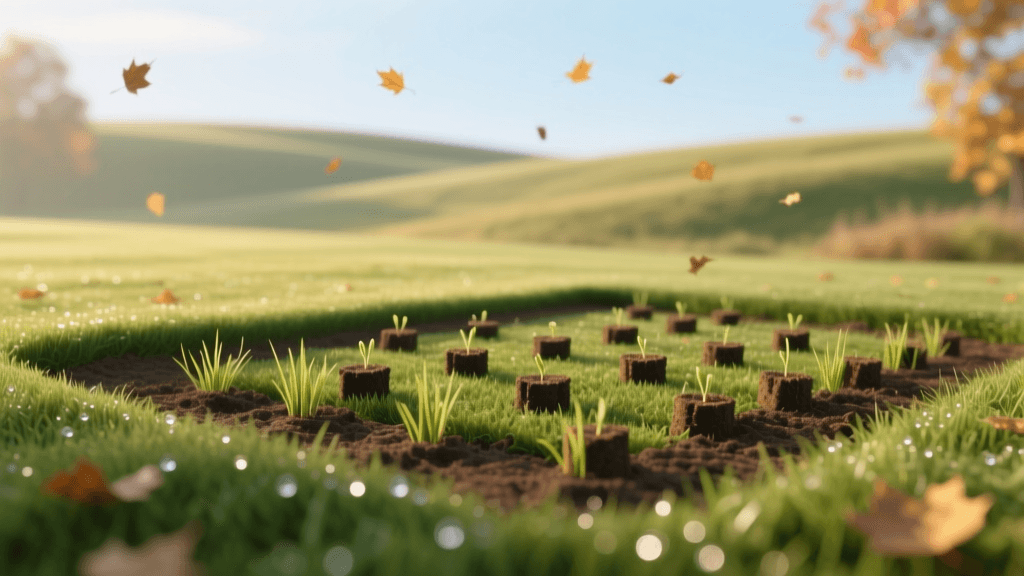
Fall Aeration and Overseeding Guide for Cool-Season Lawns
Why Fall is the Ultimate Season for Cool-Season Lawn Renovation
For homeowners cultivating cool-season grasses like Kentucky Bluegrass, Tall Fescue, and Perennial Ryegrass, autumn is not the time to put away the lawn care equipment. In fact, fall is the most critical window for seasonal maintenance and long-term turf health. As air temperatures drop and daylight hours shorten, cool-season grasses shift their biological focus from upward blade growth to aggressive root development and energy storage. This natural physiological shift makes early to mid-fall the absolute best time for core aeration and overseeding.
Unlike spring seeding, which forces young grass seedlings to compete with aggressive summer annual weeds like crabgrass and endure the stress of impending summer heat, fall overseeding offers a distinct biological advantage. Soil temperatures in early autumn typically hover between 55°F and 65°F, which is the exact germination sweet spot for cool-season grass seeds. Furthermore, the cooler air temperatures reduce moisture evaporation, and the natural autumn rainfall provides a consistent, gentle watering cycle that promotes deep, resilient root systems before the winter dormancy period begins.
Step 1: Soil Testing and Preparation
Before renting an aerator or purchasing expensive grass seed, you must understand the chemical foundation of your lawn. A comprehensive soil test is the first step in any successful seasonal maintenance routine. You can order a mail-in soil test kit from reputable laboratories like Logan Labs or contact your local university extension office. A standard soil test will cost between $15 and $30 and will reveal your soil's pH, phosphorus, potassium, and micronutrient levels.
Cool-season grasses thrive in soil with a pH between 6.0 and 7.0. If your soil test reveals a pH below 6.0, the soil is too acidic, and essential nutrients will become locked up and unavailable to your grass roots. To correct this, apply pelletized calcitic or dolomitic lime. A general rule of thumb is that it takes approximately 50 pounds of lime per 1,000 square feet to raise the soil pH by one full point. Apply the lime immediately after aeration so it can be worked deep into the soil profile.
Step 2: Core Aeration vs. Spike Aeration
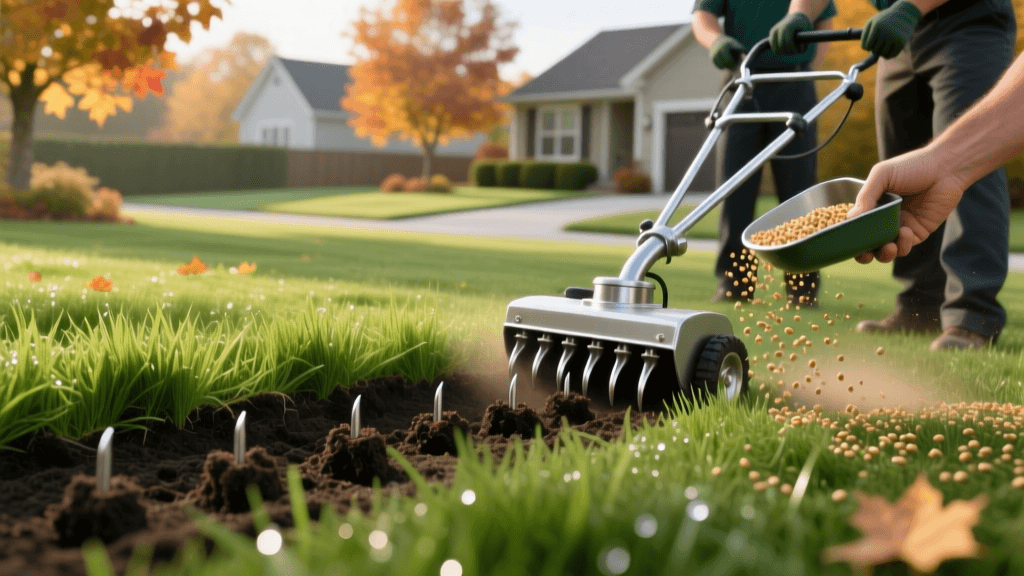
Over the summer, heavy foot traffic, mowing, and natural settling cause soil compaction. Compacted soil suffocates grass roots, prevents water infiltration, and creates a barrier that new grass seeds cannot penetrate. To resolve this, core aeration is mandatory. Core aeration involves using a machine with hollow tines to physically extract plugs of soil and thatch from the lawn.
You should avoid spike aeration, which simply pokes holes into the ground and can actually worsen compaction by pressing the surrounding soil tighter. A high-quality core aerator will pull plugs that are 2 to 3 inches deep and roughly 0.5 inches in diameter. For optimal results, the plugs should be spaced no more than 2 to 3 inches apart. If your lawn is heavily compacted clay, you may need to make two passes with the aerator, with the second pass running perpendicular to the first.
Logistics and Costs: You can rent a walk-behind core aerator from most home improvement stores or local equipment rental yards. Expect to pay between $80 and $120 for a four-hour or full-day rental. Because these machines are incredibly heavy (often exceeding 200 pounds) and difficult to maneuver, it is highly recommended to rent a truck or trailer for transport and bring a friend to help load and unload the equipment. Before aerating, always mark your sprinkler heads and shallow utility lines with fluorescent spray paint to prevent costly damage.
Step 3: Selecting the Right Grass Seed
Choosing the correct seed is vital for long-term lawn health. Avoid cheap, generic seed mixes found in bargain bins, as they often contain high percentages of weed seeds and annual ryegrass filler. Instead, invest in premium, coated seeds from reputable brands like Jonathan Green, Scotts, or Barenbrug. Coated seeds are treated with fungicides and moisture-retaining polymers that significantly increase germination rates.
| Grass Type | Germination Time | Drought Tolerance | Best Use Case |
|---|---|---|---|
| Kentucky Bluegrass | 14-30 Days | Moderate | Full sun, high traffic areas, rhizome spreading |
| Tall Fescue | 7-14 Days | High | Shade/Sun mix, low maintenance, deep roots |
| Perennial Ryegrass | 5-10 Days | Low | Erosion control, quick patching, nurse grass |
For most northern lawns, a blend of Tall Fescue and a small percentage of Kentucky Bluegrass offers the perfect balance of deep drought resistance and lateral spreading capabilities to fill in bare spots.
Step 4: The Overseeding Execution Plan
Mow and Prep the Turf
Before seeding, lower your mower deck to 1.5 or 2 inches and mow the entire lawn. Bag the clippings to expose the soil surface. This scalping process ensures that the new grass seed will reach the soil rather than getting trapped in the existing turf canopy, where it will dry out and die.
Apply Seed and Starter Fertilizer
Use a rotary broadcast spreader to apply your grass seed. When overseeding an existing lawn (as opposed to seeding bare dirt), the application rate should be 3 to 5 pounds of seed per 1,000 square feet. Immediately after seeding, apply a high-quality starter fertilizer. Starter fertilizers are uniquely formulated with higher levels of phosphorus (the middle number in the N-P-K ratio) to stimulate rapid root growth. A product like Scotts Turf Builder Starter Food for New Grass (24-25-4) is an excellent choice and typically costs around $25 for a bag that covers 5,000 square feet.
Preventative Weed Control
Standard pre-emergent herbicides will stop grass seed from germinating, so they cannot be used during fall overseeding. However, if you have a history of broadleaf weeds or Poa annua, you can apply a herbicide containing the active ingredient mesotrione (commonly sold under the brand name Tenacity). Mesotrione is unique because it prevents weed seedlings from developing chlorophyll, effectively killing them without harming germinating cool-season grass seeds. Apply it at the time of seeding according to the label rates (typically 4 to 8 ounces per 100 gallons of water per acre).
Step 5: The Critical Watering Schedule
Grass seed must remain consistently moist to germinate. If the seed dries out even once during the germination window, the embryo will die. For the first 14 to 21 days, you must water the lawn lightly two to three times per day. Set your sprinkler timers to run for 5 to 10 minutes in the early morning, late morning, and early afternoon. The goal is not to deeply soak the soil, but to keep the top half-inch of the soil surface damp. Once the new grass reaches a height of 1 inch, you can gradually reduce the frequency of watering while increasing the duration, encouraging the new roots to grow deep into the aerated soil profile.
Post-Germination Care and Winter Prep
Patience is required when it comes to mowing the new grass. Wait until the new seedlings reach a height of 3 to 3.5 inches before performing the first mow. Ensure your mower blades are freshly sharpened; dull blades will rip the tender young grass out of the ground by the roots.
As late November approaches and the grass stops growing, apply a winterizer fertilizer. Winterizers are high in potassium, which acts like antifreeze for grass cells, protecting the turf from freezing temperatures and snow mold diseases. Avoid applying broadleaf weed killers (like 2,4-D or Dicamba) until the newly overseeded grass has been mowed at least three times, as young grass blades are highly susceptible to chemical burn.
"Seed-to-soil contact is the most critical factor in overseeding success. Seeds left on top of the thatch layer or existing turf canopy will dry out and fail to germinate, making core aeration and thorough raking non-negotiable steps for fall lawn renovation."
- Penn State Extension, Department of Plant Science
By following this comprehensive fall aeration and overseeding protocol, you will transform a thin, tired lawn into a thick, vibrant, and disease-resistant turf that will emerge from winter dormancy looking better than ever.