Lawn Care
Fall Aeration and Overseeding Guide for Fescue Lawns
The Critical Role of Fall in Fescue Lawn Health
Tall fescue (Festuca arundinacea) is widely celebrated for its deep root system, drought tolerance, and year-round green potential in the transitional zone and cooler northern climates. However, the brutal realities of summer—characterized by soaring air temperatures, high humidity, and relentless foot traffic—often leave fescue lawns thin, stressed, and highly susceptible to turf diseases like brown patch. As a senior lawn care specialist, I cannot stress this enough: the secret to a thick, vibrant, and disease-resistant fescue lawn is not found in spring treatments, but in rigorous fall maintenance. Fall aeration and overseeding represent the cornerstone of seasonal turf health, providing your lawn with the biological reset it desperately needs before winter dormancy and the subsequent spring green-up.
Understanding Fescue Seasonal Health and Summer Stress
To master fall lawn care, you must first understand the biological rhythm of cool-season grasses. Fescue thrives when daytime air temperatures hover between 60°F and 75°F, and soil temperatures remain between 50°F and 65°F. During the summer months, fescue enters a state of survival rather than active growth. Root systems naturally die back, and the plant relies on stored carbohydrates to endure heat stress. By late August, most fescue lawns exhibit significant thinning, bare spots, and weakened crowns. Fall renovations are not merely cosmetic; they are a vital health intervention. Rebuilding the root mass and increasing turf density in the autumn directly correlates to the lawn's ability to outcompete spring weeds like crabgrass and Poa annua. A dense, healthy fescue canopy acts as a natural pre-emergent herbicide by shading the soil and depriving weed seeds of the sunlight required for germination.
Timing Your Fall Renovation: Soil Temperature is Key
The most common mistake homeowners make is waiting until the first frost or relying solely on the calendar to dictate their overseeding schedule. True lawn health is dictated by soil temperature, not air temperature. You must invest in a simple soil probe thermometer and begin monitoring the top two inches of your soil. The ideal window for core aeration and overseeding fescue opens when soil temperatures consistently drop below 70°F and settle into the 50°F to 65°F range. In the upper Midwest and Northeast, this typically occurs between late August and mid-September. In the transitional zone (states like Virginia, North Carolina, and Tennessee), the optimal window shifts to early September through mid-October. Seeding too early exposes vulnerable seedlings to late-summer heat stress and Pythium blight. Seeding too late prevents the grass from establishing a robust root system capable of surviving winter heave and spring droughts.
Core Aeration: Alleviating Soil Compaction for Root Health
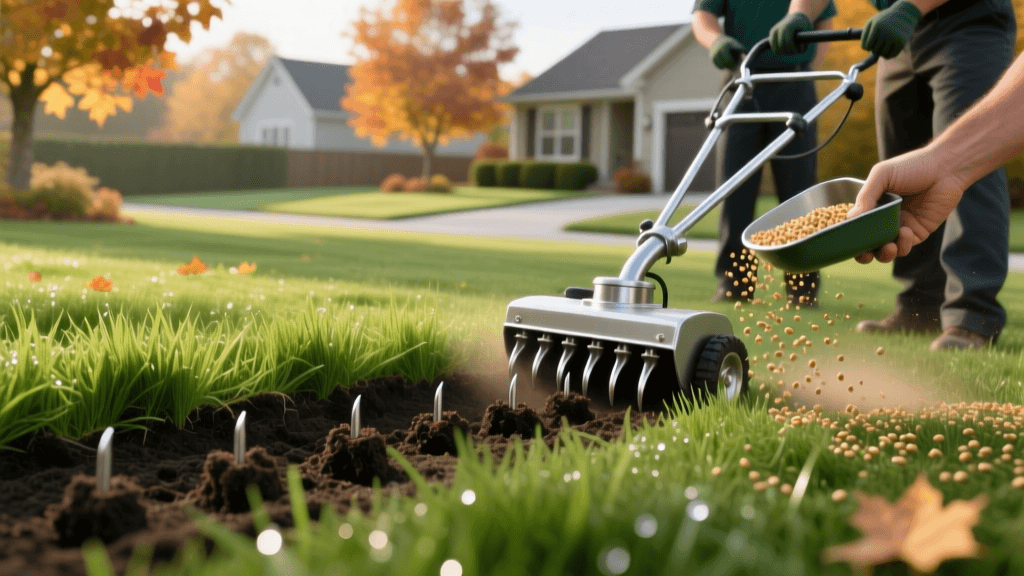
Healthy turf requires a delicate balance of water, oxygen, and nutrients in the soil profile. Over the summer, heavy rains and foot traffic compress the soil, squeezing out vital oxygen pockets and creating a hostile environment for fescue roots. Core aeration is the mechanical process of extracting plugs of soil—typically 2 to 3 inches deep and 0.5 to 0.75 inches in diameter—to alleviate this compaction. For optimal health, aim for 20 to 40 holes per square foot. This may require passing over the lawn twice with a heavy-duty gas-powered core aerator in perpendicular directions. The extracted soil cores should be left on the lawn; they contain valuable microorganisms that will break down and help decompose the thatch layer. Renting a commercial-grade aerator from a local equipment yard typically costs between $70 and $100 for a half-day, while hiring a professional lawn care service averages $15 to $25 per 1,000 square feet.
Selecting the Right Turf-Type Tall Fescue (TTTF) Seed
Seed selection is paramount for long-term disease resistance and seasonal health. Avoid cheap, generic seed mixes or outdated forage varieties like Kentucky-31 (K-31), which feature wide, clumpy blades and poor shade tolerance. Instead, invest in certified Turf-Type Tall Fescue (TTTF) or Rhizomatous Tall Fescue (RTF) blends. Look for cultivars that score highly on the National Turfgrass Evaluation Program (NTEP) for your specific region, prioritizing traits like brown patch resistance, drought tolerance, and endophyte enhancement. Endophytes are naturally occurring fungi that live within the grass tissue, producing alkaloids that deter surface-feeding insects like chinch bugs and sod webworms. Excellent commercial blends often include cultivars such as 'Titan Ultra', 'Hemi', 'Rebel IV', or 'G-Titan'.
Overseeding Rates, Fertilizer, and Cost Breakdown
To ensure you have the correct inputs for your lawn's health, consult the following seasonal maintenance chart:
| Input / Service | Recommended Rate / Specification | Estimated Cost (per 1,000 sq ft) |
|---|---|---|
| TTTF Seed (Overseeding) | 5 to 8 lbs per 1,000 sq ft | $8.00 - $15.00 |
| Starter Fertilizer | 1.0 lb of Nitrogen + Phosphorus | $4.00 - $7.00 |
| Core Aeration (DIY Rental) | 2 passes, 2-3 inch depth | $7.00 - $10.00 (pro-rated) |
| Core Aeration (Professional) | 2 passes, 2-3 inch depth | $15.00 - $25.00 |
| Topdressing (Compost) | 1/4 inch layer (approx. 1 cu yd) | $10.00 - $20.00 |
Step-by-Step Fall Execution Plan
- Step 1: Mow Low. Drop your mower deck to 1.5 or 2 inches and bag the clippings. This removes the canopy barrier, allowing vital seed-to-soil contact.
- Step 2: Aerate. Run the core aerator across the lawn, ensuring you overlap your paths for maximum plug extraction.
- Step 3: Seed. Use a rotary or drop spreader to apply the TTTF seed at the rates specified in the table above. Split the seed in half and apply in two perpendicular directions for even coverage.
- Step 4: Fertilize. Apply a high-phosphorus starter fertilizer to promote rapid root development. A product like Scotts Turf Builder Starter Food for New Grass (24-25-4) or an organic alternative like Milorganite (6-4-0) provides the necessary nutrients. Phosphorus (the middle number in N-P-K) is critical for root development, though many states restrict its use unless you are actively establishing or overseeding a lawn. Avoid standard high-nitrogen winterizers at this exact moment, as they push top growth at the expense of root establishment.
- Step 5: Topdress (Optional but Recommended). Dragging a thin layer of compost or peat moss over the seed helps retain moisture and protects against bird predation.
Post-Seeding Irrigation and Disease Prevention
The success of your fall overseeding hinges entirely on your irrigation discipline. Fescue seed must remain consistently moist to germinate, which typically takes 7 to 14 days. You must water lightly two to three times a day for 5 to 10 minutes per zone, ensuring the top half-inch of soil never dries out. Once the seedlings reach 1.5 inches in height, transition to deeper, less frequent watering—about 1 inch of water per week—to encourage deep root diving. Be highly vigilant for turf diseases during this period. The combination of cool nights, heavy morning dew, and frequent shallow watering creates a breeding ground for Pythium blight and brown patch. If you notice greasy, dark, water-soaked lesions on the young grass blades, immediately apply a preventative fungicide containing azoxystrobin or propiconazole (e.g., Heritage SC or BioAdvanced Fungus Control).
'According to the NC State Extension TurfFiles program, Fall is the most important time for cool-season lawn care. Seeding in the fall allows the grass to develop a deep root system during the cool months, which is essential for surviving the heat and drought of the following summer. Proper timing and cultivar selection are the ultimate defenses against seasonal turf decline.'
Conclusion: Investing in Biological Infrastructure
By adhering to this rigorous fall aeration and overseeding protocol, you are not just patching bare spots; you are fundamentally engineering a healthier, more resilient lawn. Seasonal maintenance is an investment in the biological infrastructure of your turf. Equip yourself with the right TTTF seed, monitor your soil temperatures, and execute with precision this autumn to guarantee a lush, weed-free, and deeply rooted fescue lawn next spring. Consistent attention to seasonal health indicators will separate your lawn from the rest of the neighborhood, ensuring it remains the envy of the block year after year.