Tree Care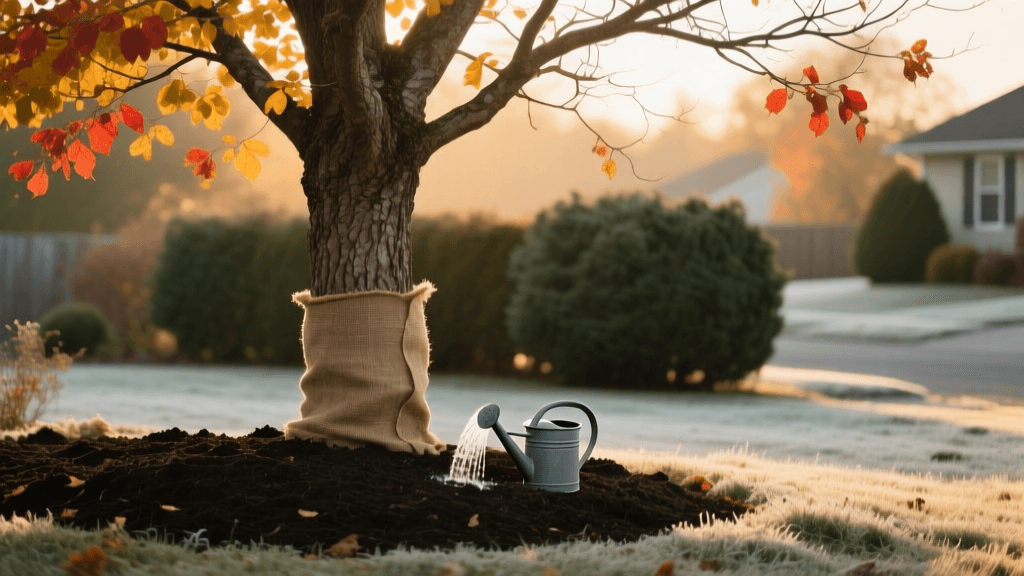
Fall and Winter Tree Care: Watering, Mulching, and Wrapping Guide
Why Fall and Winter Tree Care is Critical
As autumn leaves drop and temperatures begin to plummet, many homeowners mistakenly believe their landscaping duties are over. However, the transition from fall to winter is arguably the most critical period for tree health. Trees do not simply 'go to sleep' during the winter; they undergo complex physiological changes to survive freezing temperatures, fluctuating soil moisture, and harsh winds. Neglecting seasonal maintenance can lead to severe consequences, including winter desiccation, frost cracking, sunscald, and root dieback.
According to the University of Minnesota Extension, winter injury is one of the leading causes of premature tree decline in residential landscapes. The damage often does not become apparent until the following spring or summer, making preventative fall and winter care absolutely essential. This comprehensive guide will walk you through the exact steps, measurements, and products needed to winterize your trees effectively.
Understanding Winter Desiccation
Winter desiccation occurs when trees lose more water through their leaves or needles than they can absorb from the frozen ground. Evergreens are particularly susceptible because they retain their foliage throughout the winter, continuing to transpire on sunny, windy days. When the soil freezes, the root system cannot replace the lost moisture, leading to browning needles, tip dieback, and in severe cases, total plant death.
Deciduous trees, while dormant, also suffer from moisture deficits if they enter the winter without adequate soil hydration. Deep, infrequent watering in the late fall ensures that the root zone is fully saturated before the ground freezes solid.
Fall and Winter Watering Strategies
Proper hydration is the foundation of winter tree survival. The Colorado State University Extension recommends continuing to water trees well into the late fall, and even during winter thaws, to prevent root damage.
When and How Much to Water
- Timing: Continue watering until the ground freezes. In most northern climates, this means watering through October and November. During dry winters, water once or twice a month during periods of thaw when air temperatures are above 40°F.
- Measurement Rule: Apply 10 gallons of water per inch of trunk diameter (measured at knee height) for each watering session.
- Application Method: Use a deep root waterer, such as the Ross Root Feeder ($25-$35), or a slow-drip soaker hose. Water should be applied slowly to allow it to penetrate the top 12 inches of soil, where the majority of the absorbing roots are located.
- Evergreen Priority: Newly planted evergreens and broadleaf evergreens (like rhododendrons) require the most attention, as their shallow root systems dry out rapidly.
Expert Tip: Never water trees if the soil is already frozen or if the ground is completely saturated from recent rainfall. Overwatering in poorly draining clay soils can lead to root rot and frost heaving.
The Right Way to Mulch Before the Freeze
Mulch acts as an insulating blanket for the soil, moderating temperature extremes and retaining vital moisture. However, improper mulching—often referred to as 'volcano mulching'—can suffocate roots, harbor pests, and invite fungal diseases.
Mulching Best Practices
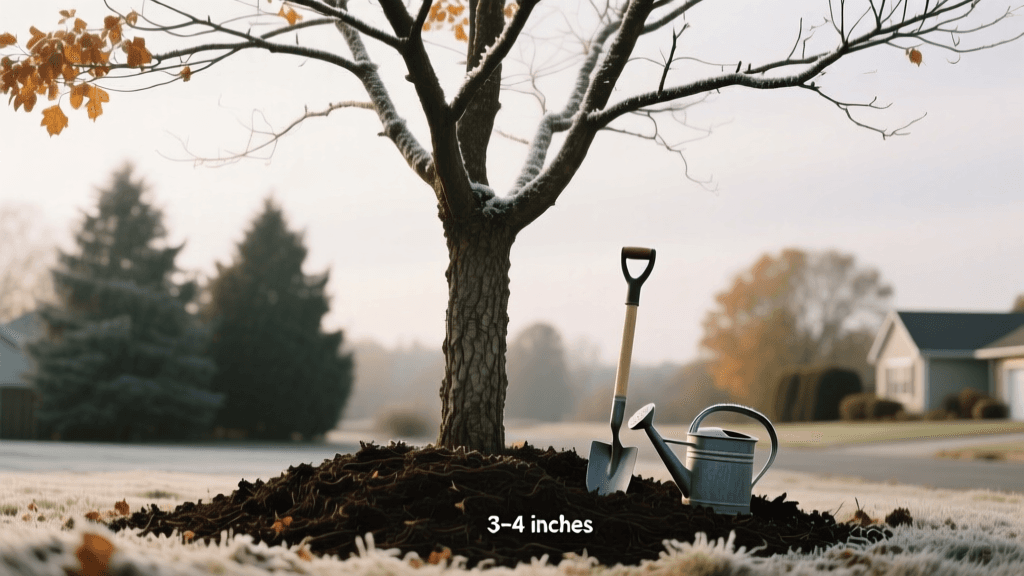
To properly prepare your trees for winter, follow the 'donut' method. Keep mulch away from the trunk to prevent bark decay and rodent damage.
- Material Selection: Use coarse, organic mulches like shredded hardwood bark, pine needles, or wood chips. Products like Scotts Nature Scapes Deep Forest Brown Mulch ($4-$6 per 2-cubic-foot bag) provide excellent insulation and slowly break down to improve soil structure.
- Depth: Apply a 2- to 4-inch layer of mulch. Any deeper, and you risk cutting off oxygen to the roots.
- Diameter: Extend the mulch ring at least 3 feet from the trunk, ideally out to the tree's drip line if space permits.
- The Trunk Gap: Maintain a strict 3-inch mulch-free ring directly around the base of the trunk. The root flare must remain visible and exposed to the air.
Protecting Bark: Tree Wrapping and Guarding
Young trees, particularly those with thin bark like maples, ash, crabapples, and honeylocusts, are highly vulnerable to two winter phenomena: sunscald and frost cracking. Sunscald occurs when the winter sun warms the south-facing side of the trunk, stimulating active cellular growth. When the sun sets and temperatures rapidly drop below freezing, these active cells freeze and rupture, leaving permanent, sunken scars.
Additionally, winter is a time when foraging deer and rabbits may strip bark from young trunks, a behavior known as 'buck rub' or girdling, which can instantly kill a tree by severing its phloem layer.
How to Wrap Trees Properly
The Iowa State University Extension advises wrapping vulnerable trees in the late fall and removing the wrap in early spring.
- Product Choice: Use a commercial, breathable paper or fabric tree wrap, such as DeWitt Paper Tree Wrap ($10-$15 per roll). Avoid using plastic wraps, duct tape, or dark-colored materials that can trap moisture and absorb excess heat.
- Application Technique: Start wrapping at the base of the trunk and overlap each layer by about one-third. Wrap upward to the height of the lowest branch or at least 4 feet high to protect against deer rubs.
- Timing: Apply the wrap around Thanksgiving and remove it promptly around Easter. Leaving wrap on during the spring and summer traps moisture, invites fungal pathogens, and provides a hiding place for boring insects.
- Hardware Cloth Guards: For severe rabbit or rodent pressure, surround the base of the tree with a cylinder of 1/4-inch galvanized hardware cloth. Bury the bottom 2 inches into the soil and ensure the guard stands at least 18 inches above the anticipated snow line.
Anti-Desiccant Sprays for Evergreens
For broadleaf evergreens and highly exposed conifers, applying an anti-desiccant spray provides an extra layer of protection against winter winds. Products like Wilt-Pruf ($20-$30 for a ready-to-use gallon) coat the needles in a protective, breathable polymer film that reduces the rate of transpiration.
Apply the spray in late November or early December when temperatures are between 40°F and 50°F, and no rain is in the forecast for 24 hours. A second application in late January or February is often necessary, as the polymer degrades under UV light over time. Never apply anti-desiccants to blue spruces or other conifers with a naturally occurring waxy bloom, as the spray will permanently alter their color and trap moisture.
Seasonal Tree Care Checklist and Cost Breakdown
Budgeting and scheduling your seasonal maintenance ensures no critical steps are missed. Below is a structured breakdown of tasks, optimal timing, and estimated material costs for a standard residential property with 5 to 10 medium-sized trees.
| Maintenance Task | Optimal Timing | Recommended Products | Estimated Cost |
|---|---|---|---|
| Deep Root Watering | October - November (and winter thaws) | Ross Root Feeder, Soaker Hose | $25 - $40 |
| Mulch Application | Late October - Early November | Shredded Hardwood Bark (approx. 15 bags) | $60 - $90 |
| Trunk Wrapping | Late November (Thanksgiving) | DeWitt Paper Tree Wrap | $10 - $15 per roll |
| Anti-Desiccant Spray | December and February | Wilt-Pruf Concentrate or RTU | $20 - $35 |
| Rodent Guard Installation | November | 1/4-inch Galvanized Hardware Cloth | $15 - $25 |
| Wrap Removal | Early April (Easter) | N/A (Labor only) | $0 |
Final Thoughts on Winterizing Your Landscape
Trees are a long-term investment that adds immense ecological and financial value to your property. By dedicating a single weekend in late fall to deep watering, proper mulching, and strategic trunk protection, you can prevent thousands of dollars in future tree removal and replacement costs. Remember that seasonal maintenance is not a one-size-fits-all endeavor; always adjust your watering volumes and wrapping heights based on your specific local microclimate, tree species, and the age of your landscape. Stay vigilant, observe your trees during winter thaws, and set yourself up for a vibrant, healthy canopy when spring finally arrives.