Tree Care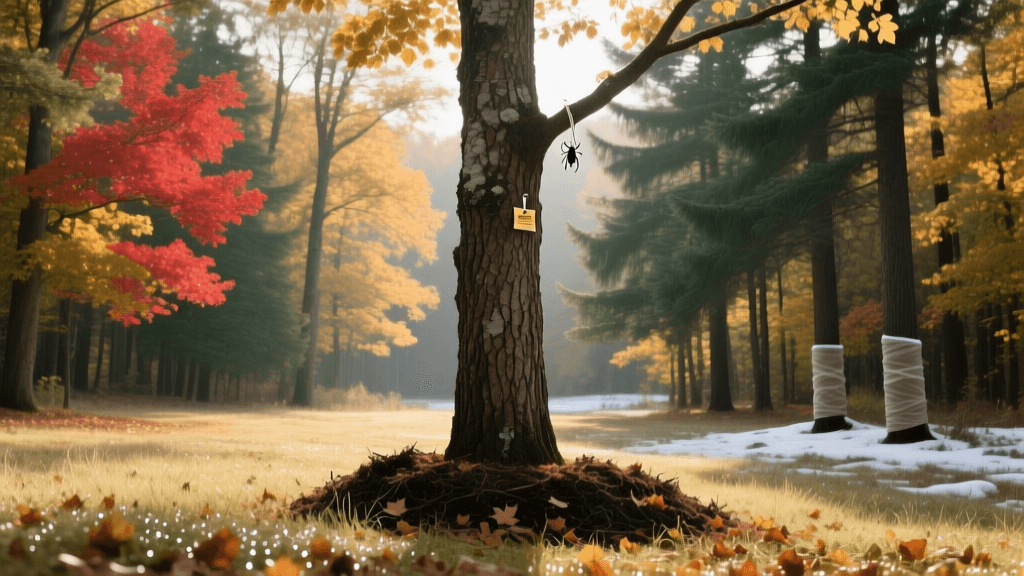
The Ultimate Fall and Winter Tree Care Survival Guide
Why Winterizing Your Trees is Crucial
When the leaves fall and the first frost settles, many homeowners assume their landscape tasks are finished until spring. However, fall and early winter represent the most critical window for tree health. Seasonal maintenance and care during these colder months dictate whether your trees will thrive or merely survive the upcoming growing season. At LawnsGuide, we understand that trees are significant investments. A mature shade tree can add thousands of dollars to your property value, but replacing one damaged by winter desiccation, frost cracking, or rodent girdling can cost anywhere from $500 to over $3,000. This comprehensive guide will walk you through the exact steps, products, and timing required to winterize your trees effectively.
The Science of Winter Dormancy
To care for trees in winter, you must first understand what is happening beneath the bark. Dormancy is not simply a state of rest; it is an active period of physiological adaptation. As daylight hours shorten and temperatures drop, trees begin to move carbohydrates and nutrients from their leaves down into their root systems for safekeeping. The root system actually remains active and continues to grow in the fall as long as the soil temperature remains above 40°F (4°C). Because the roots are still working hard to store energy and establish themselves before the deep freeze, they require consistent moisture and oxygen. Neglecting your trees during this transition phase can lead to severe stress, making them highly susceptible to opportunistic pests and diseases in the spring.
Hydration: The Deep Root Watering Method
The most common cause of winter tree damage is not the cold itself, but winter drought, also known as desiccation. This occurs when the ground is frozen, preventing roots from taking up water, while the winter sun and harsh winds continue to draw moisture out of the tree's tissues. This is especially devastating for evergreens and newly planted trees.
To combat this, implement a deep-root watering strategy in late fall. Continue watering your trees until the ground freezes solid. The general rule of thumb is to provide 10 to 15 gallons of water per inch of trunk diameter (measured at breast height, or DBH). Use a soaker hose coiled around the tree's drip line—the outer edge of the canopy where the most active water-absorbing roots are located. Water slowly to ensure deep soil penetration, aiming for a moisture depth of 12 to 18 inches. For a mature tree with a 10-inch trunk, this means applying roughly 100 to 150 gallons of water over a few hours every two to three weeks if there is no significant rainfall.
According to experts at the Morton Arboretum, winter watering is often the most overlooked aspect of tree care, yet it is the primary defense against winter desiccation and root dieback.
Mulching: The Donut Technique
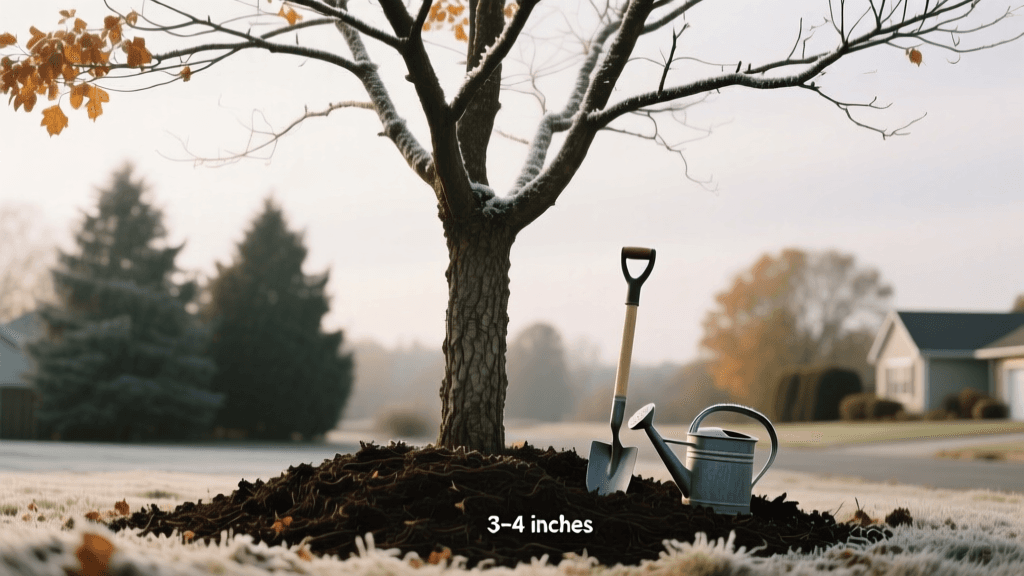
Proper mulching acts as an insulating blanket, regulating soil temperature and retaining the crucial moisture you just applied. However, incorrect mulching can be fatal. Never practice volcano mulching, where mulch is piled high against the trunk. This traps moisture against the bark, leading to rot, and invites rodents to nest and chew on the trunk.
Instead, use the donut method. Apply a 2 to 4-inch layer of organic hardwood bark or wood chips in a wide ring around the tree, extending out to the drip line if possible. Crucially, keep the mulch at least 3 to 5 inches away from the actual trunk flare. The root flare should always be visible and exposed to the air. This technique prevents extreme temperature fluctuations in the soil, protecting the delicate feeder roots from freeze-thaw cycles that can heave the soil and sever root connections.
Trunk Protection: Sunscald and Rodents
Young trees and species with thin bark—such as maples, ash, honeylocust, and fruit trees—are highly vulnerable to sunscald and frost cracking. Sunscald occurs on bright, cold winter days when the sun heats the south and southwest-facing bark, stimulating the cambium layer to become active. When the sun sets and temperatures plummet, the active cells freeze and burst, causing permanent vertical cracks.
To prevent this, wrap the trunks of vulnerable trees with commercial tree wrap (made of polypropylene or burlap) starting from the base and overlapping slightly as you work up to the first set of branches. Alternatively, you can paint the lower trunk with a 50/50 mixture of white interior latex paint and water. The white color reflects the winter sun, keeping the trunk temperature stable.
Additionally, winter brings hungry rodents like voles and mice that will chew through the bark to reach the sweet cambium layer. Protect the base of your trees by installing a cylinder of 1/4-inch galvanized hardware cloth. Bury the bottom edge 2 to 3 inches below the soil line and ensure the cylinder extends 18 to 24 inches above the expected snow line.
Evergreen Care and Anti-Desiccants
Broadleaf evergreens (like rhododendrons and hollies) and some needle evergreens lose moisture through their foliage all winter long. When the ground is frozen, they cannot replace this lost water, leading to brown, scorched-looking leaves by spring.
Applying an anti-desiccant spray, such as Wilt-Pruf or VaporGard, can provide a protective polymer coating that reduces moisture loss by up to 80%. Timing is critical: apply the spray in late November or December on a dry day when temperatures are between 40°F and 50°F. The product needs time to dry completely before freezing temperatures hit, otherwise, it can damage the foliage. A second application may be required in late January or February during a winter thaw, as the product naturally degrades over time.
Winter Pruning: When and How to Cut
While heavy pruning should be avoided in the fall (as it can stimulate new growth that will not harden off before winter), late winter is the ideal time for structural pruning. Pruning while the tree is fully dormant allows you to see the branch architecture clearly and prevents the spread of diseases that are active in the spring and summer.
This is especially vital for oak trees. Pruning oaks outside of the deep winter months exposes them to Oak Wilt, a devastating fungal disease spread by sap-feeding beetles. Always sterilize your pruning tools with 70% isopropyl alcohol or a 10% bleach solution between every cut when dealing with diseased wood, and make clean, precise cuts just outside the branch collar to promote rapid healing.
Managing Snow and Ice Loads
Heavy snow and ice storms can wreak havoc on tree limbs. If a tree becomes heavily laden with snow, gently brush the snow off the branches using a broom, always sweeping upward toward the trunk. Sweeping downward can add stress and snap brittle, frozen branches.
Conversely, if the branches are coated in solid ice, do not attempt to shake or break the ice off. The branches are highly brittle in freezing temperatures, and the mechanical force will cause severe tearing and damage. Instead, let the ice melt naturally and assess the damage once the tree has thawed.
Seasonal Tree Care Cost and Product Breakdown
Investing in preventative winter care is highly cost-effective compared to tree removal or replacement. Below is a breakdown of essential products, their purposes, and estimated costs to help you budget for your seasonal maintenance.
| Product | Purpose | Estimated Cost | Application Timing |
|---|---|---|---|
| Commercial Tree Wrap | Sunscald and frost crack protection | $10 - $15 per roll | Late Fall |
| Hardware Cloth (1/4 inch) | Rodent and vole exclusion | $20 - $30 per roll | Late Fall |
| Anti-Desiccant Spray | Evergreen moisture retention | $25 - $40 per gallon | Early Winter |
| White Latex Paint | Sunscald alternative for trunks | $15 per gallon | Late Fall |
| Organic Hardwood Mulch | Soil insulation and moisture retention | $30 - $50 per cubic yard | Mid to Late Fall |
Conclusion
Winterizing your trees is a proactive measure that pays dividends when spring arrives. By focusing on deep hydration, proper mulching, trunk protection, and strategic pruning, you ensure your landscape remains resilient against the harshest winter conditions. Take the time this fall to assess your trees, gather your supplies, and implement these seasonal care strategies to protect your living investments for decades to come.