Pest Control
Fall Grub Control: Seasonal Lawn Care and Recovery
The Hidden Threat: Identifying Grub Damage in Late Summer
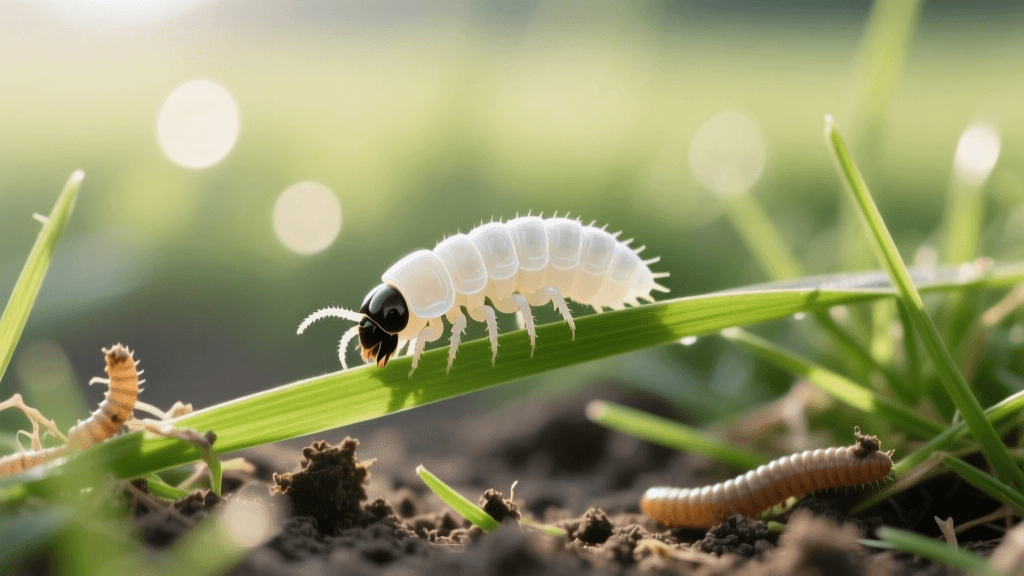
As the intense heat of summer begins to wane and the cooler days of early autumn approach, many homeowners notice irregular brown patches appearing across their once-vibrant lawns. While drought stress and fungal diseases are common culprits, one of the most destructive seasonal pests is the white grub. Grubs are the larval stage of various scarab beetles, including Japanese beetles, June bugs, and European chafers. These C-shaped, cream-colored larvae live just beneath the soil surface, feasting on the root systems of turfgrass. When the roots are severed, the grass loses its ability to take up water and nutrients, leading to rapid decline and death, even when adequate rainfall is present.
Understanding how to differentiate grub damage from seasonal drought stress is the first critical step in integrated pest management (IPM). Drought-stressed grass will typically turn a dull, bluish-green color before browning, and the entire lawn may be affected uniformly if irrigation is lacking. In contrast, grub damage often appears as localized, irregular brown patches that feel spongy when walked upon. Furthermore, a secondary indicator of a severe grub infestation is increased wildlife activity. Skunks, raccoons, and foraging birds like crows and starlings will actively tear up the turf in late summer and early fall to feast on the protein-rich larvae hiding just below the surface.
The Tug Test and Treatment Thresholds
To confirm the presence of grubs, lawn care professionals rely on a simple diagnostic method known as the tug test. Grasp a handful of grass at the edge of a brown patch and pull gently. If the turf rolls back easily like a loose carpet, exposing severed roots and the soil surface, you likely have a grub problem. To assess the severity, use a flat spade to cut a one-foot by one-foot square of turf, about two to three inches deep, and peel it back. Count the number of grubs in the top two inches of soil. According to entomologists at Cornell University, a healthy, well-maintained lawn can tolerate a low population of grubs. The general treatment threshold is five to ten grubs per square foot. If your count exceeds ten grubs per square foot, immediate curative action is required to save the turf before winter dormancy.
Understanding the Seasonal Grub Life Cycle
Effective seasonal maintenance requires aligning your pest control strategies with the biological life cycle of the target insect. Adult beetles typically emerge and mate in early to mid-summer, laying their eggs in the top inch of soil. These eggs hatch in late July or August, releasing first-instar larvae. These young grubs begin feeding aggressively on grassroots throughout late summer and early fall. By October, they reach their third-instar stage, which is when they consume the vast majority of their total diet and cause the most visible damage to the lawn.
As soil temperatures drop below 50 degrees Fahrenheit in late fall, grubs migrate deeper into the soil profile, often burrowing six to twelve inches down to overwinter below the frost line. They remain dormant until early spring, when they migrate back to the surface to feed briefly before pupating into adult beetles. Because the most severe root destruction occurs during the late summer and early fall feeding frenzy, this window is the most critical time for monitoring and applying curative treatments to protect lawn health.
Curative vs. Preventative Grub Control Strategies
When managing grubs from a seasonal maintenance perspective, it is vital to understand the difference between preventative and curative chemical controls. Preventative products are designed to be applied before the eggs hatch, creating a toxic barrier in the soil that eliminates young, vulnerable larvae. Curative products, on the other hand, are fast-acting contact insecticides used to kill larger, actively feeding grubs in late summer and early fall. Applying a preventative product in September will yield poor results, just as applying a short-lived curative product in May will leave your lawn unprotected by the time eggs hatch.
| Treatment Type | Active Ingredient | Common Trade Name | Application Timing | Target Life Stage | Watering Requirement |
|---|---|---|---|---|---|
| Preventative | Chlorantraniliprole | Acelepryn, Scotts GrubEx | May through July | Eggs and 1st-instar larvae | Water in within 3 days |
| Preventative | Imidacloprid | Merit, BioAdvanced Grub Killer | June through mid-July | Eggs and 1st-instar larvae | Water in immediately |
| Curative | Trichlorfon | Bayer Advanced 24-Hour Grub Killer (Dylox) | August through October | 2nd and 3rd-instar active grubs | Water in immediately |
| Curative | Carbaryl | Sevin | August through October | 2nd and 3rd-instar active grubs | Water in immediately |
Executing Curative Treatments for Active Fall Infestations
If you have confirmed an active infestation exceeding the threshold of ten grubs per square foot in late August or September, a curative insecticide containing Trichlorfon (commonly known by the professional trade name Dylox) is the most effective option. Trichlorfon is highly water-soluble and penetrates the soil profile rapidly, reaching the grubs within 24 to 48 hours. A standard 10-pound bag of granular Dylox typically costs between $20 and $30 and covers approximately 5,000 square feet. For optimal efficacy, the product must be watered in immediately after application with at least 0.5 inches of irrigation to carry the active ingredient into the root zone where the larvae are feeding. Keep in mind that Trichlorfon has a short residual effect, lasting only about a week or two in the soil, meaning it will not protect the lawn from grubs hatching the following year.
Planning Preventative Treatments for Next Season
To break the seasonal cycle and protect your lawn's long-term health, plan a preventative application for the following spring or early summer. Products containing Chlorantraniliprole (such as Scotts GrubEx) are highly favored in modern IPM programs because they are highly effective against scarab larvae but have a significantly lower toxicity profile for beneficial insects, earthworms, and pollinators compared to older neonicotinoids like Imidacloprid. Chlorantraniliprole takes longer to break down in the soil, so applying it in May or early June ensures the active ingredient is present and stable when the beetle eggs hatch in late July. The cost for preventative treatments generally ranges from $15 to $25 per 5,000 square feet.
Biological and Organic Seasonal Controls
For homeowners seeking organic lawn care alternatives, biological controls offer an environmentally friendly approach to seasonal grub management. Beneficial nematodes, specifically the species Heterorhabditis bacteriophora (often labeled as HB nematodes), are microscopic, unsegmented worms that naturally occur in soil. When applied to the lawn, they actively seek out grub larvae, enter their bodies, and release a symbiotic bacteria that kills the host within 48 hours. The nematodes then reproduce inside the dead grub and release a new generation to hunt for more pests.
Nematodes must be applied when soil temperatures are consistently above 60 degrees Fahrenheit and the soil is kept consistently moist for at least two weeks post-application to prevent the nematodes from drying out. A typical application rate is 1 billion nematodes per acre, which translates to roughly 25 million nematodes for a standard 1,000-square-foot treatment area. Purchasing high-quality, refrigerated HB nematodes from a reputable biological supplier will cost approximately $40 to $60 per 10 million nematodes. Another organic option is Milky Spore (Paenibacillus popilliae), a naturally occurring bacterium that specifically targets Japanese beetle grubs. While Milky Spore is highly effective once established, it can take two to three years to build up sufficient spore counts in the soil to provide reliable seasonal control, making it a long-term investment rather than an immediate curative fix.
Post-Pest Seasonal Lawn Health and Recovery
Pest control does not end with the elimination of the insect; true seasonal maintenance requires rehabilitating the compromised turf. Grub feeding destroys the root system, leaving the grass highly susceptible to winter kill, frost heave, and invasive winter weeds. Once the grub population has been managed in early fall, the focus must shift immediately to lawn health and recovery.
Begin by removing the dead, detached turf with a heavy thatch rake or a mechanical dethatcher. Expose the soil to ensure proper seed-to-soil contact. Early fall (late August to mid-September) is the absolute best time to overseed cool-season lawns. Choose a turfgrass species that exhibits natural resistance to insect feeding and environmental stress. Endophyte-enhanced tall fescue is an excellent choice, as the naturally occurring fungi within the grass blades produce alkaloids that deter surface-feeding insects and improve drought tolerance. Apply a starter fertilizer high in phosphorus (such as a 10-18-10 NPK ratio) at the time of seeding to encourage rapid root development before the first hard frost.
Additionally, consider pairing your fall overseeding with core aeration. By pulling small plugs of soil from the lawn, you relieve compaction caused by summer foot traffic, improve oxygen flow to the recovering root zone, and create ideal micro-environments for new grass seed to germinate. Topdressing the aerated and overseeded lawn with a thin layer (about one-quarter inch) of screened compost will introduce beneficial soil microbes, improve moisture retention, and provide a slow-release source of organic nutrients to support the turf through the winter months.
Expert Insights and Integrated Pest Management
Adopting a holistic, seasonal approach to lawn care minimizes the need for harsh chemical interventions. Experts emphasize that a thick, vigorously growing lawn is the best natural defense against pest invasions. According to the Penn State University Extension, maintaining proper mowing heights (never removing more than one-third of the grass blade at a time) and providing deep, infrequent irrigation encourages deep root growth that can better tolerate minor grub feeding.
"Integrated Pest Management (IPM) for white grubs relies heavily on monitoring and cultural practices. A healthy, vigorously growing turfgrass stand can often withstand grub populations that would severely damage a weak, stressed lawn. Routine soil testing and maintaining optimal soil pH between 6.0 and 7.0 ensures the grass can efficiently uptake the nutrients required to outgrow minor root damage." - Penn State Extension, Turfgrass Integrated Pest Management Guidelines.
By combining vigilant late-summer monitoring, precise timing of curative or organic treatments, and aggressive fall turf recovery practices, you can break the seasonal cycle of grub damage and cultivate a resilient, vibrant lawn that is prepared to thrive in the coming spring.