Pest Control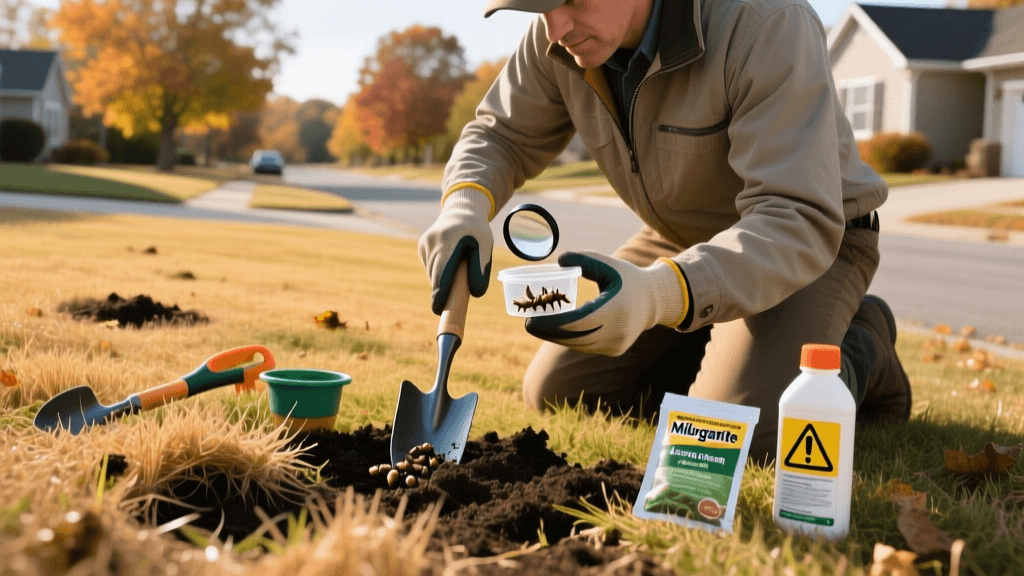
Fall Grub Control: Seasonal Prevention and Turf Repair
The Hidden Fall Threat: Grubs and Turf Health
As the crisp air of autumn settles over your yard, most homeowners focus on raking leaves and preparing their gardens for winter. However, beneath the soil surface, a critical seasonal battle for your lawn's health is unfolding. White grubs, the larval stage of various scarab beetles, are actively feeding on grass roots during the fall months. If left unchecked, this subterranean feeding can decimate your turf's root system, leading to widespread brown patches, spongy soil, and severe vulnerability to winter stress and secondary pests like skunks and raccoons.
Integrated Pest Management (IPM) dictates that effective pest control is not just about applying chemicals; it is about understanding the seasonal lifecycle of the pest, monitoring thresholds, and combining biological, cultural, and chemical controls to maintain long-term turf health. This comprehensive guide will walk you through identifying fall grub activity, selecting the right curative or organic treatments, and executing a robust fall lawn repair protocol to ensure your grass emerges thick and vibrant next spring.
Identifying the Culprits and Understanding the Lifecycle
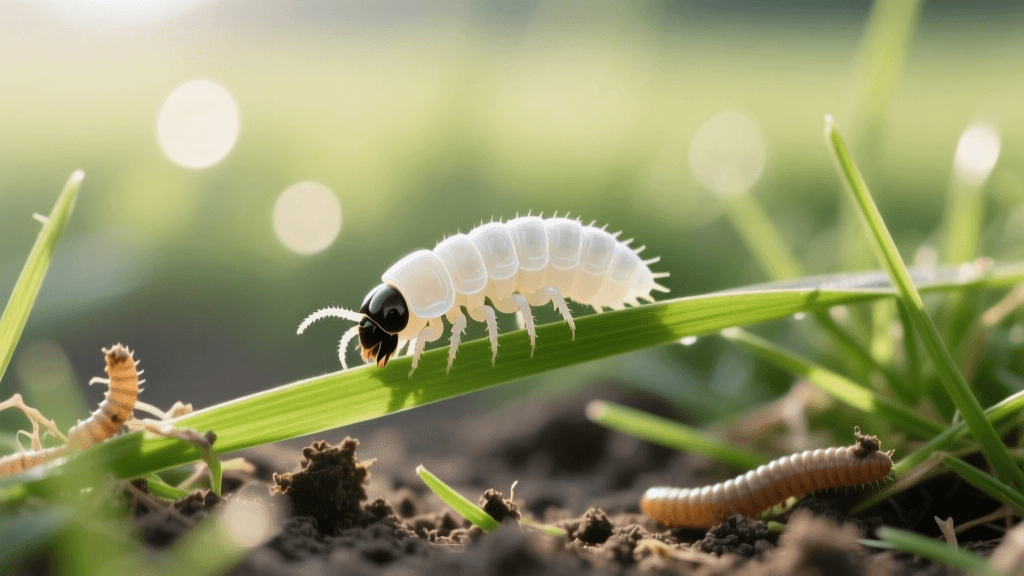
Not all grubs are created equal. The most common turf-destroying species in North America include the Japanese beetle (Popillia japonica), the European chafer (Rhizotrogus majalis), and various June beetles (Phyllophaga species). While they all share a similar C-shaped, cream-colored body with a distinct brown head capsule, their feeding habits and seasonal timelines vary slightly.
By late summer and early fall, grubs have molted into their third and final larval instar. This is the most destructive stage of their lifecycle. During the fall, these mature grubs consume up to 80 percent of their total root mass before the ground freezes. They feed aggressively just below the thatch layer, severing the grass from its water and nutrient supply. As soil temperatures drop in late November, they burrow deeper below the frost line to overwinter, only to return to the surface in early spring for a brief period of feeding before pupating into adult beetles.
Scouting and Establishing Treatment Thresholds
Before applying any pest control product, you must confirm the presence of grubs and determine if the population exceeds the damage threshold. A healthy, well-maintained lawn can actually tolerate a small number of grubs without showing visible damage.
- Japanese Beetle Grubs: Threshold is generally 8 to 10 grubs per square foot.
- European Chafer Grubs: Threshold is lower, typically 5 to 7 grubs per square foot, due to their larger size and voracious appetite.
- June Beetle Grubs: Threshold is around 3 to 5 grubs per square foot.
How to Scout: Use a sharp spade or a specialized turf sampler to cut three sides of a 12-inch by 12-inch square of sod, about 3 inches deep. Peel the sod back like a carpet and inspect the soil and root zone. Count the number of C-shaped grubs present. Check at least three to four different areas of your lawn, particularly in sunny spots and areas that have suffered drought stress, as beetles prefer to lay eggs in these locations. If your counts exceed the thresholds above, intervention is required.
Fall Grub Control: Chemical vs. Organic Strategies
When treating grubs in the fall, timing and product selection are paramount. Many homeowners mistakenly apply preventative products in September, not realizing that these chemicals are designed for early summer application. For fall control, you must use curative treatments or biological agents.
| Treatment Type | Active Ingredient / Agent | Best Application Timing | Target Stage | Approximate Cost (per 5,000 sq ft) | Environmental Impact |
|---|---|---|---|---|---|
| Chemical Curative | Trichlorfon (e.g., Dylox) | August to late September | Active 2nd and 3rd instar grubs | $20 - $30 | Moderate; toxic to aquatic life, requires careful watering |
| Biological Control | Heterorhabditis bacteriophora (Beneficial Nematodes) | Late August to mid-October | All active larval stages | $25 - $40 | Low; completely safe for pets, humans, and earthworms |
| Biological Control | Paenibacillus popilliae (Milky Spore) | Early Fall (when soil is warm) | Japanese beetle grubs only | $35 - $50 | Low; highly specific, takes 2-3 years to establish |
| Chemical Preventative (For Next Year) | Chlorantraniliprole (e.g., Scotts GrubEx) | May to July (Not for Fall Curative) | Eggs and 1st instar larvae | $25 - $35 | Low toxicity to mammals and birds; pollinator concerns if applied to blooming weeds |
Applying Curative Chemical Controls
If you have confirmed a severe infestation in early fall, a fast-acting curative insecticide containing Trichlorfon is the industry standard. Trichlorfon works rapidly, killing grubs within 24 to 48 hours of contact. However, it breaks down quickly in the soil (often within a week), meaning it will not provide residual control into the following spring. To apply, use a broadcast spreader to distribute the granules evenly over the affected area. Immediately follow the application with at least a half-inch of irrigation to wash the chemical off the grass blades and into the thatch and soil where the grubs are feeding.
Utilizing Beneficial Nematodes for Organic Control
For homeowners committed to organic lawn care, beneficial nematodes are a highly effective, environmentally friendly alternative. Specifically, you must seek out the Heterorhabditis bacteriophora (Hb) species, as it actively hunts grubs in the soil profile, unlike other nematode species that wait for pests to come to them. Nematodes are living organisms and must be handled with care. Purchase them from a reputable supplier, keep them refrigerated until use, and apply them in the late afternoon or on an overcast day to protect them from UV light. Mix the nematodes with water according to the package instructions and apply using a hose-end sprayer. The soil must remain consistently moist for at least 10 days post-application to ensure the nematodes survive and infect the grub population.
Repairing Grub Damage: A Step-by-Step Fall Guide
Killing the grubs is only half the battle. The feeding activity of third-instar grubs leaves the turf detached from the soil, resulting in dead, brown, and easily rolled-back patches of grass. Fall is the absolute best time of year to repair this damage, as cool-season grasses thrive in autumn temperatures and face less weed competition.
Step 1: Remove Dead Turf and Thatch
Use a heavy-duty steel lawn rake to vigorously scratch out the dead grass, loose thatch, and debris from the damaged areas. You need to expose the bare soil to ensure new grass seed makes direct contact with the dirt. If the grub damage is extensive across the entire lawn, consider renting a power dethatcher or a sod cutter to remove the dead layers efficiently.
Step 2: Core Aeration and Soil Loosening
Grub-damaged soil is often compacted from the tunneling activity and subsequent foot traffic. Rent a core aerator and pass over the damaged zones multiple times. This pulls small plugs of soil to the surface, relieving compaction and creating ideal micro-environments for new seed to germinate and establish deep roots.
Step 3: Overseeding with Resilient Grass Varieties
Select a high-quality seed mix suited to your region and sunlight conditions. For northern lawns, a mix of Turf-Type Tall Fescue and Kentucky Bluegrass is highly recommended. Tall Fescue develops deep, robust root systems that are more tolerant of minor insect feeding, while Kentucky Bluegrass spreads via rhizomes to fill in gaps. Apply the seed at a rate of 3 to 5 pounds per 1,000 square feet for overseeding, or 6 to 8 pounds per 1,000 square feet if the area is completely bare.
Step 4: Fertilize and Maintain Moisture
Apply a high-phosphorus starter fertilizer (such as a 10-18-10 NPK ratio) to promote rapid root development in the new seedlings. Phosphorus is critical for early root establishment, helping the new grass anchor itself before the winter freeze. Water the repaired areas lightly two to three times a day for the first 14 to 21 days to keep the top inch of soil consistently moist. Once the seedlings reach 2 inches in height, transition to deeper, less frequent watering to encourage drought-resistant root growth.
Winterization and Long-Term Health
As late fall approaches and grass growth slows, apply a winterizer fertilizer high in potassium (e.g., a 32-0-10 NPK). Potassium acts as an antifreeze for grass cells, improving cold hardiness and disease resistance. A strong, deeply rooted lawn that has been properly fertilized and repaired in the fall will naturally resist severe damage from minor grub populations the following year.
According to the Cornell University College of Agriculture and Life Sciences Integrated Pest Management guidelines, maintaining a vigorous lawn through proper mowing heights (3 to 4 inches), deep and infrequent watering, and balanced fertilization is the most effective long-term defense against white grubs. Healthy turf can mask and tolerate low-level infestations without requiring chemical intervention.
By combining vigilant fall scouting, targeted curative or biological treatments, and aggressive seasonal turf repair, you can break the lifecycle of destructive beetles and maintain a pristine, resilient lawn year after year. Remember that pest control is not a one-time event, but a continuous component of holistic seasonal lawn maintenance.