Lawn Care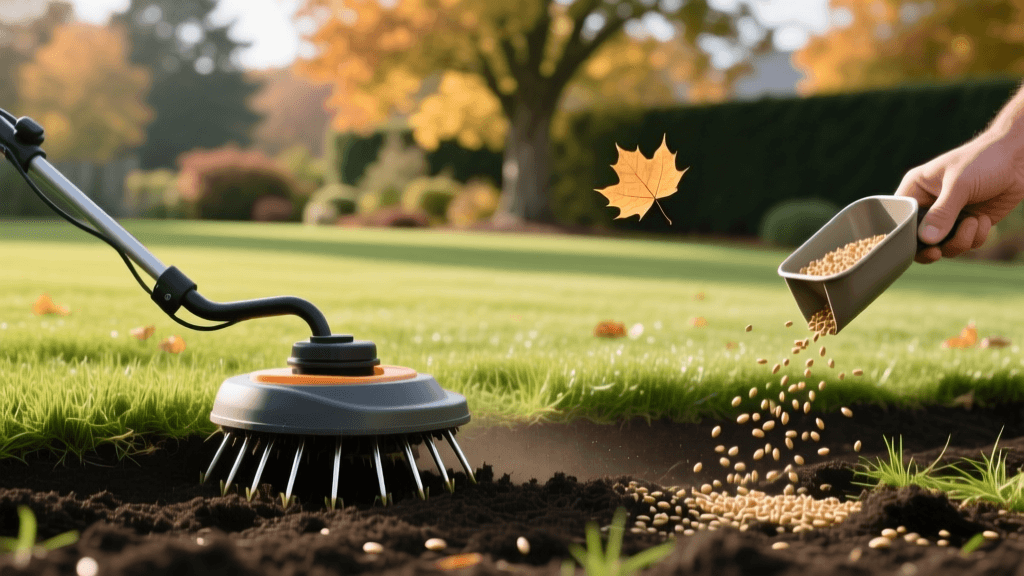
Fall Aeration and Overseeding Guide for Cool-Season Lawns
Why Fall is the Critical Season for Cool-Season Lawns
For homeowners cultivating cool-season grasses such as Tall Fescue, Kentucky Bluegrass, and Perennial Ryegrass, autumn is not the end of the growing season—it is the beginning of the most vital period for long-term turf health. While spring often gets the lion's share of lawn care attention, fall provides the optimal environmental conditions for root development, seed germination, and recovery from summer stress. Soil temperatures are warm enough to encourage rapid germination, while cooler air temperatures reduce heat stress on young seedlings. Furthermore, fall typically brings more consistent rainfall and fewer competitive weeds, giving new grass a distinct advantage.
However, simply tossing seed onto an existing lawn in September will yield disappointing results. To achieve a dense, resilient, and disease-resistant turf, you must combine two foundational practices: core aeration and overseeding. This comprehensive guide will walk you through the science, timing, and exact execution required to transform a thin, tired lawn into a lush carpet of grass.
Core Aeration: Relieving Soil Compaction
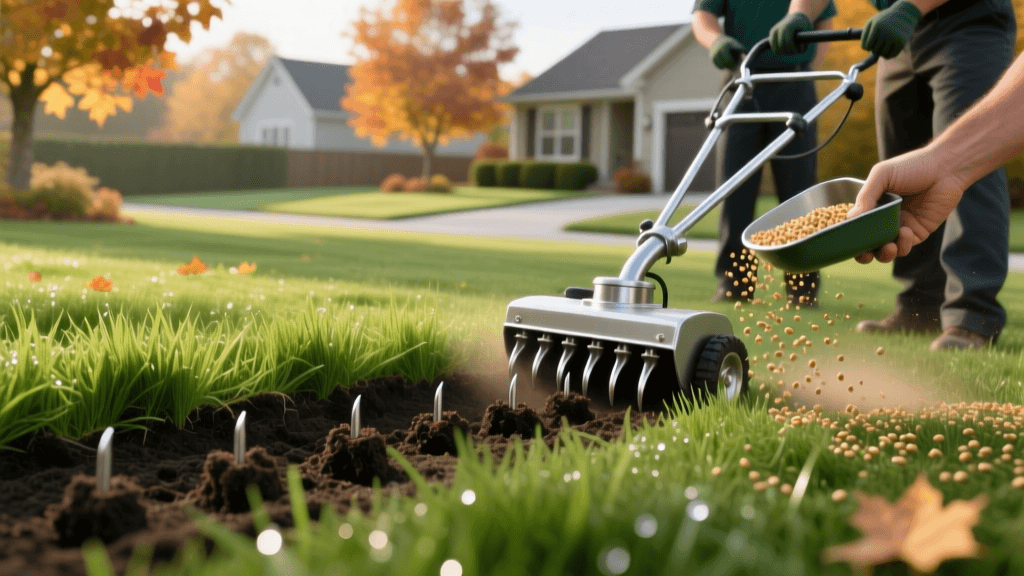
Over the summer, foot traffic, heavy mowing equipment, and intense heat can cause soil particles to press tightly together. This compaction restricts the flow of oxygen, water, and essential nutrients to the root zone. Core aeration involves using a machine to physically extract small plugs of soil (typically 2 to 3 inches deep and 0.5 to 0.75 inches in diameter) from the lawn. This process alleviates compaction, reduces thatch buildup, and creates perfect pockets for new seed to fall into, ensuring critical seed-to-soil contact.
Signs Your Lawn Needs Aeration
- The Screwdriver Test: If you cannot easily push a standard 6-inch screwdriver into moist soil, your lawn is heavily compacted.
- Water Pooling: If water puddles on the surface during light irrigation rather than absorbing quickly, compaction is restricting infiltration.
- Thatch Buildup: A thatch layer thicker than 0.5 inches acts as a barrier. Core aeration introduces soil microbes to the thatch layer, accelerating natural decomposition.
Equipment and Costs
Never use a spike aerator for cool-season lawns; spike tines merely push soil aside, worsening compaction in heavy clay soils. Instead, rent a walk-behind core aerator from a local hardware store or equipment rental center. Expect to pay between $75 and $110 for a four-hour or full-day rental. For an average 5,000-square-foot lawn, aeration will take approximately two to three hours. If you have heavy clay soil, plan to make two passes over the lawn in perpendicular directions to maximize the number of soil cores removed.
Overseeding: Filling in the Gaps
Overseeding is the process of planting new grass seed directly into existing turf without tearing up the soil. When combined with aeration, the seeds fall into the aeration holes, protecting them from birds and wind while providing direct access to moisture and nutrients. Choosing the right seed is paramount. Avoid cheap, generic seed mixes found in big-box stores, as they often contain high percentages of annual ryegrass or agricultural weed seeds. Instead, invest in certified, weed-free seed blends tailored to your specific microclimate and sun exposure.
Seed Application Rates and Germination Timelines
Applying the correct amount of seed prevents overcrowding, which can lead to fungal diseases like damping-off, while ensuring enough density to choke out future weeds. Refer to the table below for precise overseeding rates:
| Grass Type | Overseeding Rate (lbs/1,000 sq ft) | Germination Time (Days) | Best Use Case |
|---|---|---|---|
| Tall Fescue (Turf-Type) | 4.0 - 6.0 | 7 - 12 | High traffic, heat tolerance, transition zones |
| Kentucky Bluegrass | 1.0 - 2.0 | 14 - 21 | Full sun, rhizome spread, northern climates |
| Perennial Ryegrass | 3.0 - 5.0 | 5 - 10 | Quick erosion control, high wear areas |
Step-by-Step Fall Aeration and Overseeding Timeline
Timing is everything. The ideal window for this process is when soil temperatures at a 2-inch depth consistently read between 60°F and 70°F. This usually corresponds to late August through mid-October, depending on your USDA Hardiness Zone.
Phase 1: Preparation (1-2 Weeks Prior)
Begin by mowing your lawn shorter than usual, dropping the mower deck to a height of 1.5 to 2 inches. Bag the clippings to remove excess thatch and expose the soil surface. If the soil is dry, water the lawn deeply two days before you plan to aerate. The soil should be moist but not muddy; if it is too wet, the aerator tines will clog and fail to pull proper cores.
Phase 2: Aeration and Seeding (Day 1)
Run the core aerator over the lawn, making two passes in a crisscross pattern. Leave the extracted soil plugs on the lawn—they will break down naturally within a few weeks and return valuable microbes to the surface. Immediately following aeration, use a broadcast spreader to apply your chosen grass seed at the rates specified in the table above. Follow up by dragging a piece of chain-link fence or a specialized lawn drag mat over the area to work the seed into the aeration holes and ensure maximum soil contact.
Phase 3: Watering and Establishment (Weeks 2-6)
Newly germinated seeds and young seedlings have incredibly shallow root systems and will die if the top inch of soil dries out. For the first 14 to 21 days, water the lawn lightly two to three times per day, applying roughly 0.1 to 0.2 inches of water per session. Once the seedlings reach 1.5 inches in height, transition to deeper, less frequent watering to encourage roots to chase moisture down into the aeration channels.
Fertilization and Weed Control Considerations
When overseeding, you must provide immediate nutrition to support rapid growth. Apply a high-quality starter fertilizer on the same day as seeding. Look for an N-P-K (Nitrogen-Phosphorus-Potassium) ratio similar to 18-24-12. The high phosphorus content is critical for early root development. A product like Scotts Turf Builder Starter Food for New Grass or a professional-grade Lesco Starter Fertilizer will yield excellent results. Expect to spend around $40 to $60 for a bag that covers 5,000 square feet.
A Critical Warning on Weed Control: Standard pre-emergent herbicides (like Prodiamine or Dithiopyr) work by creating a chemical barrier that stops all seeds from germinating—including your expensive grass seed. If you have a severe weed problem, you must choose between overseeding this fall or applying a pre-emergent. However, if you need to control broadleaf weeds or crabgrass while seeding, you can use a specialized herbicide containing Mesotrione (commonly sold under the brand name Tenacity). Mesotrione acts as a selective pre-emergent that targets weeds but is safe for germinating Tall Fescue, Kentucky Bluegrass, and Ryegrass.
Expert Insights and Authoritative Guidelines
Adhering to university-backed turfgrass science ensures you are not wasting time or money on outdated lawn care myths. According to turfgrass specialists at Penn State Extension, "Core aeration in early fall reduces soil compaction, enhances thatch breakdown, and creates the ideal microclimate for seed germination by allowing direct seed-to-soil contact." Their research emphasizes that the physical holes created by aeration act as moisture reservoirs, protecting vulnerable seeds during dry autumn winds.
"Overseeding without prior aeration or dethatching often results in seed resting on the thatch layer, leading to poor germination and seedlings that perish during the first winter freeze due to shallow rooting." — Penn State College of Agricultural Sciences, Turfgrass Management Guidelines
By combining the mechanical relief of core aeration with the genetic renewal of overseeding, you set your cool-season lawn up for explosive spring green-up and deep-rooted summer survival. Stick to the timeline, invest in certified seed, and maintain strict watering discipline to achieve professional-grade results right in your own backyard.