Lawn Care
Fall Lawn Care Guide: Aerate, Overseed, and Winterize
The Ultimate Fall Lawn Care Guide for Cool-Season Grasses
When it comes to cultivating a dense, vibrant, and weed-resistant lawn, spring might get all the glory, but fall is undeniably the most critical season for lawn health. For cool-season grasses like Kentucky bluegrass, tall fescue, and perennial ryegrass, the autumn months provide the ideal environmental conditions for root development, carbohydrate storage, and turf recovery. The scorching heat and drought stress of summer have likely left your lawn thin, compacted, and vulnerable to weed invasion. By implementing a strategic fall lawn care routine, you can reverse summer damage and set the stage for a flawless spring green-up.
This comprehensive guide will walk you through the essential seasonal maintenance steps required to rehabilitate your cool-season lawn. From core aeration and precision overseeding to strategic fertilization and broadleaf weed control, we will cover the exact timing, product recommendations, and cost estimates you need to succeed.
Step 1: Soil Testing and Preparation
Before purchasing any seed or fertilizer, you must understand the current chemical makeup of your soil. Applying nutrients blindly can lead to fertilizer burn, nutrient lockout, and environmental runoff. Fall is the perfect time to conduct a soil test because it gives you ample time to apply slow-acting amendments like lime or sulfur before the ground freezes.
How to Test Your Soil
Use a clean trowel to take 10 to 15 core samples from the top 3 to 4 inches of soil across your lawn. Mix these samples in a clean plastic bucket, remove any debris or thatch, and let the soil air dry. Send a one-cup sample to a reputable laboratory, such as your local university extension office or a private lab like the University of Massachusetts Soil Testing Lab. The cost typically ranges from $15 to $30 and takes about one to two weeks for results.
Your soil test will reveal your soil pH and base saturation levels. Cool-season grasses thrive in a pH range of 6.0 to 7.0. If your soil is too acidic (below 6.0), you will need to apply pelletized calcitic limestone. A general rule of thumb is to apply 50 pounds of lime per 1,000 square feet to raise the pH by one full point, but always defer to your specific lab recommendations.
Step 2: Core Aeration for Soil Decompression
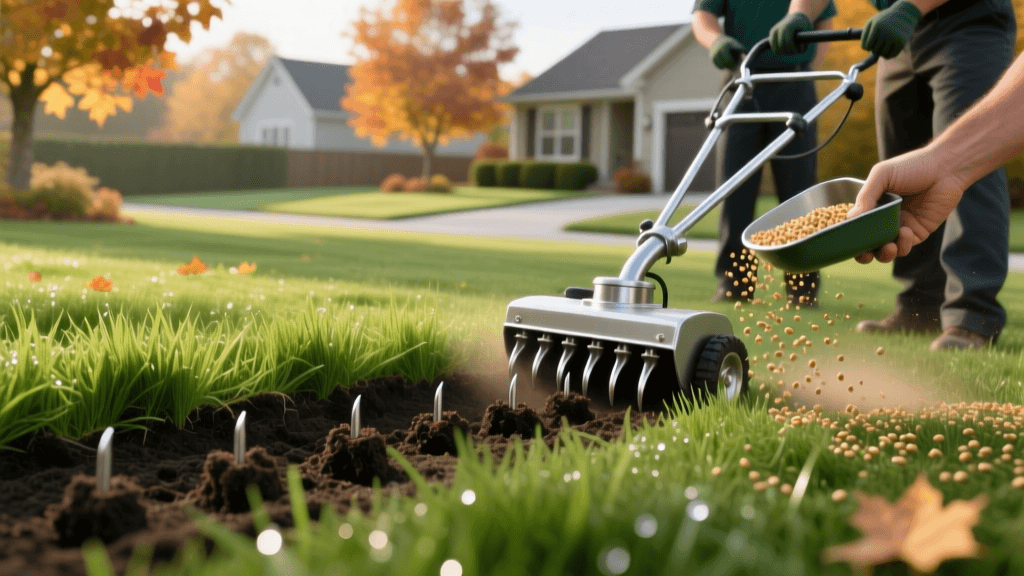
Summer foot traffic, heavy mowing equipment, and intense rainfall often lead to soil compaction. Compacted soil restricts the flow of oxygen, water, and nutrients to the root zone, effectively suffocating your turf. Core aeration is the process of mechanically removing small plugs of soil and thatch from the lawn, alleviating compaction and creating channels for roots to expand.
Aeration Best Practices
- Timing: Aerate in early fall (late August to early October) when the grass is actively growing and can quickly recover from the mechanical stress.
- Equipment: Always use a core aerator, never a spike aerator. Spike aerators simply punch holes, which can actually increase compaction along the sides of the holes. Renting a gas-powered core aerator from a local hardware store typically costs between $75 and $100 for a four-hour rental.
- Technique: Ensure the machine pulls plugs that are 2 to 3 inches deep and spaced about 2 to 3 inches apart. For heavily compacted clay soils, make two passes over the lawn in perpendicular directions.
- Aftercare: Leave the soil plugs on the lawn. They will break down naturally over the next few weeks, depositing beneficial soil microbes onto the surface and helping to decompose the thatch layer.
Step 3: Overseeding to Rebuild Turf Density
Aeration and overseeding go hand-in-hand. The holes created by the aerator provide perfect, protected micro-environments for grass seed to make direct soil contact, drastically improving germination rates. Overseeding introduces new, disease-resistant grass cultivars to your lawn, thickening the turf canopy to naturally choke out weeds like crabgrass and poa annua.
Seed Selection and Application Rates
Choose a seed blend that matches your existing lawn and environmental conditions. Avoid cheap contractor-grade mixes that contain high percentages of annual ryegrass or weed seeds. Look for certified seed with zero weed content.
- Tall Fescue: Ideal for drought-prone areas and heavy traffic. Apply at a rate of 6 to 8 pounds per 1,000 square feet for overseeding.
- Kentucky Bluegrass (KBG): Excellent for rhizomatous spreading and self-repair. Apply at 2 to 3 pounds per 1,000 square feet.
- Perennial Ryegrass: Germinates rapidly (in 5 to 7 days) and provides quick erosion control. Apply at 4 to 5 pounds per 1,000 square feet.
After spreading the seed, apply a high-quality starter fertilizer, such as Scotts Starter Food for New Grass (N-P-K ratio of 24-25-4). The high phosphorus content is crucial for stimulating rapid root development in new seedlings. Keep the top inch of soil consistently moist by watering lightly two to three times a day for the first 14 to 21 days until the new grass reaches mowing height.
Step 4: Strategic Fall Fertilization
Fall fertilization is arguably the most important nutrient application of the year. While top-growth slows down as air temperatures drop, the root systems of cool-season grasses continue to grow and store carbohydrates deep in the soil profile. These stored energy reserves are what fuel the explosive green-up you see the following spring.
Early Fall vs. Late Fall Fertilization
Early Fall (September): If your lawn is thin or recovering from severe summer stress, apply a balanced, slow-release nitrogen fertilizer (e.g., 32-0-10) at a rate of 1.0 pound of nitrogen per 1,000 square feet. This supports the recovery of existing turf and the establishment of newly overseeded grass.
Late Fall (November): Often referred to as 'winterizing,' this application should occur after the last mowing of the season but before the ground freezes. The grass blades will no longer grow, but the roots will rapidly absorb the nutrients. Use a fast-release, high-nitrogen fertilizer like Scotts Turf Builder WinterGuard (32-0-10) or a standard urea-based product. Apply at 1.0 to 1.5 pounds of nitrogen per 1,000 square feet. This specific application builds the root mass and carbohydrate reserves necessary to survive winter dormancy and resist spring snow mold.
Step 5: Targeted Broadleaf Weed Control
Many homeowners make the mistake of only treating weeds in the spring. However, fall is biologically the most effective time to eradicate perennial broadleaf weeds like dandelions, clover, and plantain. In autumn, these weeds are actively pulling nutrients down into their deep taproots to prepare for winter. When you apply a liquid herbicide during this period, the plant will translocate the chemical directly to the root system, ensuring a complete kill rather than just burning off the top growth.
Use a selective, post-emergent herbicide containing a combination of active ingredients like 2,4-D, dicamba, and MCPP (commonly found in products like Trimec or Ortho Weed B Gon). Apply on a calm, clear day when temperatures are between 60°F and 80°F, and ensure no rain is expected for at least 24 hours. Wait at least four weeks between overseeding and applying broadleaf herbicides to avoid damaging young grass seedlings.
Step 6: Mowing and Leaf Management
Continue mowing your lawn until it completely stops growing, which usually occurs when daytime temperatures consistently drop below 50°F. Gradually lower your mower deck over the final few cuts of the season. While you should maintain a height of 3.0 to 3.5 inches during the summer to shade the soil, your final fall cut should bring the grass down to about 2.0 to 2.5 inches. This prevents the long grass from matting down under heavy snow, which creates a breeding ground for fungal diseases like Typhula blight (snow mold).
Instead of raking and bagging fallen autumn leaves, use a mulching mower to shred them into dime-sized pieces. Research from Michigan State University has proven that mulching leaves directly into the turf canopy provides a natural source of organic matter and nitrogen, improving soil structure without smothering the grass.
Fall Lawn Care Timeline and Cost Breakdown
Planning your budget and schedule is essential for a successful lawn renovation. Below is a structured breakdown of the tasks, timing, and estimated costs for an average 5,000 square foot cool-season lawn.
| Month | Task | Product / Tool Required | Est. Cost (5k sq ft) |
|---|---|---|---|
| Late August | Soil Testing | University Extension Lab Kit | $20.00 |
| Early Sept | Core Aeration | Gas Core Aerator Rental | $85.00 |
| Early Sept | Overseeding | Premium Tall Fescue Seed (40 lbs) | $110.00 |
| Mid Sept | Starter Fertilizer | High-Phosphorus Starter Fertilizer | $35.00 |
| October | Weed Control | Selective Broadleaf Herbicide | $25.00 |
| November | Winterization | Fast-Release Nitrogen Winterizer | $30.00 |
Expert Insights and Authoritative Guidelines
To ensure your lawn care practices are backed by science, it is crucial to follow guidelines established by turfgrass researchers. The timing of your late-fall fertilizer application is especially critical. Apply it too early, and you risk stimulating tender top-growth that will be killed by the first hard frost. Apply it too late, and the frozen soil will prevent nutrient uptake.
According to the Purdue University Extension Office, 'Late-fall fertilization should be applied after the last mowing, but while the turf is still green and actively photosynthesizing. This typically occurs in November for the Midwest. The nitrogen absorbed during this period is stored in the root system and crown, leading to improved spring root growth and turf density without the excessive shoot growth associated with early-spring fertilization.'
Conclusion
Achieving a professional-grade lawn does not happen by accident, nor does it happen exclusively in the spring. By dedicating a weekend or two in the fall to core aeration, precision overseeding, and strategic fertilization, you address the root causes of turf decline. The investments you make in soil health and seed quality during the autumn months will pay dividends the following year, resulting in a thick, deeply rooted, and naturally weed-resistant lawn that is the envy of the neighborhood. Stick to the timeline, trust the soil test data, and let the natural cool-season growth cycles work in your favor.