Lawn Care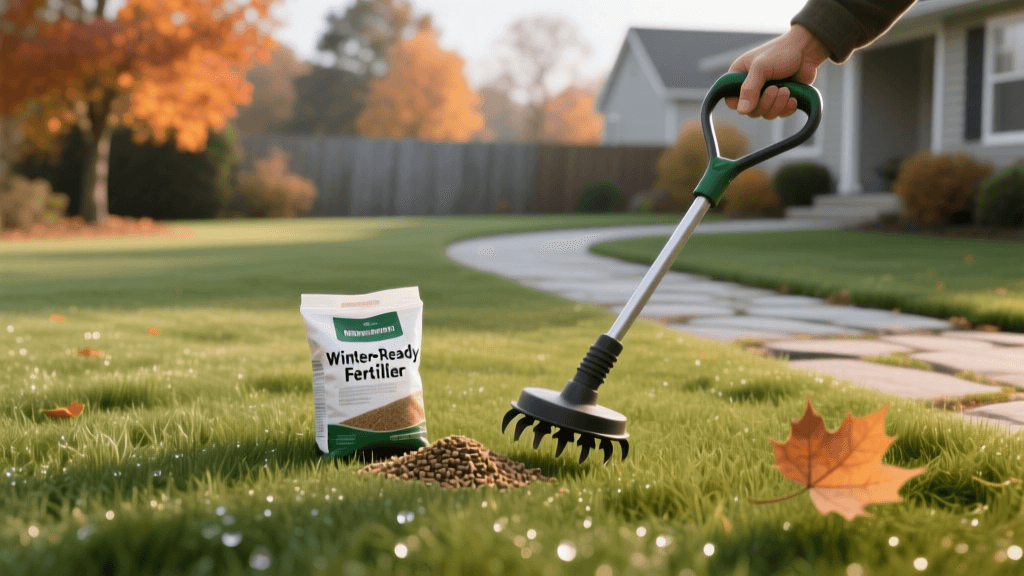
The Complete Fall Lawn Care Checklist for Cool-Season Grasses
The Critical Importance of Fall Lawn Care
When homeowners think about lawn maintenance, spring and summer usually dominate the conversation. However, for cool-season grasses—such as Kentucky Bluegrass, Tall Fescue, Fine Fescue, and Perennial Ryegrass—fall is undeniably the most important season of the year. During the sweltering summer months, cool-season grasses often enter a state of dormancy or severe stress, depleting their carbohydrate reserves and suffering from soil compaction, thatch buildup, and weed invasion.
As air and soil temperatures begin to drop in late summer and early autumn, these grasses experience a massive growth surge. The roots are actively expanding, and the plant is desperately trying to store energy for the long winter ahead. By following a structured, proactive fall lawn care schedule, you can repair summer damage, outcompete annual weeds, and set the stage for a remarkably thick, vibrant lawn the following spring. This comprehensive checklist will guide you through every essential step, complete with product recommendations, application rates, and timing metrics.
Why Fall is the Ultimate Recovery Season
Cool-season grasses thrive in soil temperatures ranging from 50°F to 65°F. In the fall, the combination of warm soil (which encourages deep root growth) and cool air (which reduces heat stress and moisture evaporation) creates the perfect biological environment for turfgrass recovery. According to turfgrass researchers at the University of Minnesota Extension, the cultural practices you perform between late August and mid-November dictate up to 70% of your lawn's health and density for the following year. Neglecting this window means missing the grass's natural biological drive to establish deep, resilient root systems.
The Ultimate Fall Lawn Care Checklist
1. Soil Testing (Late Summer / Early Fall)
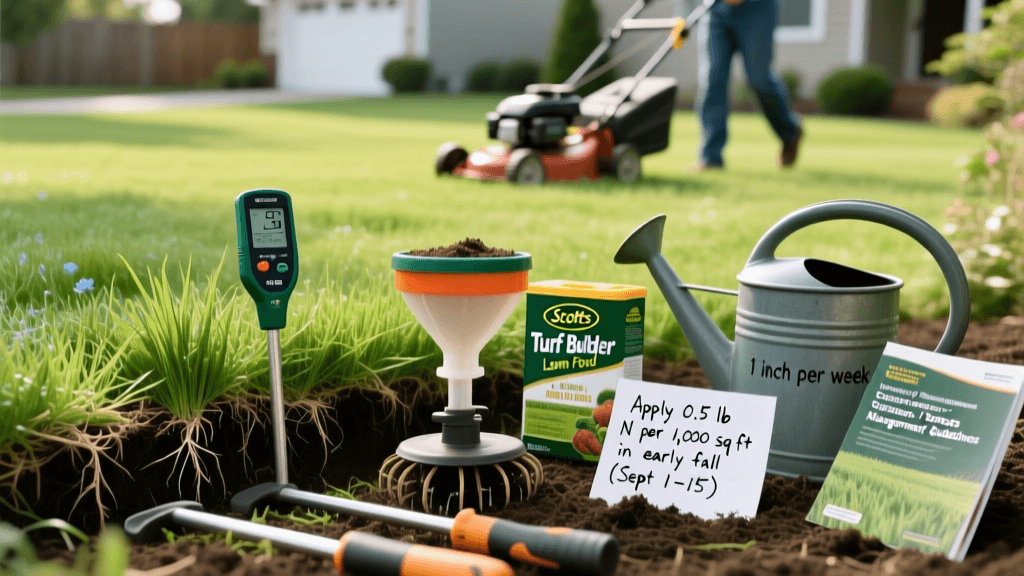
Before applying any amendments, you must understand your soil's baseline chemistry. A soil test reveals your pH level, organic matter percentage, and exact macronutrient deficiencies. Cool-season grasses prefer a slightly acidic to neutral pH between 6.0 and 7.0. If your pH is below 6.0, apply pelletized limestone at the rate recommended by your lab results (typically 25 to 50 lbs per 1,000 square feet). If the pH is above 7.5, elemental sulfur may be required. Soil tests cost between $15 and $30 through local university extension offices and take about two weeks to process, making late August the ideal time to submit your samples.
2. Core Aeration (Early Fall)
Summer foot traffic, heavy mowing equipment, and dry soil often lead to severe compaction. Compacted soil prevents oxygen, water, and nutrients from reaching the root zone. Core aeration involves using a machine to pull 2-to-3-inch plugs of soil and thatch from the ground. For best results, aerate when the soil is moist but not waterlogged. Water your lawn deeply the night before, or aerate the day after a steady rain. Leave the soil cores on the lawn; they will break down within a few weeks and introduce beneficial microbes back into the thatch layer, accelerating its decomposition.
3. Overseeding (Early to Mid-Fall)
Overseeding introduces new, modern turfgrass cultivars into your existing lawn, improving drought resistance and disease tolerance. Always core aerate immediately before overseeding to ensure maximum seed-to-soil contact. For Tall Fescue, apply 4 to 6 lbs of seed per 1,000 square feet. For Kentucky Bluegrass, apply 1 to 2 lbs per 1,000 square feet. Use a high-quality seed blend that contains zero weed seeds and zero filler. After seeding, keep the top inch of soil consistently moist by watering lightly 2 to 3 times a day until germination occurs, which typically takes 7 to 14 days for ryegrass and up to 21 days for bluegrass.
4. Strategic Fall Fertilization (Early and Late Fall)
Fall fertilization is a two-part process. Early Fall (September): Apply a balanced or nitrogen-heavy fertilizer to fuel top growth and recovery from summer stress. A product with an NPK ratio like 32-0-10 or 24-4-12 is ideal. Apply 1.0 to 1.5 lbs of actual nitrogen per 1,000 square feet. Late Fall (November): Often called 'winterizing,' this application occurs when top growth has slowed or stopped, but the ground is not yet frozen. The grass will absorb the nutrients and store them in the roots as carbohydrates. The Penn State Extension emphasizes that this late-fall application is crucial for early spring green-up without causing excessive, disease-prone top growth. Use a quick-release nitrogen source like urea or ammonium sulfate at a rate of 1.0 lb of nitrogen per 1,000 square feet.
5. Broadleaf Weed Control (Mid to Late Fall)
Perennial broadleaf weeds like dandelions, clover, and plantain are actively pulling nutrients down into their taproots during the autumn months. If you apply a selective broadleaf herbicide (such as Triclopyr or 2,4-D) in late September or October, the plant will translocate the chemical directly into the root system, resulting in a complete kill rather than just burning off the leaves. Always apply herbicides on a calm, dry day when temperatures are between 55°F and 75°F.
Cool-Season Fall Maintenance Schedule
Use the following data table to time your applications based on soil temperature and seasonal markers. The NC State Extension Tall Fescue Calendar corroborates that aligning tasks with soil temperature yields significantly better results than relying on calendar dates alone.
| Maintenance Task | Ideal Timing | Target Soil Temp | Application Rate / Specification | Estimated Cost (per 1,000 sq ft) |
|---|---|---|---|---|
| Soil Testing | Mid-August | Above 70°F | 1 cup of soil from 3-4 inches deep | $0.05 - $0.10 |
| Core Aeration | Early September | 60°F - 70°F | Pull 2-3 inch plugs, 3-4 inches apart | $0.15 (DIY Rental) |
| Overseeding | Early September | 55°F - 65°F | 4-6 lbs (Tall Fescue) / 1-2 lbs (KBG) | $0.25 - $0.40 |
| Early Fall Fertilizer | Mid-September | 55°F - 65°F | 1.0 - 1.5 lbs Nitrogen / 1,000 sq ft | $0.10 - $0.15 |
| Broadleaf Herbicide | Early October | 50°F - 60°F | Spot treat or broadcast per label | $0.05 - $0.10 |
| Late Fall Winterizer | Mid-November | 40°F - 45°F | 1.0 lbs quick-release Nitrogen | $0.08 - $0.12 |
Product Recommendations and Budgeting
To execute this checklist effectively, you need the right tools and materials. For a standard 5,000 square foot cool-season lawn, budget approximately $250 to $400 for a complete fall renovation if you are doing the labor yourself.
- Aeration: Renting a walk-behind core aerator from a local hardware store typically costs $75 to $100 for a four-hour window. Share the rental with a neighbor to cut costs.
- Seed: Invest in premium, certified seed. Brands like Scotts, Pennington, or local university-recommended blends cost around $40 to $60 for a 10 lb bag. Avoid cheap 'contractor' mixes that contain annual ryegrass or weed seeds.
- Fertilizer: Look for specialized fall formulations. Products like Scotts Turf Builder WinterGuard or Lesco Professional Starter Fertilizer (if overseeding) provide the exact nutrient profiles required for autumn root development.
Pro Tip: Never apply 'weed and feed' products when overseeding. The pre-emergent or broadleaf herbicides contained in these combination products will inhibit the germination of your expensive new grass seed. Always separate seeding and chemical applications by at least 4 to 6 weeks.
Final Cleanup and Winter Preparation
As autumn progresses, deciduous trees will shed their leaves. While a light layer of mulched leaves can provide organic matter to the soil, a thick, wet mat of leaves will smother cool-season grass, blocking sunlight and trapping moisture that leads to snow mold diseases. Use a mulching mower to chop leaves into dime-sized pieces, or use a leaf blower and tarp to remove heavy accumulations. Finally, lower your mowing height gradually. For your final mow of the season in late November, drop the deck to 2 inches. This prevents the grass blades from matting down under heavy winter snow, drastically reducing the risk of fungal diseases like Typhula blight (snow mold).
Conclusion
A beautiful cool-season lawn is not built in the spring; it is built in the fall. By systematically working through this checklist—testing your soil, relieving compaction, introducing new seed, and providing strategic nutrition—you transition your lawn from a state of summer survival to one of aggressive autumn recovery. Stick to the schedule, monitor your soil temperatures, and invest in high-quality materials. The result will be a dense, weed-free, and deeply rooted lawn that emerges from winter dormancy head and shoulders above the rest.