Lawn Care
The Ultimate Fall Lawn Care Guide for Cool-Season Grass
Why Fall is the Most Critical Season for Cool-Season Lawn Health
For homeowners with cool-season grasses like Kentucky bluegrass, tall fescue, and perennial ryegrass, autumn is not the time to neglect your yard. In fact, fall is the most biologically active and crucial season for turf health. While the blazing summer heat forces cool-season grasses into a state of dormancy or stress, the crisp air and warm soils of early autumn trigger a massive surge in root development and carbohydrate storage.
If you want a thick, vibrant, and weed-resistant lawn next spring, the work must be done between September and November. This comprehensive seasonal maintenance guide covers the exact timing, product recommendations, and actionable steps required to winterize your cool-season lawn and set the stage for explosive spring growth.
Step 1: Soil Testing and Preparation
Before applying any amendments, you must understand your soil's baseline health. Cool-season grasses thrive in a soil pH between 6.0 and 7.0. If your soil is too acidic, fertilizers will be locked up and unavailable to the turf.
- Action: Purchase a professional soil test kit (such as those offered by SoilKit or your local university extension office) in late August.
- Cost: $25 to $35 per sample.
- Amendment: If your pH is below 6.0, apply pelletized lime. A general rule of thumb is 50 lbs of lime per 1,000 square feet to raise the pH by roughly half a point, but always follow your specific soil test recommendations.
Step 2: Core Aeration to Relieve Summer Compaction
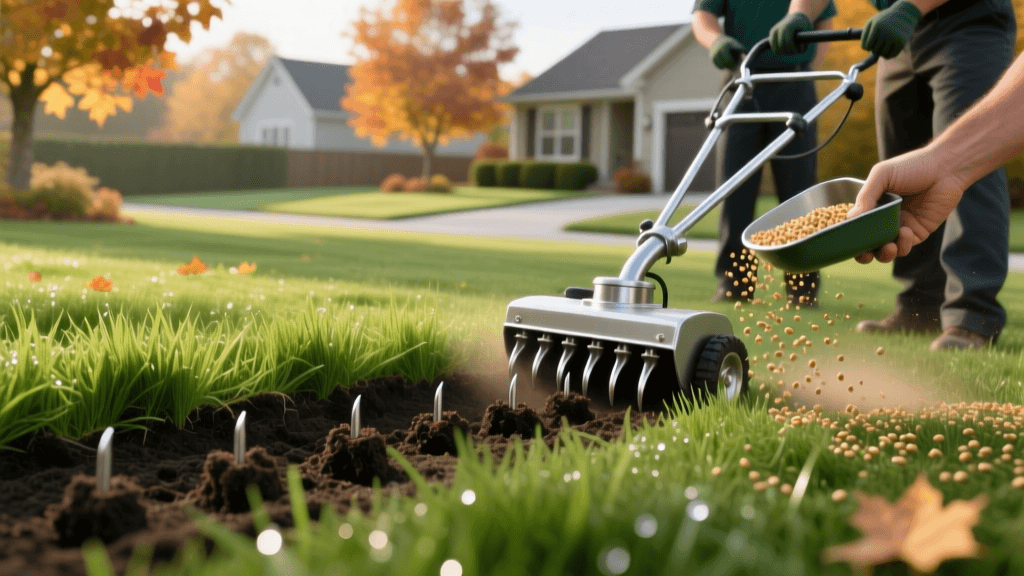
Summer foot traffic, heavy mowing equipment, and intense rainstorms often lead to severe soil compaction. Compacted soil prevents oxygen, water, and nutrients from reaching the root zone. Core aeration involves pulling small plugs of soil (typically 2 to 3 inches deep and 0.5 inches wide) from the lawn, alleviating this compaction and allowing the soil to breathe.
Aeration Best Practices
- Timing: Early to mid-September, when the grass is actively growing and can quickly recover from the mechanical stress.
- Preparation: Water your lawn deeply 24 hours before aerating to soften the soil, ensuring the machine pulls deep, intact cores.
- Equipment & Cost: Rent a walk-behind core aerator from a local hardware store (typically $70 to $100 for a half-day rental) or hire a professional lawn care service ($15 to $25 per 1,000 square feet).
- Pro Tip: Leave the soil plugs on the lawn. They will break down naturally over the next two weeks, depositing beneficial soil microbes back onto the thatch layer to aid in decomposition.
Step 3: Overseeding for Density and Disease Resistance
Overseeding is the process of introducing new grass seed into an existing lawn to fill in bare patches, crowd out future weeds, and introduce modern, drought-resistant turf cultivars. The holes created during core aeration provide the perfect seed-to-soil contact necessary for high germination rates.
Seed Selection and Application Rates
Choosing the right seed is paramount. Avoid cheap, generic seed mixes that contain annual ryegrass or excessive weed seeds. Invest in premium, certified seed blends.
- Tall Fescue: Apply at a rate of 6 to 8 lbs per 1,000 square feet. Look for turf-type tall fescue (TTTF) blends containing endophytes for natural insect resistance.
- Kentucky Bluegrass (KBG): Apply at a rate of 1.5 to 2 lbs per 1,000 square feet. KBG spreads via rhizomes, making it excellent for repairing damaged areas.
- Perennial Ryegrass: Apply at 4 to 5 lbs per 1,000 square feet. Often used in mixes for its rapid germination (5-7 days) to provide quick erosion control and shade for slower-germinating KBG.
Watering the New Seed
Newly overseeded lawns require a strict watering regimen. For the first 14 days, water lightly 2 to 3 times per day for 10 minutes to keep the top inch of soil consistently moist. Once seedlings reach 2 inches in height, transition to deep, infrequent watering (about 1 inch of water per week) to encourage deep root growth.
Step 4: Strategic Fall Fertilization
Fall fertilization is split into two distinct phases: early fall recovery and late fall winterization.
Early Fall (September): The Recovery Feed
After the stress of summer, your lawn needs a balanced dose of nitrogen and phosphorus to fuel the recovery of existing grass and the germination of new seed.
- Product Recommendation: Use a high-phosphorus starter fertilizer, such as Lesco Starter Fertilizer (18-24-12) or Scotts Turf Builder Starter Food (24-25-4).
- Application: Apply immediately after overseeding to give new seedlings the phosphorus required for rapid root establishment.
Late Fall (November): The Winterizer
The late-fall application is arguably the most important fertilizer treatment of the entire year. Applied just before the ground freezes but while the grass is still green, this feeding focuses on potassium and quick-release nitrogen. The grass will absorb these nutrients and store them in its root system as carbohydrates, surviving the winter and greening up weeks earlier in the spring.
- Product Recommendation: Look for a winterizer formula with a high potassium content, such as a 24-0-10 or 32-0-10 N-P-K ratio.
- Timing: Apply after the last mow of the season, typically mid-to-late November, depending on your hardiness zone.
Month-by-Month Fall Maintenance Schedule
Use this structured timeline to keep your seasonal lawn care organized and effective.
| Month | Primary Task | Secondary Task | Product / Metric |
|---|---|---|---|
| Early Sept | Core Aeration | Soil Testing & Lime Application | Aerator rental / 50 lbs Lime per 1k sq ft |
| Late Sept | Overseeding | Early Fall Fertilization | TTTF Seed (8 lbs/1k) & Starter Fertilizer |
| Mid Oct | Broadleaf Weed Control | Leaf Mulching | Trimec Herbicide & Mulching Mower Blade |
| Late Nov | Winterizer Fertilizer | Final Mow & Equipment Winterization | 32-0-10 Winterizer / Mow to 2 inches |
Weed Control and Leaf Management
Targeting Broadleaf Weeds in Autumn
Fall is the absolute best time to eradicate broadleaf weeds like dandelions, clover, and plantain. During autumn, weeds shift their energy from top-growth to root storage in preparation for winter. When you apply a post-emergent herbicide during this translocation phase, the weed actively pulls the chemical down into its root system, ensuring a complete kill rather than just burning off the leaves.
- Active Ingredients: Look for a three-way herbicide containing 2,4-D, MCPP, and Dicamba (e.g., Ortho WeedClear or professional-grade Trimec).
- Caution: Do not apply post-emergent herbicides within 3 to 4 weeks of overseeding, as they can stunt or kill young grass seedlings.
Managing Fallen Leaves
Leaving a thick mat of wet leaves on your lawn will smother the grass, block sunlight, and promote snow mold diseases. However, you do not need to rake and bag every single leaf.
The Mulching Method: Use a mulching mower to chop leaves into dime-sized pieces. These tiny fragments will filter down into the soil canopy, acting as a natural, nitrogen-rich compost that feeds earthworms and soil microbes. If the leaf cover is so thick that you cannot see the grass blades after mowing, you must rake and remove the excess.
Expert Insights on Winterization
To underscore the importance of late-season feeding, we look to the agronomic research provided by leading university extensions.
"Late-fall fertilization is highly beneficial for cool-season turfgrasses. Applied after the last mowing but before the ground freezes, this practice promotes deep root growth, increases shoot density, and enhances the turf's ability to retain its green color well into the winter months. The carbohydrates stored during this period are the primary driver for early spring green-up and vigorous recovery from winter stress."
— Penn State Extension, Department of Plant Science
Final Mowing and Winter Preparation
As the growing season winds down in late November, gradually lower your mower deck. Your final mow of the season should cut the grass down to a height of 2 to 2.5 inches. Leaving the grass too long over the winter invites voles, mice, and fungal diseases like pink snow mold, which thrive in long, matted grass trapped beneath snow cover.
Finally, prepare your equipment for winter storage. Run the carburetor dry on your gas-powered mower, or remove the battery from your electric tools and store it in a climate-controlled garage. Sharpen your mower blades now so you are fully prepared for the rapid spring flush.
Conclusion
Seasonal lawn health is a cumulative process. By executing core aeration, strategic overseeding, targeted weed control, and a two-step fall fertilization program, you are not just maintaining your lawn—you are actively engineering a denser, more resilient turf. Stick to this cool-season fall schedule, and your lawn will emerge from winter thicker, greener, and vastly more resistant to summer stress and weed invasion.