Lawn Care
The Ultimate Fall Lawn Care Guide for Cool-Season Grasses
Why Fall is the Most Critical Season for Lawn Health
For homeowners with cool-season grasses like Kentucky Bluegrass, Tall Fescue, and Perennial Ryegrass, autumn is not the time to neglect your yard. In fact, fall is the most vital season for long-term turf health. While spring lawn care focuses on rapid top-growth and weed prevention, fall lawn care is entirely about root development, energy storage, and canopy density. During the autumn months, soil temperatures remain warm enough to stimulate deep root growth, while cooler air temperatures reduce heat stress and minimize the evaporation of crucial moisture.
If you want a thick, vibrant, and weed-resistant lawn next spring, the work must be done between late August and late November. This comprehensive seasonal maintenance guide will walk you through the exact steps, product recommendations, and scientific timelines required to winterize your cool-season lawn and set the stage for explosive spring green-up.
Step 1: Soil Testing and Preparation
Before applying any amendments, you must understand your soil's baseline chemistry. Summer heat and heavy foot traffic often deplete soil nutrients and alter pH levels. A professional soil test will reveal your lawn's exact pH, phosphorus, potassium, and micronutrient levels.
We recommend using a mail-in soil test kit like SoilKit or contacting your local university cooperative extension office. These tests typically cost between $15 and $30 and provide results within a week. Cool-season grasses thrive in slightly acidic soil with a pH between 6.0 and 7.0. If your soil test indicates a pH below 6.0, early fall is the perfect time to apply pelletized calcitic or dolomitic lime. Apply lime at the rate recommended by your soil test—usually around 50 lbs per 1,000 square feet—and water it in thoroughly to begin the slow process of neutralizing soil acidity before winter dormancy.
Step 2: Core Aeration to Relieve Soil Compaction
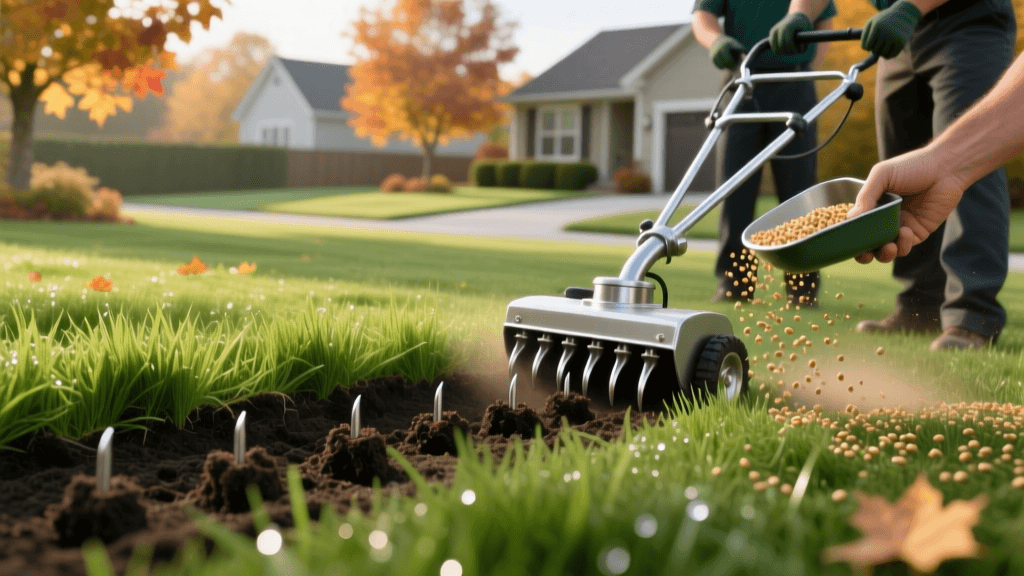
After a long summer of mowing, playing, and heavy rainfall, your soil is likely compacted. Compacted soil restricts the flow of oxygen, water, and nutrients to the root zone. Core aeration involves using a machine to pull small plugs of soil (typically 2 to 3 inches deep and 0.5 inches wide) out of the lawn, creating channels for essential elements to reach the roots.
Actionable Advice: Rent a walk-behind core aerator from a local hardware store or equipment rental center like Sunbelt Rentals. Expect to pay between $80 and $110 for a half-day rental. If you prefer to hire a professional landscaping service, expect to pay $15 to $18 per 1,000 square feet. For best results, water your lawn deeply 24 hours before aerating to soften the soil, ensuring the tines can penetrate deeply. Leave the extracted soil plugs on the lawn; they will break down naturally over the next two weeks, depositing beneficial microbes back onto the surface.
Step 3: Overseeding for Canopy Density
Overseeding is the process of introducing new grass seed into an existing lawn to fill in bare spots, improve turf density, and introduce modern, disease-resistant grass cultivars. The holes created by core aeration provide the perfect seed-to-soil contact necessary for high germination rates.
Choose a high-quality seed blend tailored to your specific microclimate and sunlight exposure. Premium brands like Jonathan Green Black Beauty or Pennington Smart Seed offer excellent drought tolerance and deep root genetics. Follow these seeding rates for optimal coverage:
- Kentucky Bluegrass: 1 to 2 lbs per 1,000 sq ft (overseeding rate).
- Tall Fescue: 4 to 6 lbs per 1,000 sq ft (overseeding rate).
- Perennial Ryegrass: 3 to 5 lbs per 1,000 sq ft (overseeding rate).
Immediately after seeding, apply a high-quality starter fertilizer (such as Scotts Turf Builder Starter Food for New Grass, with an N-P-K ratio of 24-25-4). Starter fertilizers are rich in phosphorus, which is critical for early root development. Keep the top inch of soil consistently moist by watering lightly 2 to 3 times a day for the first 14 days. Once the new grass reaches 3 inches, transition to deep, infrequent watering.
Step 4: Strategic Fall Fertilization
Fall fertilization is arguably the most important nutrient application of the year for cool-season lawns. It is generally split into two distinct phases: early fall and late fall.
Early Fall (September to Early October)
The goal of early fall fertilization is to help the grass recover from summer stress and support the energy demands of overseeding. Use a balanced or nitrogen-heavy fertilizer (e.g., 32-0-10) to promote blade growth and root expansion.
Late Fall (November)
Often referred to as 'winterizing,' late fall fertilization occurs just before the ground freezes but after the grass has stopped actively growing top-growth. The grass will absorb the nutrients and store them in its root system as carbohydrates.
According to the University of Minnesota Extension, 'Fall is the most important time of year to fertilize cool-season lawns. The nutrients applied in autumn are stored in the root system, promoting early spring green-up without excessive shoot growth, which makes the lawn more susceptible to spring diseases.'
For late fall, select a winterizer fertilizer with a higher potassium content (the third number in the N-P-K ratio), such as 10-0-20. Potassium acts like antifreeze for grass cells, improving cold hardiness and disease resistance against winter snow mold.
Step 5: Weed Control and Final Mowing
Fall is the most effective time to tackle broadleaf weeds like dandelions, clover, and plantain. As temperatures drop, weeds begin pulling nutrients down into their root systems to prepare for winter. If you apply a liquid post-emergent herbicide containing 2,4-D or Dicamba during this period, the weed will translocate the chemical directly to its roots, ensuring a complete kill.
Additionally, target winter annual weeds like Poa annua (annual bluegrass) and henbit by applying a pre-emergent herbicide like Prodiamine in late August or early September. Note: Do not apply pre-emergent if you plan to overseed, as it will prevent your new grass seed from germinating.
As the season progresses, gradually lower your mower blade. While cool-season grasses should be kept at 3 to 4 inches during the summer to shade the soil, your final mow of the season in late November should drop the height to 2 to 2.5 inches. This shorter cut prevents the grass blades from matting down under heavy snow, drastically reducing the risk of fungal diseases like Typhula blight (snow mold).
Comprehensive Fall Lawn Maintenance Schedule
Use this structured timeline to keep your seasonal maintenance on track. Adjust the exact weeks based on your local hardiness zone and first frost date.
| Timeframe | Primary Tasks | Product / Metric Target |
|---|---|---|
| Early Fall (Late Aug - Sept) | Soil Testing, Pre-emergent (if no seeding), Core Aeration | Soil pH 6.0-7.0; Aerator tines 3 inches deep |
| Mid-Fall (Oct) | Overseeding, Starter Fertilizer, Broadleaf Weed Control | 4-6 lbs Tall Fescue seed / 1000 sq ft |
| Late Fall (Nov) | Winterizer Fertilizer, Final Mowing, Leaf Removal | High Potassium (e.g., 10-0-20); Cut to 2.5 inches |
Conclusion: Investing in Spring Success
Seasonal lawn health is a continuous cycle, but the foundation of a lush, green spring lawn is poured in the autumn. By investing the time and budget into core aeration, strategic overseeding, and scientifically timed fertilization, you are fundamentally altering the biology of your turf. The roots will grow deeper, the canopy will grow thicker, and your lawn will naturally choke out spring weeds before they ever have a chance to germinate. Follow this guide, respect the timelines, and your cool-season grass will reward you with unparalleled vigor when the spring thaw arrives.