Lawn Care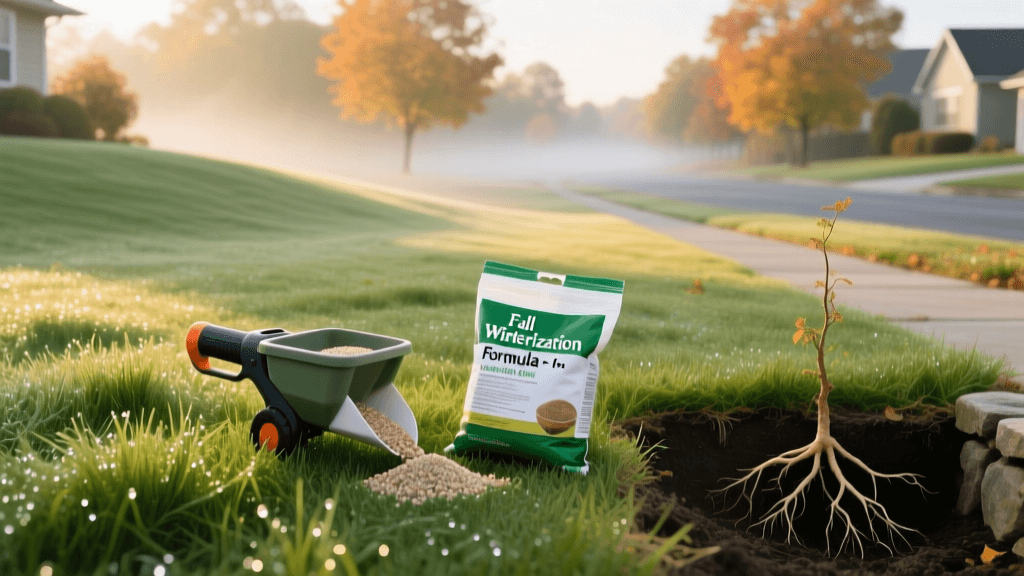
Fall Lawn Winterization: Late-Season Fertilization Guide
The Critical Role of Autumn in Lawn Health
As the crisp autumn air settles in and daytime temperatures begin to drop, many homeowners mistakenly believe their lawn care duties are over. However, for cool-season grasses like Kentucky bluegrass, tall fescue, and perennial ryegrass, fall is the most critical season of the year. The concept of "winterizing" your lawn has evolved significantly over the past decade, shifting away from heavy potassium loads and toward strategic late-season nitrogen applications. This comprehensive guide will walk you through the science, timing, and actionable steps required to properly winterize your cool-season lawn, ensuring vibrant, early-spring green-up and robust root health.
The Biology of Cool-Season Grasses in Autumn
During the heat of summer, cool-season grasses often enter a state of semi-dormancy to conserve water and energy. When autumn arrives, the combination of warm soil and cooler air temperatures triggers a massive biological response. The grass shifts its energy away from top growth and redirects it downward into the root system and rhizomes. This period, typically spanning from late September through November, is when your lawn builds up its carbohydrate reserves. These stored carbohydrates are the lifeline your grass relies on to survive freezing winter temperatures and to fuel the rapid cellular division required for spring green-up. If you skip late-season fertilization, your lawn enters winter malnourished, making it highly susceptible to winter desiccation, snow mold, and early-spring weed invasion.
Debunking the "Winterizer" Fertilizer Myth
For years, garden centers have marketed specialized "Winterizer" fertilizers boasting high potassium (the third number in the NPK ratio) to supposedly increase cold hardiness. While potassium is an essential macronutrient that aids in overall plant vigor and disease resistance, modern turfgrass science has thoroughly debunked the idea that blasting your lawn with potassium in the fall magically prevents winter kill. In fact, unless a comprehensive soil test reveals a specific potassium deficiency, applying high-K fertilizers is not only a waste of money but can also lead to nutrient runoff and environmental imbalances. Today, university extension programs universally recommend a late-fall application of primarily nitrogen to maximize carbohydrate storage.
Timing Your Late-Season Application
The success of late-season fertilization hinges entirely on timing. Apply too early, and you will stimulate tender top growth that is highly vulnerable to early frost damage and snow mold diseases. Apply too late, after the ground has frozen, and the granules will simply sit on the surface, washing away with winter snowmelt. The ideal window for late-season winterization is when the grass has stopped growing vertically, but the soil is still warm enough for root absorption. Specifically, you want to apply your fertilizer when daytime air temperatures are consistently in the 40s and 50s, and soil temperatures (measured at a 2-inch depth) are hovering around 45°F to 50°F. In most northern and midwestern climates, this window falls between late October and mid-November. A reliable soil thermometer is a $15 investment that will take the guesswork out of this crucial timing.
NPK Ratios: Fall vs. Spring Applications
Understanding the difference between early-fall recovery feeding and late-fall winterization is vital. Below is a comparison chart to help you select the correct formulation for your seasonal maintenance schedule.
| Application Phase | Timing | Ideal NPK Ratio | Primary Purpose | Nitrogen Rate |
|---|---|---|---|---|
| Early Fall Recovery | Early September | 24-0-10 or 20-5-10 | Recover from summer stress, stimulate rhizome growth | 0.8 to 1.0 lb per 1,000 sq ft |
| Late Fall Winterizer | Late Oct to Mid Nov | 32-0-10 or 30-0-12 | Maximize root carbohydrate storage, prep for spring | 1.0 to 1.2 lb per 1,000 sq ft |
Step-by-Step Late-Season Winterization Guide
- Step 1: Conduct a Soil Test ($15-$30). Before buying any fertilizer, send a soil core sample to your local university extension or a private lab like Waypoint Analytical. This will dictate if you actually need phosphorus or potassium, preventing unnecessary chemical applications.
- Step 2: The Final Mow. Lower your mower deck to 2 inches for the final cut of the season. This prevents the grass blades from matting down under heavy snow, which is the primary catalyst for Typhula blight (snow mold).
- Step 3: Calculate and Apply Nitrogen. Look for a high-quality, fast-release or methylene urea nitrogen source. Products like Scotts Turf Builder WinterGuard (32-0-10) or a professional-grade 34-0-11 are excellent choices. A standard 14 lb bag of 32-0-10 covers about 4,000 square feet and costs around $22. To apply 1 lb of actual nitrogen per 1,000 sq ft, you must apply roughly 3.1 lbs of this product per 1,000 sq ft. Use a broadcast spreader with a calibrated edge guard to prevent fertilizer from landing on hard surfaces.
- Step 4: Water the Granules In. Apply 0.25 inches of irrigation immediately after spreading. This washes the nitrogen off the grass blades and into the soil profile where the roots can access it, preventing foliar burn and volatilization.
Expert Insights from Purdue University
"Late-fall fertilization is one of the most beneficial practices for cool-season lawns. The nitrogen applied at this time is not used for top growth, but rather is converted into amino acids and stored as carbohydrates in the crown and root tissues. This results in a lawn that greens up earlier in the spring without the excessive, disease-prone top growth associated with early-spring fertilization."
— Purdue University Extension Turfgrass Science Program
This authoritative stance underscores why homeowners should shift their budgets away from April "weed and feed" products and invest heavily in November root-building applications. By feeding the roots when the plant is naturally programmed to store energy, you set the stage for a deeply rooted, drought-tolerant lawn the following summer.
Common Winterization Mistakes to Avoid
Mistake 1: Winterizing Warm-Season Grasses. If you have Bermuda, Zoysia, or St. Augustine grass, do NOT apply nitrogen in the fall. Doing so forces the grass out of its natural dormancy cycle, making it highly susceptible to lethal winter freeze damage. Warm-season lawns should receive their final potassium-heavy feeding in late summer, not late fall.
Mistake 2: Leaving Leaves on the Lawn. Tree leaves act as a suffocating blanket, blocking sunlight and trapping excess moisture against the soil. This creates the perfect microclimate for fungal pathogens. Mulch leaves into the canopy with your mower, or rake them entirely before the first snowfall.
Mistake 3: Ignoring Soil Moisture Before Freeze. Winter desiccation occurs when cold, dry winds pull moisture from the grass blades faster than the frozen roots can replace it. If your region is experiencing a dry autumn, deep watering your lawn right before the ground freezes acts as an essential insulating buffer, keeping the crown hydrated throughout the harshest months.
Conclusion
Proper fall lawn winterization is the ultimate foundation for a resilient, dark-green lawn. By abandoning outdated high-potassium myths and embracing scientifically backed, late-season nitrogen applications, you empower your cool-season grass to survive winter stress and outcompete spring weeds. Grab your soil thermometer, calibrate your spreader, and give your lawn the nutritional head start it deserves before the first snow flies.