Pest Control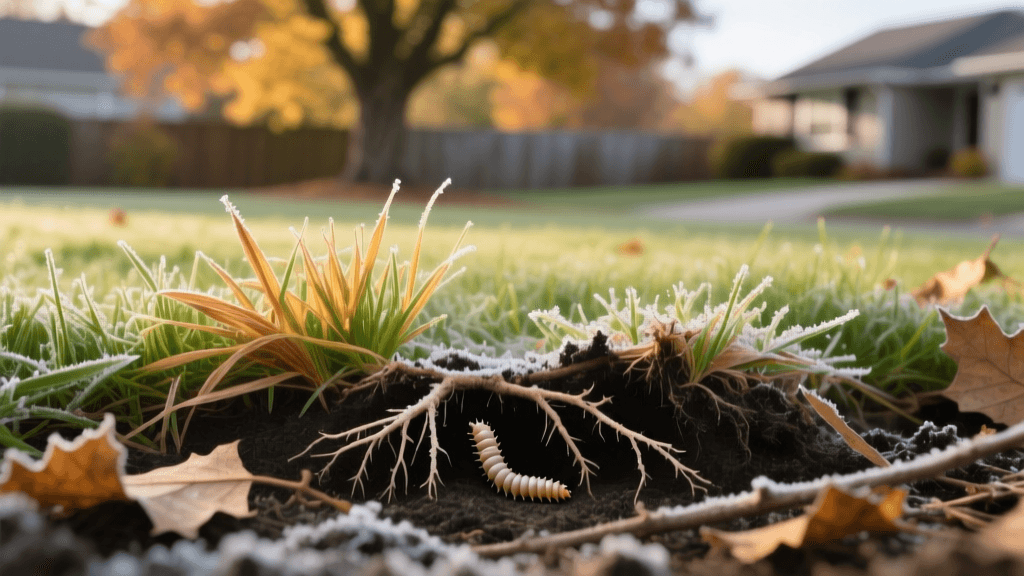
Fall Pest Control: Managing Overwintering Lawn Grubs
The Hidden Threat of Overwintering Grubs to Fall Turf Health
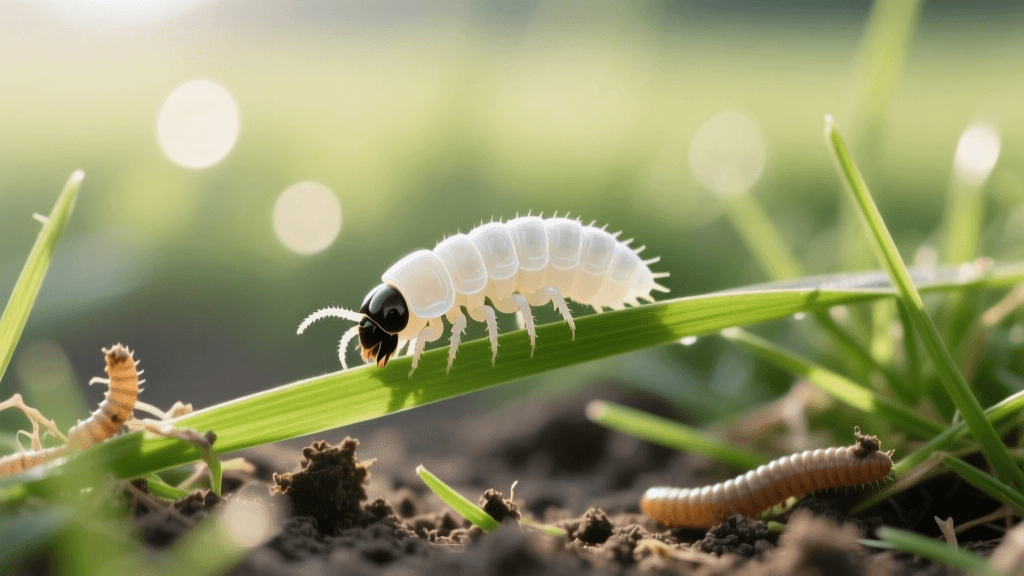
As the vibrant greens of summer transition into the crisp, golden hues of autumn, most homeowners shift their focus to leaf raking and winterizing their gardens. However, beneath the surface of your lawn, a critical battle for turf health is unfolding. Fall is a pivotal season for pest control, specifically when it comes to managing overwintering white grubs. These destructive larvae, which are the immature stages of Japanese beetles, European chafers, and June bugs, pose a severe threat to the root systems of cool-season turfgrasses. If left unmanaged during the autumn months, grubs will continue to feed aggressively before burrowing deep into the soil profile to survive the winter. This feeding severs the roots from the soil, leading to massive die-offs that manifest as dead, easily detachable patches of grass the following spring. Effective seasonal maintenance and targeted fall pest control are essential to protect your lawn's structural integrity and ensure a vigorous, pest-free recovery when temperatures warm up.
The Biology of Overwintering Grubs and Seasonal Transitions
Understanding the life cycle of lawn grubs is the foundation of successful integrated pest management (IPM). In late summer, adult beetles lay their eggs just below the soil surface. By early fall, these eggs hatch into small, voracious larvae. During the months of September and October, these grubs are in their second and third instar stages, meaning they are large enough to cause significant root damage but still actively feeding near the surface to build fat reserves for winter. As soil temperatures begin to drop consistently below 60 degrees Fahrenheit, the grubs receive a biological signal to stop feeding and migrate downward, often burrowing 12 to 18 inches below the frost line to enter a state of diapause (hibernation). Once they descend past the active root zone, they become virtually untouchable by surface-applied pesticides. Therefore, the window for effective fall curative treatment is narrow and requires precise timing based on local soil temperatures rather than just the calendar date.
How to Identify Fall Grub Activity in Your Lawn
Before applying any pest control products, you must confirm that grubs are the actual culprit behind your lawn's decline. Drought stress, fungal diseases like brown patch, and shallow soil compaction can all mimic grub damage. To accurately diagnose a grub infestation, perform the 'Tug Test'. Walk across your lawn and find areas where the grass appears wilted, spongy, or brown. Grab a handful of the turf and pull gently. If the grass rolls back like a loose carpet with little to no root resistance, grubs have likely severed the root system. Additionally, look for secondary signs of an infestation. Increased nighttime digging by skunks, raccoons, and armadillos, or daytime foraging by flocks of crows and starlings, is a strong indicator that a high-protein food source is hiding just beneath the thatch.
The Square Foot Sampling Method
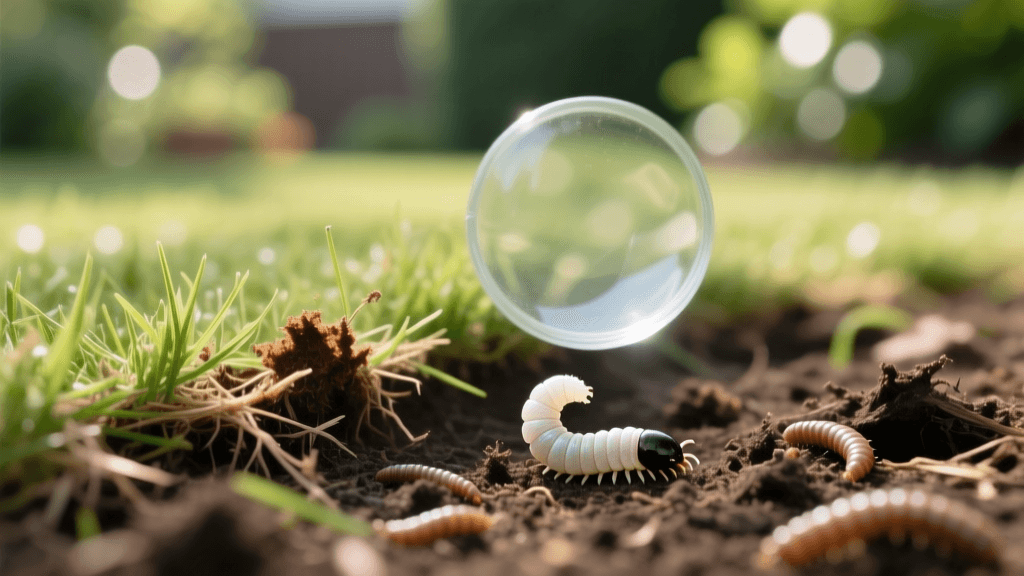
To determine if the population warrants chemical or organic intervention, conduct a square foot sampling test. Using a flat-edged spade, cut three sides of a one-foot square in the turf and peel it back like a hinge. Count the number of C-shaped, white grubs with brown heads in the top two inches of soil. Replace the sod and water it immediately. Repeat this process in three to five different areas of your lawn. According to university extension guidelines, a threshold of 5 to 10 grubs per square foot is generally considered the tipping point where curative fall treatment is economically and agronomically justified. If you find fewer than 5 grubs per square foot, your lawn's natural resilience and proper seasonal maintenance are usually sufficient to outcompete the minor pest pressure.
Essential Seasonal Maintenance Before Treatment
Applying pest control products to a poorly maintained lawn is a waste of time and money. To ensure that your fall grub treatments penetrate the soil effectively and reach the target pests, you must prepare the turf canopy and soil profile.
Mowing and Thatch Management
Continue mowing your lawn through the fall, but gradually lower the cutting height to about 2.5 inches. This prevents the turf from matting down under winter snow, which can invite snow mold, while also reducing the physical barrier between the soil and your pest control application. More importantly, assess your thatch layer. If the spongy, organic layer between the green grass blades and the soil surface exceeds 0.5 inches, it will intercept and bind liquid or granular pesticides, preventing them from reaching the grubs. If thatch is excessive, rent a power rake or schedule a dethatching service before applying any treatments.
Core Aeration for Soil Penetration
Fall is the ideal time for core aeration, especially for compacted clay soils. By pulling 2-to-3-inch plugs of soil from the ground, you create direct channels for water, oxygen, and pest control products to reach the root zone. Aerating a week before your planned grub treatment drastically improves the efficacy of both chemical curatives and organic biological controls by allowing them to bypass surface barriers and enter the grubs' feeding zone immediately.
Targeted Fall Treatments: Curative vs. Organic Controls
It is crucial to understand that the preventative grub control products used in early summer (such as Imidacloprid or Clothianidin) are largely ineffective in the fall. These chemicals require months to break down and are designed to kill young, first-instar grubs. By autumn, grubs are larger, more resilient, and require fast-acting 'curative' treatments. Below is a comparison of the most effective fall grub control options available to homeowners and lawn care professionals.
| Product / Active Ingredient | Control Type | Application Rate (per 1,000 sq ft) | Est. Cost | Best Fall Timing |
|---|---|---|---|---|
| Trichlorfon (Dylox) | Chemical Curative | 1.5 - 3 lbs (Granular) | $15 - $20 | Early Sept - Mid Oct |
| Chlorantraniliprole (Acelepryn) | Chemical (Slow) | 0.08 - 0.16 fl oz (Liquid) | $25 - $30 | Early Sept |
| Heterorhabditis bacteriophora | Organic Nematodes | 1 million nematodes | $20 - $25 | Early Sept (Soil > 60F) |
| Paenibacillus popilliae (Milky Spore) | Organic Bacteria | 1 tsp per 4 sq ft | $30 - $40 | Anytime ground is thawed |
Chemical Curatives: Trichlorfon
Trichlorfon, commonly sold under the brand name Dylox, is the gold standard for rapid, curative grub control in the fall. It is a fast-acting organophosphate alternative that paralyzes the grubs' nervous systems, killing them within 24 to 48 hours of ingestion or contact. Because it breaks down rapidly in the soil (usually within 7 to 10 days), it poses minimal long-term environmental risk when used strictly as a targeted fall spot treatment. However, it must be watered in immediately after application to prevent UV degradation and to wash the active ingredient into the top inch of soil.
Organic Controls: Beneficial Nematodes
For homeowners committed to organic lawn care, beneficial nematodes (specifically the Heterorhabditis bacteriophora species) are highly effective biological control agents. These microscopic worms actively hunt down grubs in the soil, entering their bodies and releasing bacteria that kill the pest within 48 hours. Nematodes are living organisms, meaning they require careful handling. They must be applied in the early evening to avoid UV light, and the soil temperature must remain above 60 degrees Fahrenheit for them to be active. You must also keep the soil consistently moist for at least two weeks following application to ensure their survival.
Step-by-Step Fall Application Guide
To maximize the success of your fall pest control regimen, follow this precise application protocol:
- Monitor Soil Temperature: Purchase a digital soil thermometer and check the temperature at a depth of 2 inches. Apply curative treatments when the soil is between 60F and 70F. Once it drops below 55F, grubs will have already migrated too deep for treatment.
- Pre-Water the Lawn: The day before application, irrigate your lawn with roughly 0.25 inches of water. This draws the grubs closer to the surface to feed on the softened roots and makes the soil more receptive to the treatment.
- Apply the Product: Use a broadcast spreader for granular products like Dylox, ensuring a 6-inch overlap on each pass to prevent missed strips. For liquid nematodes, use a hose-end sprayer designed for biologicals.
- Water-In Immediately: Within one hour of applying chemical curatives, apply 0.5 inches of water. This is non-negotiable. Without adequate irrigation, the product will remain trapped in the thatch layer and fail to reach the grubs.
Post-Treatment Turf Recovery and Winterization
Pest control is only half the battle; restoring the health of the damaged turf is equally important. After treating for grubs, the severed roots will not magically reattach. You must encourage new root growth before the ground freezes. Overseeding the damaged patches with a high-quality, endophyte-enhanced tall fescue or Kentucky bluegrass blend will help crowd out future weeds and pests. Endophytes are naturally occurring fungi that live within the grass blades, producing alkaloids that deter surface-feeding insects and improve overall drought tolerance.
Furthermore, adjust your fall fertilization strategy to support root recovery rather than top growth. Avoid high-nitrogen fertilizers in late autumn, as they promote tender, fast-growing blades that are highly susceptible to winter desiccation and snow mold. Instead, apply a winterizer fertilizer with a high potassium (K) content, such as a 10-0-20 or 8-2-12 N-P-K ratio. Potassium acts as an antifreeze for plant cells, thickening the cell walls and regulating water uptake, which drastically improves the turf's ability to survive freezing temperatures and bounce back vigorously in the spring.
Expert Citations and Extension Guidelines
Integrated pest management relies heavily on data-driven research from agricultural institutions. Timing and thresholds are not arbitrary; they are based on decades of entomological study.
According to the University of Kentucky College of Agriculture, Food and Environment, fall curative treatments for white grubs must be applied while the larvae are still relatively small and actively feeding near the surface, typically before soil temperatures consistently drop below 60 degrees Fahrenheit. Applications made in late November or early spring when grubs are deep in the soil profile are largely ineffective and result in unnecessary chemical loading into the environment.
Similarly, Penn State Extension emphasizes the importance of the square-foot threshold test, noting that healthy, well-fertilized, and deeply watered lawns can often tolerate grub populations of up to 5 per square foot without showing visible aesthetic damage. By combining precise seasonal maintenance, targeted curative treatments, and proper winterization protocols, you can protect your lawn from overwintering pests and secure a lush, resilient landscape for the year ahead.