Tree Care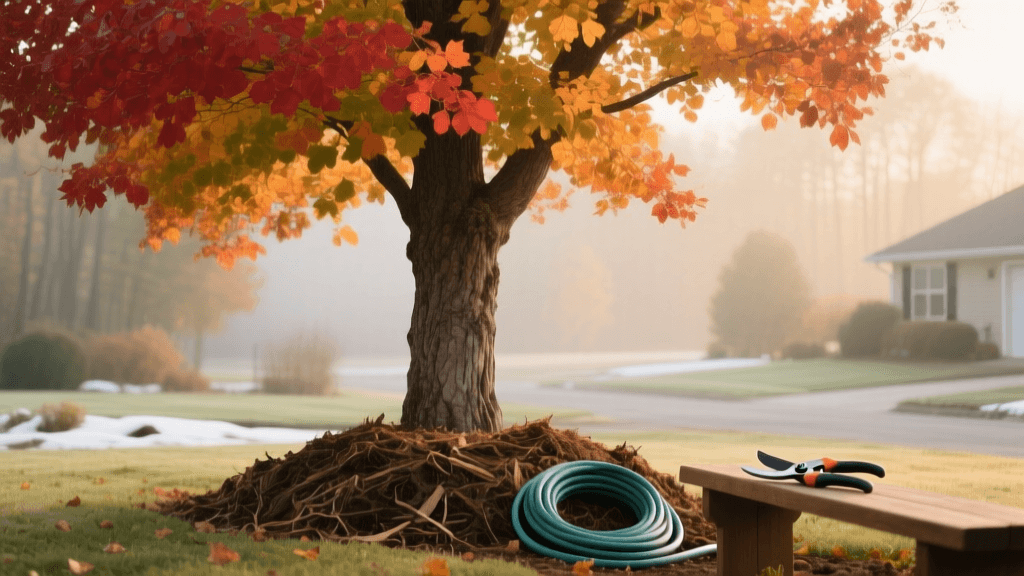
Fall Tree Health Assessment and Winterization Guide
Why Fall Tree Health Assessments Matter
As the vibrant hues of autumn replace the lush greens of summer, many homeowners mistakenly believe their landscape chores are winding down. However, the fall season is arguably the most critical window for tree health assessment and winterization. Trees undergo a massive physiological shift during autumn, transitioning from active top-growth to root development and energy storage. Neglecting your trees during this period leaves them vulnerable to winter desiccation, frost cracks, and structural failure under heavy snow loads. By implementing a targeted seasonal maintenance plan, you can safeguard your landscape's structural integrity and ensure a vigorous spring canopy.
Conducting a Comprehensive Autumn Tree Inspection
Before the leaves completely drop, or immediately after, perform a thorough visual assessment of every significant tree on your property. This proactive step identifies vulnerabilities that could lead to catastrophic failure during winter storms.
Canopy and Branch Structure
Look for deadwood, hanging branches (often called widow-makers), and V-shaped crotches which are inherently weak and prone to splitting under the weight of ice and snow. According to the International Society of Arboriculture (ISA), removing compromised limbs before winter storms arrive is the most cost-effective way to prevent property damage and personal injury. Use a pair of sharp bypass pruners for branches under 1 inch, and a pole saw or pruning saw for limbs up to 4 inches thick.
Trunk and Root Flare Inspection
Inspect the trunk for signs of decay, such as fungal conks, carpenter ant frass, or deep vertical cracks. Pay special attention to the root flare—the area where the trunk widens at the soil line. If the root flare is buried under soil or excessive mulch, the tree is highly susceptible to girdling roots and root rot. Carefully excavate the flare using an air spade or hand trowel to expose the primary buttress roots. The University of Minnesota Extension emphasizes that a visible root flare is a primary indicator of a healthy, structurally sound tree.
Hydration: Deep Watering Before the Freeze
Winter desiccation occurs when trees lose more water through their needles or twigs than they can absorb from frozen soil. Evergreens are particularly vulnerable to this phenomenon. To prevent severe moisture loss, continue watering your trees deeply until the ground freezes solid.
The general rule of thumb recommended by the Colorado State University Extension is to provide 10 gallons of water per inch of trunk diameter (measured at knee height) for newly planted or young trees. Mature trees require roughly 15 gallons per inch of diameter. Use a soaker hose or a slow-drip root feeder, applying the water at the drip line rather than directly against the trunk. A standard soaker hose delivers about 1 gallon per minute per 10 feet of hose. Run it for 30 to 45 minutes per tree every two weeks throughout the autumn if rainfall is less than one inch per week.
Mulching and Soil Insulation Techniques
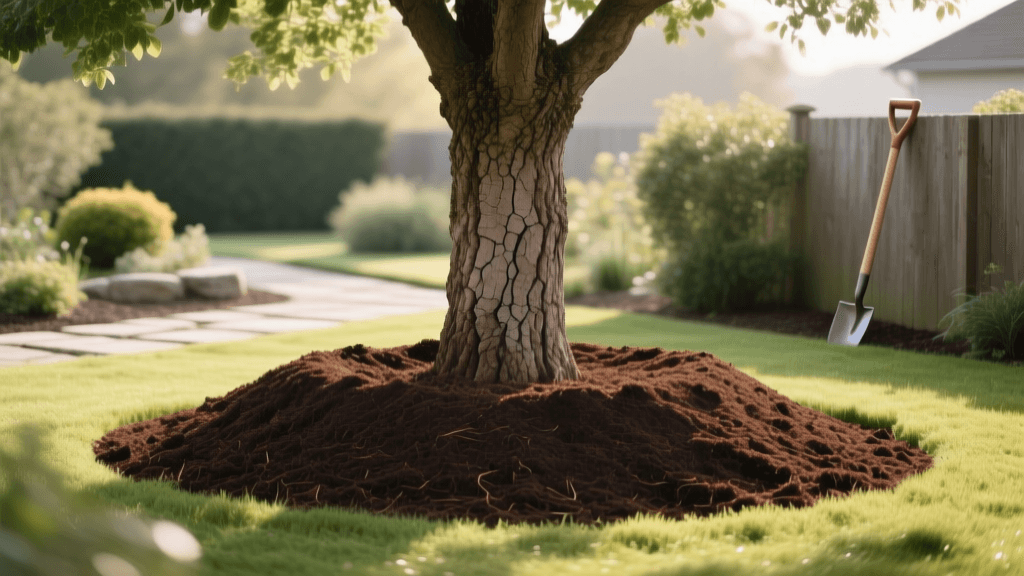
Proper mulching acts as a thermal blanket, regulating soil temperature and retaining vital moisture. However, improper application can be lethal. Never engage in 'volcano mulching,' where mulch is piled high against the trunk. This traps moisture against the bark, inviting fungal pathogens and providing a warm nesting habitat for bark-gnawing rodents.
Apply a 2- to 4-inch layer of organic mulch, such as shredded hardwood bark or arborist wood chips, extending out to the tree's drip line if possible. Keep the mulch at least 3 inches away from the trunk base. The cost of premium hardwood mulch averages $30 to $45 per cubic yard, which is enough to cover a 100-square-foot area at a 3-inch depth.
Protecting Trunks from Sunscald and Wildlife
Young trees with thin bark, such as maples, ash, and crabapples, are highly susceptible to southwest winter injury, commonly known as sunscald. This happens when the winter sun warms the bark on cold days, stimulating cellular activity, which then freezes and ruptures at night.
Wrap the trunks of these vulnerable trees with commercial white tree wrap or a white plastic tree guard from the base up to the first major scaffold branches. Remove the wrap in early spring to prevent moisture buildup and insect harborage. Additionally, install a 1/4-inch hardware cloth cylinder around the base of young trees, burying it 2 inches into the soil and extending it 18 inches above the expected snow line to deter voles and rabbits. Hardware cloth costs approximately $15 to $20 for a 2-foot by 10-foot roll.
Anti-Desiccant Sprays for Broadleaf Evergreens
Broadleaf evergreens, such as rhododendrons, hollies, and boxwoods, lose significant moisture through their leaves during harsh winter winds. Applying an anti-desiccant spray creates a micro-thin polymer coating that seals in moisture. Apply the spray in late November or early December when temperatures are above freezing (ideally between 40°F and 50°F) so the liquid can dry properly. A high-quality anti-desiccant like Wilt-Pruf costs approximately $20 to $30 for a ready-to-use 32-ounce spray bottle, which covers several medium-sized shrubs. Reapply in mid-to-late January during a warm winter thaw, as the coating naturally degrades under UV light over 6 to 8 weeks.
Fall Pruning Rules and Disease Prevention
While late winter is generally the best time for major structural pruning, autumn is ideal for removing diseased, dead, or dangerously broken limbs. However, avoid pruning oak trees in regions where Oak Wilt is prevalent unless it is an absolute emergency, as fresh wounds can attract sap beetles that carry the fungal spores.
Always sanitize your pruning tools between cuts when dealing with diseased wood. A solution of 70% isopropyl alcohol or a 10% bleach solution is highly effective. If using bleach, rinse and oil your tools afterward to prevent corrosion.
Winterization Task and Cost Breakdown
| Task | Timing | Estimated Cost | Tools Needed |
|---|---|---|---|
| Deep Root Watering | Late Oct - Nov | $10-$30 (water bill) | Soaker hose, root feeder |
| Proper Mulching | Late Nov | $35-$50 per cubic yard | Wheelbarrow, steel rake, gloves |
| Trunk Wrapping | Early Nov | $8-$15 per tree | White tree wrap, tape |
| Rodent Guard Install | Late Nov | $15-$25 per roll | Hardware cloth, wire snips, zip ties |
| Sanitary Pruning | After leaf drop | $40-$80 (tools/supplies) | Bypass pruners, folding saw, alcohol |
Authoritative Guidelines and Citations
'Proactive autumn care, including deep watering and structural inspections, is the most effective method for reducing winter storm damage and ensuring long-term urban forest health.' — International Society of Arboriculture (ISA) Best Management Guidelines
- Colorado State University Extension: 'Fall and Winter Watering' guidelines for tree hydration metrics.
- University of Minnesota Extension: 'Identifying Hazardous Trees' protocols for root flare and canopy inspections.
- International Society of Arboriculture (ISA): 'Trees & Storms Preparation Guide' for structural pruning standards.
Wrapping Up Your Seasonal Tree Care
By dedicating a single weekend in late autumn to these proactive tree health assessments and winterization strategies, you fortify your landscape against the harshest elements of winter. The small investments of time and money made in November will pay massive dividends when your trees emerge healthy, vibrant, and structurally sound the following spring.