Tree Care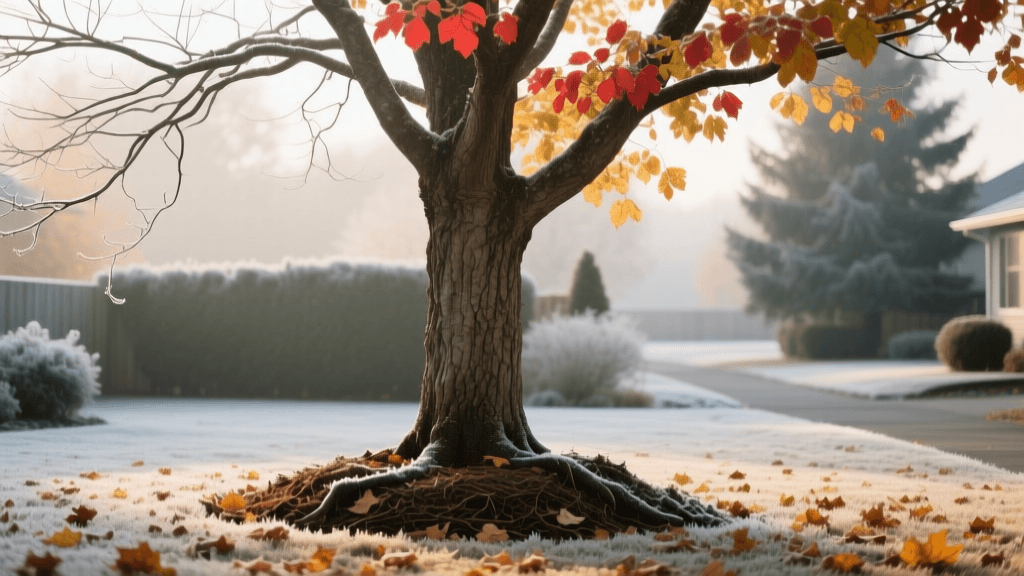
Fall Tree Winterization Guide: Protecting Roots and Trunks
Why Fall Tree Winterization Matters
As autumn leaves fall and temperatures drop, many homeowners mistakenly believe their landscaping duties are over. However, from the perspective of seasonal tree health, fall is arguably the most critical time for tree care. While the canopy enters dormancy, the root system remains active until the soil temperature drops below 45°F (7°C). Preparing your trees for the harsh realities of winter—ranging from freezing winds and heavy snow loads to temperature fluctuations and rodent damage—is essential for ensuring vigorous spring growth and long-term structural integrity.
Winter desiccation, frost cracks, and root heaving are silent killers of both newly planted saplings and mature landscape trees. By implementing a strategic fall tree winterization protocol, you can mitigate these risks. This comprehensive guide will walk you through actionable, step-by-step seasonal maintenance tasks, complete with product recommendations, precise measurements, and estimated costs to help you budget for a healthier landscape.
Step 1: Deep Root Hydration Before the Freeze
One of the most common misconceptions in tree care is that trees do not need water in the fall. In reality, evergreens and newly planted deciduous trees are highly susceptible to winter burn (desiccation) when frozen ground prevents roots from taking up moisture to replace what is lost through transpiration on sunny, windy winter days.
Watering Measurements and Timing
The golden rule for fall hydration is to provide 10 gallons of water per inch of trunk caliper (measured at chest height). For a tree with a 3-inch caliper, this means 30 gallons per watering session. You should continue this deep watering regimen every 10 to 14 days until the ground freezes solid, which typically occurs in late November or early December in most temperate zones.
- Equipment: Use a soaker hose or a slow-drip irrigation bag (like the TreeGator, which costs around $25-$35). Soaker hoses are highly cost-effective at about $15 for 50 feet.
- Placement: Water at the drip line (the outer edge of the canopy), not directly at the trunk. The majority of a tree's absorbing roots are located in the top 12 inches of soil at the drip line.
- Anti-Desiccant Sprays: For broadleaf evergreens like rhododendrons and hollies, apply an anti-desiccant spray such as Wilt-Pruf (approx. $18 per quart). Apply when temperatures are between 40°F and 50°F, ensuring the spray has time to dry before freezing.
Step 2: Proper Mulching Techniques for Insulation
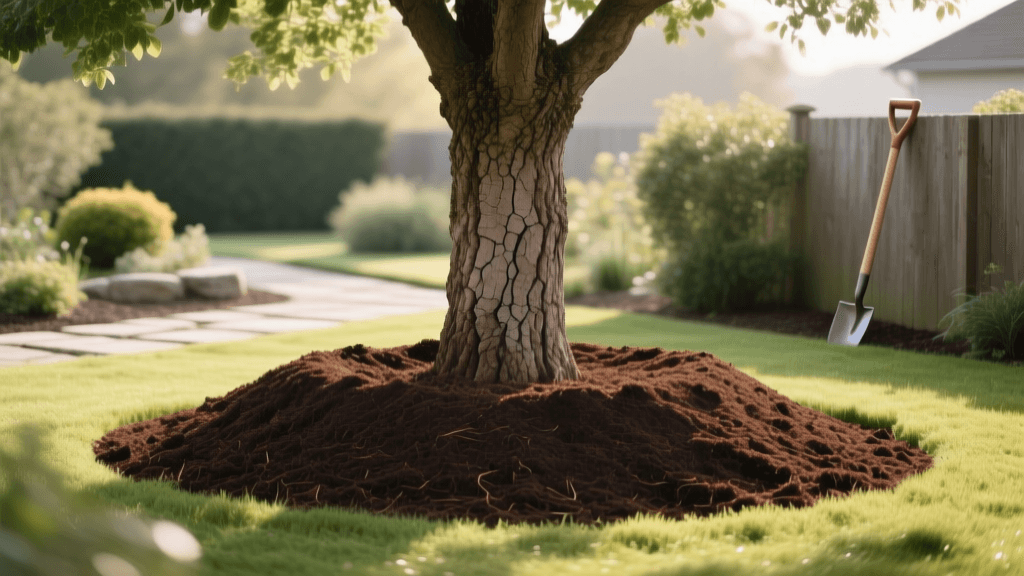
Mulch acts as a thermal blanket, regulating soil temperature and retaining vital moisture. However, improper mulching—often referred to as “volcano mulching”—can suffocate roots and invite fungal diseases and rodent infestations.
The Donut Method
To properly winterize the root zone, apply a 3 to 4-inch layer of organic hardwood mulch or arborist wood chips. The mulch ring should extend at least 3 feet from the trunk for young trees, and ideally to the drip line for mature trees.
- The 3-3-3 Rule: 3 inches deep, 3 feet in diameter, and 3 inches away from the trunk. Never let mulch touch the bark, as this traps moisture and encourages root girdling and collar rot.
- Cost Factor: Bulk hardwood mulch typically costs $30 to $45 per cubic yard. One cubic yard will cover roughly 100 square feet at a 3-inch depth.
- Frost Heave Prevention: Mulch prevents the freeze-thaw cycle that causes frost heave, a phenomenon where shallow roots are literally pushed out of the ground by expanding ice crystals, exposing them to lethal freezing air.
Step 3: Trunk Protection Against Frost Cracks and Rodents
Young trees with thin bark (such as maples, ash, and fruit trees) are highly vulnerable to “southwest injury” or frost cracks. This occurs when the winter sun warms the bark on the southwest side of the trunk during the day, causing cells to activate, followed by a rapid temperature drop at night that freezes and ruptures the cells.
Installing Tree Guards
To prevent frost cracks and protect against voles and rabbits that chew bark under the snowline, install physical tree guards in late autumn.
- Materials: Use white corrugated plastic tree guards ($5 to $12 each) or wrap the trunk with commercial crepe paper tree wrap ($8 per roll). The white color reflects winter sunlight, preventing the bark from overheating during the day.
- Installation: Bury the bottom of the guard 2 inches below the soil line to stop burrowing rodents, and ensure it reaches just above the expected snow line (usually 18 to 24 inches high).
- Crucial Spring Removal: You must remove tree wraps and guards in early spring as soon as the snow melts. Leaving them on traps moisture, promotes fungal growth, and provides a hidden haven for boring insects during the summer months.
Step 4: Fall Fertilization and Soil Testing
Fall fertilization is fundamentally different from spring feeding. While spring fertilizers are high in nitrogen to promote rapid canopy and leaf growth, fall fertilization should focus on phosphorus and potassium to stimulate deep root development and increase cellular hardiness for winter survival.
| Feature | Fall Fertilization | Spring Fertilization |
|---|---|---|
| Primary Goal | Root expansion, winter hardiness, nutrient storage | Canopy growth, leaf production, flowering |
| N-P-K Ratio Focus | Low Nitrogen, High Phosphorus/Potassium (e.g., 5-15-15) | High Nitrogen (e.g., 20-5-10 or 32-0-10) |
| Timing | After canopy dormancy, before ground freeze (Late Oct-Nov) | After bud break and last frost (April-May) |
| Product Type | Slow-release granular or deep-root liquid injection | Quick-release granular or fertilizer spikes |
Soil Testing: The Prerequisite to Feeding
Before applying any amendments, conduct a soil test. Blindly applying fertilizers can alter soil pH to toxic levels or cause nutrient lockout. You can purchase a mail-in soil test kit from your local university cooperative extension office for approximately $15 to $30. The results will provide a customized amendment recipe, detailing exactly how much lime (to raise pH) or sulfur (to lower pH) your specific tree species requires.
Step 5: Dormant Pruning for Winter Storm Resilience
Late fall, after the leaves have dropped, is the ideal time to assess the structural integrity of your deciduous trees. Without foliage, the branching architecture is fully visible, making it easier to identify weak crotches, crossing branches, and deadwood that could fail under the weight of winter snow and ice.
Pruning Best Practices
- Target Deadwood: Remove any dead, diseased, or broken branches. Deadwood is brittle and highly likely to snap during winter storms, potentially causing property damage or tearing healthy bark when it falls.
- Correct Weak Angles: Look for narrow V-shaped crotches with included bark. These are structurally weak and prone to splitting. Consult a certified arborist to install cabling or remove the competing leader.
- The Oak Wilt Exception: Never prune oak trees in the fall. Fresh pruning wounds emit volatile odors that attract sap beetles, which carry the devastating oak wilt fungus. The University of Minnesota Extension strongly advises waiting until the deepest part of winter (when temperatures are consistently below freezing) or early spring to prune oaks.
“Proper winter preparation, including adequate fall watering and protective mulching, is the most effective defense against winter desiccation and frost injury. Trees that enter the winter season stressed from drought are significantly more vulnerable to cold damage and subsequent pest infestations.” — University of Minnesota Extension, Forestry and Tree Care Division.
Conclusion: Investing in Long-Term Tree Health
Seasonal tree maintenance is not merely about surviving the winter; it is about setting the stage for explosive, healthy growth when spring arrives. By investing a few hours and a modest budget—roughly $50 to $100 per tree for soaker hoses, premium mulch, tree guards, and slow-release fertilizers—you protect your landscape investment. Mature trees can add thousands of dollars to your property value, provide critical energy-saving shade, and support local ecosystems. Treat your fall tree winterization checklist as an essential annual ritual, and your trees will reward you with decades of resilience, beauty, and vitality.