Tree Care
Fall Tree Care Guide: Winterizing Roots, Bark, and Canopies
Why Fall Tree Preparation is Critical
As autumn leaves drop and temperatures begin their steady descent, many homeowners mistakenly believe their landscaping duties have ended for the year. However, fall is arguably the most crucial season for long-term tree health. The transition from autumn to winter presents a unique set of environmental stressors, including freezing soil, harsh winds, and hungry wildlife. Implementing a rigorous seasonal care schedule now ensures your trees survive the winter and enter the spring growing season with robust vitality.
Trees do not simply 'go to sleep' the moment the first frost hits. Beneath the soil, root systems continue to grow and store carbohydrates well into the late fall, provided the ground has not yet frozen solid. Neglecting fall tree preparation can lead to severe winter desiccation, frost cracks, and structural damage from ice storms. By focusing on deep hydration, proper mulching techniques, and physical trunk protection, you can mitigate these risks and safeguard your landscape investment.
Hydration: Deep Watering Before the Freeze
One of the most common misconceptions in tree health assessment is that trees do not need water once the air temperature drops. In reality, trees, especially newly planted specimens and evergreens, continue to lose moisture through their leaves and needles well into late autumn. If the ground freezes while the root system is parched, the tree enters winter in a state of severe drought stress, making it highly susceptible to winter burn and root dieback.
To properly winterize your trees, you must engage in deep, slow watering. According to the Morton Arboretum, trees should be watered thoroughly until the ground freezes. Use a soaker hose or a slow-drip root irrigator placed at the drip line (the outer edge of the tree's canopy). The general rule of thumb is to provide 10 to 15 gallons of water per inch of the tree's trunk diameter. For a tree with a 4-inch caliper, this means applying 40 to 60 gallons of water in a single session. Repeat this process every 10 to 14 days throughout the fall if rainfall is insufficient, ceasing only when the top few inches of soil freeze solid.
Mulching for Insulation and Moisture Retention
Proper mulching is a cornerstone of seasonal tree maintenance. A well-applied layer of organic mulch acts as an insulating blanket, regulating soil temperature and preventing the damaging freeze-thaw cycles that can heave shallow roots out of the ground. Furthermore, it locks in the moisture you provided during your deep watering sessions.
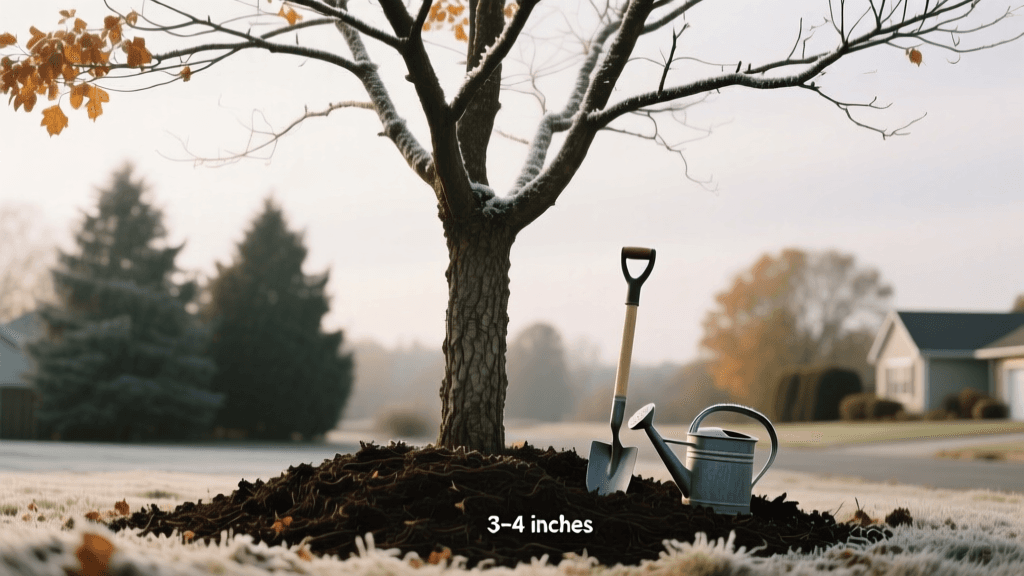
When applying mulch, avoid the dreaded 'mulch volcano'—a common landscaping error where mulch is piled high against the trunk. This traps moisture against the bark, leading to fungal diseases, trunk rot, and creating a warm winter haven for bark-gnawing voles. Instead, employ the 'donut method'. Spread a 2 to 4-inch layer of coarse organic mulch, such as shredded hardwood bark or pine bark nuggets, in a wide ring extending to the tree's drip line. Crucially, keep the mulch at least 3 to 4 inches away from the base of the trunk, exposing the root flare. The University of Minnesota Extension emphasizes that keeping mulch away from the trunk is essential for preventing winter rodent damage and maintaining proper gas exchange at the root collar.
Shielding Bark from Sunscald and Frost Cracks
Young trees, thin-barked species (like maples, ash, and fruit trees), and newly planted specimens are highly vulnerable to a phenomenon known as sunscald or southwest winter injury. On cold, clear winter days, the sun's rays heat the bark on the southwest-facing side of the trunk, stimulating cellular activity. When the sun sets or drops behind a cloud, temperatures plummet rapidly, causing the active cells to freeze and die. This results in elongated frost cracks, sunken cankers, and peeling bark that can severely compromise the tree's vascular system.
To prevent this, wrap the lower trunk with a commercial white tree wrap or a specialized light-colored plastic tree guard. The white color reflects solar radiation, keeping the bark temperature stable. Begin wrapping at the base of the trunk and overlap the material by about one-third as you work your way up to the first set of lower branches. Secure the top with a piece of weather-resistant tape or a zip tie. Tree wrap typically costs between $3 and $8 per roll and is a highly cost-effective insurance policy against structural trunk damage. Remember to remove the wrap in early spring as the tree breaks dormancy; leaving it on year-round can girdle the trunk and harbor insect pests.
Anti-Desiccant Sprays for Evergreen Canopies
While deciduous trees drop their leaves to conserve water, evergreens retain their needles and broadleaves throughout the winter. This makes them highly susceptible to winter desiccation—a condition where harsh, drying winds and intense winter sun pull moisture from the foliage faster than the frozen root system can replace it. The result is browning, brittle needles, and dieback on the windward side of the tree.
To combat this, apply an anti-desiccant spray (often sold under brand names like Wilt Stop or Vapor Gard) to your evergreens in late fall. These organic, pine-resin-based products coat the needles in a microscopic, breathable film that reduces moisture loss by up to 80%. Penn State Extension advises that anti-desiccants must be applied when the air temperature is above freezing (ideally between 40°F and 50°F) and when no rain or snow is forecasted for at least 24 hours to allow the emulsion to dry and cure properly. Expect to spend roughly $15 to $25 for a concentrated hose-end sprayer sufficient for treating several average-sized landscape evergreens.
Fall Pruning: What to Cut and What to Leave
Pruning is a vital component of tree health assessment and storm damage management, but timing is everything. Fall is generally not the ideal time for heavy, structural pruning. Pruning stimulates new growth, and any tender shoots that emerge in late autumn will be quickly killed by the first hard freeze, wasting the tree's stored energy reserves. Furthermore, many fungal spores and disease-causing pathogens are highly active in the cool, damp autumn air and can easily infect fresh pruning wounds.
However, fall is the perfect time for sanitary pruning. Once the leaves have dropped, the tree's architecture is fully visible, making it easy to identify dead, diseased, or damaged wood. Use sterilized bypass pruners to remove any broken branches that could tear during heavy winter snowstorms or ice accumulation. By removing these hazardous limbs now, you practice proactive storm damage management, protecting your home and property from falling debris during winter squalls.
Fall Tree Care Checklist and Estimated Costs
To help you budget and schedule your seasonal maintenance, refer to the structured checklist below. Costs are estimated per standard-sized landscape tree (up to 20 feet tall) and may vary based on regional pricing and specific product brands.
| Maintenance Task | Optimal Timing | Materials Required | Estimated Cost (Per Tree) |
|---|---|---|---|
| Deep Root Hydration | Early to Mid-Fall (before ground freeze) | Soaker hose, water source | $0.50 - $2.00 (Water utility cost) |
| Insulating Mulch Application | Mid-Fall (after soil cools) | Shredded hardwood bark (2-4 cubic feet) | $8.00 - $15.00 |
| Trunk Wrapping (Sunscald Protection) | Late Fall (after first frost) | White crepe tree wrap, securing tape | $3.00 - $8.00 |
| Anti-Desiccant Spray (Evergreens) | Late Nov - Early Dec (above 40°F) | Pine resin anti-transpirant spray | $5.00 - $12.00 |
| Sanitary Pruning | Late Fall (post leaf-drop) | Bypass pruners, rubbing alcohol (sterilization) | $0.00 (If DIY with existing tools) |
Conclusion
Winterizing your trees is an investment in the long-term resilience and beauty of your landscape. By combining deep autumnal hydration, strategic mulching, physical bark protection, and targeted evergreen care, you insulate your trees against the harshest elements of the season. Consistent seasonal maintenance not only prevents costly emergency tree removals following winter storms but also ensures your canopy emerges vibrant, healthy, and ready to thrive when spring finally returns.