Tree Care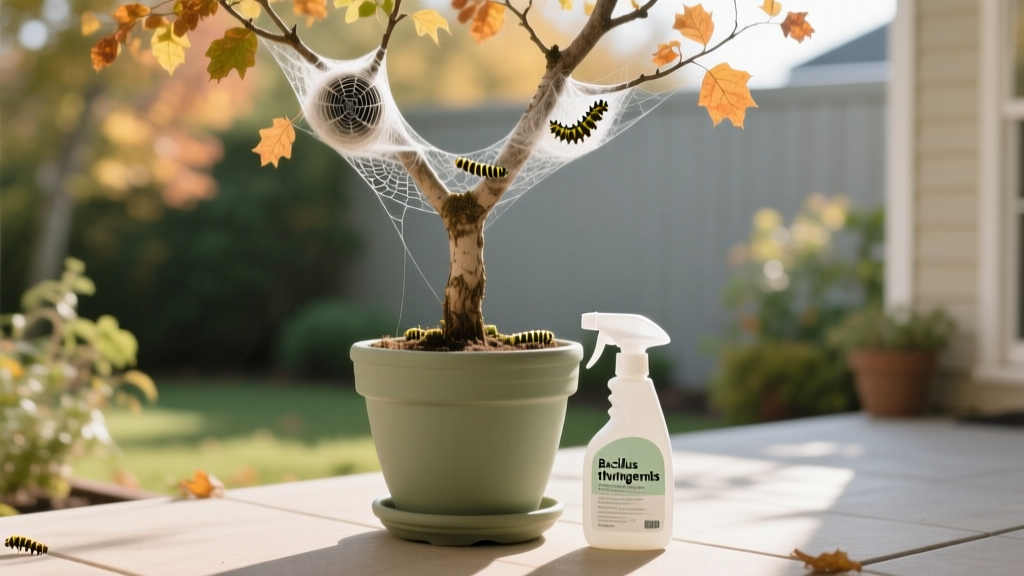
Fall Webworm Bt Control For Potted Trees: 2026 Guide
Lisa ThompsonPublished
The Rise of Fall Webworms in Container Orchards
As container gardening continues to dominate urban and suburban landscaping in 2026, more homeowners are cultivating dwarf fruit trees, patio ornamentals, and bonsai specimens in large pots. While growing trees in containers offers unparalleled control over soil quality and mobility, it does not make your plants immune to regional pests. One of the most unsightly and frustrating late-season invaders is the fall webworm (Hyphantria cunea). If you are growing potted apple, cherry, plum, mulberry, or persimmon trees on your patio, you have likely encountered the large, silken webs that engulf the tips of your tree's branches in late summer.
Fortunately, the gold standard for managing this pest in close-quarters outdoor living spaces is Bacillus thuringiensis var. kurstaki (Btk). Because potted trees are often situated on decks, balconies, and patios where children and pets play, broad-spectrum chemical pesticides are highly discouraged. Bt offers a targeted, biological solution that eradicates caterpillars without harming beneficial insects, humans, or container soil microbiomes. This comprehensive 2026 guide will walk you through identifying, treating, and preventing fall webworms on your potted trees using Bt.
Identifying the Culprit: Fall Webworm vs. Tent Caterpillar
Before reaching for a spray, it is crucial to correctly identify the pest. Many gardeners confuse fall webworms with eastern tent caterpillars, but their behaviors and treatment timelines differ vastly. According to Clemson University Home & Garden Information Center, fall webworms construct their silken tents at the tips of the branches in late summer and early fall. In contrast, tent caterpillars build webs in the crotches of branches during the spring.
In a container environment, a fall webworm infestation can be particularly damaging. Unlike massive landscape trees that can easily defoliate a few branches and recover, a dwarf patio tree in a 15-gallon pot has a limited canopy. Severe defoliation by webworms can stunt the tree's growth, reduce fruit yield for the following year, and weaken its winter hardiness. Look for the following signs on your potted trees:
- Unsightly Silk Tents: Large, messy, grayish-white webs enveloping the terminal leaves of your potted tree.
- Caterpillars Inside: Hairy, pale yellow or green caterpillars with black or red spots feeding within the web.
- Skeletonized Leaves: The caterpillars consume the leaf tissue, leaving only the veins behind inside the web.
Why Bacillus thuringiensis (Bt) is Ideal for Potted Trees
Bacillus thuringiensis (Bt) is a naturally occurring soil bacterium that produces proteins toxic to the larvae of specific insects, primarily caterpillars. When a fall webworm ingests leaves treated with Bt, the alkaline environment of its gut activates the protein crystals, paralyzing its digestive system. The caterpillar stops feeding within hours and dies a few days later.
For container gardeners, Bt is the ultimate weapon for several reasons:
- Patio Safety: Potted trees are often within arm's reach of outdoor dining areas. Bt is non-toxic to humans, pets, and birds, making it perfectly safe for residential patios.
- Preservation of Beneficials: Container gardens often rely on introduced or local pollinators and predatory insects. Bt does not harm bees, ladybugs, or parasitic wasps, which are vital for patio fruit production.
- Soil Health: Overspray that drips into your potting mix will not harm the complex mycorrhizal fungi or beneficial nematodes you have carefully cultivated in your container soil.
For a deeper understanding of how Bt functions in integrated pest management, the University of California Statewide IPM Program provides excellent, up-to-date research on its biological mechanisms and environmental safety profile.
2026 Bt Product Comparison for Container Gardeners
When treating potted trees, you rarely need to mix gallons of product. Choosing the right formulation—whether a Ready-To-Use (RTU) spray for a single bonsai or a concentrate for a small orchard of dwarf trees—is essential for cost-effectiveness and minimizing waste. Below is a comparison of the top Bt products available in 2026 for container tree care.
| Product Name | Formulation Type | Mix Rate (Per 1 Gallon) | Est. 2026 Price | Best For |
|---|---|---|---|---|
| Monterey B.t. Insect Spray | Liquid Concentrate | 1.5 fl oz | $16.99 (8 oz bottle) | Multiple potted trees; cost-effective |
| Bonide Thuricide Bt | Liquid Concentrate | 1.5 fl oz | $14.49 (8 oz bottle) | Dwarf fruit tree patios |
| Garden Safe B.t. Worm Killer | Ready-To-Use (RTU) | N/A (Pre-mixed) | $9.98 (24 oz spray) | Single small patio trees / bonsai |
| Southern Ag Thuricide | Wettable Powder | 1.5 tsp | $12.50 (4 oz powder) | Long-term storage; large container orchards |
Step-by-Step Bt Application for Patio Trees
Applying Bt to a potted tree requires a slightly different approach than spraying a 50-foot landscape pecan tree. Because your tree is small and accessible, you can achieve near-perfect coverage and combine biological controls with physical removal.
Step 1: Time the Application for Early Instars
Bt must be ingested to work, and it is most effective on young, early-instar caterpillars. Monitor your potted trees closely in mid-to-late summer. As soon as you see small webs forming at the branch tips and tiny caterpillars feeding, it is time to spray. Do not wait until the web has engulfed the entire branch, as older caterpillars are more resistant and the thick silk can deflect the spray.
Step 2: Physical Pruning (The Container Advantage)
Because potted trees are easily reachable, use sterilized bypass pruners to snip off the most heavily infested branch tips before spraying. Drop the webby clippings directly into a sealed plastic bag and dispose of them in the trash—never compost them, as the caterpillars can survive and crawl back to your patio. This physical removal instantly reduces the pest population and opens up the remaining canopy for better spray penetration.
Step 3: Mix and Spray with Precision
If using a concentrate like Monterey B.t., mix only what you need for your containers. A standard 1-gallon pump sprayer is usually sufficient for an entire patio of dwarf trees. Add the water first, then the Bt concentrate, and agitate gently. Spray the remaining webs and the surrounding foliage thoroughly. You must coat the leaves inside and around the web, as the caterpillars will venture out to feed on untreated leaves if the web is fully consumed.
2026 Pro Tip: UV radiation from direct sunlight degrades Bt proteins rapidly. To maximize the residual effectiveness of your treatment, apply the spray in the late afternoon or early evening. This allows the product to dry on the foliage overnight and provides maximum toxicity during the caterpillars' peak evening and morning feeding cycles.
Step 4: Protect the Potting Soil
While Bt is harmless to soil ecology, it is a waste of money to let it pool in your container saucers. If your potted tree is small enough, tilt the pot slightly or shield the soil surface with a piece of cardboard while spraying to ensure the product stays on the foliage where it belongs.
Post-Treatment Care and Prevention
After treating your potted trees with Bt, the caterpillars will stop feeding within 24 to 48 hours, though the dead webs may remain on the tree for a few weeks. You can gently hose off the dead webs a week after treatment to restore the aesthetic appeal of your patio tree.
Container trees are highly dependent on you for nutrients and water, and a pest attack can be stressful. Following a webworm treatment, support your tree's recovery with a balanced, slow-release organic fertilizer formulated for container woody plants. Ensure your pot has adequate drainage, as stressed roots make the canopy more susceptible to secondary pests like spider mites, which often spike in late summer.
According to the University of Minnesota Extension, fall webworm populations fluctuate cyclically. While they rarely kill a tree outright, the stress of defoliation on a container-restricted root system can be severe. By keeping a bottle of Bt concentrate in your garden shed and monitoring your patio trees weekly in August and September, you can nip infestations in the bud. Embracing biological controls like Bt ensures that your 2026 container garden remains a safe, thriving, and beautiful extension of your living space.